
This week in birds - #533

A roundup of the week's news of birds and the environment

A group of Roseate Spoonbills enjoying an afternoon nap.

*~*~*~*

According to climate researchers, the last eight years have been the hottest on record. Overall, the world is now 1.2 degrees Celsius (2.1 degrees Fahrenheit) hotter than it was in the second half of the 19th century.

*~*~*~*

And greenhouse gas emissions, the main cause of the Earth heating up, continue to rise.

*~*~*~*

Extreme weather events were the cause of 18 disasters and 474 human deaths in this country last year.

*~*~*~*
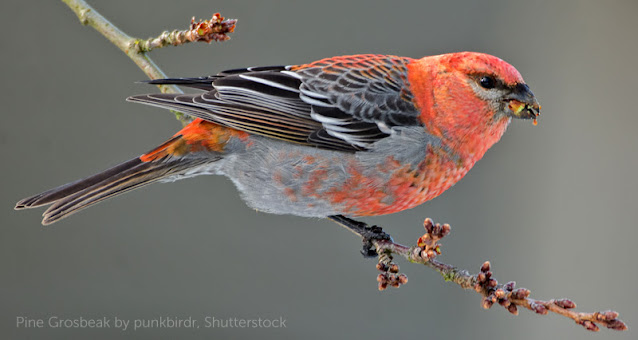
This is the beautiful Pine Grosbeak, a bird of the boreal forests that is the American Bird Conservancy's Bird of the Week.

*~*~*~*

The deal that Kevin McCarthy made in order to obtain the speakership of the House of Representatives for himself essentially cedes control of the House Republicans' agenda to the most extreme faction of his party. This does not bode well for action on climate issues for the next two years.

*~*~*~*

A nonprofit group is working to restore the shortgrass prairie of the western states and to allow the buffalo (American bison) to roam there once more. 

*~*~*~*

The Biden administration is proposing tougher standards for the emission of soot into the atmosphere from tailpipes, smokestacks, and wildfires. Reducing these emissions could help prevent thousands of premature deaths each year. 

*~*~*~*

On a beach in Maryland, a nine-year-old girl has found a treasure: a five-inch tooth of the Otodus megalodon shark species. The species died out approximately 3.5 million years ago. 

*~*~*~*

This beautiful Snowy Owl that decided to spend its winter in California is still drawing crowds to Orange County to see it.

*~*~*~*

The Japanese giant salamander is an endangered species that could become extinct but a male of the species in the Hino River of southwestern Japan is trying to make sure that doesn't happen as he guards hundreds of eggs

*~*~*~*

Everything in Nature is connected. As populations of insect pollinators decline, yields of fruits and vegetables are reduced, leading to increased disease and death in humans.

*~*~*~*

Scientists are warning that the Great Salt Lake could disappear in as little as five years. 

*~*~*~*

Human noise makes it harder for dolphins to communicate and cooperate on tasks which leads them to "shout" under water to make themselves heard by their fellows.

*~*~*~*

Here's a bit of good news: Scientists say that the restoration of the ozone layer, vital for protecting life on Earth, is proceeding on track.


Comments

  1. Good morning, Dorothy. Thank you as always for the weekly roundup. As you know this is essential reading in my household. It seems that this week I have been confronted with one environmental catastrophe or another this week, both local and global. It is truly depressing the way we continue to trash this planet. Time for another asteroid strike I think!

    ReplyDelete
    Replies
    1. There may be one out there somewhere with Earth's name on it.

      Delete
  2. I love buffalo and I love to see them roaming free (there's a sizable herd at the North Rim of the Grand Canyon), so the news about a group trying to restore the shortgrass prairie made me smile; however, I am wondering how the government would go about controlling the emission of soot into the air from wildfires?

    ReplyDelete
    Replies
    1. If the emissions from tailpipes and smokestacks can be controlled, that at least could have a positive impact on the atmosphere/

      Delete

Post a Comment

Popular posts from this blog

Poetry Sunday: Don't Hesitate by Mary Oliver

How about we share another Mary Oliver poem? After all, you can never have too many of those. In this one, the poet seems to acknowledge that it is often hard to simply live in and enjoy the moment, perhaps because we are afraid it can't last. She urges us to give in to that moment and fully experience the joy. Although "much can never be redeemed, still, life has some possibility left." Don't Hesitate by Mary Oliver If you suddenly and unexpectedly feel joy, don’t hesitate. Give in to it. There are plenty of lives and whole towns destroyed or about to be. We are not wise, and not very often kind. And much can never be redeemed. Still, life has some possibility left. Perhaps this is its way of fighting back, that sometimes something happens better than all the riches or power in the world. It could be anything, but very likely you notice it in the instant when love begins. Anyway, that’s often the case. Anyway, whatever it is, don’t be afraid of its plenty. Joy is no...

Poetry Sunday: Hymn for the Hurting by Amanda Gorman

You probably remember poet Amanda Gorman from her appearance at the inauguration of President Biden. She read her poem "The Hill We Climb" on that occasion. After the senseless slaughter in Uvalde this week, she was inspired to write another poem which was published in The New York Times. It seemed perfect for the occasion and so I stole it in order to feature it here, just in case you didn't get a chance to read it in the Times . Hymn for the Hurting by Amanda Gorman Everything hurts, Our hearts shadowed and strange, Minds made muddied and mute. We carry tragedy, terrifying and true. And yet none of it is new; We knew it as home, As horror, As heritage. Even our children Cannot be children, Cannot be. Everything hurts. It’s a hard time to be alive, And even harder to stay that way. We’re burdened to live out these days, While at the same time, blessed to outlive them. This alarm is how we know We must be altered — That we must differ or die, That we must triumph or try. ...

Poetry Sunday: Blackberry-Picking by Seamus Heaney

My mother was a farm wife and a prodigious canner. She canned fruit and vegetables from the garden, even occasionally meat. But the best thing that she canned, in my opinion, was blackberry jam. Even as I type those words my mouth waters!  Of course, before she could make that jam, somebody had to pick the blackberries. And that somebody was quite often named Dorothy. I think Seamus Heaney might have spent some time among the briars plucking those delicious black fruits as well, so he would have known that "Once off the bush the fruit fermented, the sweet flesh would turn sour." They don't keep; you have to get that jam made in a hurry! Blackberry-Picking by Seamus Heaney Late August, given heavy rain and sun For a full week, the blackberries would ripen. At first, just one, a glossy purple clot Among others, red, green, hard as a knot. You ate that first one and its flesh was sweet Like thickened wine: summer's blood was in it Leaving stains upon the tongue and lust ...