For example, there is the one about Keiko, the captive killer whale who starred in the movie "Free Willy." The essay is about efforts to free Keiko and it begins like this: "It was a hell of a time to be in Iceland, where the wind never huffs or puffs but simply blows your house down." How can you not be captivated by such a beginning?
This book isn't only about big and famous animals, however. There are chickens here, and rabbits, pigeons, pandas, tigers, lions, donkeys, mules, and oxen. And that's probably not a complete list.
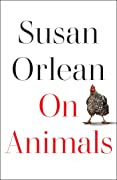
One of my personal favorites was the essay about keeping backyard chickens. I was especially delighted to learn that this famous writer for an urban publication did this for I am not unfamiliar with the pleasure of having chickens around. Those who think of them as stupid, ditzy creatures have never spent much time with them. They each have their own unique personalities and they arrange themselves in definitive social structures. The chicken yard is not all that dissimilar to human society.
Another of the essays deals with a backyard in New Jersey where a woman kept twenty-three - twenty-three! - pet tigers. The remarkable thing (in addition to all those tigers) is that her neighbors had no idea they were there until one of them escaped.
There is not a dull essay in this collection. I read straight through rather than skipping around because the clever arrangement of the pieces helped to lead the reader from each essay into the next one.
Orlean has a knack for pulling the reader in with her first sentence. It's a knack honed over all those years of writing for The New Yorker. She also has a gift for exploring the human connection to all of the animals about which she writes. She makes clear that it is false to think of these as human-animal relationships; in fact, we are all animals and we are all in this together. One planet for all of us and what we do to that planet affects all.
My rating: 4 of 5 stars