Translate

Showing posts with label reading. Show all posts

Thursday, January 6, 2022

The President and the Frog by Carolina De Robertis: A review


What a pleasure this book was to read. I'm not sure why it took me so long to get to it for it had been in my reading queue for months but finally, I picked it up as my very last read of 2021 and it turns out it was a great way to close out the year. 

It is a short book at only around 220 pages so one could almost read it in one sitting if one had nothing else to do. Carolina De Robertis packs quite a lot into those few pages. She gives us the story of an 82-year-old man who is the former president of a South American country that is never actually named but is assumed to be Uruguay. He is about to be interviewed by a television journalist from Norway and as he waits for her he reflects on his life and on the part of it that he does not want to reveal to anyone. That secret part is his relationship with a frog.

As a much younger man, the former president had taken part in an attempted revolution against the autocratic government that was then in power. The attempt was unsuccessful and many of the revolutionaries, including him, were captured and imprisoned in solitary confinement for years. His cell for the first four years was a hole in the ground with a grate covering part of the top through which food was lowered to him each day and through which he was extracted from time to time for "questioning," i.e., torture. His only light came through that grate and his only companions at first were the spiders and bugs that found their way into his hole, but finally, another creature joined him there: a frog.

This was no ordinary frog. For one thing, he could talk. He was, in fact, a philosopher frog, a snarky and prescient frog, and he and the future president had many long conversations about life and its meaning. They talked about the quest for justice and dignity and what it means to love a country. Those conversations are full of irony and satire as they reflect on politics, on the disparities endemic in society, and the systemic racism that seems so hard to root out. Their conversations are sometimes funny, sometimes moving, but always insightful. And they are a secret that the ex-president has carried with him for more than forty years.

The interview with the journalist takes place in 2016 after the presidential election in the United States and that, too, comes up in the conversation. The ex-president marvels at the idea that a country could freely elect such an ignoramus to be its leader. 

This is the third of De Robertis' books that I have read after The Gods of Tango and Cantoras and I think it may be my favorite. It is very different from the other two books but it has in common with them her brilliant insights into what it is to be human. It is part historical fiction and part fable and she ties all of that together beautifully with masterful writing. The technique she employs is to flash back and forth through time as we witness the interactions with the frog who urges the man to dig deep and find "the One Thing" and the conversation with the interviewer who expresses concern about the ramifications of climate change and of the American election. The result of comparing and contrasting the two conversations is to give us a sense of the indomitable human spirit that finds hope and optimism even in the face of the grimmest reality.

It's difficult to adequately describe this novel. There isn't much of a plot and one can't really say it is character-driven. The "action" takes place entirely in the head of the main character, as we are privy to his thoughts and memories. It's not a book that everyone would enjoy, but I loved it and I'm just glad I finally got to it at the end of the year.

My rating: 5 of 5 stars  


Tuesday, January 4, 2022

The Little Book of Hygge by Meik Wiking: A review


I chose this book as my final read of 2021. It turned out not to be that because I managed to squeeze another in, but this one was chosen as a comfort read. It is literally about comfort. Coziness, happiness, being comfortable in your own skin and appreciating the life you have. Doesn't that sound like a positive note on which to end the year?

The author of the book, Meik Wiking, is the CEO of the Happiness Research Institute in Copenhagen. (Yes, apparently there is such a thing!) Whenever there are polls about which country is the happiest, Denmark inevitably ends up at or near the top so it is appropriate, I guess, that the Happiness Research Institute is located there. 

And what are the things that Danes associate with this feeling of happiness? Wiking lists them from most to least important as follows: hot drinks, candles, fireplaces, Christmas, board games, music, holiday, sweets and cakes, cooking, and books. I find it interesting that at least half those things are related to light or food. I also find it interesting that books are last. Oh, well, at least they made the list.

Danes spend a disproportionate amount of their income on lighting and some of their most popular designers are designers of lamps or other lighting. They are also the world's highest consumers of candles. They light them daily to create a mood throughout much of the year.

They love indulging their sweet tooth. For example, they consume twice the amount of sweets as other Europeans. And they love cooking. Their pleasure comes from the process of preparing food and if it is complicated and takes a long time, so much the better!

They prefer casualness in their dress and in their home furnishings. Their clothing tends to rely on soft natural fabrics like wool. Danish furniture is simple in style and uses a lot of wood in its designs. Tactility is very important to them.  

Hygge, in short, is a word that implies indulging all the senses. It's what makes us feel cozy. Now, all of that could be said in one short sentence, but Meik Wiking does go on and on about it. Not that the book is that long at less than 300 pages, but after a while, it started to feel like War and Peace to me. Except that War and Peace is not endlessly repetitive. The writer basically states the same idea over and over again in as many different ways as he could come up with. And I pretty quickly lost patience with him. I ended up skimming most of the book, seeing if there was any new idea there that I needed to concentrate on. There wasn't. 

My rating: 2 of 5 stars


Monday, January 3, 2022

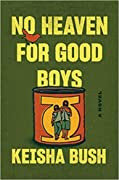
No Heaven for Good Boys by Keisha Bush: A review


Dakar, Senegal. In the villages of Senegal, it is the custom for parents of young boys to give their sons to the care of a marabout, a teacher who will instruct them in the Qu'ran for a year. Most of these men are probably honorable and take their responsibility for the children in their care seriously as they attempt to teach them the tenets of Islam. But some of them are pure evil. Marabout Ahmed is the evilest of the evil and it is into his care and control that cousins Etienne and Ibrahimah are given. Ibrahimah is only six years old.

Etienne is the first to be sent to Dakar to be taught by Ahmed, but when his year is up Ahmed persuades the parents to let him stay, and then Ibrahimah's father decides to send his son, also. Ibrahimah's mother is opposed to the idea. She insists he is too young, but his father takes him to Ahmed very early one morning while his mother is still sleeping so that she cannot object. Ibrahimah joins Ahmed's daara (school) with his cousin and his life is changed forever.

Instead of being instructed in the Qu'ran, the boys in Ahmed's daara are forced onto the streets every day to beg for food and for money to line their marabout's pockets. They are told a sum of money that they must collect each day. If they fall short, they are beaten. 

Even under the best of circumstances, the streets of Dakar would not be safe for these young boys. There are predators galore who would take advantage of them. For example, there is an active black market in organ trading that some of the boys are known to fall prey to. There are also student protests taking place on the streets, sometimes violent protests. Etienne and Ibrahimah must try to navigate all of these dangers as they attempt to meet their marabout's demands and avoid being beaten.

The older cousin, Etienne, is a real hero in this story. He does his best to protect his younger cousin and keep him safe. The boys' lives are a neverending series of horrors and the most horrible thing may be the knowledge that their parents - or at least their fathers for their mothers seem to have little say in the matter - have delivered them to this fate. Etienne and Ibrahimah long to run away and go home, but if they do, will their fathers just bring them back as the father of one boy who did manage to run away did?

This book had been in my reading queue for a year and I kept avoiding it because I knew it was going to be a heartbreaking story. I was not wrong. And, of course, I usually stay away from reading books that deal with the abuse of children or animals because they are just too upsetting for me. Nevertheless, in spite of the subject matter, I am glad I finally convinced myself to read this one. Keisha Bush has given us in her first novel a beautiful narrative of human perfidy and brutality but also of the resilience of the human spirit and its ability to keep hope alive even in the direst of circumstances. Her characterizations of Ibrahimah and Etienne make them real flesh and blood boys, not just paper replicas. They are a combination of both naivete and native wisdom. They comfort each other and manage to have moments of silliness that can almost bring a smile to the reader's face amid all the sadness.

The author also gives moments of magical realism in the narrative which somehow help to lighten the mood, but there is no disguising the fact that this is a completely devastating story. The most devastating thing about it may be the fact that it is based on reality. In truth, it is the religious custom in that country to send young boys to a marabout for a year's study of the Qu'ran. And human nature being what it is, over the years the practice has been abused and the boys are sometimes mistreated, even starved, and forced to beg. And evidently, this is not a practice that is in the past; it is still happening today. Here is a report on it from the Harvard Human Rights Journal published last year. 

This really is an excellent, well-written book that tells an important story and is hard to put down, although I had to occasionally just to give myself a mental break. The only reason I don't give it five stars is because it was so difficult for me to read.

My rating: 4 of 5 stars


Wednesday, December 29, 2021

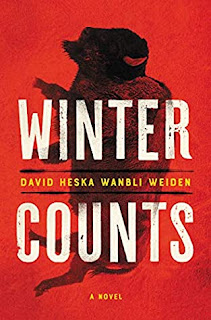
Winter Counts by David Heska Wanbli Weiden: A review


The title of the book is a reference to the Lakota calendar system that includes images showing the most significant events of the year. David Heska Wanbli Weiden is an enrolled member of the Sicangu Lakota nation and he has written a book that explores the Lakota culture, especially that on the Rosebud Indian Reservation in South Dakota. 

His vehicle for this exploration is his character named Virgil Wounded Horse who is a kind of local enforcer on the reservation. People hire him to deliver their (or his) idea of justice if they feel that they have been failed by the legal system. Virgil lives with his teenage nephew, for whom he is the guardian. The boy's mother, Virgil's sister, was killed in an automobile accident some years earlier. 

Virgil is not concerned about his nephew's use of marijuana, but when heroin makes its way to the reservation and the nephew becomes involved, his work as an enforcer takes on a personal dimension. He is determined to discover where the dangerous drugs are coming from and to put a stop to their sale on the reservation. He is convinced that they are coming from Denver and that he knows who may be responsible. He leaves his nephew in the care of his great-aunt and heads to Denver.

But before he goes he is approached by his ex-girlfriend who also has a personal interest in the case and she accompanies him to Denver. In Denver, they discover that the drug cartels are becoming more powerful and are expanding their reach and influence. But it seems that someone, possibly in authority on the reservation, is making it possible for the cartels to make inroads. Who could that person be?

This was David Heska Wanbli Weiden's first novel and it has been highly praised and has won several awards including the Anthony Award for Best First Novel. I can only conclude that all those critics read a different book than I did. It's not really a terrible book, but I would not say it is award-worthy. The writing is pedestrian at best. The characters are one-dimensional. As far as the main character, Virgil Wounded Horse, is concerned, that one dimension is toxic masculinity. His love interest's only dimension seems to be to "follow that man." She puts her life and her career goals on hold at the drop of a hat. 

As for the plot, it is totally predictable, repetitive, and often downright cringe-worthy. Every chapter, indeed it often seems every page, contains a rant about the injustices perpetrated on Native Americans - or Indians as the author prefers. No rational person with any sense of honor would deny that such horrors have happened and in some instances still happen, but the constant repetition of reminders of them has the effect of inuring the reader and eventually making such events, dare I say, boring. I am sure that is not the effect the writer hoped to achieve.

All of that is not to say that the book has no redeeming features. The writer takes pains to describe day-to-day life on the reservation and the importance of religious practices and spiritual beliefs to that life. He also renders in an understandable and believable way the effects of violence, both historical violence and personal and familial violence on Lakota society. The individual and societal costs of the pain of that violence are inestimable. But overall, I found these strengths insufficient to completely offset the problems with the writing.

My rating: 3 of 5 stars


Sunday, December 26, 2021

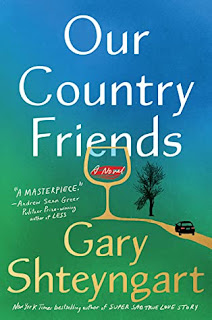
Our Country Friends by Gary Shteyngart: A review


Gary Shteyngart has written a pandemic novel. Set in 2020 and beginning in March, the calamity that is COVID-19 was already well underway in the world and in this country. 

At a country house surrounded by four one-bedroom bungalows in upstate New York owned by the Levin-Senderowskys, a Russian-born novelist and his Russian-born psychiatrist wife, five friends gather. There is a woman who is an extremely successful Korean American app developer; a man who is a struggling Indian American writer; a woman essayist from the South who specializes in provocative pieces; a man who is a world traveler with several passports; and finally, an actor who is never named but who may appear in a television show written by the novelist. The five join the Levin-Senderowskys and their precocious adopted Asian pre-teen daughter who is obsessed with K-pop. They will be together at the estate for the next several months as they try to wait out the pandemic.

Sasha Senderowsky is the Russian-born novelist. His main purpose in inviting these people to stay in his bungalows seems to be to convince the actor to work with him on the film that he wants to make. His wife is Masha and her main concern is enforcing social distancing and mask-wearing among this group. They come to think of her as the pandemic nazi. Their daughter, Natasha called Nat, appears to have special needs, perhaps being on the autism spectrum. She is a delight and the most sympathetic character in this group of fairly self-absorbed people.

The obsessions of these adults seem to be depressingly stereotypically American: money, sex, and booze. None of them appear to have any real self-awareness or a full appreciation of what is happening in the world. It goes without saying perhaps that their sense of their own importance in that world is extremely inflated.

Shteyngart no doubt intended this to be witty and satirical and at times he achieves that purpose. There are bits that are quite funny. Most of them involve the antics of Nat. But satirizing a situation in which millions have died, many of them needlessly, requires an extremely deft touch and I felt that this writer was not quite up to the task. Moreover, the characters are essentially stereotypes, and that, I guess, is supposed to serve as "character development" but again, it didn't quite do the trick for me. 

This novel has been highly praised and I looked forward to reading it as I had thoroughly enjoyed Shteyngart's Super Sad True Love Story and I did enjoy parts of it. It was entertaining up to a point but the story became repetitive and less than a hundred pages from the end, it just sort of petered out. The ending itself felt like an afterthought, something tacked on for dramatic value.

I debated about what rating I should give this book and I have to acknowledge that my reaction to it may be as much a reflection of our current situation as it is a true assessment of the writing. It may be that if I read it for the first time a few years hence, I might find it more amusing. But I read it now amid all the baggage of December 2021 and it is what it is.

My rating: 3 of 5 stars 


Monday, December 20, 2021

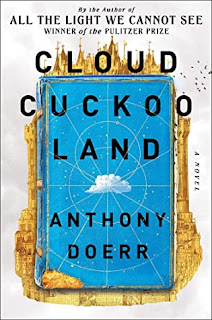
Cloud Cuckoo Land by Anthony Doerr: A review


I wasn't sure I was going to like this one at all. It started slowly for me and I found it hard to get my head around the story Anthony Doerr was telling. But I kept reading because it's what I do and, in the end, I was handsomely rewarded. In fact, the story just about blew me away.

Doerr gives us five different stories of five different characters that take place over a period of centuries. They might in fact be five separate books, but all of these characters are connected in a special way. They are in many ways very similar characters, one might even say the same character. They are all outsiders who embark on what Joseph Campbell would call the hero's journey. They all have challenges and they suffer on their journeys but they all achieve a final homecoming. And each of the characters is fascinated by an ancient text, a supposed work by Diogenes called Cloud Cuckoo Land (actually an invention of Doerr's). It is the story of Aethon and all of his many adventures and misadventures as well as mishaps involving other characters. Fragments of that book are included in this novel. The ways in which the text survived destruction over the centuries is the theme that connects all of the characters.

The first character that we meet is Zeno Ninis in present-day Idaho. He is in his 80s, a veteran of the Korean War where he was a prisoner of war and learned Greek from a fellow prisoner during his captivity. He is directing a group of children at the local library in a play that he's written based on an ancient text that he translated called Cloud Cuckoo Land. Their rehearsal is interrupted by the intrusion of a sensitive young man named Seymour Stuhlman who has been radicalized by the destruction by developers of the wilderness that he loves. He has come to the library with a gun and an explosive device to leave the bomb in a corner of the library that shares an adjoining wall with the real estate developers. He's not interested in damaging the library; he wants to destroy the developers' office but since he can't get into that office, he places the bomb in the library in the hope that it will cause as much destruction as possible.

Then, before a resolution of the library incident, the scene shifts to five hundred years earlier. In 15th century Thrace, we meet Omeir, a harelipped teenager who society scorns because of his defect, and his two beloved oxen. His oxen are requisitioned by the Saracens for their assault on Constantinople. As their driver and caregiver, Omeir must go with them. Inside Constantinople reside Anna and her sister, Maria, orphans who live in a house of women who make their living embroidering robes for priests. When Maria is injured, Anna develops a side occupation as a cat burglar to raise money for her sister's care. On one of her burgling forays, she finds a book that tells the story of Aethon. She reads the book to her sister to comfort her. The stories of Omeir and Anna will eventually merge.

Finally, we have a young teenager named Konstance who lives at some undefined time in the future. Konstance is alone in a sealed vault on a spacecraft called Argos that is traveling in search of a new home away from the blighted, ruined Earth. She has never actually set foot on Earth. She was born on the spacecraft and after an epidemic kills the other passengers on the craft, she spends her lonely time remembering the story of Aethon that had been told to her by her father and copying what she remembers of the story onto scraps of paper. 

The plot construction of the book takes us back and forth through the centuries and between these five characters' stories. It is only tantalizingly slowly that the nature of the connections between them comes into focus. Doerr is a master storyteller and his book is in ways small and large an homage to the power of literature to persist through the centuries and to affect and guide people's lives. At one point a bibliophile character in the book reminds us of all the works that have been lost: thousands of Greek plays, several books of the Bible, Lord Byron's memoirs, works by Melville, Shakespeare, and Aristotle. And yet, so much has been saved because people loved it and refused to let it die.

These characters from two epochs of history and the present and one of the future have disparate storylines and lives and it is a work of great creativity to be able to keep those stories coherent and compelling throughout. I found the conclusion of it all incredibly moving and shed more than a few tears. Yes, it really did blow me away and I'm glad I stuck with it through a sometimes confusing beginning.

My rating: 5 of 5 stars 
Thursday, December 16, 2021

Powers and Thrones: A New History of the Middle Ages by Dan Jones: A review


Historians of the Middle Ages, roughly from the fall of the western Roman Empire until the dawn of the modern era in the 16th century, take considerable umbrage when the period is referred to as the "Dark Ages." They will argue that in spite of the barbarism and ignorance that were certainly a part of the era, it was not dark at all. It was in fact a period of considerable enlightenment that brought the Carolingian Empire that was produced by the sophisticated culture of the Germanic tribes, the legacy of the Roman Empire that continued brightly in Byzantium, and the many contributions of Muslim culture and writers throughout the Mediterranean area. Dan Jones will certainly make that argument and he does in his latest book, Powers and Thrones: A New History of the Middle Ages

The book is 656 pages long and yet it feels concise and approachable for the general reader like myself. Jones organizes the vast and complicated historical record of the era into a compelling story that reads almost like a novel. He makes that story relevant to the modern reader by showing the connection of events during the period to events of our day, and there are many connections.

He also keeps the reader's interest alive through the long book by balancing the recording of events with descriptions and discussion of some of the vivid personalities that were responsible for those era-defining events. Historical anecdotes abound and he shows how they have helped to create the building blocks of the modern age. 

He shows us that Ancient Rome lived on (and lives on) as the source of much of the law that still guides the West. It also lives through all the Romance languages and through the Christian faith that it was largely responsible for imparting to the world at large. The Germanic invasions of the Roman Empire that helped to bring it down were not simply a conquest by barbarians for the tribes created much of the political framework that still exists in Europe today. 

The Muslim conquest still affects the modern world as well since they brought with them their science and learning, but it was also the source of many of the religious splits and fragmentation that continue to this day. Moreover, the arrival of the Vikings shaped future Anglo-French connections, alliances, as well as competitions. And it provided the first connection between Europe and North America.

The book is arranged in basically chronological order but it is also organized around major themes and ideas that shaped the era. So, within the chronology, the writer sometimes skips around to show the progression of certain important ideas through the whole period. An exploration of knighthood, for example, considers its development and importance through eight centuries. Although this might occasionally be confusing, it does help to show how Europe - and this book essentially deals with Europe rather than the whole world - evolved during the period.  

Dan Jones has provided us with a highly readable and understandable exploration of the complicated period that we know as the Middle Ages. It was the period that in so many ways made us who we are today and we still live with its accomplishments as well as some of its complexities. It must have been difficult to organize and fit all of that into a book of manageable length. Fortunately, Jones was up to the task. I would definitely recommend the book to anyone interested in this fascinating era.

My rating: 4 of 5 stars

Wednesday, December 8, 2021

Crossroads by Jonathan Franzen: A review


Having finished with William James' The Varieties of Religious Experience may have prepared me for reading Jonathan Franzen's latest. It is a book with strong religious themes and each member of the Hildebrandt family around whom he builds his story experiences religion or rejection of religion in his/her own individual way. Franzen has said that this book is the first in a planned trilogy that, in a nod to Middlemarch, he calls A Key to All Mythologies

This is a very different book from his others that I have read. For one thing, it is long, nearly 600 pages and it builds very slowly. It is set in the 1970s and the feeling of it is mellow, definitely lacking the acerbic manners of some of his previous novels.

The Hildebrandt family lives in suburban Chicago in fictional New Prospect. It is comprised of husband Russ, wife Marion, and four children: Clem, Becky, Perry, and Judson. Russ is the associate pastor of a local liberal church called First Reform where there is a popular youth group called Crossroads. Its name is a reference to the choices young people must make about their lives, but here it also refers to Russ who seems to be at a crossroads in his own life. And throughout the book, each of the Hildebrandts, except for the youngest, Judson, faces a crossroads of some kind.

Russ is middle-aged and dissatisfied. He is a tall, attractive man, who reminds people of Charlton Heston while his wife, Marion, after four children and years of being stuck in mommyhood is now overweight and a bit unkempt, and a careless dresser. Russ definitely feels that he could do better and he has a candidate in mind. She's a pretty, young, blond widow in his church who has reached out to him for counseling. She has a teenage son who knows and idolizes Perry, Russ' son.

In his flirty interactions with the widow, Russ mentions that he is a fan of the blues and owns a lot of old blues records, including those of Robert Johnson, who, according to the legend, met the devil at the crossroads of Highways 49 and 61 in Clarksdale, Mississippi and exchanged his soul for mastery of the guitar. The allegory is clear. Russ, too,  must decide what the devil has to offer him. He loans some of those records to the widow, hoping they will have the desired effect.

Marion, meanwhile, is not unaware of Russ's desire to stray and essentially gives him permission to do it. She is taking stock of her own life and making changes, not to get her husband's attention but to regain her own self-respect and self-image. She will be a frump no longer. 

As we learn about Marion's life, it becomes clear that there is much of her background that is unknown to Russ. In her 20s, she had had an affair with a married man and became pregnant. The only recourse available to her for an abortion was from a man who as payment got to rape her repeatedly over many days. She suffered from severe depression and spent months in a mental hospital. When she got out, she turned to religion and the church to sustain her. It was at the church that she met Russ. She later told him that she had had a brief marriage that ended in divorce; she did not tell him the truth about her background.

For me, Marion was the most fully realized character of the novel. I admit that may be a gender bias, but she was the character I could most, if not identify with at least understand where she was coming from, what motivated her. She describes herself as a mother of four "with a 20-year-old's heart." She feels that she is not a good person, but she is determined to change her life for the better.

As for the Hildebrandt children, Clem is off to college where he experiences sexual awakening and a moral dilemma. He is so obsessed with his new sexual relationship that he's unable to concentrate on course work and his grades suffer. He decides that he doesn't deserve to keep his academic exemption from the draft. He writes to his draft board that he is quitting school and giving that up and he's ready to be drafted and to go to Vietnam. This is a blow to his pacifist father and that is part of the attraction for Clem.

Becky is the most strictly religious of the children, her father's favorite. She is the social star at her high school. Everybody wants to be in her group. She has her own awakening when she is attracted to Tanner, a boy at the church who is part of a rock 'n' roll band. Through him, she enters into that world which also gives her an experience with drugs. Her sexual relationship with Tanner changes the course of her life forever.  

Perry may be a genius. He's certainly very smart, but not smart enough to stay away from drugs. He becomes not just a consumer but a purveyor of drugs and his promising life spins out of control.

Judson is a bit of an enigma. He is a very laid-back and seemingly well-adjusted child. We don't see much of him in this novel but I suspect he may play a larger role in the sequels that follow.

There's a lot going on in this book including adultery, suicide attempts, arson, a car wreck, and the list goes on. It's difficult to sum it all up. Much of the action relates to that church group's work with the Navajos. Russ is very deeply involved in that. He suffers several professional humiliations when the group no longer wants him and he is replaced by a younger, cooler man. He hates that man and refuses to speak or interact with him. He plots ways to thwart him. Marion, meanwhile, loses her excess weight and recovers her former selfhood. In her reformed life, she manages to deflate Russ's own high opinion of himself. 

This is one of those books that stays with you and that one mulls over its meaning. I remember one of the reviews that I read of it made the comparison to the work of Joseph Campbell and I think I can see that now. God and sex - those are the major themes of the book; how those two "cultural ideas" control our lives in so many ways. It's a book that does not lack for sympathy with human frailties. That, too, is a bit of a difference from some of Franzen's earlier novels that were less forgiving. When I finished reading the book last week, I initially rated it as four stars, but I want to amend that. Having given it more thought, I think it deserves five. Of all the Franzen books I've read, I feel this is the best. It will be interesting to see where the trilogy goes.

My rating: 5 of 5 stars
Monday, December 6, 2021

Harlem Shuffle by Colson Whitehead: A review


It is the 1960s in Harlem and Ray Carney is a furniture store owner there. He also has a side business as a fence. People bring him stolen goods and he either buys and sells them or passes them on to others who will. At one point, in a conversation with another character named Pepper he describes himself as an entrepreneur. Pepper replies, "That's just a hustler who pays taxes."

Ray is a family man. When we meet him, he has a wife and daughter and another child on the way. They are his incentive to maintain respectability and legitimacy. He is, in fact, considered a man of standing in the community. But there is another influence that keeps pulling him in the opposite direction. His name is Freddie. 

Freddie is Ray's cousin and he is the one who gets Ray involved in all kinds of illegal schemes and heists. The book is divided into three sections; one is set in 1959, one in 1961, and one in 1964. The first one details the major heist of a hotel that Freddie sucks his cousin into as an accessory against his will. Ray's self-image as a legal businessman takes a serious hit and his life is changed.  

The fictional stick-up heist of the Hotel Theresa (a real hotel in Harlem) goes off without a hitch. The hotel is described as "the headquarters of the Negro world" so robbing it is a headline event. The description of this caper is the high point of the book. Whitehead seems to be enjoying writing it. The prose is crisp and often gleeful and downright funny. I found the two following sections of the book to be somewhat less dynamic.

In the second section, Carney is steaming over being cheated out of $500 by a sleazy Harlem banker and most of the action involves him scheming of a way to exact revenge against the banker. In the third section, Carney's moral struggles continue as he is once again involved by Freddie as an unwilling accomplice in a crime that will have tragic consequences for some of his loved ones. 

Whitehead, the double Pulitzer Prize winner, has always delivered novels that are original and quirky and are notable as expansions of whatever genre they might be assigned to. So it is with Harlem Shuffle. It is essentially a crime saga but it also manages to embody cultural satire and it is a page-turning, entertaining literary novel.

And now I must confess: I finished reading this book two weeks ago and when I sat down to write my review today, I found I really couldn't remember much about it. I'm not sure what that says about this book or about me as a reader; nothing good about either, I expect. I had to resort to reading the publisher's synopsis and some of the reviews of the book to jog my memory. I can't really explain why that would be because I did enjoy the book while I was reading it, but I never really felt "connected" to any of the characters. There were no female characters or at least none of consequence and perhaps that's why it was hard for me to identify with the male characters. 

So, the plot of the book was not particularly memorable for me for whatever reason. I could actually better remember The Nickel Boys. Now we only have to wait for Colson Whitehead to collect his third Pulitzer for this "unmemorable" book.

My rating: 4 of 5 stars 

Thursday, December 2, 2021

The Varieties of Religious Experience by William James: A review


My husband actually owned this book before we got married and for all these years since it has languished on our bookshelves. I've always been curious about it and intended to read it. I decided that 2021 would finally be that year. It has taken me months, reading just a little bit at a time because that's all I could take before my eyes started to glaze over. To say that reading it was tedious would be a vast understatement.

The book was published in 1902 and was based on lectures that James gave in 1901-02 at the University of Edinburgh. No doubt the lectures were crafted for students of psychology at the university. They seem designed to emphasize the erudition of the lecturer who never uses one word when twenty will suffice and never uses a single syllable word if one with multiple syllables is available. The author also quotes extensively from other writers. Sometimes these quotes go on for pages, as do many of the footnotes. I think I am a fairly patient reader but my strong impulse here was to say, "Just get on with it! Say what you mean and let it stand. Stop beating around the bushes." 

And yet I must report that this book was a best seller in its day.  Apparently, excessive wordiness was just what the readers of the day wanted. The winter nights were long and sources of entertainment were limited. Of course, there's no way of knowing whether buyers of the book actually READ it or if it was a vanity purchase.

Now, as to the title of the book, in my opinion, it should have been The Varieties of Christian Experience because that's really all he discusses. Mentions of any other religious faiths are merely done in passing. The writer evidently wished to stick to the religious beliefs of which he had personal experience, but it does cause one to wonder just how much he really knew about those other faiths. It could be argued that the Christian experience is easily extrapolated to other systems of belief, but I'm not entirely sure that is true and it certainly is not supported by this text.

James' primary focus is even narrower than that. He makes the distinction between Catholic and Protestant forms of Christianity and, in his considered opinion, the Protestant form is superior. Thus, the Protestant experience seems to me to be what his book is really about.

The writer's plan for the book was to explore individual rather than group experiences of religion. The examples that he uses to illustrate his points are almost never of ordinary people for whom one might be able to have some fellow feeling; they are stories of mystics and saints and of extreme born-again converts, all of whose experiences seemed occasionally interesting but rather foreign to me. Are the extremes of experience truly the best way to discuss the subject? That's debatable, I think, but again, James was writing for the audience of his day, not for me, and evidently, that audience lapped it up.  

James' conclusion is that religious feelings are a good thing, a force for good in society, even though he himself says that such feelings are not a part of his personal experience. Perhaps that explains in part why he chose such bizarre cases to support his arguments.

My conclusion about his book is that it is an extremely frustrating and annoying read. It could have been one-half its length and that probably would have made it a better book. I've seen raves about what a talented and insightful writer James was, but I did not find this particularly insightful or well-written. It may well have pleased the readers of the early twentieth century; this reader of the twenty-first century not so much.

My rating: 2 of 5 stars  

Monday, November 29, 2021

The Sentence by Louise Erdrich: A review


Acclaimed author Louise Erdrich who is also the owner of an independent bookstore called Birchbark Books & Native Arts in Minnesota has given us a new book that features an acclaimed writer named Louise who has an unnamed independent bookstore in Minneapolis. The book's Louise, however, is not the central character in the new book; that role belongs to an Ojibwe woman called Tookie.

Tookie had led a checkered life prior to her employment at the bookstore. In response to a friend's request, she had stolen the corpse of the woman's boyfriend, wrapped it in a tarp, and taken it across state lines to deliver it to another friend. It was a stupid but not evil thing to do. She was trying to help out a friend. What she didn't know was that the "friend" had duct-taped crack cocaine under the armpits of the man. Unlucky Tookie is found out and arrested by a tribal policeman. She is indicted and found guilty and sentenced to 60 years.

After ten years, Tookie's former friends confess to what they had done and absolve Tookie. That is the result of her lawyer and the tribal policeman who had arrested her having worked tirelessly to secure her release. Her sentence is commuted and she is released. She's able to continue her education and get on with her life. 

During her imprisonment,  one bright spot and consolation for her was that she had learned to love books. Reading took her out of herself and her present circumstances. When she got out, she applied for a bookseller's job at that independent Minneapolis bookstore. Louise, who interviews her, does not ask about her work history or her stint in prison. Instead, she asks her what she is currently reading. Tookie replies that she is reading Almanac of the Dead by Leslie Marmon Silko. Apparently, that is a good enough recommendation for Louise. She tells her that it is a dark time for bookstores and that hers probably won't make it, but then she offers her a job.

Tookie's life is finally looking up. She has reconnected with the tribal policeman who had arrested her and the two of them marry. She loves her work as a bookseller. Then four years after she takes the job, the store's most annoying customer, Flora, dies while reading a book. And five days after her death, her ghost finds its way to the bookstore and starts haunting Tookie.

Flora was an apparent White woman who had always claimed to be Indigenous in a former life and she was obsessessed with all things Indigenous. She even brought a photograph to the store of a woman who she said was her great-grandmother and who she presumes is Indigenous. Tookie takes a look at the picture and concludes, "The woman in the picture looked Indianesque, or she might have just in in a bad mood." Wonderful line and the book is replete with such wonderful lines.

Flora's daughter gives the book that her mother was reading when she died to Tookie. The passage that was found open by her body is marked. When Tookie looks at the book, she superstitiously becomes convinced that a sentence in the book killed Flora.  Thus, the title of this book has a double meaning; it may refer to the sentence that Tookie served in prison or it may reference that killer sentence in Flora's book. Tookie tries to destroy this malevolent book but she is less than successful.

Then, in the midst of all this haunting and malevolence, the pandemic arrives. It's the spring of 2020 and at the corner near Cup Foods, a place where Tookie's husband often stops to buy things on the way home, the police kill George Floyd and the city explodes. Clouds of tear gas fill the air. And suddenly everyone wants to read about why people are so angry. The bookstore becomes a very popular place just as everything is beginning to close down because of the pandemic.

The Sentence is chock full of literary references and with descriptions of the ins and outs of running an independent bookstore, from dealing with publishers to packaging mail orders, or curbside and even home deliveries of books during the pandemic. It is quintessentially Erdrich from page one to the appendix featuring a list and sublists of Tookie's favorite books. The narrative is at times dark and at times laugh-out-loud funny. More often it features Erdrich's wry humor and her well-known dichotomy of interests in shamanic religion and Christian beliefs and in the nuclear family as opposed to tribal kinships. She is able to explore all of these in this wonderful book.

There is a point in the novel where Tookie is talking with Louise, her boss, and she tells her her theory about the book that Flora was reading containing a sentence that was powerful enough to kill her. Louise responds, "I wish I could write a sentence like that." Well, if anyone could...

My rating: 5 of 5 stars   
Tuesday, November 23, 2021

The Promise by Damon Galgut: A review


Can I share a shameful secret with you? I don't think I had ever heard of Damon Galgut before he won the Booker Prize for fiction with this book. If I had heard his name mentioned or seen it in print, it obviously did not register with me for I'd forgotten it. But he has actually published eleven novels beginning in 1983 when he was only seventeen. His works have been highly praised and some have won prizes and he had previously been shortlisted for the Booker in 2003 and 2010. He is also a playwright. His writing documents life in his native South Africa both during apartheid and after it was abolished.

This current novel details the experiences and actions of the Swart family who live on a farm outside Pretoria. There are three adult children. It begins during the apartheid period and stretches all the way to the present. When we meet the family, their mother has died and they gather for her funeral. Before she died, she extracted a promise from her husband that he would sign over to their Black maid Salome the house that she lives in. She had served the family for many years and had faithfully nursed her during her final illness. The promise was witnessed by the youngest sibling in the family, Amor.

There is much resentment in the family, especially from Pa because his wife had abandoned their conservative Christian faith and had returned to her Jewish roots. She requested a Jewish funeral and he complies but he's not happy about it. He resents all the trappings and traditions of the Jewish faith.

After the funeral, Amor reminds him of the promise that he made to her mother. It is clear almost from the first that he has no intention of fulfilling that promise. So things continue much as they had. Salome continues serving the family and continues living in a house that she had hoped would be legally hers. More cause for resentment, both from Salome and from Amor who expected the promise to be honored.

Years pass and eventually Pa dies also, leaving the older daughter, Astrid, in charge. Astrid was in her second marriage and had two children, twins. Once again, Amor brings up the promise that was made to Salome and urges Astrid to sign over the home to her. But Astrid has an acquisitive nature and does not want to give up any part of what the family owns. I think you can see where this is headed.

Meantime, Amor has moved on with her own life. She had been living in London prior to the death of her father. Returning, she decides to move to Durban and train as a nurse, a decision that confounds her family. This is during the worst of the HIV/AIDS epidemic and she takes a position nursing the victims of the horrible disease. She is disgusted with the behavior of her family, their excess drinking, marital infidelities, self-deceptions, and general moral bankruptcy. She cuts her ties to them. But then tragedy strikes and she has to be notified. The only one who has her phone number is Salome and she calls her to tell her that Astrid has been murdered. Once again, Amor comes home for a funeral.

Amor's brother, the middle child, Anton is now in charge of the farm. Amor approaches him as she had her sister and father previously and reminds him of the promise that was made to their mother long ago. He reassures her that he will take care of it but he continually finds excuses to delay the deed transfer. It's clear that it really isn't going to happen. Salome once again is denied.

More than thirty years pass since that original promise was made. Anton is a drunk who is an incompetent manager. Apartheid has now passed into history, but still, Salome and her son Lukas are tied to the land and the Swart family. And then the unexpected happens. Anton is found dead, a result of his overindulgence. Finally, ownership and management of the farm fall to Amor and there is nothing preventing her from accomplishing the deed transfer which she does. But now there are other threats to the land that make it less than valuable and Lukas views Amor's action as an empty gesture. He responds in fury.

This family's story appears to be Galgut's way of depicting the history of South Africa during this whole period; the squandering of opportunities and failures to live up to its promise are not just familial failures but a society-wide picture of moral insolvency. It is a portrait of a country with deep and abiding divisions as it attempts to put apartheid behind it and move toward a more equitable society. Galgut accomplishes all of this deftly and with great finesse. I suspect all of the praise and awards he has received over the years for his writing are well-earned.

My rating: 4 of 5 stars


Sunday, November 21, 2021

The Lincoln Highway by Amor Towles: A review


Amor Towles' latest features two young brothers, an older teenager and a pre-teen, who set out from Nebraska to go to San Francisco where the younger brother has hopes of finding their mother who left them years earlier. Their father has recently died and their home, a farm, is being foreclosed by the bank which holds the mortgage. They have to go somewhere and San Francisco seems like a good option.

It is June 1954 and eighteen-year-old Emmett Watson has just been driven home by the warden of the work farm where he was sentenced after being found guilty of involuntary manslaughter. His sentence has been reduced because of his father's death and the fact that his eight-year-old brother, Billy, has no other family to care for him. Emmett has a 1948 Studebaker Land Cruiser that he had bought with wages earned as a carpenter before being sentenced. His plan was to take his brother and head to Texas where he thought there would be work for a carpenter and he could support the two of them. Billy, though, is dead set on California and after some research at the library, Emmett decides that there's work for carpenters in California as well, so San Francisco, here they come!

Well, not quite.

Before they can hit the road on the Lincoln Highway, two of Emmett's friends from the work farm, Duchess and Woolly, show up, having hidden themselves in the trunk of the warden's car. They have escaped and now Duchess has a plan to get Emmett to take them to New York where Woolly, who is estranged from his wealthy family, will be able to access money left to him by his grandfather. Woolly is an innocent with a good heart and some undefined psychological problem for which he takes medication. Duchess is a user of people and I disliked him from his first "Ta-da!" I never changed that opinion even after I learned some of his sad history. Emmett is not interested in going to New York. He's ready to head west.

Unable to persuade Emmett, Duchess steals ("borrows") his car, and he and Woolly head to New York, stranding Emmett and Billy. Naturally, all the money they had was in the trunk of the car, so they are left with no money and no transportation. They manage to hop a freight train and head to New York to find Duchess and Woolly and the car.  Easy peasy, right? That was just one of the things about the book's plot that stretched my credulity.

Emmett and Billy are fortunate in finding friendly people along the way who help them out. After they leave, Sally, the young woman who had cared for Billy before Emmett was released, decided that she would drive to New York to find Billy and Emmett, and of course, she does, and of course, they do get the money (of Woolly's) that Duchess had promised. But there are a couple of tragedies that happen before the two brothers can finally head west on the Lincoln Highway. 

I loved Towles' A Gentleman in Moscow and I dearly wanted to love this one, too, but I just couldn't. I can't really explain why but it never really "grabbed" me. The story was told from five different viewpoints, Emmett's, Billy's, Sally's, Duchess's, and Woolly's, which gave it a somewhat unfocused feel. It was a bit long, I felt, and could have used a stricter editor. The story seemed repetitive and it got rather tiresome for me. I started with a lot of empathy for the brothers, for young Billy particularly, but as the plot advanced, his constant perkiness just began to irritate me. It's certainly not a bad book, and I know many readers have really liked it, and I guess I liked it well enough but just not as much as I was expecting to.

My rating: 3 of 5 stars


Thursday, November 18, 2021

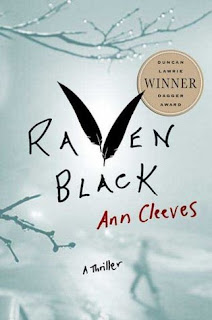
Raven Black by Ann Cleeves: A review


I had seen the "Shetland" series on television but had never read any of the books, even though I am a big fan of Ann Cleeves' writing. So I decided to remedy that starting with the first book in the series. It was a creditable beginning.

Raven Black takes place in the fictional town of Ravenswick, Shetland, where on New Year's Eve a simpleton loner named Magnus Tait is visited by two teenage girls, Sally Henry and Catherine Ross. When the girls turn up at his door, he invites them in to toast the New Year. The girls then leave but they, especially Catherine, have left a vivid impression on Magnus. A few days later when he's riding a bus, Catherine gets on. When they both start to leave the bus, Catherine offers him her hand to help him down and he invites her in for a cup of tea. 

A deep layer of snow covers Ravenswick but the next morning a local artist on her way home sees some bright colors in the distance on the snow and ravens circling around the area. She goes to investigate and discovers Catherine Ross's strangled body which the ravens have already been feeding on. The body is quite near Magnus Tait's home. The police come to investigate, led by Inspector Jimmy Perez.

Perez is another strong and realistic detective creation of Cleeves. His name comes from a Spaniard who had been shipwrecked on Fair Isle and subsequently made it his home. It was there that Perez was born and raised. He went to school at Ravenswick and Lerwick on the main island, so he is very familiar with the area. Soon, a high-powered team of detectives from Inverness is sent in to head up the investigation and Perez is relegated to a relatively minor role. But he establishes a good working relationship with the head of the new team and they begin working well together to try to solve the crime. 

The community is sure that they know who killed the girl. Several years earlier, a young girl went missing in Ravenswick and she was never found. The neighbors were sure that Magnus Tait was responsible. Now they have jumped to the conclusion that he is responsible for this death also. The investigators are interested in him but can find no physical evidence linking him to the crime and Perez follows the evidence. Moreover, he finds himself feeling sympathetic toward the lonely man who is an outcast in his community. It soon develops that there are other potential suspects in the murder.

Then a complication arises. While out walking, Fran Hunter, the woman who had found Catherine's body, finds another body that had been buried under some rocks. It is the girl who had gone missing years earlier, Catriona Bruce. This body also was found in the vicinity of Magnus Tait's home. Now Perez must determine whether the two deaths are connected and if indeed Tate is responsible for two murders.

I found that I liked this book much better than the television series. I sometimes found the series perhaps unnecessarily complicated with story lines that were difficult to follow. It's much easier for me when I see it all in print. 

One of the strongest parts of the narrative, in my opinion, is Cleeves' evocation of this small, close-knit Shetland community. Everyone knows everyone else and many of the people are related in one way or another. One can feel the claustrophobic context of those relationships. 

It's not just the community relations that are a strong element; Cleeves also gives us a powerful picture of the unique Shetland culture, for example their upcoming celebration of a holiday called Up Helly Aa. It is a festival that marks the end of the Yule season and involves a torchlit parade of costumed participants that ends in the burning of an imitation Viking galley. We are given to understand that this is an important holiday for them and there is much discussion of it througout the book. The Viking influence and heritage is strong on the island.

As usual, Cleeves hid the solution to the mystery(ies) of the two deaths very well indeed. I admit I was totally flummoxed and surprised by the conclusion. And that, I suppose, is the mark of an excellent writer of thrillers, a description that fits Cleeves to a T.

My rating: 4 of 5 stars 

Tuesday, November 16, 2021

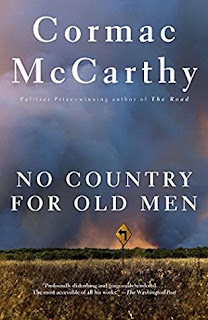
No Country for Old Men by Cormac McCarthy: A review


"Don't read Cormac McCarthy," they said. "He's too bloody and violent. You wouldn't like him," they said. And for years I heeded that warning. But finally, this year in thinking about ways to challenge myself with reading, I considered McCarthy again. After all, how bad could he be? How much worse than some of the other bloody stuff I've read? (I'm looking at you, Jo Nesbo.) So, I picked up No Country for Old Men and began to read. What I learned was he's not bad at all. In fact, he's very, very good. Oh, he's bloody enough all right. I quickly lost track of the body count that continued to rise throughout the book. But the violence was never particularly explicit. It was just reported rather matter of factly.

You've probably read the book or seen the popular 2007 Coen brothers movie based on the book. There was, of course, a lot of talk about the movie after it came out and especially after it won the Oscar for Best Movie, so even though I hadn't read the book or seen the movie, I was already fairly familiar with the plot. My memory of the plot may have been a bit faulty though, or maybe the emphasis of the movie was different from the book. Mostly what I had remembered was the killer Anton Chigurh and the trail of bodies he leaves behind. The book, however, featured a narrative by Sheriff Ed Tom Bell which gave a lot of exposition and moved the plot along.

The other central character was Llewelyn Moss who initially sets the plot in motion. While out hunting pronghorns, Moss stumbles on the aftermath of a drug deal that went awry, somewhere along the Mexican/American border in remote Terrell County, Texas. Moss finds everyone dead except for one badly wounded Mexican who pleads with him for water, but Moss has none to give. When he searches the vehicles, he finds a truck full of heroin. Some distance away from the other bodies, he finds a dead man with a satchel that contains $2.4 million in cash. He takes the money and goes home, but then he returns to the scene with a jug of water for the wounded man. He finds that the man has been shot and killed in the interim. He is seen by the apparent killers and they chase him across a desert valley. He manages to escape but for most of the rest of the novel, the killers are chasing him.

Returning home, Moss sends his wife, Carla Jean, to her grandmother in Odessa, hoping to keep her safe, while he takes the money and runs.

Sheriff Bell investigates the drug deal gone bad and the resultant deaths. Learning of Llewelyn's involvement, he attempts to protect him and his wife. They are residents of his county and he feels responsible for them. But his attempt to keep them safe is complicated by the arrival of ruthless hitman Anton Chigurh on the scene. He has been hired to find and return the money. He will go to any lengths to accomplish the task he has been hired for and will kill anyone who stands in his way. The reader intuits pretty quickly that this will not end well for Llewelyn Moss.

This book was published in 2005. The story was originally written as a screenplay. I looked at some of the reviews of the novel that appeared at the time of its publication and saw that some of the professional critics who did not like it, and there were a few, complained about the book being "too cinematic." Huh? Is that really a bad thing? Not being a professional critic, maybe I'm just not sophisticated enough to see the problem with that. I loved McCarthy's vivid exploration of the darker side of human nature, not only in Anton Chigurh but in Sheriff Bell as well. Bell is haunted by his actions in World War II. (This book takes place in 1980 when he is in his 50s.) He received a Bronze Star for action in which he feels that he failed his unit and left them to die. He has spent the rest of his life trying to make up for that failure.  I particularly enjoyed Bell's narrative in the book and felt that it was both the glue that held the plot together and the engine that moved it along. 

Llewelyn's actions, too, have their dark side. He could have turned the money in. He didn't have to run with it and focus the attention of a professional killer on himself and his wife, putting her as well as himself in mortal danger. And, of course, Chigurh is darkness itself. He is essentially a psychopathic killer who takes a lot of pleasure in his work. 

McCarthy is an extremely gifted writer and I enjoyed this book quite a lot. Several of the critics that I read said that it is inferior to his other work. Now I need to read some of that other work and make my own judgment.

My rating: 5 of 5 stars
Wednesday, November 10, 2021

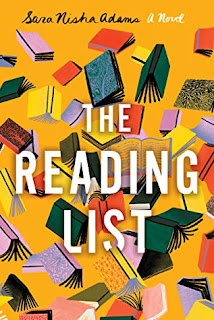
The Reading List by Sara Nisha Adams: A review


The list of the title is a series of eight well-known books. It was a list written by an unknown (until near the end of the book) hand and tucked into several different books at the struggling public library in Wembley which the lister frequented. The list read as follows:

Just in case you need it -

To Kill a Mockingbird
Rebecca
The Kite Runner
Life of Pi
Pride and Prejudice
Little Women
Beloved
A Suitable Boy

As it happens, the people who find one of the lists need it very badly indeed. The first one who does is Aleisha, a seventeen-year-old teenager working at the library.

Aleisha is not a reader. She's only working at the library because she desperately needed a job and her beloved brother, Aidan, a book lover who had previously worked at the library, recommended it. Between shelving books and working at the front desk, she is bored senseless and spends much of her time looking at her phone. That's what she is doing the day that Mukesh comes to the library.

Mukesh is an eighty-year-old Indian immigrant from Kenya who had lived in England for most of his life. He is a widower, having lost his beloved Taina Naina two years earlier. He is stuck in the early stages of grief still and has not been able to move on with his life. Taina Naina was an avid reader who always had a book going. Mukesh is not a reader. He is a devoted viewer of David Attenborough documentaries. His three adult daughters have been directing and organizing his life since their mother died. Now, his oldest daughter insists that they need to clear out her mother's clothing and other things. Some things are stored under the bed and when the box is pulled out it pushes out a book that was there.

The book is The Time Traveler's Wife by Audrey Niffenegger. The library book is two years overdue. It was the last book Taina Naina was reading when she died. Mukesh had never understood his wife's love of books, but when he finds this book and remembers seeing her reading it, he is drawn to try to find out what fascinated her. He opens the book and begins to read. He is soon completely absorbed in the story, feeling as though his wife is talking to him. He is surprised to learn that he finds great comfort in reading. When he finishes the book, he decides to return it to the library even though it is so long overdue and to ask for other books that he might read. That is how he comes to meet Aleisha.

Aleisha was having a bad day. In fact, there is very little about her life at the moment that is good. She and her brother are trying to care for their mentally ill mother at home after their father abandoned the family. It is not going well. When Mukesh, who had never been to the library, tentatively approached her at the front desk and asked for her, she was rude and abrupt and had no time for him. She pointed him in the direction of books but didn't help him. He decided on the spur of the moment that he would keep The Time Traveler's Wife. He left the library, unsatisfied, without another book to read. When Aleisha's boss learned what had happened, she was warned that she was on shaky ground and there were other people who would be glad to have her job. She must make an effort or be fired.

Meanwhile, Aleisha had found that reading list in the back of a returned copy of To Kill a Mockingbird. On a whim, she decided to read the first book on the list to see what all the shouting about reading was about. She found out. She was completely mesmerized by the story of Scout and Jem and Atticus Finch. In an effort to atone for her treatment of Mukesh, she recommended the book to him as well. When he read the book and returned it, she was eager to discuss the book with him. That was the beginning of a beautiful friendship. She recommended the next book on the list to him and the pattern of the friendship was laid.

Reading helped Mukesh to get closer to his young granddaughter, who like her grandmother was an avid reader. It also opened the world to him and helped him to finally step out of his grief. Reading aloud to her mother became a way for Aleisha to connect with her and to help her begin to emerge from her depression. Reading changed the lives of these two people. But we learn that it had a similar effect on the other people who found "the list." The books all had something of value to say to their readers.

This book is really a love letter to books, libraries, and to readers. The writer, Sara Nisha Adams, is a British Indian editorial director at a publishing house in London. This is her debut book. Adhering to the dictum of writers to write what they know, the book is steeped in British Indian culture and, of course, the love of all things bookish. There is no magic in the book, other than the magic of good writing. At one point, Aleisha's family suffers a crushing tragedy which leads her to turn against books and regret the time she spent with them, but her friend, Mukesh, gently reminds her, "Please try to remember that books aren't always an escape; sometimes books teach us things. They show us the world; they don't hide it."

Yes. What he said.

My rating: 5 of 5 stars   
Monday, November 8, 2021

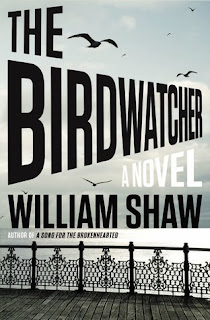
The Birdwatcher by William Shaw: A review


This one wound up on my reading list, I'm sure, because of its name. But there it has sat for many months. Now I'm trying to read some of those books I have neglected before the end of the year. It's The Birdwatcher's turn.

The birdwatcher of the title is Kent Police Sergeant William South. When it comes to his job as a detective, he would definitely rather be birding. He prefers to do his detecting from behind a desk. He doesn't want to be out in the field actually investigating. He particularly does not want to be asked to investigate a murder. He has his personal reasons for feeling this way. They go back to his childhood and the narrative goes back and forth between his childhood in Belfast and the present in Kent to give us all the backstory.

But then necessity causes his superior to team him with a strong-willed Detective Sergeant just transferred from London named Alexandra Cupidi. Together they discover the body of a man who had been savagely beaten and stuffed into a wooden box. It is South's worst nightmare - a murder to investigate. And making it worse still, the victim is his friend. Maybe his only friend, a passionate birder like himself.

He declares his relationship with the victim, hoping it will get him taken off the investigation, but there is no one to take his place. He will have to continue. Soon though, they have a suspect. He is Donnie Fraser, a drifter from Northern Ireland. South is disturbed by this because Fraser is very familiar to him. He and his mother left Belfast after his father was murdered. He was still just a child at the time. But now he recognizes that Donnie Fraser is the man who was convicted and sent to prison for murdering his father and he suspects that the man had come to Kent looking for him. He'll never know for sure because soon they have another murder to investigate. Donnie Fraser's. At first, it looks like Fraser's death might have been suicide, but, no, it was murder.

Now William South is in the deep end of a place he didn't want to be - the investigation of a double murder. This, however, is exactly where DS Cupidi wants to be. She is hard-driving, intelligent, ambitious, and wants to make a name for herself in her new assignment. She sees the chance to solve two murders as a golden opportunity for her career. At the same time, she is sensitive to her partner's connection to the case and careful to ensure that his personal relationships are not affecting the investigation. 

The best times for South are when he can get away from all this and find himself outdoors with the birds. Those were also my favorite parts of this book as the birds he is seeing are described. I'm not familiar with the birds of Kent, so I can't say if the species listed are accurate, but they sounded plausible to me. A birding detective is certainly an interesting literary creation. The two activities are not that dissimilar after all. Both require patience and an ability to notice details.

I've never read books by William Shaw before but this one displays a good ability at developing characters and plot. We get to know both South and Cupidi very well, and evidently, there is a continuing series featuring Cupidi. As for South, the ending of this story represents relief for him as he is able to confess and, in a sense, expiate a guilt he has carried with him since childhood. Overall, I found this to be a worthwhile read. I'm glad I finally got around to it.

My rating: 4 of 5 stars   


Thursday, November 4, 2021

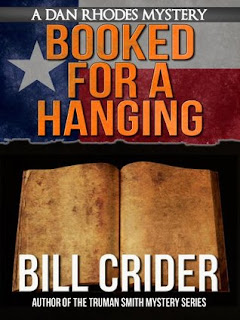
Booked for a Hanging by Bill Crider: A review


This book has languished on my reading list for months and I'm really no longer sure how it got there. I know it must have been recommended to me because it is not the kind of thing that I usually read but I'm not certain who I should credit for that. If it was you, then thank you. It was quite enjoyable and a fast read.

This is actually the sixth in the series about Sheriff Dan Rhodes of fictional Blacklin County, Texas, somewhere between Houston and Dallas. So, East Texas. I've not read any of the earlier books but this one worked well enough as a standalone. I'm sure I would have understood more about the recurring characters if I had read the earlier books, but the author did a good job of including essential information regarding the background.

The county is rural and quite sparsely populated and Sheriff Rhodes seems to fit it perfectly. He is an easy-going folksy kind of sheriff who knows the people of his county very well. Remember Sheriff Andy Taylor (Griffith) from tv? That kind of guy. His toughest jobs usually involve things like investigating for a stolen herd of cattle and he does a little of that in this book, but then a more urgent crime demands his attention.

A rare book dealer named Simon Graham has just moved to the county from Houston which seems a bit strange considering the demographic, but never mind. Graham had bought a dilapidated warehouse for his business. But then his body is found hanging in the building. The death has all appearances of suicide but Sheriff Rhodes' instinct tells him otherwise. And, of course, his instinct is right. As he gets into his investigation, he learns that Graham was in fact more of a conman than an actual entrepreneur which may go a long way toward explaining his move to Blacklin County. 

Conman he may have been but he was rumored to have had in his possession a particularly valuable rare book and soon several interested parties have arrived on the scene to search for the book, much to the chagrin of the sheriff. But is one of them responsible for the man's death? Because, of course, it was murder.

Meanwhile, back at the jailhouse where Rhodes seems to mostly spend his working hours, the two jailhouse employees are in a dither of excitement over the installation of the department's new computer. (Maybe I missed it but I didn't see any indication of the time frame of the action of the novel, which bothered me a bit.) Rhodes is less enamored of the new instrument and still more likely to depend on his observations and instinct rather than on any information that the computer can dig up for him. He's worried that if he doesn't solve the murder soon, a Texas Ranger will be sent in to investigate and he doesn't want that!

The book's plotting is pretty predictable and holds no real surprises but it is smooth and the author obviously knows what he's doing. There's quite a lot of gentle humor, mostly from the activities of some of the eccentric oddball county locals. The character of Sheriff Rhodes is a thoroughly likable one and I can understand why this series is a favorite with many readers. This was a nice comfort read and a change of pace for me. And I especially appreciated the clever title of the book - a rare book dealer found hanging. Booked for a Hanging.

My rating: 4 of 5 stars


Tuesday, November 2, 2021

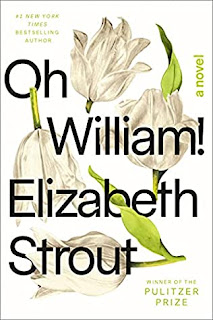
Oh William! by Elizabeth Strout: A review


Having read and loved Elizabeth Strout's two previous books featuring Lucy Barton, I was excited to hear about this third Lucy book. I pounced on it as soon as it was available and read it right away. It did not disappoint. In fact, it may be my favorite of the three.

The William of the title is Lucy's first husband with whom she had two daughters. William was serially unfaithful in the marriage and finally, Lucy took her two daughters and left him. This was especially traumatic for the daughters who loved their father, but they survived, and eventually, Lucy married again to a man who was just what they needed. He provided stability and love and he and Lucy had a very happy marriage. Sadly, he had recently died at the time that this story begins.

Meanwhile, William also remarried a couple of times and he and his third wife had a daughter. Then his history repeated itself. His wife took their daughter and left him.

One of Lucy and William's daughters had given her father a membership in one of the DNA matching organizations that identify one's relatives and ancestors. Through it, he had learned that he had a half-sister that he never knew about. She lived in Maine. At loose ends after his wife and daughter left, he decided to go to Maine to meet his sister. But he didn't want to go alone. He and Lucy had always maintained an amicable relationship and he asked her to go with him. Most of the narrative details their trip.

Loneliness and grief are the overriding themes of that narrative and it is richly mesmerizing. Lucy is the narrator of the story. She is now a very famous writer and she says the only way she can tell the story is as a novel/memoir. She tells us a lot about her life with William and weaves it into her history with her second husband. We learn that her current relationship with William is deep and complicated, based upon their history together and the two daughters they share. Her portraits of those daughters, too, are vibrantly drawn. We hear less about William's third wife, Estelle, and their daughter but all of these people, including Lucy's recently dead husband, serve as a palpable background for the ebbs and flows of the Lucy/William relationship at center stage.

The intimacy and fragility of close human relationships are the continuing themes of the narrative and it makes for breathtaking reading. But even in the most intimate relationships the possibility of being completely open and honest is problematic. As Lucy says near the end of the book, "People are lonely, is my point here. Many people can't say to those they know well what it is they feel they might want to say." In this book, though, the amazing Elizabeth Strout accomplishes that.

My rating: 5 of 5 stars

Thursday, October 28, 2021

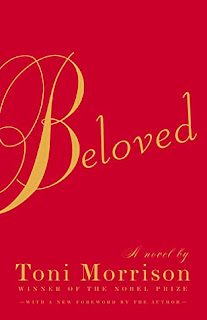
Beloved by Toni Morrison: A review

I first read Beloved thirteen years ago. I hated it. It had, of course, been a highly acclaimed novel, thought by many critics to be Morrison's masterpiece and it had won the Pulitzer Prize for Fiction in 1988. Morrison went on to win the Nobel Prize for Literature in 1993 based on her body of work. Some would say that Beloved was the heart of that body. I always felt that I had probably shortchanged the book in my reading and I made it part of my goals for the year to read it again. I finished rereading it a week ago. Who could have known that by then it would be in the news again, making racists uncomfortable? Banning it seems to be the latest right wing cause celebre.

The novel is set after the end of the  Civil War during the Reconstruction period. It was not a peaceful time. Even though slavery had been officially ended in the country, those who had been given their freedom or who had bought their freedom earlier were still victims of a lot of random violence. That was a constant cloud hanging over the freed Blacks. Among those living under that cloud were a woman in her mid-thirties named Sethe and her family. Sethe lived in Ohio with her daughter, Denver, and her mother-in-law, Baby Suggs, in a home found by abolitionists for Baby after she was freed. But there is another presence in the house. It is the ghost of Sethe's other daughter who died under horrific circumstances eighteen years earlier. After her death, Sethe wanted to get a headstone for her grave. She traded ten minutes of sex with the tombstone engraver to get it. She wanted Dearly Beloved engraved on the stone but she only had enough strength for the one word. Beloved it was.

The ghost of Beloved is an angry, sad, and malevolent spirit who often breaks and smashes things in the house. She had driven away Sethe's two young sons. Denver, though, seeks the company of the spirit because her family is ostracized and she has no other friends. As the novel opens, Baby Suggs, after a lifetime spent in slavery and then time in freedom after her son, Sethe's husband, purchased her freedom with his labor, dies leaving Sethe and Denver alone in the house with the spirit.

The action of the novel takes place in this Reconstruction time period but there are flashbacks to an earlier time which reveal the backstories of the characters and their time in slavery. They had been slaves on a Kentucky plantation that was named, quite ironically, Sweet Home. But, in fact, it was not as bad as many plantations. It was owned by a Mr. Garner who was relatively benevolent and treated his "property" well. But then Mr. Garner died and his widow brought in one of her male relatives to help run the place. He was called "the schoolteacher" and his viciousness knew no bounds. Soon the slaves were trying to escape. Some were murdered and some went crazy. Sethe takes a nightmarish trek to freedom. This all happened eighteen years before the time during which the current action of the novel occurs.  

It is through these flashbacks that we learn of the hideous and gruesome existence of slaves caught in this awful system. Their families are viciously ripped apart. They are deprived of their mates and their children and their kin. Family members vanish and are never seen again, sold away, or victims of an even crueler fate. Their bodies were not their own but merely units of commerce. Any evil could be visited upon them or their loved ones by their owners and there was nothing they could do about it. Can you begin to imagine what that does to a person?

Back in the present time of the novel, a man from Sethe's past at Sweet Home shows up in Ohio. His name is Paul D. and he, too, escaped from the plantation but has endured harrowing, nauseating experiences along the way, including time on a Georgia chain gang. Paul D. and Sethe attempt to set up a "real" family and when the baby ghost acts up, he drives it out. 

But then a young woman turns up. She seems to be about twenty years old but she talks like a child and can't remember where she came from. She is intensely interested in Sethe. She says her name is Beloved. Sethe believes that this young woman is her long-dead daughter and she becomes a catalyst for other revelations and memories.

The supernatural is an integral part of this layered story. All the characters believe in ghosts and the "ghosts" are reported in a matter-of-fact manner as are all the other events. At one point, Sethe wishes that her memories could be erased, that she could "go crazy" like some of the slaves and forget. But it was not to be. Her brain absorbed it all and loaded her down with the past, leaving no room to plan for the future.

There are so many different stories and voices in this novel that it becomes difficult at times to keep them all straight. Toni Morrison's versatility and technical skill in telling her stories cannot even be fully comprehended by an ordinary reader like myself. The stories are truly horrifying and appalling which explains why I hated them when I first read the book. I still hate them. Only a monster could "enjoy" this book. But I don't think Morrison intended it to be enjoyed. It was intended to explicate an almost inexplicable human experience and make it real for people living comfortable modern lives, and she succeeded with skill and an astounding emotional range. On my second reading, I think I have gained a better appreciation of that skill and emotional range. I honestly don't think a person in my position can ever truly comprehend the slave's experience but at least I have a more complete understanding of what it is I can't understand. The amazing Toni Morrison did that for me.

My rating: 5 of 5 stars