One of the really neat things about birds is that they are very adaptable creatures and they can be found almost everywhere on Earth. There is virtually no place you can go where there will not be at least a token presence of feathered flying critters.
Of course, some places are birdier than others. I am fortunate to live in Southeast Texas which much of the North American population of birds passes through at some time in the year, either headed to more northern climes in the spring or to Mexico and Central and South America in the fall. Many of them do, in fact, linger with us throughout the year. So, I'm never at a loss for birds to watch in my own backyard.
One might assume that the urban areas of the world would be unlikely places for people who enjoy watching birds, but one would be wrong. David Lindo in his recent book, How to be an Urban Birder, shows his readers just how wrong that assumption is.
Lindo is a U.K. birder and most of the birds that he discusses in his book are European species, but they all have counterparts in North America (and indeed on every continent except possibly Antarctica) and the lessons that he gives on the art and science of birding, where to find birds in the urban landscape, how to attract birds, what to look for at various times of the year, and the helpful tools of the trade are applicable no matter in which urban setting you happen to live.
I found the chapters on gardening for birds and on the tools of the trade especially interesting. Cultivating a wildlife-friendly garden, particularly if one is able to include a water feature, such as a pond or bog garden, is a wonderful way to bring the birds in close so you might not even need binoculars to view them. But, really, binoculars are perhaps your most important tool of the trade and Lindo's section on how to choose binoculars for your hobby is quite helpful, especially for the novice.
Overall, the book is written in a conversational and easy-to-understand style. Lindo never talks down to his readers and his enthusiasm for the hobby of birding - or twitching, if you prefer - is infectious. It would be most recommended for the person living in an urban area who is new to this leisure pursuit and wants to learn more about finding a greater variety of species of birds beyond House Sparrows, European Starlings, and Common Rock Pigeons.
(Disclaimer: A free copy of this book was provided to me by Princeton University Press for the purpose of this review. The views expressed here are entirely my own.)
My rating: 5 of 5 stars
Books, gardens, birds, the environment, politics, or whatever happens to be grabbing my attention today.
Translate
Showing posts with label Nature. Show all posts
Monday, November 19, 2018
Friday, September 5, 2014
The Bee: A Natural History by Noah Wilson-Rich: A review
The Bee: A Natural History by Noah Wilson-RichMy rating: 4 of 5 stars
The argument could be and has been made that bees are essential to life on Earth as we know it. They are most certainly crucial to the reproduction and diversity of flowering plants.
The creatures are known to pollinate more than 130 fruit, vegetable, and seed crops that we rely on to survive and those plants make economic contributions in the tens of billions of dollars every year. Therefore, it is very important on many levels that we have a healthy population of bees.
But bees are in trouble. They are dying off at an alarming rate, and although in some cases the cause of the die-off has not been absolutely pinned down, scientists are pretty much in agreement that pesticides and the practices of modern agriculture are the main culprits.
In The Bee: A Natural History, Noah Wilson-Rich explores some of the challenges faced by bees and how we can ameliorate them in order to aid the bees. This book primarily focuses on honeybees, but it also has sections on solitary bees, bumblebees, and stingless bees, which takes in the various kinds of native bees that exist in this country.
Earth is, in fact, the home to more than 20,000 bee species of an astounding diversity, but all have some essentials in common. Wilson-Rich discusses their evolution and development, their anatomy and biology, and their society and behavior.
An entire chapter is given over to the discussion of bees and humans. A second chapter explores beekeeping from the basics to hive design and harvesting the honey, and it includes information about problems which might occur and pests which can invade the hives.
This book is written in an engaging and easily accessible style and it is illustrated throughout with pictures and drawings which enliven the text. For the person interested in beekeeping, it gives the basics of organic and integrated pest management techniques. Overall, it gives its readers insights into a holistic approach to bee health and to ensuring that a vibrant population of the little creatures is able to survive on the planet. It is a very practical handbook for anyone looking for ways to help the bees.
(A copy of this book was provided to me without charge by the publisher in return for an honest review. No other remuneration was provided. The opinions expressed here are my own.)
View all my reviews
Thursday, July 24, 2014
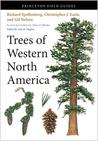
Trees of Western North America by Richard Spellenberg, Christopher J. Earle, and Gil Nelson: A review
Trees of Western North America by Richard SpellenbergMy rating: 4 of 5 stars
For those readers and Nature-lovers who need a comprehensive field guide to help them identify the trees of western North America, here is your book. This new guide, soon to be published by Princeton University Press, covers both native and naturalized trees of the western United States and Canada. The territory covered extends as far east as the Great Plains.
This book is very easy to navigate. It is divided into two main sections, the gymnosperms and the angiosperms, and within those sections it is further divided into families of trees. Overall, there are descriptions of some 630 species, which the publisher says is more than any comparable field guide. (I guess I'll take their word for it!)
An important part of any field guide, maybe the most important part, is the pictures. Trees of Western North America has thousands of meticulous color paintings of trees by David More. These are invaluable identification aids. The paintings are further enhanced by the detailed easy-to-understand descriptions and the accompanying range maps which, together, provide a quick and easy view of the individual species.
There is also copious information about recently naturalized species, as well as "Quick ID" summaries which make the information on each species more accessible. There is a key to shapes and structures of leaves along with an introduction to tree identification, forest ecology, and plant classification and structure.
The book defines trees broadly enough to include in its descriptions many small, overlooked species that are normally thought of as shrubs and it includes treelike forms of cacti and yuccas. The descriptions offer details of size and shape, growth habit, bark, leaves, flowers, fruit, flowering and fruiting times, habitat, and range.
In short, the book has everything one could ask for in a field guide of trees in western North America and it certainly seems to nicely fill that niche. I think it should become a very useful and popular tool among those who are interested in this subject.
(A free copy of this book was provided to me by the publisher in exchange for an honest review. The opinions expressed here are entirely my own.)
View all my reviews
Wednesday, July 9, 2014
Backyard Nature Wednesday: Leucophyllum frutescens
| Leucophyllum frutescens in my backyard garden, July 8, 2014. |
Texas sage is the name it is most often known by in my area. It is a tough, tough plant, extremely tolerant of our triple-digit summer weather with its long dry spells but also able to survive fairly cold temperatures for extended periods. The frequent unusually cold spells which we experienced last winter, with temperatures down to 20 degrees F. or below, did not faze my plant at all.
One of the most interesting things about this plant is its bloom habit. The shrub produces abundant tubular flowers in response to high soil moisture or humidity. In summers during which we suffer drought, we don't see much out of the Texas sage. But this summer, our weather pattern has been hot days and not much cooler nights with a leavening of late afternoon showers. Recently, few days have passed when we didn't receive at least a sprinkle of rain and on Monday of this week we got 1.25 inches in a bit less than an hour. The Texas sage loved it and the next day all of these rose-lavender blossoms popped open.
The plant will bloom more or less continuously throughout the summer as long as there is enough moisture. With plenty of water, the plant tends to sprawl and grow taller and somewhat scraggly in appearance. One has to prune it in order to keep a pleasing rounded, fuller shape. Other than that, Texas sage doesn't really require any care. It's not a heavy feeder so fertilizing is not really required if it is in reasonably good soil. I never fertilize mine.
Moreover, the plant doesn't have any pests that I've encountered. According to horticulturists, it is even resistant to deer in areas where those herbivores are a problem. Probably the worst thing one could do to it is give it too much water, for it is essentially a desert plant.
A carefree native plant with pretty silver gray leaves and pink to purple tubular flowers that are attractive to a wide variety of pollinators - what more could one possibly ask? Leucophyllum frutescens may just be the perfect plant for Texas gardens.
Tuesday, May 6, 2014
Deep-rooted Wisdom: Skills and Stories from Generations of Gardeners by Augustus Jenkins Farmer: A review
Deep-Rooted Wisdom: Skills and Stories from Generations of Gardeners by Augustus Jenkins FarmerMy rating: 3 of 5 stars
Augustus Jenkins Farmer, known to his friends as "Jenks," gardens in South Carolina, using the traditional skills and techniques he learned from his parents as a child and later from a large cast of teachers and mentors who had, in their turn, learned from generations of gardeners. In a straightforward and engaging style, he writes about what he has learned from all of them and from his own experience.
He espouses a model of gardening that is quite different from the corporate-driven one that we see in many slick gardening magazines and in television commercials for weed killers, insecticides, and manufactured fertilizers. It is a kinder and gentler way of gardening, one that is in harmony with Nature.
He writes about the basics of his kind of gardening, which starts with building a fertile soil to encourage a healthy web of life. He goes on to discuss harnessing the natural power of worms and fungi to help the soil and he expounds on the pleasures of watering by hand as a way of not only keeping the plants hydrated but keeping the gardener informed about their condition.
Jenks has chapters on saving seeds, on scavenging for plants, and on the use of pass-along plants. He shows how gardening need not be an expensive proposition. He also has an informative chapter on the use of tools, especially hand tools, some of which modern gardeners may not even be familiar with.
I found particularly interesting his discussion of handling garden pests. He takes a holistic approach to the management of insects and weeds. Since this is the method which I utilize in my own garden, I found myself nodding my head in agreement as I read.
In a fascinating final chapter, the author writes about telling stories through one's garden. The truth is each garden does tell a story - whether we want it to or not. Gardening is a creative process and the garden one creates says much about its creator. It speaks of the culture which produced the gardener and of the biology of the land on which it exists. In effect, it reveals the essential spirit of the gardener and the place.
I've been reading a lot of garden literature this spring and each book has offered the wisdom of gardeners whose trowels I am not fit to handle but all have been accessible and generous in the sharing of their knowledge. None more so than Jenks Farmer in this book which could very well be sub-titled "The Joy of Gardening" because it is presented with an infectious joyousness which is difficult to resist. But why would you even try?
(A free copy of this book was provided to me by the publisher in return for an honest review of it. No other compensation was provided. The opinions expressed here are entirely my own.)
View all my reviews
Thursday, April 24, 2014
Butterflies of Houston & Southeast Texas by John & Gloria Tveten: A review
Butterflies of Houston and Southeast Texas by John TvetenMy rating: 5 of 5 stars
A book that I have owned for many years, which I am constantly re-reading sections of, and which I refer to almost every day especially at this time of year, is Butterflies of Houston and Southeast Texas by John and Gloria Tveten. This is the most accessible and, at the same time, the most comprehensive guide to butterflies that I have found for this area.
The guide describes and illustrates with color pictures more than 100 species of butterflies that can be found in Southeast Texas, as well as often occurring farther afield in other sections of the state. In my many years of relying on this easy-to-use guide, it has never failed me. Every butterfly that I have come across in Southeast Texas has been found in the book.
As a habitat gardener and amateur photographer who delights in photographing butterflies, I particularly admire the work of those who photographed the butterflies for the book. They are indeed striking and, in most cases, feature both ventral and dorsal views, making identification of the critters a snap.
But it is not just the adult creatures that are featured here. There are lovely photographs of the caterpillars as well, which allow the gardener to see what it is that is munching on her plants and to be tolerant and protective of these "worms" which will some day take to the air as fully-formed colorful butterflies.
The authoritative text of the book is based on the Tvetens' lifetime of observing these flighty flutterers. They also rely upon and frequently refer to the observations of other experts in the field of lepidoptery. The text describes each species' life history, habits, flight patterns, characteristic markings, and the plants on which the caterpillars feed and on which the adults prefer to nectar.
The guide is arranged in sections featuring each butterfly family: swallowtails; whites and sulphurs; gossamer-winged, metalmarks; snout butterflies; longwings; brush-footed butterflies; satyrs, wood nymphs, and browns; milkweed butterflies; and skippers. I'm proud to say that long usage of and familiarity with the book has finally given me the skill to (almost) always know immediately to which family a new butterfly that I'm seeing for the first time belongs.
There is a general description of each butterfly family in each section that precedes the descriptions of the individual species. This includes characteristics which all members of that family share.
In addition, in the introduction, the Tvetens provide a fairly comprehensive discussion of butterfly biology. Also, in the back is a complete checklist of area butterflies with their common and scientific names and there is a list of butterfly organizations and journals and of public butterfly houses and gardens that one can visit.
I have several bookshelves filled with field guides, habitat gardening books, and general information books about many subjects in Nature, but there is none among them that I refer to more often or that I rely on my completely for accurate and easily accessible information on this subject. It is certainly the book that I would recommend first to any amateur naturalist interested in the butterflies of this region.
View all my reviews
Wednesday, April 23, 2014
Backyard Nature Wednesday: Leopard Frog
While I was weeding the area around my little backyard goldfish pond last Saturday, I happened to interrupt the nap of this handsome fellow.
Leopard Frogs are pretty common anywhere there is shallow water. This can include lakes, marshes, streams, or backyard goldfish ponds. They are nocturnal and become active at night. Throughout the day, they generally hide among the plants, like my little friend. Sometimes, if they are startled, they will leap into the water. This guy, though, seemed too sleepy to bother.
These frogs are large and slender and can grow up to about five inches long. They can be green or brown or, as this one is, green AND brown. with the large dark spots which give them their common name.
Southern Leopard Frogs breed from March to June. Once mated, the female frogs lay egg masses of up to 4,000 eggs in shallow water, usually attached to plant stems. The tadpoles hatch from the eggs and eat algae and small organisms in the water. They transform to adult frogs by late spring or early summer.
After mating, adult frogs often wander away from water and into woods or fields, where they hide among plants or debris. They return to water by the end of summer.
They eat a wide variety of foods from algae to crickets, beetles, butterflies and spiders, and a wide variety of animals prey on them. Their enemies include herons, fish, bullfrogs, raccoons, opossums, snakes, skunks, and snapping turtles.
One of the great pleasures of having a habitat garden is getting to know the little critters that come to call it home. The Southern Leopard Frog is a welcome resident of my garden.
Wednesday, April 9, 2014
Backyard Nature Wednesday: Crossvine
Crossvine is a native perennial vine that is a member of the trumpet-creeper family (Bignoniaceae). It grows in the woods in many of the eastern parts of the United States, including in east Texas and occasionally to westernmost central Texas. It is a robust woody vine that can climb up to 50 feet due to its tendrils which have claws at the tips, enabling the vine to catch and hold on.
In the spring, it produces masses of brilliant flowers in shades of orange. The leaves are glossy dark green in summer and turn reddish after frost. In areas of mild winters, such as southeast Texas, the vines keep their leaves through winter and once the weather warms up it is ready to grow and produce flowers.
Like many native plants, this one has been cultivated by horticulturists and new varieties created. I grow one of them in my backyard.
This is 'Tangerine Beauty' and it is well-named for it is a beauty, and, at this time of year, the vine is completely covered in these blossoms.
Native Americans historically found many medicinal uses for crossvine. They used it as a remedy for diphtheria, edema, headaches, and rheumatism. Today, we grow it just for its beauty or to provide shade when planted on an arbor. It is also very attractive to hummingbirds and various pollinators.
This is a great plant with many useful and beautiful qualities. If there is any downside to it, it is simply that it may be too robust for the space allotted to it in the garden. It grows rampantly and creates suckers that may encroach outside of where the gardener wants it to grow, but these are easily pulled up to keep the plants in bounds.
In the spring, it produces masses of brilliant flowers in shades of orange. The leaves are glossy dark green in summer and turn reddish after frost. In areas of mild winters, such as southeast Texas, the vines keep their leaves through winter and once the weather warms up it is ready to grow and produce flowers.
Like many native plants, this one has been cultivated by horticulturists and new varieties created. I grow one of them in my backyard.
This is 'Tangerine Beauty' and it is well-named for it is a beauty, and, at this time of year, the vine is completely covered in these blossoms.
Native Americans historically found many medicinal uses for crossvine. They used it as a remedy for diphtheria, edema, headaches, and rheumatism. Today, we grow it just for its beauty or to provide shade when planted on an arbor. It is also very attractive to hummingbirds and various pollinators.
This is a great plant with many useful and beautiful qualities. If there is any downside to it, it is simply that it may be too robust for the space allotted to it in the garden. It grows rampantly and creates suckers that may encroach outside of where the gardener wants it to grow, but these are easily pulled up to keep the plants in bounds.
Wednesday, March 26, 2014
Backyard Nature Wednesday: Allium candense with Funereal Duskywing
Three springs ago, I was sitting in my favorite seat under my red oak tree one day when I looked down at my feet and saw a pretty little wildflower growing there. It was an allium, a wild onion, but where most of the wild onions in my neighborhood have white flowers, this one had pink flowers. I thought it was quite pretty so I dug it up and put it in a pot and later transferred it to a bed in my garden, where it has flourished and bloomed for the two springs since then.
Referring to my guidebook, Wildflowers of Texas by Geyata Ajilvsgi, I determined that the wildling was most likely Allium canadense. Bloom period for the plant is March - May, and just now the plants are full of these pretty, delicate little blossoms.
While I was admiring the plant on Tuesday, I got a bonus treat. A small, dark butterfly landed on the blooms and began to feed. It was a butterfly that I didn't remember ever seeing before, so I ran for my camera to try to get its picture.
I wasn't particularly successful in getting a good picture of the critter. This is the ventral view of it. I tried to get a dorsal view which would have been more definitive for identification purposes, but the butterfly was not cooperative. It flew away every time I tried to get behind it. Ultimately though, in viewing my pictures later and comparing them to the pictures in Butterflies of Houston and Southeast Texas by John and Gloria Tveten, my go-to reference book for butterflies in my garden, I decided that it was a member of the skipper family called the Funereal Duskywing (Erynnis funeralis). The dark wings with the white hindwing fringes were diagnostic of that species. This butterfly is in our area from February through December and produces several broods during that time, so it is really rather remarkable that I hadn't encountered it before.
Learning about the wild inhabitants, both plant and animal, that share my backyard is a fascinating and never-ending study, one that encourages me to always keep my eyes open to see what is there.
*~*~*~*
I'm linking this post to Gail's "Wildflower Wednesday" at Clay and Limestone. Check out her blog for a list of other participants in this fun monthly meme.
Referring to my guidebook, Wildflowers of Texas by Geyata Ajilvsgi, I determined that the wildling was most likely Allium canadense. Bloom period for the plant is March - May, and just now the plants are full of these pretty, delicate little blossoms.
While I was admiring the plant on Tuesday, I got a bonus treat. A small, dark butterfly landed on the blooms and began to feed. It was a butterfly that I didn't remember ever seeing before, so I ran for my camera to try to get its picture.
I wasn't particularly successful in getting a good picture of the critter. This is the ventral view of it. I tried to get a dorsal view which would have been more definitive for identification purposes, but the butterfly was not cooperative. It flew away every time I tried to get behind it. Ultimately though, in viewing my pictures later and comparing them to the pictures in Butterflies of Houston and Southeast Texas by John and Gloria Tveten, my go-to reference book for butterflies in my garden, I decided that it was a member of the skipper family called the Funereal Duskywing (Erynnis funeralis). The dark wings with the white hindwing fringes were diagnostic of that species. This butterfly is in our area from February through December and produces several broods during that time, so it is really rather remarkable that I hadn't encountered it before.
Learning about the wild inhabitants, both plant and animal, that share my backyard is a fascinating and never-ending study, one that encourages me to always keep my eyes open to see what is there.
*~*~*~*
I'm linking this post to Gail's "Wildflower Wednesday" at Clay and Limestone. Check out her blog for a list of other participants in this fun monthly meme.
Wednesday, October 9, 2013
Backyard Nature Wednesday: Dainty Sulphur butterfly
Sometimes you get lucky.
I was sitting on my backyard bench by the pond over the weekend with my camera in my hands because I was trying - unsuccessfully as it turned out - to get some pictures of a red dragonfly. Then, Fate brought me another subject for my photography efforts. A tiny butterfly landed in the grass near my feet and I aimed the camera at it and snapped.
When I looked at the picture later, I realized that it was a butterfly I had never seen before. Actually, it was so small, with a wingspread of perhaps an inch, that it is possible I had seen it before and had simply not noticed it.
That's often the case of some of the tiny butterflies. We are distracted by the Monarchs and the various swallowtails, all large and showy butterflies that grab our attention, and we forget to notice some of the smaller treasures that are right there under our noses.
The Dainty Sulphur certainly qualifies as one of those treasures. It is a pretty little butterfly and the smallest of the family of butterflies known as whites and sulphurs, In fact, it is so distinctive and different from other sulphurs that some taxonomists believe it should be accorded a separate subfamily of its own.
This butterfly is a year-round resident from Guatemala and the West Indies northward to Florida and the southwestern states, including Texas. Its preferred habitat is dry, open areas such as weedy fields and sandy coastal flats. It flies just a few inches above the ground and nectars from a number of different flowers, especially those in the aster family. Congregations of the little butterflies can sometimes be found at mud puddles or on patches of damp sand.
Surprisingly perhaps, this tiny critter is migratory, except for the population in Florida which appears, for unknown reasons, not to migrate. The butterflies expand their range northward during the summer months, pressing on all the way to the northern tier of states where they perish in the winter cold. The next year the northward journey begins all over again.
The caterpillars of the butterfly feed on a variety plants, mainly members of the aster family.
The Dainty Sulphur is present in my area throughout much of the year. Now that I've made its acquaintance, I will be on the lookout for it in the future.
I was sitting on my backyard bench by the pond over the weekend with my camera in my hands because I was trying - unsuccessfully as it turned out - to get some pictures of a red dragonfly. Then, Fate brought me another subject for my photography efforts. A tiny butterfly landed in the grass near my feet and I aimed the camera at it and snapped.
When I looked at the picture later, I realized that it was a butterfly I had never seen before. Actually, it was so small, with a wingspread of perhaps an inch, that it is possible I had seen it before and had simply not noticed it.
That's often the case of some of the tiny butterflies. We are distracted by the Monarchs and the various swallowtails, all large and showy butterflies that grab our attention, and we forget to notice some of the smaller treasures that are right there under our noses.
The Dainty Sulphur certainly qualifies as one of those treasures. It is a pretty little butterfly and the smallest of the family of butterflies known as whites and sulphurs, In fact, it is so distinctive and different from other sulphurs that some taxonomists believe it should be accorded a separate subfamily of its own.
This butterfly is a year-round resident from Guatemala and the West Indies northward to Florida and the southwestern states, including Texas. Its preferred habitat is dry, open areas such as weedy fields and sandy coastal flats. It flies just a few inches above the ground and nectars from a number of different flowers, especially those in the aster family. Congregations of the little butterflies can sometimes be found at mud puddles or on patches of damp sand.
Surprisingly perhaps, this tiny critter is migratory, except for the population in Florida which appears, for unknown reasons, not to migrate. The butterflies expand their range northward during the summer months, pressing on all the way to the northern tier of states where they perish in the winter cold. The next year the northward journey begins all over again.
The caterpillars of the butterfly feed on a variety plants, mainly members of the aster family.
The Dainty Sulphur is present in my area throughout much of the year. Now that I've made its acquaintance, I will be on the lookout for it in the future.
Wednesday, September 11, 2013
Backyard Nature Wednesday: Beautyberry
The berries which give beautyberry its name, photographed in my garden this week.
In fact, I am sure that all the purple-berried beautyberries in my yard were planted by birds - birds who either pooped out the seeds from the berries or dropped them in flight. I do have several of these native shrubs from the verbena family, because, generally, if possible, I just leave them alone and let them grow where they are planted.
Historically, Native Americans made a tea from the leaves and roots of American beautyberry (Callicarpa americana), sometimes called French mulberry, which they used for sweat baths for rheumatism, fevers, and malaria. A root tea was used for dysentery and stomach aches. Root and berry teas were used for colic.
The plant is very valuable in a native plant landscape because it attracts birds and butterflies. In areas where deer are a nuisance, unfortunately, it also attracts them.
For gardeners looking for a carefree shrub to add to their gardens, this could be the answer to their dreams. Once established, it requires virtually no maintenance. The only thing I ever do for mine is to prune them back when they get too big for their space. They can be pruned severely before new growth starts in the spring to control the plant's size, and they can be pruned throughout the growing season if they need to be shaped or the size further controlled.
In addition to the more familiar purple-berried plant, there is a white-berried variety which I also have in my garden. The white berries, for whatever reason, seem to be even more attractive to the birds in my yard. They will strip this shrub of its berries before moving on to the purple berries.
The shrubs are deciduous and so are not especially attractive in winter and sometimes during prolonged droughts, as we are prone to have in Texas, they will lose some leaves and the fruit may not develop properly. But, in my backyard, for three seasons of the year, they are an attractive and valuable addition to my habitat garden.
Thursday, August 29, 2013
Gardening for the Birds by George Adams: A review
My rating: 4 of 5 stars
If you are interested in creating a habitat garden, a garden that fits seamlessly into your local environment and is welcoming to local wildlife, this is a book that can help you achieve your goal. George Adams' emphasis is upon attracting birds to the garden, but, in fact, his gardening method will also attract butterflies, bees, and other pollinators, small reptiles and amphibians, as well as avian visitors. It will be a place that is welcoming to them all and that is much more interesting for any humans that spend time in it.
One of the most popular hobbies in the country is feeding birds. An entire multi-million dollar industry has grown up around supplying feeders and feed to the hobbyists, but putting up a bird feeder in your yard is not necessarily the best way to attract birds or to attract a wide range of species. You might wind up with nothing but House Sparrows, which is not what most people who want to watch birds in their yards are aiming for.
A better approach is to actually put in the effort to create the kind of habitat that the birds are looking for. The author advises us to look at our yards from a bird's eye view. When we do that, we can begin to see that a bird-friendly landscape is what they are seeking. They want plants that are familiar to them, plants that provide food, shelter, and a place to raise their young. And, of course, they want a source of clean, fresh water.
In his introduction to his book, George Adams writes:
That is a succinct summary of the philosophy behind this book and the philosophy behind habitat gardening in general. It is one that I subscribe to and try to put in practice in my garden.
Adams explains that when you use native plants, plants with which birds and other wildlife are familiar, you will be mimicking their natural ecosystems. In doing so, you will provide birds with food, water, shelter, and nesting places, so that, instead of simply visiting and passing through, they will linger. They will call your garden home and you will have the bonus of observing them, up close and personal.
This book provides helpful calendars which list native plants from each region of the country. The calendars show the light needs of the plants, which animals make use of them and which months they will bloom, as well as other useful information. There are calendars for hummingbird and butterfly flowers, wildflowers, and for seasonal fruiting.
The author shows how to develop your landscape plan, according to the properties of your own particular region. He shows that even small garden spaces can create friendly habitats for birds. He also discusses some of the problems which may arise - things like nuisance birds such as House Sparrows and European Starlings, cats, and the unwelcome guests like rats and mice that bird feeders can sometimes attract.
Finally, there is a substantial plant directory, covering more than one hundred pages, which lists native plants from all sections of the country and their needs, as well as some of the birds they may attract. And there is a cross reference directory with profiles of the individual bird species, featuring wonderful pictures, which gives information about their preferred habitat and their behavior and, most importantly, what plants you can plant to attract them.
This book, in short, gives a helpful but not overwhelming amount of detail regarding the horticulture of the plants and the garden design strategies. It features wonderful pictures of plants and birds that should be useful to both the birding and non-birding gardener. And the charts are well-organized and easy to understand. It is a book that provides a primer for anyone who is interested in creating a bird-friendly habitat in their yard. It should find a place on the bookshelves of gardeners and birders alike. And, yes, they are quite often the same people.
(A free copy of this book was provided to me by the publisher for the purposes of this review. No other compensation was given and the opinions here are entirely my own.)
*~*~*~*
Does this sound like a book you would like to have? Well, this may be your lucky day. The publisher is offering a chance to win a free book as well as a framed pen-and-ink bird illustration done by the author. Just click on the link and enter. All it takes is an email address. Good luck!
View all my reviews
If you are interested in creating a habitat garden, a garden that fits seamlessly into your local environment and is welcoming to local wildlife, this is a book that can help you achieve your goal. George Adams' emphasis is upon attracting birds to the garden, but, in fact, his gardening method will also attract butterflies, bees, and other pollinators, small reptiles and amphibians, as well as avian visitors. It will be a place that is welcoming to them all and that is much more interesting for any humans that spend time in it.
One of the most popular hobbies in the country is feeding birds. An entire multi-million dollar industry has grown up around supplying feeders and feed to the hobbyists, but putting up a bird feeder in your yard is not necessarily the best way to attract birds or to attract a wide range of species. You might wind up with nothing but House Sparrows, which is not what most people who want to watch birds in their yards are aiming for.
A better approach is to actually put in the effort to create the kind of habitat that the birds are looking for. The author advises us to look at our yards from a bird's eye view. When we do that, we can begin to see that a bird-friendly landscape is what they are seeking. They want plants that are familiar to them, plants that provide food, shelter, and a place to raise their young. And, of course, they want a source of clean, fresh water.
In his introduction to his book, George Adams writes:
To attract birds to your garden, the backbone of your landscaping plan should be local native plants. By putting in native plants and using an organic, sustainable approach to gardening, you establish a balanced ecosystem in your yard. A greater variety of birds and butterflies will visit and linger, insect pests will be kept under control by insect-eating birds (reducing the need for harmful insecticides), and the wonder of nature will be part of your everyday living environment.
That is a succinct summary of the philosophy behind this book and the philosophy behind habitat gardening in general. It is one that I subscribe to and try to put in practice in my garden.
Adams explains that when you use native plants, plants with which birds and other wildlife are familiar, you will be mimicking their natural ecosystems. In doing so, you will provide birds with food, water, shelter, and nesting places, so that, instead of simply visiting and passing through, they will linger. They will call your garden home and you will have the bonus of observing them, up close and personal.
This book provides helpful calendars which list native plants from each region of the country. The calendars show the light needs of the plants, which animals make use of them and which months they will bloom, as well as other useful information. There are calendars for hummingbird and butterfly flowers, wildflowers, and for seasonal fruiting.
The author shows how to develop your landscape plan, according to the properties of your own particular region. He shows that even small garden spaces can create friendly habitats for birds. He also discusses some of the problems which may arise - things like nuisance birds such as House Sparrows and European Starlings, cats, and the unwelcome guests like rats and mice that bird feeders can sometimes attract.
Finally, there is a substantial plant directory, covering more than one hundred pages, which lists native plants from all sections of the country and their needs, as well as some of the birds they may attract. And there is a cross reference directory with profiles of the individual bird species, featuring wonderful pictures, which gives information about their preferred habitat and their behavior and, most importantly, what plants you can plant to attract them.
This book, in short, gives a helpful but not overwhelming amount of detail regarding the horticulture of the plants and the garden design strategies. It features wonderful pictures of plants and birds that should be useful to both the birding and non-birding gardener. And the charts are well-organized and easy to understand. It is a book that provides a primer for anyone who is interested in creating a bird-friendly habitat in their yard. It should find a place on the bookshelves of gardeners and birders alike. And, yes, they are quite often the same people.
(A free copy of this book was provided to me by the publisher for the purposes of this review. No other compensation was given and the opinions here are entirely my own.)
*~*~*~*
Does this sound like a book you would like to have? Well, this may be your lucky day. The publisher is offering a chance to win a free book as well as a framed pen-and-ink bird illustration done by the author. Just click on the link and enter. All it takes is an email address. Good luck!
View all my reviews
Wednesday, August 21, 2013
Backyard Nature Wednesday: Pokeweed
If you are a person of a certain age, you may remember the summer of 1969 when Neil Armstrong took his "giant leap for mankind" on the Moon. Around that same time, there was a song that was very popular and was getting a lot of play on the radio. It was called "Poke Salad Annie" and told the story of a poor Southern girl who picked a wild plant called pokeweed and cooked it as a vegetable.
Annie, however, would have actually called her vegetable "poke salet." It is a vegetable that many poor Southerners were then, and probably still are, very familiar with. It is properly known as pokeweed (Phytolacca americana) and it grows wild and rampantly in the eastern United States. It is a member of a family of perennial potherbs that are native mostly in Africa and the New World.
The plant's name supposedly is derived from the Algonquian word "pakon" or "puccoon" which referred to a dye plant. It is also sometimes spelled "Polk" and its leaves were adopted as symbols in the political campaigns of the 11th president of the United States, James K. Polk.
The funny thing about this plant is that the young, tender leaves which are used as a green vegetable like spinach are highly toxic. Anyone who wants to eat it must be very careful to handle it properly or their meal could wind up making them very sick. The leaves must be boiled twice and the first water discarded.
In spite of the labor-intensive preparation needed, many people do look forward to picking those first leaves that poke out of the ground in spring. And, in fact, in some specialty markets, you can even find the canned, preserved leaves prepared and ready for you to eat.
Annie, however, would have actually called her vegetable "poke salet." It is a vegetable that many poor Southerners were then, and probably still are, very familiar with. It is properly known as pokeweed (Phytolacca americana) and it grows wild and rampantly in the eastern United States. It is a member of a family of perennial potherbs that are native mostly in Africa and the New World.
The plant's name supposedly is derived from the Algonquian word "pakon" or "puccoon" which referred to a dye plant. It is also sometimes spelled "Polk" and its leaves were adopted as symbols in the political campaigns of the 11th president of the United States, James K. Polk.
The funny thing about this plant is that the young, tender leaves which are used as a green vegetable like spinach are highly toxic. Anyone who wants to eat it must be very careful to handle it properly or their meal could wind up making them very sick. The leaves must be boiled twice and the first water discarded.
In spite of the labor-intensive preparation needed, many people do look forward to picking those first leaves that poke out of the ground in spring. And, in fact, in some specialty markets, you can even find the canned, preserved leaves prepared and ready for you to eat.
The Allens use the traditional Southern spelling of the plant on their cans.
Several years ago, pokeweed got started as a weed in my garden, probably planted there by a birds. The berries of the plant are greatly loved by birds, and since I love the birds, every year I leave one or two of the plants to grow in my garden. From those tiny, dark green leaves that first poke out of the ground in the spring, the plant will grow rather quickly into a robust shrub. The one that is growing in my backyard this year is about eight feet tall and just as wide.
In late spring, the plant begins to produce long clusters, or racemes, of white flowers and the shrub can be quite attractive when covered in these flowers. The flowers draw the pollinators in droves and slowly those flowers become green berries. Over the summer, the berries ripen into a shiny purple-black and birds come from all around to devour them. (The toxicity of the plant seems to have no effect on birds.)
The berries don't last long once they ripen. You can see that some of the ones on this raceme have already been plucked by the birds even as some at the tip are still green. Northern Mockingbirds, in particular, love these berries and do daily battle over them.
The berries were highly prized in earlier days as a source for dye or for use as a red ink. It was sometimes even used to help color wine, a chancy practice since the berries, too, are poisonous for humans. Today, the plant is prized mostly by habitat gardeners like me and by those adventurous souls who like to live on the wild side and pluck their food from Mother Nature's own garden, the descendants of Poke Salet Annie.
Wednesday, July 24, 2013
Backyard Nature Wednesday: Fairy rings
An incomplete fairy ring, or fairy circle. More like a fairy semi-circle.
These naturally occurring rings or arcs of mushrooms are commonly known as fairy rings or fairy circles. You may also sometimes see or hear them referred to as elf rings or pixie rings. Because the mushrooms pop up overnight as if by magic, folk tales have associated them with these magical folk.
In folklore, these phenomena are said to result from the dancing of fairies (or elves or pixies) on moonlit nights. These beings were thought to dance in circles; thus, the mushrooms that became visible in daylight marked the area of their nighttime frolics.
If you are more inclined to a scientific explanation, you'll be interested to know that mushrooms are the fruiting bodies of fungi and that they poke their heads above the soil after rainstorms.
But mushrooms are not individual organisms. They are just the visible part of a huge network of thread-like mycelia, branching filaments of the organism, that are hidden underground. Mushrooms feed on dead organic matter and the fairy ring manifests itself in a necrotic zone, an area in which grass or other plant life has withered or died, as has happened in the picture you see above.
Not perhaps the best sort of thing to have growing in your front yard. Still, since the rain and the full moon on Monday night, the rings are popping up everywhere. I think the fairies have been celebrating the breaking of the long dry spell.
One of the individual mushrooms in the ring.
Friday, December 7, 2012
A Nature moment: The Beauty of Pollination
This is a short film by Louie Schwartzberg called "The Beauty of Pollination." I thought it was quite gorgeous. I hope you will, too.
That seems like a nice place to start our weekend. Happy weekend to you!
Wednesday, September 26, 2012
Saturday, March 24, 2012
A wonder of Nature
The migration of animals is one of the true wonders of Nature, and none of those migrations is more wondrous, bordering on the miraculous, than that of the Monarch butterfly. Each late summer and fall the colorful orange, black, and white butterflies from all across the North American continent head south toward their winter home in Mexico. For such a fragile creature to make such of journey seems incredible, but it happens to be true. And when winter is over the butterflies head north again.
An individual butterfly may not necessarily make the entire journey. The female butterflies lay their eggs on milkweed plants along the way and succeeding generations of the species then continue the trip until they reach their final destination. Some of them go all the way to Canada.
There has long been speculation about what percentage of the butterflies actually fly the entire distance and what percentage are born along the way. Now there has been some research done which has given answers to those questions.
Researchers at the University of Guleph in Canada sampled butterflies from 44 sites in Ontario and in the northern United States. By analyzing chemical markers called stable isotopes and examining wing wear, the researchers found that about 10 per cent reaching the northern breeding range in the spring come directly from Mexico. Thus, 90 per cent of the butterflies had been hatched somewhere along the way.
In my garden this week, I was visited on two separate days by at least two female Monarchs. Both of the ladies sought out the milkweed plants I had planted for the purpose and left a number of eggs on their leaves.
This Monarch visited on Thursday. Here she is laying an egg on a milkweed leaf.
And here is one of the eggs she left. No bigger than a pinhead now, with any luck, it will release a tiny caterpillar in a few days and that caterpillar will munch the milkweed leaves and grow until it is ready to pupate and become another colorful butterfly. And then the amazing journey will continue.
The Monarch is in trouble for a number of reasons. One problem has been severe weather occurrences in recent years. Drought and excessively cold winters have taken their toll. There is also habitat degradation at their wintering site in Mexico due to trees being cut, changing the character of the forest. Mexicans revere these butterflies and they are making an effort to protect the area where they spend their winters, but, of course, they can't control the weather.
Another problem is development in North America which is destroying much of the milkweed which the butterflies depend on as a host plant for their caterpillars. This, at least, is something with which gardeners and home owners can help. All across the country, gardeners are being encouraged to plant milkweed in their gardens and they are responding as I have. It's a chance to throw out a lifeline for a creature that captures our imagination and makes us pause and consider this incredible wonder of Nature.
An individual butterfly may not necessarily make the entire journey. The female butterflies lay their eggs on milkweed plants along the way and succeeding generations of the species then continue the trip until they reach their final destination. Some of them go all the way to Canada.
There has long been speculation about what percentage of the butterflies actually fly the entire distance and what percentage are born along the way. Now there has been some research done which has given answers to those questions.
Researchers at the University of Guleph in Canada sampled butterflies from 44 sites in Ontario and in the northern United States. By analyzing chemical markers called stable isotopes and examining wing wear, the researchers found that about 10 per cent reaching the northern breeding range in the spring come directly from Mexico. Thus, 90 per cent of the butterflies had been hatched somewhere along the way.
This Monarch visited on Thursday. Here she is laying an egg on a milkweed leaf.
And here is one of the eggs she left. No bigger than a pinhead now, with any luck, it will release a tiny caterpillar in a few days and that caterpillar will munch the milkweed leaves and grow until it is ready to pupate and become another colorful butterfly. And then the amazing journey will continue.
The Monarch is in trouble for a number of reasons. One problem has been severe weather occurrences in recent years. Drought and excessively cold winters have taken their toll. There is also habitat degradation at their wintering site in Mexico due to trees being cut, changing the character of the forest. Mexicans revere these butterflies and they are making an effort to protect the area where they spend their winters, but, of course, they can't control the weather.
Another problem is development in North America which is destroying much of the milkweed which the butterflies depend on as a host plant for their caterpillars. This, at least, is something with which gardeners and home owners can help. All across the country, gardeners are being encouraged to plant milkweed in their gardens and they are responding as I have. It's a chance to throw out a lifeline for a creature that captures our imagination and makes us pause and consider this incredible wonder of Nature.
Saturday, March 3, 2012
Some REALLY BIG bloodsuckers!
Did you read the story this week about the discovery of giant Jurassic fleas? It seems that scientists in northeastern China have found fossils of fleas from the Jurassic period! Think about that for a minute - flea fossils. Will wonders never cease?
Not only have they found these fossils but they are really, really big as fleas go. The female of the species was up to one-half inch long, a veritable giant in the world of fleas. The male was smaller but still much larger than modern fleas. In fact, these Jurassic fleas were ten times as big as today's fleas.
The scientists speculate that these giant fleas may have fed on dinosaurs. They had very elongated and sharp mouth parts made for sucking blood and it is believed that these siphons were long enough and sharp enough to have pierced the dinosaurs' leathery skin. Although there were some mammals around in the Jurassic era, they were small and probably were not hosts to the big fleas.
I am fascinated by the fact that these scientists have discovered flea fossils. Somehow I doubt that's really what they were looking for. Maybe they were hoping to find another exotic, sexy dinosaur, and, instead, they found something which preyed on the dinosaurs and probably made their lives miserable. I just never, in my wildest images of dinosaurs, ever had a vision of one scratching a flea. Who would have guessed?
Not only have they found these fossils but they are really, really big as fleas go. The female of the species was up to one-half inch long, a veritable giant in the world of fleas. The male was smaller but still much larger than modern fleas. In fact, these Jurassic fleas were ten times as big as today's fleas.
The scientists speculate that these giant fleas may have fed on dinosaurs. They had very elongated and sharp mouth parts made for sucking blood and it is believed that these siphons were long enough and sharp enough to have pierced the dinosaurs' leathery skin. Although there were some mammals around in the Jurassic era, they were small and probably were not hosts to the big fleas.
I am fascinated by the fact that these scientists have discovered flea fossils. Somehow I doubt that's really what they were looking for. Maybe they were hoping to find another exotic, sexy dinosaur, and, instead, they found something which preyed on the dinosaurs and probably made their lives miserable. I just never, in my wildest images of dinosaurs, ever had a vision of one scratching a flea. Who would have guessed?
Subscribe to:
Posts (Atom)