Translate

Showing posts with label Patrick O'Brian. Show all posts

Monday, December 7, 2015

Blue at the Mizzen by Patrick O'Brian: A review

Blue at the Mizzen (Aubrey/Maturin, #20)Blue at the Mizzen by Patrick O'Brian
My rating: 4 of 5 stars

This was my final voyage with Captain (now Admiral) "Lucky Jack" Aubrey and Dr. (naturalist/spy) Stephen Maturin. Patrick O'Brian was working on a 21st entry to the series at the time of his death and it was, in fact, later published, incomplete, with an afterword by someone else. But I don't think I will be reading it. It just seems wrong somehow. I am content to leave Aubrey and Maturin, savoring their latest "famous victory" and Jack's imminent promotion to admiral, with Stephen happy in the knowledge that his daughter and his new lady love (a fellow naturalist) have become friends and are looking forward to his return.

This last complete volume in the series is different from those that came before in some ways. There isn't as much naval action as many of O'Brian's fans have come to anticipate, although its absence is no cause for regret for me since I never read the books for their naval battles. In fact, the battles that do occur are told in an offhand way, often in letters written by Maturin, who, even after all his years on the sea, is no seaman.

Much of the story is told through Stephen's letters to the lady who he has asked to marry him and who is considering the offer and to Sir Joseph Blaine, his spymaster in London. And so we see the action through his eyes.

The meandering plot of Blue at the Mizzen takes up at the end of the previous book, The Hundred Days, which saw the final defeat of Napoleon and the standing down of the British Navy. That standing down has led to the desertion of some of the crew of the Surprise and so it is with an incomplete ship's complement that Aubrey prepares to take on his new mission.

That incomplete status doesn't last for long, of course, as former shipmates learn that he needs crew. They come to volunteer and soon the frigate is fully staffed once again and on its way to Chile where a revolution is brewing. The mission is to deliver Stephen and his friend and fellow intelligence agent Dr. Jacob to Concepcion, where they are to aid and encourage the junta which England sees as the more congenial group.

After the usual ups and downs, their mission is successful, including a final naval battle against a Peruvian faction which had planned an invasion of Chile. Reports of that battle are sent home and soon the word comes back. Jack is authorized to fly "blue at the mizzen," the signal that he is a rear admiral, and they are to proceed to South Africa on their new mission.

Sadly, we'll never know what O'Brian intended as the outcome of that mission, but we can guess that, whatever the hardships that came their way, it all ended in greater glory for Aubrey and, for Maturin, ultimate happiness with a woman equal to him in intellect as they raise his uniquely talented daughter together.

As always, the real story of these voyages has been the ongoing and ever-deepening friendship between the naval captain, Jack Aubrey, and the ship's surgeon, British intelligence agent, wealthy Catalonian aristocrat, staunch Irish patriot, and avid naturalist, Stephen Maturin.

Aubrey is the bold man of the sea, fearless in battle, innovative yet cautious, but compassionate, even tender-hearted, with his crew. On land, he was utterly hopeless. All of his native intelligence and intuition which served him so well at sea evaporated once his feet touched land and he became a bumbling booby. As Maturin was often rescued by Aubrey when he got into perilous situations, so Aubrey was frequently rescued - often without his knowledge - by Maturin's actions and scheming on his behalf. That pattern continues to the end when Maturin saves Aubrey from an egregious political error after their action in Chile.

This novel is not plot driven; it meanders along, propelled by mostly gentle breezes, and O'Brian takes his time in telling the story. After all, the voyage rather than the destination has always been the point of these tales.


View all my reviews
Tuesday, October 20, 2015

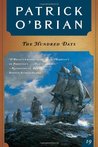
The Hundred Days by Patrick O'Brian: A review

The Hundred Days (Aubrey/Maturin, #19)The Hundred Days by Patrick O'Brian
My rating: 3 of 5 stars

Boney has escaped his captivity on Elba and is threatening Europe once again. And once again, the British Navy and one of its most illustrious captains, now Commodore Jack Aubrey, are called upon to meet the challenge.

Aubrey and his squadron of ships head to Gibraltar to begin their new campaign. As they are approaching the Rock, two old salts watch and discuss Aubrey and Dr. Stephen Maturin and their exploits. It is from their discussion that we learn of a tragedy that has befallen the pair. A coach carrying Stephen's wife, Diana, and Aubrey's mother-in-law as well as various household members and servants has gone off the road and into a creek. Everyone except the groom was drowned.

Fortunately, the faithful Padeen and Mrs. Oakes were not aboard the coach and they now remain at home caring for Stephen's young daughter, Brigid. Stephen is deep in mourning and yet Patrick O'Brian doesn't really make much of that - perhaps not as much as he might have. Surely the loss of the love of his life must have had more of an effect on Maturin's actions than simply inspiring him to write some sad music!

At any rate, Maturin once again throws himself into the intelligence game, working to get the information that will help to thwart Bonaparte one more time.

Napoleon sets out to pursue his enemies across the continent, hoping to corner the British and Prussians before their Russian and Austrian allies arrive to help. His plan is to lead his French armies to triumph at Waterloo.

Meanwhile, in the Balkans, a horde of Muslim mercenaries is gathering. They are sympathetic to Napoleon because he had allegedly converted to Islam during the time of his Egyptian campaign. Their role is to thrust northward into Europe and block the Russians and Austrians from being able to aid the English and Prussians. However, before they will move, they await a shipment of gold from one of their sheiks that is on its way by camel caravan to the coast of North Africa. Aubrey and Maturin are sent to intercept that gold shipment and stop it from reaching its intended recipient.

My favorite parts of these books, aside from the humor, are those which take Stephen on his intelligence-gathering trips into the hinterlands, during which he gets to do his Nature observations and collections, especially his bird-watching. It is always a delight to read these sections, and there is ample time given to them in this book.

Much of the book, though, is given over to the kind of naval jargon which is such a delight to O'Brian's more devoted naval history readers. I'm more of a relationship reader and I freely admit that I often gloss over these sections.

Aubrey makes his plans to intercept the corsair craft that will be carrying the gold and the encounter has the outcome that would be fully expected by anyone who has followed the Aubrey adventures through (now) 19 books. There are some bumps along the way, the result of Ministry politics, but, as most often happens, Aubrey comes through it all smelling like a rose.

One interesting aside is Maturin's stroll through a market that includes selling of slaves. He happens upon two Irish children that had been captured by the corsairs and are being sold. Of course, he buys them and takes them on board ship, not the first time he has saved children, and he is at his most sympathetic in his interactions with them. He makes plans to send them back to their village in Ireland as soon as he can find a reliable ship headed there.

During all of these activities, word comes of the battle at Waterloo in which Wellington has finally vanquished Bonaparte. So, where does that leave Aubrey and Maturin? One more book to go. I hope to learn their fate before the end of the year.


View all my reviews

Friday, August 7, 2015

The Yellow Admiral by Patrick O'Brian: A review

The Yellow Admiral (Aubrey/Maturin, #18)The Yellow Admiral by Patrick O'Brian
My rating: 4 of 5 stars

Patrick O'Brian's long-running naval history series takes place mostly, and naturally, on board ships at sea, but ships must occasionally touch shore and their captains and crew must live, at least for a time, on land. Readers who have followed this series throughout its development know that time ashore invariably means disaster for Jack Aubrey. The sea is his natural habitat and when he steps ashore he becomes, almost literally, like a fish out of water.

The action of The Yellow Admiral takes place mostly on land and Aubrey is gasping for air and a way to survive professionally and in his personal life throughout.

This book follows The Commodore which saw the successful conclusion to the long, long voyage of Aubrey and Dr. Stephen Maturin in the Pacific. We find Aubrey with substantial land holdings but hardly a penny to his name. 


Impoverishment is not a new and unknown country for him; he's been there before many times. But now his land holdings make him a voting member of Parliament, and, unfortunately, as far as the Admiralty is concerned, he persists in voting the wrong way.

Moreover, he engages in a feud with his neighbor, who has strong ties to the Admiralty. The neighbor wants to enclose the common land between their two estates, but Jack is implacably against enclosure. This makes him popular with the common people in his district but distinctly unpopular with the elites.

More trouble comes when Jack is sent to participate in a blockade of Brest. In stormy waters there, he captures a French privateer but is accused of missing a signal and deserting a post to do so.

While he is away on blockade, his mother-in-law comes to stay at his home with his wife, Sophie. She rummages around in Jack's papers and finds letters which seem to incontrovertibly expose his adultery. Of course, she gleefully shows them to Sophie who is devastated and ready to "take advice" from a solicitor.

Then the worst possible thing in Aubrey's world happens: Peace breaks out in 1814. Napoleon is sent to Elba and the British navy stands down. No more chance for glory. Jack fears that his naval career will end with a whimper rather than a bang. He faces the ignominious prospect of being "yellowed," meaning that he would be nominally promoted to the rank of admiral but without any squadron to command.

Riding to his rescue once again is his particular friend, Dr. Stephen Maturin.

Maturin has been happily reunited with his beloved Diana, and their daughter, Brigid, once feared to be developmentally challenged, has blossomed under the care of Maturin's loblolly boy, Padeen, and his friend, Clarissa Oakes. She has become an active chatterbox of a child, a delight to her parents. Stephen's fortune has been restored and, in fact, everything seems to be coming up Maturin.

Stephen returns from an intelligence mission in France where he made contact with some of the people he had met in South America when he was trying to foment a revolution in Peru. His contacts are Chilean and they are interested in securing their country's independence from Spain. To accomplish this, they require a navy and the help of English officers. 


If Jack agrees to aid them, it will mean taking his name off the List, the sacred Admiralty document that determines the progress of a naval man's career. He is at first reluctant to accept the assignment but on the assurance that he can be restored to the List with no loss of rank if England goes to war again or upon the completion of his employment by Chile, he agrees to the terms.

It's all signed, sealed, and delivered. Aubrey takes the Surprise, their refurbished privateer, and heads out to Chile with Stephen and with both of their families aboard. The families are to go as far as Madeira for a vacation there and the Surprise will continue on its mission.

But while in Madeira, Aubrey receives a letter from the Admiral, apologizing for a perceived slight, and calling him back to duty. Napoleon has escaped Elba!

These books have been a joy to read throughout, and, as we get near the end of the series, they just seem to get better. I started the series with some trepidation because of the authentic technical naval vocabulary the author employs in telling his stories, but I soon learned to allow that vocabulary (that I was not really interested in learning) to simply wash over me and become a kind of background noise that did lend authenticity but did not distract from the development of the characters and their relationships which is the real meat of the stories. 


Also, the characters are mostly male and that might seem to make them difficult to relate to for someone of my sex. But, in fact, their gender doesn't matter. They are simply fully realized human beings and I love the time that I spend with them.

View all my reviews

Monday, June 1, 2015

The Commodore by Patrick O'Brian: A review

The Commodore (Aubrey/Maturin, #17)The Commodore by Patrick O'Brian
My rating: 5 of 5 stars

Patrick O'Brian seemed to get better as a writer as this series wound down toward its end. This entry, number seventeen in the series, has actually been my favorite so far. Possibly that is because much of the action takes place on land and I didn't have to worry about keeping track of naval battles. Also, even more than is usually the case, it concentrated on exploring relationships and human interactions. Moreover, the author kept things moving and kept my complete interest throughout. Yes, I would definitely say that, for me, this is the high mark in the series to this point.

At the beginning of this story, we find Jack Aubrey and Stephen Maturin headed home after their years-long adventures in the South Sea. Both are looking forward to home and family once again, but before Stephen can actually head home from port, he receives an urgent message to go to London and meet with Joseph Blaine, the head of the intelligence service. He does so and learns there has been a breach of security and his position has been exposed. He must tread carefully.

He continues home, eager to meet his daughter Brigid who was born during his long, long voyage, but when he gets there, he finds a heartbreaking situation. Brigid is a beautiful child but she has a mental disability, apparently something like autism, and seems unable to communicate. Maturin's wife, Diana, in despair over the daughter's situation, had taken to drinking too much and had finally run away, leaving the child in the care of Clarissa Oakes whom we met on a previous voyage. No one knows where Diana is.

Meanwhile, Jack Aubrey arrives home to find that his family had gone on a visit. He rides out to find them and is thrown by his horse and hits his head on a rock. Nevertheless, his head may be the least vulnerable part of his anatomy and his wife and children arrive home to care for him, a happy reunion all around.

However, Jack's applecart is totally upset when his wife Sophie goes to dinner with Clarissa Oakes and finds her wearing a dress made from the same silk as the one she is wearing! The silk for the dress was a gift from Jack so she jumps to the worst possible conclusion. (Actually, Clarissa had married one of Jack's men while on that aforementioned long voyage and he had given her the silk for her wedding dress.) Things get very chilly at home.

Stephen's assistant/servant Pegeen forges a unique relationship with the autistic daughter. He draws her out of her shell and she does begin to communicate, first in Irish, then in English. Stephen is delighted.

Jack receives confirmation that he has been made a commodore and has been given command of a fleet that is being sent to the west coast of Africa to interdict the despicable trade in human beings there. He is to harry and destroy as much of the slave trade as possible and then head north to his ultimate mission which is to stop the French in their planned invasion of Ireland

To accomplish all of this will call upon the best skills of both Aubrey and Maturin. Aubrey must learn to lead and discipline captains and he finds it isn't easy. Among the captains under his command is one who believes flogging his men is the answer to every problem. Jack abhors a flogger! Another captain is a practicing homosexual (in a Royal Navy that considers sodomy a hanging offense) who shows favoritism to certain of his men. This has created resentment between those in the inner circle and those outside it. Both ships are on the edge of mutiny.

Stephen must keep his intelligence contacts intact, while at the same time battling disease among freed slaves as well as naval personnel.

The plot of The Commodore is beautifully crafted and rendered. Many scenes in the book simply sparkle and crackle with wit and meaning. O'Brian is able, even with very brief scenes of only a few sentences, to convey so much significance and render his multi-dimensional characters with such realism that they seem to stand before the reader to deliver their lines. It is, in short, a marvelous read!


View all my reviews

Tuesday, May 5, 2015

The Wine-Dark Sea by Patrick O'Brian: A review

The Wine-Dark Sea (Aubrey/Maturin, #16)The Wine-Dark Sea by Patrick O'Brian
My rating: 4 of 5 stars

After several years of returning to this series periodically, I'm now in the home stretch of Patrick O'Brian's Aubrey/Maturin tales. This is the sixteenth entry and the quality has not declined at all. In fact, The Wine-Dark Sea was one of the more interesting reads in this latter part of the long-running series.

We begin with Captain Jack Aubrey and ship's surgeon and British intelligence agent Stephen Maturin aboard their privateer, the Surprise in the southern Pacific. They are pursuing an American privateer through the Great South Sea when things start to get weird. The sea turns a purple-red color and Aubrey notes that the sea "twitches" periodically. Even so experienced a seaman as Aubrey has never seen anything like it.

In the midst of the chase, the sea suddenly explodes about them, hurling debris into the air. It is an undersea volcano, and the rocks and other debris that are being sent into the air rain down on both ships, damaging them, injuring and killing sailors, and filling the sea with dead animals. When the explosions finally cease, Aubrey sees a new cone-shaped island having been formed by the volcano's eruption.

They are able to take the American privateer as a prize and they spend time repairing both ships as best they can. Then they continue on their way to Peru, where Maturin, in his guise as intelligence agent, will be attempting to foment a revolution to overthrow the current government.

His efforts meet with initial success, but then he is betrayed by a man who was on the American privateer (possibly its owner) and who had escaped into Lima. His betrayal puts Stephen in peril. Forewarned, he is able to flee, with the aid of friends who are descendants of the Incas, through the high, frozen wastes of the Andes, having sent word to Aubrey by Aubrey's illegitimate black son, Sam, who is a priest in Peru, that he will try to meet the Surprise in Valparaiso on the last day of the next month.

Actually, my favorite parts of the book were the descriptions of the volcanic eruption and its aftermath and of Stephen's time in Peru and the trip through the Andes. The description of the flora, fauna, geology, archaeology, and weather of the Andes was particularly fascinating to me. I may not be able to tell a studdingsail from a mizzenmast, but I can easily imagine the flight of an Andean Condor or the differences between guanacos, llamas, and vicunas, or the bromeliads of the high mountains, and the cleverness of the Incan engineers who made the roads through those mountains and designed the "Inca chair" which carried Stephen on the last part of his journey after he lost two toes to frostbite.

Even when Maturin makes his rendezvous with the Surprise and is reunited with his friends, the adventure is far from over. They will endure a breathtaking chase with American ships through stormy seas and icebergs south of Cape Horn, when the Surprise, hoping to capture more American prizes, suddenly finds itself outgunned and outmanned and must run for its life.

Having survived that test by the skin of their teeth, losing masts and sails and their rudder(!) in the process, they finally encounter aid in the form of a British ship captained by an old friend, and, thus, are able to say that they are truly "homeward bound" after their years-long voyage.

This book made me even more eager to read the last few entries in the series. I hope to finish it by the end of this year.


View all my reviews

Thursday, December 11, 2014

The Truelove by Patrick O'Brian: A review

The Truelove (Aubrey/Maturin, #15)The Truelove by Patrick O'Brian
My rating: 3 of 5 stars

Captain Jack Aubrey and Dr. Stephen Maturin are still in the South Seas in this 15th entry in Patrick O'Brian's series. It's a rather slow moving tale that doesn't seem to advance the Aubrey/Maturin saga that much - at least until near the end when Maturin gets a clue that may identify a highly placed English spy in the pay of Napoleon's intelligence service. It's a name he has been seeking for a while.

The storyline this time is that Captain Aubrey and the Surprise have been dispatched by the Royal Navy to the Sandwich Islands where a British whaler has been captured by a local chief at the instigation and with the assistance of the French. Intelligence reveals that there are two warring chiefs on the island - the northern one who has allied himself with the French and the southern one who turns out to be a particularly handsome woman of about 35. Aubrey's mission is to offer his assistance to the southern chief and seek to persuade her to accept British "protection."

Complications arise on the trip to the islands when Aubrey discovers that there is a woman aboard his ship. She was brought aboard from the penal colony at Botany Bay by one of his officers and was hidden away. Of course, everyone on the ship, including Stephen, knew she was there except for the captain and when he finds out, he is furious.

The woman, Clarissa Harvill, becomes an object of awkward courtliness to the men of the Surprise but some of the men are attracted to her and this creates predictable jealousies and hard feelings. Aubrey sees his ship falling into chaos and he takes strong and - for him - unusual measures to bring the men back into line before they must face the French and their allies in the Sandwich Islands.

Meantime, Aubrey himself finds that he is attracted to the woman and that he must make an effort to stay clear of her. Maturin, on the other hand, strikes up a friendship with her and learns the story of her lurid past. He begins to understand her personality and he respects and values her. This respect is proved warranted when she provides him with the clue which may well lead to the identity of the dangerous spy he has been seeking.

Part of the problem of the woman's presence is solved when she is married to her rescuer, Oakes. With the protection of being a woman married to a British officer, it is unlikely she will be returned to Botany Bay.

Also still on board the ship are the two little girls who Stephen rescued from the small pox-ridden island where everyone except them had died. They have been named Sarah and Emily and are favorites with the crew.

And there is another escapee from Botany Bay - Stephen's servant, Padeen. All in all, the Surprise has become one big rescue operation.

There's not a lot of action in this entry. At the end, we hear of the confrontation and battle with the French and the islanders, but we experience it through Stephen and Padeen's eyes; i.e., from well behind the lines of the action.

While The Truelove certainly was not my favorite in this series so far, it was a workmanlike bit of writing and a pleasant diversion for a couple of days of reading. It's always good to spend some time with Aubrey and Maturin.


View all my reviews

Friday, September 26, 2014

The Nutmeg of Consolation by Patrick O'Brian: A review

The Nutmeg of Consolation (Aubrey/Maturin, #14)The Nutmeg of Consolation by Patrick O'Brian
My rating: 4 of 5 stars

At the beginning of The Nutmeg of Consolation, we find Captain Jack Aubrey, Dr. Stephen Maturin and the rest of the surviving crew of the Diane right where we left them at the end of The Thirteen-Gun Salute - shipwrecked on an island in the South China Sea where they were tossed by the typhoon that destroyed their ship. They've been there for a while now and foodstuffs on the island are getting low. Their situation is becoming more desperate.

They have been busily engaged in building a schooner with timbers salvaged from the wrecked Diane. They hope to escape the island in it and sail to Batavia where they can find assistance. Before that can happen though, they are visited by a group of Malays who at first seem friendly and are engaged to carry a message to Batavia for the castaways. Unfortunately, the Malays turn out to be pirates and return later to ravage the camp, killing many of the crew and setting fire to the half-completed schooner.

In the end, Aubrey and his men are able to repel the attackers and utterly destroy them and their boat, but they are left without their schooner and must start over again. The situation is not looking hopeful.

But their luck turns. While Stephen is out hunting for their dinner, he comes across some children, one of whom has an injured leg. They are from a junk lying just off shore that is captained by their father. Stephen treats the boy's injury and in return the junk picks up the stranded men and finally delivers them safely to Batavia where Captain Aubrey is given another ship to command, a recently captured Dutch vessel. Finally, the new vessel is stocked and Aubrey and his crew are on their way again, headed to their rendezvous with Captain Tom Pullings and the Surprise.

Nothing ever comes easy in these Patrick O'Brian adventures, of course, and before they can hook up with the Surprise, they encounter a French ship and a chase ensues, ending in the destruction of the French vessel and the happy discovery that it had been commanded by an old friend whom they take aboard.

Reunited with the Surprise and finally on their way again, they plan to stop off at a particular island to pick up fresh fruit to help stave off scurvy, but when they reach the island, they find to their horror that it has been visited by small pox. Everyone in the village is dead - except for two small girls. The little girls have barely managed to survive on their own. Stephen takes them aboard along with the fruit they've been able to gather.

And now they are headed for a stop at the dreadful penal colony at New South Wales and their adventures have only begun!

In an author's note at the beginning, O'Brian details some of the research that he did for this book. He relied heavily on contemporary newspapers and the Naval Chronicle as well as several books about the times and the places in this story. As always, he has been meticulous and the writing rings true. One feels that one in there in the early 19th century world. The language is elegant and layered and once again I am reminded very much of the books of that period by Jane Austen. The subject matter is certainly different but the language feels much the same and I can offer no higher praise to O'Brian's work.


View all my reviews

Friday, August 1, 2014

The Thirteen Gun Salute by Patrick O'Brian: A review

The Thirteen-Gun Salute (Aubrey/Maturin, #13)The Thirteen-Gun Salute by Patrick O'Brian
My rating: 3 of 5 stars

The thirteen-gun salute refers to the number of volleys given in honor of an ambassador, an envoy, and that title here presages a tale of a diplomatic mission that Captain Jack Aubrey and Dr. Stephen Maturin are assigned on behalf of England.

But first, we find Aubrey still sailing the Surprise as in the last book, The Letter of Marque. That changes rather quickly, although never quick enough for Jack, when he is reinstated to the Royal Navy because of his exploits on behalf of the nation as a privateer. He is once again "Captain" Jack Aubrey and all is right in his world.

Well, almost all. Being a part of the Royal Navy once again means he must leave his beloved Surprise behind. He is given command of the Diane, formerly a French vessel, which he captured in the last book, and he is sent to accompany his friend Maturin on a diplomatic mission that will take them to the South China Sea. There, Maturin is to aid and support the king's envoy in securing a treaty with the Malay court at Pulo Prabang, a treaty that will prevent links between Bonaparte and the Malay princes that would put English merchant shipping at risk.

At the Sultan's court, Maturin encounters two French agents who have been his nemesis in the past and who are now well-entrenched in the Sultan's good graces, and with whom he must find a way of dealing so that the mission can succeed. At the same time, the English envoy proves to be a fatuous, self-important man, sensitive to any perceived slight - perhaps not the best personality for an ambassador, but Stephen Maturin is nothing if not resourceful and he manages his behind-the-scenes role with his usual aplomb, ensuring that the necessary treaty can be achieved.

This is a departure from the usual arc of these stories in that there is no great sea battle recounted, no prizes to be won. Instead, the action is mostly of a quieter kind until near the end when a killer typhoon hits after the Diane has become intractably stuck on an uncharted reef. Aubrey and his men must abandon the ship and go ashore to wait out the storm.

But before that final excitement, we get to accompany Stephen Maturin on a quieter - but no less exciting to him and to like-minded readers - adventure when he climbs the Thousand Steps to a sacred crater where a community of Buddhists watches over a habitat that includes orangutans and many other fascinating species. It is the high point of his time in the Malay world.

During this voyage also, Maturin is anticipating the birth of a child. His wife, Diana, is expecting their first child, which he is completely convinced will be a girl and he longs for news from home which will confirm that for him.

But he never gets that confirmation and we have to leave him there on a desolate rock in the South China Sea along with Aubrey and all the other men of the Diane who managed to survive the storm as they plan to build a schooner to escape their predicament. We'll have to wait for number 14 in the series to see whether they succeed. (I strongly suspect that they will!)


View all my reviews

Thursday, June 5, 2014

The Letter of Marque by Patrick O'Brian: A review

The Letter of Marque (Aubrey/Maturin, #12)The Letter of Marque by Patrick O'Brian
My rating: 4 of 5 stars

I started reading this series a little over two years ago and have been slowly working my way through it since. Time to check in on Jack Aubrey and Stephen Maturin once again.

We left these two in a rather sad state of affairs in the last book, The Reverse of the Medal. Aubrey's long and glorious naval career was in tatters, after his enemies duped him and were able to have him charged with manipulating the stock market. Anyone who knows Aubrey knows he is too much of a simpleton about finances to be able to manipulate the market, but that didn't prevent him from being convicted, having his name struck off the list of naval captains, and, humiliatingly, sentenced to the stocks. We saw him locked into the stocks with his enemies set to take advantage of his helpless position by throwing garbage at him. But his shipmates, both present and past, came to his rescue, surrounded the stock and prevented anyone from harming him.

Meanwhile, Maturin, made newly wealthy by a bequest, bought the Surprise, Aubrey's beloved frigate, fitted it out as a privateer and gave Aubrey command of it. In this book, we see their first adventures on the sea in their new circumstances aboard their private man-of-war.

Many of their shipmates from the past have followed them into private service, so the characters here are mostly familiar to longtime readers of the series. And it turns out that the "luck" of Jack Aubrey, which is really a matter of clever strategy and always angling to have the weather gage, continues to hold, even when he isn't wearing a naval uniform. Soon, the privateers of the Surprise are raking in prizes hand over fist. Happily, Aubrey's financial worries seem finally to have been eased.

He would give it all up, though, to have his naval career restored and much of the action of this book is aimed at that goal.

At the same time, Stephen's worry is a more personal one. His wife, Diana, the only woman he has truly loved, has absconded to Sweden because she believes that Stephen has betrayed her with a redhead while sailing around the Mediterranean. His enemies have made sure to report those tales to her. It isn't true, of course. He was merely pursuing his second career as a British intelligence office when he was squiring the redhead around. But how will he ever convince Diana of that?    

Perhaps it will not be giving too much away to say that this book ends happily. In fact, I think it is probably the sunniest book in the series so far. At the end, we find both of our heroes as content as we have ever seen them, proof that good things come to those who persevere and wait. At least in fiction.

Patrick O'Brian was an amazingly talented writer of historical naval fiction. While I am obviously not the best judge of the accuracy of all the minutiae of the British navy in the Nelsonic period, it certainly rings true, and much more knowledgable critics than I have attested to the truthful depiction of the life of sailors in the navy at that time.

O'Brian had a way of bringing to the reader the details of life on board ship in all of its repetition, boredom, beauty, savagery, humor, boldness, and dignity. He makes these characters live for us and makes us care about them. There is scarcely higher praise one can offer a writer.


View all my reviews

Monday, April 21, 2014

The Reverse of the Medal by Patrick O'Brian: A review

The Reverse of the Medal (Aubrey/Maturin #11)The Reverse of the Medal by Patrick O'Brian
My rating: 4 of 5 stars

Jack Aubrey is such a dunderhead. He really should not be allowed abroad on land without a keeper.

At sea, he is authoritative, knowledgable, decisive, charismatic, a man of action that other men delight in following. He is "Lucky Jack."

But on land, he is decidedly unlucky. He is "Dunderhead Jack," an easy mark for any scam artist.

A scam artist is just what he meets on his way home from his duties of protecting whalers off the South American coasts. This well-spoken, well-dressed gentlemen convinces Jack that he has inside information that peace is going to break out in just a few days and that certain investments in the City, made before the news becomes public, are bound to make the lucky investors a fortune. Jack, who is always only half a step ahead of bankruptcy and ruin, jumps at the chance to make his fortune. He never considers who the man is or why he might be giving him this information or if the information might have been planted by his enemies to bring him down.

It doesn't take long for everything to fall apart. Jack has only just made it home and his beloved Sophie has just returned from a trip north and they are reunited when the bailiffs show up to arrest him for manipulating the market, in effect, for insider trading. Clapped in prison and not allowed bail, it is up to his friends to try to extricate him from the mess.

His particular friend, Dr. Stephen Maturin, works tirelessly to achieve that extrication. He visits all the important people of influence who owe him favors to ask for their help in freeing Jack. But things look bleak. None of them seem to have sufficient influence to achieve what is needed. It seems certain that Jack will at least be fined and pilloried and possibly even sent to prison for an extended period. Worst of all, he could be "struck off" and lose his naval career. It is an ill omen that the judge in his case is a political creature who is bent on punishing Jack's father, the loudmouthed Radical Gen. Aubrey, through his son.

Stephen has his own worries as well. His beloved Diana has run away to Sweden with another man, because she believed, wrongly, that her husband had been unfaithful to her and had flaunted his red-headed "mistress" all around the Mediterranean. The enemies of Aubrey/Maturin strike again.

Meantime, Jack is unworried. He maintains an innocent trust in British justice, "the best system of justice in all the world." He believes that if the jury hears him tell his story, they will believe him and free him. Even when told that he will not be allowed to tell his story because of the rules of evidence, his faith is unshaken.

If Aubrey's faith in British justice is misplaced, his faith in his men, the men of the Surprise and in all the men he has served with in his long naval career is not misplaced. When he is at his lowest ebb and just about to founder in the shoals, they are his lifeboat, his shield.

This was a quick and easy read because it was all about the characters and the characters' relationships. It didn't have a lot of the nineteenth century naval jargon and descriptions of naval battles that often slow my reading of these books. It focused, in fact, on the main thing that I read the series for - the relationship between Aubrey and Maturin.

As the book ends, that relationship is at a turning point and Maturin, the spy, has just learned some very valuable information, the result of which will (perhaps) be revealed in the next book. O'Brian did have the knack for keeping his readers turning those pages - and those books.      


View all my reviews

Thursday, January 23, 2014

The Far Side of the World by Patrick O'Brian: A review

The Far Side of the World (Aubrey/Maturin, #10)The Far Side of the World by Patrick O'Brian
My rating: 4 of 5 stars

Two years ago, I started reading Patrick O'Brian's Aubrey/Maturin series after years of prodding by my husband who insisted that the books weren't really war adventures - which I would hate - but were more about the relationships of the men on the ships. Finally succumbing to his persuasion, I found that hubby was right. Again.

In fact, I do like this series very much. I've been reading it now at a rate of about five books a year, more or less, and if I continue on that pace, I should have at least two more years of good reading ahead. So far, I have not found a stinker among the books and this tenth one is, I think, my favorite of all that I've read.

The bromance between Captain Jack Aubrey and Dr. Stephen Maturin continues in The Far Side of the World. Aubrey is still captaining the Surprise which, much to his distress, had been designated to return to England to be decommissioned and possibly broken up for scrap. But he and the ship get a reprieve. He is commanded to take the ship to protect English whalers and to stop the American frigate, the Norfolk, from interfering with them.

The Surprise chases the Norfolk all across the Atlantic, along the coast of South America, and finally around Cape Horn and into the vast openness of the Pacific Ocean. They never come very close to catching the Americans and they have many adventures along the way.

The trip sees one of the most serious disagreements ever to occur between Aubrey and Maturin when Aubrey refuses to allow Maturin and his friend, the parson Martin, time to explore the Galapagos Islands. The captain is convinced that they are getting closer to Norfolk and he will not dim his chances by slowing down for science.

Maturin is angry, but his is not a nature that can hold a grudge for long.

Sometime later,  through a combination of circumstances, Maturin, who has never really mastered the art of seamanship in all his years as a ship's surgeon, manages to fall from the ship into the Pacific. Aubrey turns to speak to him and finds him gone. He realizes almost immediately what has happened and jumps in to save his friend, who is not a proficient swimmer. He gets the doctor stabilized and begins to hail the ship to bring them on board, but there is a noisy celebration going on and the crew cannot hear him. The ship obliviously continues on its course, leaving the two treading water in the middle of the Pacific.

Things do not look hopeful, but there follows some of the most exciting adventures encountered by Aubrey/Maturin in all their years together. It won't really be a spoiler to say that they do survive. Since there are ten more books in the series, that's pretty evident, but how they survive is the real heart of this book and the bang-up ending just puts the capper on it.

Some of the recent books have put the emphasis on Stephen Maturin's secret work as an intelligence agent. This one is centered on Jack Aubrey's skills as a sailor and his knowledge of the ocean - if not always of human nature. Their relationship continues to deepen and grow stronger through their shared experiences. They often give a thought to their wives back in England, and Aubrey to his children there, but, in fact, they are more married to each other than to any woman. They spend more time with each other than with any other humans. They are very much like an old married couple - each knowing what the other is thinking even before the thought is expressed. The other members of the crew, like Aubrey's man Killick and Maturin's Padeen, make up their extended family. The Surprise is very much a family and these stories, while nominally following the English Navy during the Napoleonic Wars and War of 1812, are really about the relationships of this family and how they care for each other in often trying circumstances. So, yes, hubby was right about that.

One of the many pleasures of these books is the language. O'Brian obviously was a careful researcher and his language feels true to the period about which he is writing. I'm not competent to assess the accuracy of his nautical terms, many of which my eyes glide right over, but I suspect they are spot on. The language that really grabs me, though, is that of the dialogue. It is full of such humor and it just seems to be the way that sailors of the period would talk. It is a real treat to read a conversation between Maturin and Aubrey and, in this particular book, between Maturin and his friend Martin.

Both Maturin and Martin are enthusiastic naturalists and most of their conversations concern the flora and fauna of the places they visit. They are particularly good on the birds of those areas. For a backyard birder like myself, those conversations are really some of my favorite parts of this book.

There was, of course, a movie made a few years ago - "Master and Commander: The Far Side of the World" - which mostly relied on the events from this book. I saw the movie in the theater at the time and quite enjoyed it, although, now, I can't really recall too much about what happened in it. Now that I've read the book, maybe I should see it again.      


View all my reviews

Monday, September 23, 2013

Treason's Harbour by Patrick O'Brian: A review

My rating: 3 of 5 stars

We last visited with Patrick O'Brian's creations Jack Aubrey and Stephen Maturin in The Ionian Mission during which they spent an interminable amount of time in a blockade off Toulon. It was a boring assignment for Aubrey/Maturin and crew and somewhat boring for the reader, as well. Now, the action picks up again in Treason's Harbour, the ninth entry in the series.

This tale is set mostly in and around Malta, which turns out to be a veritable hotbed of intrigue. Half the population seems to be spying on the other half and nobody is to be trusted.

Spying, gathering intelligence, is, of course, the purview of Dr. Stephen Maturin, ship's surgeon and erstwhile biologist. Malta is both a Mecca and a nightmare for him. When his ship is sent on what turns out to be a wild goose chase that is meant to lead them into a deadly trap, it becomes apparent that the admiralty's intelligence network has been compromised. It is only Captain Aubrey's vast experience and naval expertise that allows them to escape the trap unscathed.

Jack and Stephen encounter a beautiful young woman whose husband is a captive of the French. It develops that the French intelligence network is threatening her with having her husband executed if she does not assist them. She is meant to seduce Stephen and gain valuable information from him, but she confesses all of this to Stephen and a counterplot is put into motion - one that will feed false information to the French.

In order to advance their plans, it is important that everyone thinks that Stephen is engaged in an affair with the young woman, which, as it turns out, gives an enormous boost to his reputation and standing among the sailors!

Meanwhile, Jack's main concern is getting repairs made to his ship and hanging on to his hand-picked crew, which other captains are attempting to steal away while the frigate Surprise is stuck in port. While waiting for those repairs and a return to the sea, Aubrey is given the extremely distressing news that this will be the final mission for his beloved Surprise. She is to be sent back to England where she will be decommissioned and broken up. This hits him like a death in the family.

One of the many things that I enjoy about these novels is Dr. Maturin's interest in biology and the environment of all the places which they visit. In particular, he is a keen birder and constantly makes observations of local bird life, both at sea and on land. I was particularly interested to read in this book of their visit to an area where the Purple Gallinule is found and Stephen's interest in seeing it, since, just recently, I went on my on quest for that bird which summers here in Southeast Texas. (And I found it!) It's tidbits like that, rather than all the sailing lore and terminology that is dear to the hearts of many of O'Brian's readers, that truly bring these stories to life for me.

That and the continuing relationship of Maturin and Aubrey are the elements which keep me coming back to continue reading this series. By now, the two of them are like a long-married couple who complement each other's strengths, ameliorate each other's weaknesses, and make allowances for their partner's annoying little habits. Most of all, each knows that he can absolutely depend on the other. In a dangerous world where Napoleon's agents are everywhere, that fact has often been the difference between life and death.      

Patrick O'Brian's strengths as a writer include his character development and, of course, his mastery of British naval history and naval terminology. As usual, a lot of that terminology went right over my head and, unlike some readers, I did not feel a compulsion to turn to one of the companion dictionaries to the series to learn the meaning of every single nautical term. Understanding the context seems sufficient for me and I'm able to enjoy the action and follow the flow of the story without necessarily getting every nuance. Maybe that makes me a superficial reader, but I can live with that.


View all my reviews

Friday, May 3, 2013

The Ionian Mission by Patrick O'Brian: A review

I love reading series, returning again and again to visit with characters that I've come to know and value. There are few series that I enjoy more than Patrick O'Brian's Aubrey/Maturin British Royal Navy seafaring adventures set against the backdrop of the Napoleonic War. 

Captain Jack Aubrey and Dr. Stephen Maturin are by now old friends of mine, even as they are old friends of each other. They are veterans of many battles and have come far since the early days of their association when they served in the Mediterranean. In the number eight entry in the series, they return to the Mediterranean, but their circumstances are much altered.

Aubrey is a senior captain commanding a line-of-battle ship in the Navy's blockade of Toulon. There are no dashing frigate actions here, no prizes to be won. Instead, a great line of ships maintains a long, cold, hard line, trapping the enemy French ships. 

It is a boring and tedious exercise, and, throughout much of the book, the reader gets a sense of what such an enterprise must have been like. 

Long, maddening hours of inaction, waiting for something to happen do not boost the morale of the ship's crew and Jack has his hands full in maintaining discipline, keeping the communal spirit high (done, perhaps surprisingly, through music and literature!), and keeping his men ready and sharply prepared to fight when and if the occasion arises.

Meanwhile, his ship's doctor, Stephen Maturin continues his undercover job as a British intelligence agent, gathering information at every port to try to hasten the fall of the hated Napoleon. Stephen, too, is much changed from his early days, having, at one time in an earlier book, been caught behind lines and tortured before eventually being rescued by Aubrey and his men. He still bears the scars of that torture.

Maturin's personal situation, too, has changed since he has now married the love of his life and has left her ensconced in a fine house in England while he once again takes to the seas.

Throughout perhaps two-thirds of this book, the blockade and the inaction continue and the reader begins to wonder if anything is ever going to happen! But then a sudden turn of events reunites Stephen and Jack with their old frigate, the Surprise, and aboard that vessel, they are sent off on a hazardous mission to the Greek Islands to try to make allies of the Turks against Napoleon. 

And, finally, we do get some action and we get to see Aubrey use his skills of seamanship as he must fight against heavy odds. Will "Lucky Jack's" luck hold once more? 

This book is even more fraught than others in the series with technical naval language. The descriptions of equipment and of naval maneuvers run to pages at a time until the eyes of the uninitiated truly begin to glaze over. Moreover, as noted previously, there is less action in The Ionian Mission than in most of the earlier books. All of this makes for somewhat dull reading for long periods, and yet O'Brian's sly humor breaks through from time to time to liven things up.

Reading along, I was surprised at one point to come across a non-nautical term that I had not heard in many years - Solomon Gundy. It was something that my grandfather used to refer to and I had never heard it from anyone else. I couldn't remember what he had meant by it - I was a child at the time I heard it - but a bit of research turned up the answer. It's a type of food. It can mean, variously, a kind of fish pate` especially popular in Jamaican cuisine or a kind of mixed salad with a little bit of this and a little bit of that thrown in. My grandfather had no Jamaican connections so I suspect he was referring to the salad.

What interesting things one can learn from a Patrick O'Brian book and what forgotten memories it can sometimes dredge up.

Monday, March 18, 2013

The Surgeon's Mate by Patrick O'Brian: A review

Jack Aubrey is such a dunderhead on land. On sea, captaining a ship of His Majesty's Navy,  he may be canny and virtually invincible - "Lucky Jack" they call him - but on land, his only luck seems to be bad and it's the luck that he makes for himself through utterly foolish decisions. 

Time and again he's had to be rescued by his friend, the ship's surgeon Stephen Maturin. That will be the case again in The Surgeon's Mate, seventh in Patrick O'Brian's excellent historical naval fiction series of the Napoleonic War period.

This book is a continuation and completion of the tale begun in part six of the series, The Fortune of War. Jack and Stephen have been ordered home by dispatch vessel from Halifax, following their escape from captivity by the Americans in Boston. 

With them is Diana Villiers, Stephen's long-time love, who escaped from Boston and an abusive relationship, with the two. Her presence is enough to goad her former lover, a rich and powerful man, to engage two privateers to try to stop them and bring them back. The privateers chase the vessel carrying the escapees through the dense fogs of the Grand Banks, culminating in a surprising denouement.

At home again in England, Jack learns that, yes, he really has been a dunderhead - in so many ways. His fortune is at risk as is his personal happiness with Sophie and his three children because of stupid decisions on his part. If only he could be given command of a ship and go to sea again, ironically the one place where he does not feel all "at sea"!

His chance soon comes.

Stephen is directed to travel to the Baltic area to make contact with a Catalan group there and bring them on board with England's struggle against Napoleon. He suggests that his friend Jack be given a ship with orders to travel to the Baltic, so that they can, once again, sail together. The Admiralty makes it so and the two friends head out on the continuation of their adventure.

First, though, Stephen has traveled to Paris, taking Diana along with him and he has installed her there. Her situation regarding citizenship is somewhat precarious and it is felt that she will be safest there.

The trip through the Baltics becomes one hairy escape after another as Stephen attempts to fulfill the assignment given him, and, as always, takes time along the way to observe the interesting bird life.

And, in the end, Lucky Jack Aubrey proves that sometimes even a dunderhead's luck will hold on land.

The book is up to O'Brian's usual standards, which is to say it is a quick and interesting read with the unexpected bits of humor thrown in to keep the story moving. And, as always, it is full of naval lore, but that needn't slow you down unless you want it to and, like some readers I know, you have to understand every word and term you see in print, no matter how abstruse. Personally, I find that it is perfectly possible to keep up with the flow of the story even if you don't know a mizzen topgallant staysail from a spanker. 

Tuesday, March 12, 2013

The Fortune of War by Patrick O'Brian: A review

The Fortune of War, sixth entry in Patrick O'Brian's historical tales of the seafaring adventures of Captain Jack Aubrey and Dr. Stephen Maturin, was first published in 1978, but the writing seems so fresh that it might have been published yesterday.

The two have just survived their adventure among the ice floes of the Antarctic and their stop on Desolation Island. Now, they arrive in the Dutch East Indies to find that Jack has been appointed to command the fastest and best-armed frigate in the Royal Navy, but he must get to England in order to receive his command. 

He and Maturin, along with several of his officers and midshipmen who have been with them throughout their adventures, take passage on a dispatch vessel, but before they can reach their destination, a combination of accidents causes that ship to be burned and all on board are cast into the sea.

Jack and Stephen are picked up by the Java which heads north along the eastern coast of the Americas. They learn, to their dismay, that, in addition to fighting Napoleon and the French, England is now also at war with the United States. What we refer to as the War of 1812 has broken out.

Soon enough, the two friends find themselves in the midst of that war when the Java encounters the U.S.S. Constitution. Not to reveal too much of the plot here, but Stephen and Jack wind up as prisoners of war, transported to Boston, where they get their first-hand experience of America and where Stephen once again encounters the love of his life, Diana Villiers, with unforeseen consequences for all.

As a member of the British Intelligence Service caught in the territory of a country with whom England is at war, Maturin's position is precarious. Moreover, Aubrey has been injured, and the two of them wait anxiously for an exchange of prisoners that will get them back in British hands.

The great selling point of this series, the reason the books remain so popular with so many people, I think, has to do with the remarkable relationship between Maturin and Aubrey, and, not a little, with the sardonic humor with which O'Brian writes. 

This story, in particular, was rich in puns and plays on words. At one point in the narrative, when two weevils crawl out of bread that Aubrey and Maturin are eating, Aubrey asks his friend which of the two he would choose. Maturin, the naturalist, replies that they are both of the same species, but one is slightly bigger, so he will take that one. Aubrey laughs uproariously and tells him he must remember to "always choose the lesser of two weevils." Reading this very late at night produced an uncontrolled belly laugh in this reader.

On another occasion, while they are prisoners in America, Stephen learns that the Americans may be wrongly focusing on Aubrey as the intelligence agent. He explains this to Jack and gives him some advice on how to act and then says, to comfort him:
"But do not be concerned; as I say, it will soon blow over."

"Oh," said Jack, laughing heartily for the first time since their captivity, "I am concerned. If they suspect me of intelligence, I am sure it will soon blow over, ha, ha, ha!"

"Well," said Stephen, smiling, "you are not above playing on words, I find. So good night to you, now; I am going to turn in early, because I too wish to be intelligent tomorrow."
That snippet of conversation reveals a bit of the essence of the relationship between these characters and what makes them so attractive to me as a reader. 

As always, there is enough naval jargon and lore here to satisfy the most avid fan of such writing. As for me, I admit that I glide right over a lot of that in order to get to the meat of the conversations which are such a delight to me. 

But I find that, truly, it is not necessary to be an expert on naval history or even particularly well-informed on naval history in order to get the gist of the action and to understand the flow of the narrative. I think the books work for all levels of readers of naval histories - of which I am probably the lowest rank.

The ending of this book left me wanting more, wanting to know what happens next. I don't think it will be very long before I pick up the next book in the series to find out where the adventures of Maturin and Aubrey will take them.

Sunday, December 2, 2012

Desolation Island by Patrick O'Brian: A review

The now prosperous Captain Jack Aubrey is plucked by the Admiralty from his time on shore with his family, wife Sophie and three kids, to take command of the Leopard and sail halfway around the world to deliver prisoners to Botany Bay in Australia and to rescue the benighted Governor Bligh of Bounty fame. Accompanying him as usual will be his friend and surgeon Stephen Maturin who doubles as a master spy seeking to shorten the war against Napoleon.

Stephen is recovering (again) from his obsession with the two-faced Diane Villiers and from his addiction to laudanum. He discovers that among the convicts which they will be transporting is a beautiful woman spy who bears a resemblance to Villiers and who, in fact, was a friend of hers. He sets out to funnel false information through her to her spy handlers.

But meantime, Dr. Maturin has his hands full as the ship is wracked by a deadly disease. The disease starts among the convicts but quickly spreads to the crew. Every day brings more deaths, more solemn ceremonies of burial at sea. Will there be sufficient crew left to man the Leopard? Is the ship cursed? Is there a "Jonah" on board?

In the midst of fighting disease, the Leopard encounters a Dutch ship which looms menacingly for several days and finally engages Captain Aubrey and his ship in battle. In the battle, Aubrey is seriously wounded and the reader begins to wonder if the doctor will be able to work his wonders and pull the captain through once again. Or has "Lucky Jack's" luck finally run out? Well, this is number five in a series of twenty books, so I think you can probably figure out the answer to that question. 

Number five is even more weighed down (from my perspective) than usual with nautical terminology. I know many O'Brian fans live for this stuff - the descriptions of ships and their riggings and of their battles. It's really not why I read the books. I'm more interested in the characters and their relationships, particularly Maturin and Aubrey and also the wonderful Killick who takes care of the captain, both on sea and on shore. I enjoy the humor and the real understanding of how human relationships work that is so integral to these stories. Mostly I just enjoy the rousing good tales that Patrick O'Brian tells. He never disappoints.

Thursday, August 23, 2012

The Mauritius Command by Patrick O'Brian: A review

This fourth entry in the Aubrey/Maturin naval historical series finds Jack Aubrey in the uncomfortable position of being stranded ashore. He has married his beloved Sophie and they have twin daughters, who absolutely flummox the captain. Also in the Maturin household is the mother-in-law and a young niece. So this man's man is stuck in a household of five women, not to mention the servants who are also women. He has never been so lost at sea or so miserable.

Into this domestic scene comes his friend Stephen Maturin with secret orders for Aubrey. He is to take command of a frigate under a commodore's pennant and will sail around the Cape of Good Hope and mount a campaign against the French-held islands of Mauritius and La Reunion in the Indian Ocean. This part of the book is based on an actual campaign that occurred during the Napoleonic War. Patrick O'Brian's note says that he kept close to contemporary accounts including Admiralty records in telling the story, although the characters are his own creations.

In conducting his campaign, Aubrey must contend with conflicts and jealousies among his captains, particularly the pleasure-loving Lord Clonfert and the sadistic Captain Corbett whose extreme punishments of his men lead them to the brink of mutiny. Aiding him in the campaign, as always, is Maturin, who continues to work the political part of the struggle, communicating with the locals and turning them to the English side. 

Maturin, too, continues his own studies of Nature and of exotic human culture at all their stops along the way. His delight in birds, particularly, is one of the things that endears the character to this birder/reader.

One of the great attractions of this series is the dry humor which pervades it, particularly in the conversations between Aubrey and Maturin. Here is a typical exchange, one of my favorites from this book.
(Jack is speaking.) "...This coffee has a damned odd taste."

(Stephen) "This I attribute to the excrement of rats. Rats have eaten our entire stock; and I take the present brew to be a mixture of the scrapings at the bottom of the sack."

"I thought it had a familiar tang," said Jack.
Although I have to admit that my eyes sometimes glaze over at the intricate descriptions of the naval battles, I always perk up again at the Aubrey/Maturin conversations. It is their relationship that really makes this series the wonderful reading experience it is for me. Good stuff.

Saturday, May 19, 2012

H.M.S. Surprise by Patrick O'Brian: A review


H.M.S. Surprise is the third in Patrick O'Brian's twenty book historical fiction series concerning the English Navy in the Napoleonic War and early 19th century period. The entire series has been acclaimed by professional reviewers and ordinary readers alike. The books are extremely well-written with tenacious attention to detail and that continues to be true in this third entry.

Fans of naval history love the series for its wealth of detail regarding the most arcane aspects of life on a navy ship in the early 19th century. O'Brian obliges them with long passages describing, in the terminology of the period, how the ships are set up and how they are run, and the passages concerning the naval battles, I am sure, have those who are turned on by such things drooling. That really isn't me and I confess my eyes glaze over a bit at those times and I tend to skim hurriedly through them.

But these books aren't just about the hardships of life on board ship and about naval battles or else I wouldn't be reading them. At their heart, they are about the relationship between Captain Jack Aubrey and doctor/spy Stephen Maturin and that is what I find compelling in them.

I also find particularly interesting the fact that, even though the books were written in the late 20th century, they are very much in the style of the late 18th and early 19th centuries. The language that is used, the particular style of phrasing could easily have come from a Jane Austen book, if Jane had written naval histories. This increases their feeling of authenticity and makes it easier for the reader to lose him/herself in the story.

The story here takes Jack and Stephen and the Surprise on a long voyage across the Atlantic, down along the coast of Brazil, then through the perilous southern ocean and back up to the Indian Ocean. They spend time on the teeming Indian subcontinent itself. Their travels in all these places are full of enough adventure to keep even the most easily bored reader turning those pages to see what happens next.

The adventures start even before the advent of the Surprise when Stephen is betrayed and is captured by the French in Spain and there undergoes terrible tortures. He manages to get word out and it is hardly a spoiler to reveal that he is rescued by Jack and a hardy band since he does continue to appear in later books. Unfortunately, after rescuing Stephen, Jack, who has been just half a step ahead of the bailiffs for some time now, is finally run to ground and clapped in a debtors' prison. He is extracted from there by the Admiralty in order to take command of the Surprise and sail the Indian Ocean in search of Napoleon's fleet.

Affairs of the heart take their place in this book, as well, as we find Jack now engaged to his beloved Sophia, much against the better judgment of her mother, Mrs. Williams. Meanwhile, Stephen continues to be obsessed with the beautiful Diane Villiers, who has now decamped to India with her lover, Canning. When we learn that Stephen's voyage will also take him to India, we can guess that they will meet there, which they do with utterly unforeseen consequences.

This book spends many pages on developing the character of Maturin. He is something of an earlier day Charles Darwin as he studies and collects specimens of flora and fauna at their every stop along the way. He is also a student of human culture as he observes it in every port of call, seeking to learn languages and customs. He accepts people as they are and seems to fit in wherever he goes. His interactions with an untouchable child in India are particularly poignant.

O'Brian's writing is also suffused with humor, often provoking smiles or chuckles and, less often, belly laughs, and it is one of Maturin's collecting expeditions, in Brazil, that is the impetus of my favorite line in this book, the one that I found laugh-out-loud funny.

When Maturin returned to the ship with his specimens, he brought with him a sloth, which quickly became a favorite with the crew but which, for some reason, cast a baleful eye on Jack. At one point, attempting to make friends with the creature, Jack feeds it some grog. When Stephen comes upon the two of them later, he views the sloth, sniffs its breath
and realizes it is drunk, at which point he turns to Jack and cries:
Jack, you have debauched my sloth!
Name me one other book where you would be likely to read such a line!