Translate

Showing posts with label James McBride. Show all posts

Tuesday, October 3, 2023

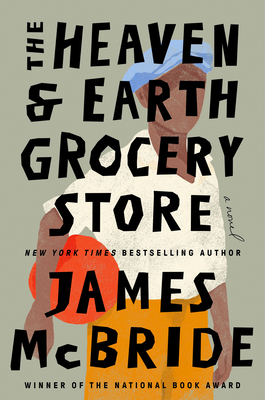
The Heaven & Earth Grocery Store by James McBride: A review


I have previously read two of James McBride's novels: The Good Lord Bird and Deacon King Kong both in 2020. They were both five-star reads for me. I can't say that I enjoyed his latest, The Heaven & Earth Grocery Store, quite as much; nevertheless, it was an enjoyable read and I don't regret any of the time I spent with it.

The setting of this story is Chicken Hill, a run-down neighborhood in Pottsdown, Pennsylvania. It alternates between two time frames: the 1930s and the 1970s. In both decades, Chicken Hill is a neighborhood of African Americans and immigrant Jews living side by side and sharing life's ambitions and sorrows. 

The action kicks off when workers discover a skeleton at the bottom of an old well. In the hands of a different writer, this might be the beginning of a horror story or a tragedy but with James McBride as our tour guide, it becomes a somewhat Dickensian tragi-comic tale of larger-than-life characters. These characters are eccentric, memorable, and altogether sympathetic.  

One main character is Moshe Ludlow, a striving impresario from Romania, who owns the All-American Dance Hall and Theater and comes up with the novel idea that he should open his dance hall to the Black residents. His wife Chona is a polio survivor with a pronounced limp and is a conscience of the community. 

But in addition to Moshe and Chona, there is a whole list of characters with interesting names like Fatty, Big Soap, Monkey Pants, and Dodo and each one of them has his story to tell. 

Dodo's story is that he is a young Black boy who is unable to hear or speak. When a local doctor who is a member of the KKK comes looking for the boy to send him to a state institution, Chona and her friends band together to keep him hidden.

One's overwhelming impression of these people and their intertwined stories is of their goodness and kindness. This is a gentle story of a community of poor and middle-class people rubbing along together and doing their best with what they have and doing it with integrity and benevolence.  

I find it difficult to even begin to adequately sum up this story. Suffice it to say that if you are looking for a tale that combines comedy and tragedy and tells it all with phenomenal heart, this may well be the book you are looking for!  

Monday, July 20, 2020

The Good Lord Bird by James McBride: A review

The Ivory-billed Woodpecker, now likely extinct, was the largest woodpecker endemic to North America. Twenty inches long with a wingspan of thirty inches, it was an impressive sight in flight, so impressive that folks who saw it were known to exclaim in awe, "Good lord!" And so, the story goes, it became known colloquially as the Good Lord Bird.

The Good Lord Bird was a denizen of the forests and swamps of the southeastern United States. It's unlikely that it ever lived on the prairies of Kansas except in James McBride's imagination.

McBride imagines the bird there in the middle of the nineteenth century, sharing "Bleeding Kansas" with the abolitionist John Brown and his "army." In his telling, the woodpecker became a talisman for the abolitionist. He carried its feathers as a good luck charm, a symbol of hope.

Like many, I suppose, I have only the most rudimentary knowledge of John Brown and his campaign to destroy the institution of slavery. I am aware of the broad outlines of the story but never troubled myself too much with the specifics. In this book, James McBride introduces the man himself to people like me and makes him a real person not just someone who exists on the dusty pages of history books. He does it by showing us John Brown through the eyes of a young boy, a Black child who first met him there in Kansas and rode with him for the next four years until his 1859 raid on the federal armory in Harpers Ferry, Virginia, a raid that likely hastened the beginning of the bloody Civil War that would finally put an end to slavery in this country.

The boy, our narrator, is Henry Shackleford. He met John Brown one day when the man came to town for a haircut. Henry's father was a barber and while he worked at the head of his customers, Henry worked at their feet, cleaning their boots. On the fateful day of their meeting, a ruckus arose as it often did in the presence of John Brown. In the ensuing melee, Henry's father was accidentally killed, leaving the child an orphan. Brown took him with him when he left, telling Henry that he was now free. 

Because of the way Henry was dressed when he met him, Brown thought that he was a she, a young girl named Henrietta, and Henry/Henrietta dressed and passed as a girl during all the years he was with Brown.  He became a favorite of Brown and particularly of Brown's son Frederick who introduced him to the Good Lord Bird and gave him a feather from the bird to wear in his hat.

Henry/Henrietta, who Brown soon dubs Onion, is a rollicking good narrator. His storytelling reminded me of no one so much as Huckleberry Finn. In fact, I think Henry and Huck would have been fast friends.

Brown led his ragtag army around Kansas and Missouri, with the pro-slavers always hot on his trail. There were many skirmishes along the way, with Brown always convinced that the Great Redeemer was on his side. As Henry observes:
“He was like everybody in war. He believed God was on his side. Everybody got God on their side in a war. Problem is, God ain’t tellin’ nobody who He’s for.”
Henry travels with Brown to Boston and Philadelphia and along the way, he meets Frederick Douglass and Harriet Tubman and sees free Black people walking the streets dressed in fine clothes. It is a revelation to him.
“I come to the understanding that maybe what was on the inside was more important, and that your outer covering didn't count so much as folks thought it did, colored or white, man or woman.”
But by this time the Onion had pretended to be a girl for so long that he was attached to the idea.
“I had thoroughly been a girl so long by then that I'd grown to like it, got used to it, got used to not having to lift things, and have folks make excuses for me on account of me not being strong enough, or fast enough, or powerful enough like a boy, on account of my size. But that's the thing. You can play one part in life, but you can't be that thing. You just playing it. You're not real.” 
But Onion rationalizes that lying about who he was didn't really matter because to white people: 
“Being a Negro’s a lie, anyway. Nobody sees the real you. Nobody knows who you are inside. You just judged on what you are on the outside whatever your color. Mulatto, colored, black, it don’t matter. You just a Negro to the world.” 
And so the road inexorably leads to Harpers Ferry and the Brown army's date with history. They ensure that Henry/Onion escapes out a window before the final battle begins and he is aided and hidden by conductors on the Underground Railroad, but once Brown is captured and tried and sentenced to hang, Henry longs to visit him to say goodbye and to confess. A janitor at the jail where he is held makes the visit possible. As Onion confesses his deceptions, a strange transformation comes over Brown.
“The old face, crinkled and dented with canals running every which way, pushed and shoved up against itself for a while, till a big old smile busted out from beneath 'em all, and his grey eyes fairly glowed. It was the first time I ever saw him smile free. A true smile. It was like looking at the face of God. And I knowed then, for the first time, that him being the person to lead the colored to freedom weren't no lunacy. It was something he knowed true inside him. I saw it clear for the first time. I knowed then, too, that he knowed what I was - from the very first.” 
Brown admonishes Henry, “Whatever you is, Onion," he said, "be it full.” 

By the time Henry nears the end of his narrative, I have completely fallen for John Brown. Maybe he was a wild and crazy old man but in spite of all his warts and foibles, he was a hero for his times, a larger than life warrior for justice. We need all of those we can get wherever we can find them.

As Henry summed up his understanding of John Brown, after all the satire and humor of his narrative, I was reduced to tears.
“The Good Lord Bird don't run in a flock. He Flies alone. You know why? He's searching. Looking for the right tree. And when he sees that tree, that dead tree that's taking all the nutrition and good things from the forest floor. He goes out and he gnaws at it, and he gnaws at it till the thing gets tired and it falls down. And the dirt from it raises other trees. It gives them good things to eat. It makes 'em strong. Gives 'em life. And the circle goes 'round.”
Even in death, John Brown gave life to the movement he espoused and though the struggle for justice goes on, the "dirt" from all those mighty trees that have fallen continues to nourish and make us stronger. And so the circle goes round. 

My rating: 5 of 5 stars

Sunday, May 24, 2020

Deacon King Kong by James McBride: A review

This book was a hoot to read. Seriously, it gave me several belly laughs which were therapeutic and cleansing, I'm sure. And yet, as I reflect on it, I realize that it was, in a very real sense, a story about grief and how we deal with it.

The book is set in South Brooklyn and at the center of it is the Five Ends Baptist Church. The time is 1969. Humans have just set foot on the moon for the first time and soon the previously most hapless team in all of major league baseball, the Mets, will win the World Series. It is a time of miracles, in other words.

The protagonist of this story is Deacon Cuffy Lambkin of that aforementioned Baptist church but in this neighborhood in Brooklyn, no one is called by his/her legal name. Everyone has nicknames. The deacon is mostly known as Sportcoat, or, somewhat more derisively, as Deacon King Kong after a locally made hooch which he freely imbibes called King Kong. Deacon Cuffy/Sportcoat/Deacon King Kong is just one more miracle. He has cheated death more times than anyone can remember, surviving three strokes and several other near-fatal afflictions. But he may have just signed his final death warrant by shooting off the ear of the local number one drug dealer, Deems Clemens. Deems is backed by "organized crime" and his backers may take exception to the deacon assaulting one of their major earners.

Before Deems started plying his trade, he had been the star of the community's baseball team and Sportcoat had been his coach and a father figure for him, but the team is now disbanded, although Sportcoat still has dreams of getting it started again.

Sportcoat engages in long conversations - aka "fusses" - with his beloved wife of 40 years, Hettie. Perhaps the only unusual thing about that is that Hettie has been dead for two years having drowned in the harbor in full view of the Statue of Liberty. Hettie was very active in the church and she had been in charge of the Christmas fund that congregants contributed to through the year so they would have money to buy presents at Christmas. She had hidden the money and no one, including Sportcoat, knew where it was. That is now the subject of many of their arguments as Sportcoat tries to get her to tell him where the money is because he's afraid the church will think he has stolen it.

Sportcoat spends his days visiting his friends Rufus and Hot Sausage, hitting the King Kong, and attending to his various jobs. He is the mainstay handyman of the neighborhood, doing a little bit of this and a little bit of that. His most productive job and the one he is really good at is as a garden helper for an elderly Italian woman. The two traipse around the area rescuing plants like pokeweed and datura (moonflower) from abandoned lots and the verges of the railroads. They plant the plants in the woman's garden. 

The Cause Houses neighborhood was home to a changing population at this time. Earlier immigrants such as the Italians and the Irish were giving way to African-Americans from the South and to Puerto Ricans and other Hispanic newcomers. There was a rich melange of cultures represented and James McBride gives us a glimpse of how it all might have worked. We get to know a vast number of characters from several of these groups in the process and the storyline is almost too complicated to render into a brief synopsis. There are several of those characters, like Sister Veronica Gee and Hettie, that I would like to have known better, but it is, after all, Sportcoat's story. And a cracking good story it is, told by a masterful writer. James McBride has produced another winner.

My rating: 5 of 5 stars