Thanks for Following

Friday, December 31, 2021

This week in birds - #482

 A roundup of the week's news of birds and the environment:

Cactus Wren photographed at the Chihuahuan Desert Nature Center near Fort Davis in West Texas.

*~*~*~*

How about we start the new year with some good environmental news? There actually was some in 2021. Here are five positive developments in the year just ended.

*~*~*~*

The Revelator gets into the act by listing twelve stories from 2021 that presented solutions to various environmental problems.

*~*~*~*

Another good news story and a personal favorite of mine is the creation of wildlife highways to keep animals safe from traffic. These animal crossings are being implemented right around the world and that is a very good thing.

*~*~*~*

Unfortunately, it's not all good news this week. Colorado is burning. High winds are driving wildfires, creating massive destruction, and tens of thousands of people have had to be evacuated.

*~*~*~*

Along the Texas-Mexico border, land that was seized by eminent domain during the previous administration has been returned to the Cavazos family. Their land had been seized in 2018 for the construction of the president's pet project, the border wall. The Biden administration returned the land.

*~*~*~*

Orangutan mothers teach their kids to forage for food, adjusting the food-gathering tactics to the age of the child and the complexity of the technique needed. Once the orang child is trained, the mother cuts him/her off, expecting the little one to feed himself. 

*~*~*~*

And speaking of orang kids, the New Orleans zoo is celebrating the birth of a healthy Sumatran orangutan male infant, shown here in the incubator with a stuffed toy bear. 

*~*~*~*

Here are some fascinating animals including a sea slug that is able to detach its head from its body and generate a new one when the old body becomes parasite-ridden.

*~*~*~*

Birdwatching has long been considered something of a Whites-only hobby but efforts are being made to correct that and to extend the hobby to more people of color.

*~*~*~*

The tequila fish is a "charismatic little fish" that was declared extinct in the wild in its native Mexico in 2003, but now, with the help of the Chester Zoo in the UK, the fish is being reintroduced to the wild there. The zoo has been breeding the fish in captivity.

*~*~*~*

Arctic climate change is reshaping the upper reaches of the Pacific and Arctic Oceans and breaking the food chain that supports billions of creatures and one of the world's most important fisheries. In the last five years, scientists have recorded the displacement and disappearance of entire species of fish and ocean-dwelling invertebrates. 

*~*~*~*

And in Alaska, December brought record high temperatures and torrents of rain at a time of the year normally associated with cold and snow.

*~*~*~*

In 2020 for the first time, renewables-generated energy surpassed coal as this country's second-biggest power source. That trend is expected to continue in 2022.

*~*~*~*

In Maryland, more than two dozen rescued sea turtles that suffered cold-stunning in the New England area are undergoing long-term rehabilitation at the National Aquarium in Baltimore. 

*~*~*~*

An exceptionally well-preserved oviraptor dinosaur embryo from between 72 to 66 million years ago is revealing dinosaur links to modern birds.

*~*~*~*

Researchers have discovered that a protein unique to sharks is able to neutralize the COVID 19 virus and its variants. They are studying the possibility that these proteins might be able to stop future coronaviruses from developing into pandemics.

*~*~*~*

Here are some top commentaries on conservation, climate change, and environmental issues that were published in 2021. 

*~*~*~*

A series of major winter storms have offered some reprieve to drought-ridden California but it's not enough to pull the state out of drought conditions.

*~*~*~*

"Songs of Disappearance," an album of the songs of 53 of Australia's most endangered bird species has proved extremely popular with Australians. In fact, it is at or near the top of the record charts.  

*~*~*~*

As expected, competition for water is driving conflict between nations. In Africa, severe drought and hunger are exacerbating conflict along Kenya's border with Uganda and South Sudan.

*~*~*~*

In another hopeful development, some companies are modifying their products to stem the flood of microplastic fibers into the oceans.

*~*~*~*

For many months now, I've been following occasional news stories about the wanderings of a Steller's Sea Eagle. The bird is a native of Asia but has been flying around North America - and I mean literally all around the continent - for over a year now. Some speculate the bird is lost, but personally, I think he just wanted to see a bit of the world.

*~*~*~*

Finally, here are Audubon's top pictures of the year, its award winners.

*~*~*~*

I want to wish a happy, healthy, and peaceful 2022 to all my readers. Thank you for spending some time with me in 2021 and I hope you'll do it again in this new year. 
Wednesday, December 29, 2021

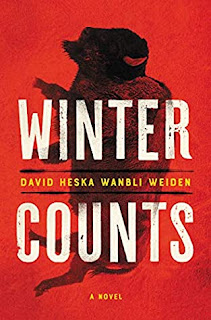
Winter Counts by David Heska Wanbli Weiden: A review


The title of the book is a reference to the Lakota calendar system that includes images showing the most significant events of the year. David Heska Wanbli Weiden is an enrolled member of the Sicangu Lakota nation and he has written a book that explores the Lakota culture, especially that on the Rosebud Indian Reservation in South Dakota. 

His vehicle for this exploration is his character named Virgil Wounded Horse who is a kind of local enforcer on the reservation. People hire him to deliver their (or his) idea of justice if they feel that they have been failed by the legal system. Virgil lives with his teenage nephew, for whom he is the guardian. The boy's mother, Virgil's sister, was killed in an automobile accident some years earlier. 

Virgil is not concerned about his nephew's use of marijuana, but when heroin makes its way to the reservation and the nephew becomes involved, his work as an enforcer takes on a personal dimension. He is determined to discover where the dangerous drugs are coming from and to put a stop to their sale on the reservation. He is convinced that they are coming from Denver and that he knows who may be responsible. He leaves his nephew in the care of his great-aunt and heads to Denver.

But before he goes he is approached by his ex-girlfriend who also has a personal interest in the case and she accompanies him to Denver. In Denver, they discover that the drug cartels are becoming more powerful and are expanding their reach and influence. But it seems that someone, possibly in authority on the reservation, is making it possible for the cartels to make inroads. Who could that person be?

This was David Heska Wanbli Weiden's first novel and it has been highly praised and has won several awards including the Anthony Award for Best First Novel. I can only conclude that all those critics read a different book than I did. It's not really a terrible book, but I would not say it is award-worthy. The writing is pedestrian at best. The characters are one-dimensional. As far as the main character, Virgil Wounded Horse, is concerned, that one dimension is toxic masculinity. His love interest's only dimension seems to be to "follow that man." She puts her life and her career goals on hold at the drop of a hat. 

As for the plot, it is totally predictable, repetitive, and often downright cringe-worthy. Every chapter, indeed it often seems every page, contains a rant about the injustices perpetrated on Native Americans - or Indians as the author prefers. No rational person with any sense of honor would deny that such horrors have happened and in some instances still happen, but the constant repetition of reminders of them has the effect of inuring the reader and eventually making such events, dare I say, boring. I am sure that is not the effect the writer hoped to achieve.

All of that is not to say that the book has no redeeming features. The writer takes pains to describe day-to-day life on the reservation and the importance of religious practices and spiritual beliefs to that life. He also renders in an understandable and believable way the effects of violence, both historical violence and personal and familial violence on Lakota society. The individual and societal costs of the pain of that violence are inestimable. But overall, I found these strengths insufficient to completely offset the problems with the writing.

My rating: 3 of 5 stars


Monday, December 27, 2021

My best reads of 2021

By the end of 2021, I will have read 102 books, a paltry total compared to many of you. Of that number, I rated one-third of them, 34, as five-star reads. It was a very good year for reading. 

Trying to whittle that number down to a manageable group that I can list as my year's best was not easy. I had to establish some guidelines. I decided that I would only include in my list books that were published this year or last. That eliminated six so only helped a little. I decided to choose one book from each month. That made the comparisons a tiny bit easier. Then I bit the bullet and made my choices.

So here it is - my best of the best for this year with links to my reviews should you care to read them. I feel compelled to add that I also had a great many books that I rated at four stars (I didn't actually count them.) and they only missed the cut by a little. As I said, it was a very good year for us readers. We had a lot of quality to choose from.

January - Homeland Elegies by Ayad Akhtar

February - The Survivors by Jane Harper

March - The Committed by Viet Thanh Nguyen

April - Klara and the Sun by Kazuo Ishiguro

May - We Play Ourselves by Jen Silverman

June - Miss Benson's Beetle by Rachel Joyce

July - When the Stars Go Dark by Paula McLain

August - The Secret Lives of Church Ladies by Deesha Philyaw

September - Intimacies by Katie Kitamura

October - Apples Never Fall by Liane Moriarty

November - The Sentence by Louise Erdrich

December - Cloud Cuckoo Land by Anthony Doerr

Sunday, December 26, 2021

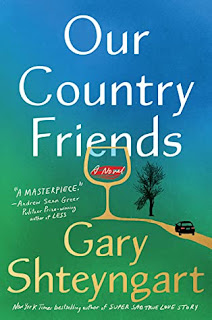
Our Country Friends by Gary Shteyngart: A review


Gary Shteyngart has written a pandemic novel. Set in 2020 and beginning in March, the calamity that is COVID-19 was already well underway in the world and in this country. 

At a country house surrounded by four one-bedroom bungalows in upstate New York owned by the Levin-Senderowskys, a Russian-born novelist and his Russian-born psychiatrist wife, five friends gather. There is a woman who is an extremely successful Korean American app developer; a man who is a struggling Indian American writer; a woman essayist from the South who specializes in provocative pieces; a man who is a world traveler with several passports; and finally, an actor who is never named but who may appear in a television show written by the novelist. The five join the Levin-Senderowskys and their precocious adopted Asian pre-teen daughter who is obsessed with K-pop. They will be together at the estate for the next several months as they try to wait out the pandemic.

Sasha Senderowsky is the Russian-born novelist. His main purpose in inviting these people to stay in his bungalows seems to be to convince the actor to work with him on the film that he wants to make. His wife is Masha and her main concern is enforcing social distancing and mask-wearing among this group. They come to think of her as the pandemic nazi. Their daughter, Natasha called Nat, appears to have special needs, perhaps being on the autism spectrum. She is a delight and the most sympathetic character in this group of fairly self-absorbed people.

The obsessions of these adults seem to be depressingly stereotypically American: money, sex, and booze. None of them appear to have any real self-awareness or a full appreciation of what is happening in the world. It goes without saying perhaps that their sense of their own importance in that world is extremely inflated.

Shteyngart no doubt intended this to be witty and satirical and at times he achieves that purpose. There are bits that are quite funny. Most of them involve the antics of Nat. But satirizing a situation in which millions have died, many of them needlessly, requires an extremely deft touch and I felt that this writer was not quite up to the task. Moreover, the characters are essentially stereotypes, and that, I guess, is supposed to serve as "character development" but again, it didn't quite do the trick for me. 

This novel has been highly praised and I looked forward to reading it as I had thoroughly enjoyed Shteyngart's Super Sad True Love Story and I did enjoy parts of it. It was entertaining up to a point but the story became repetitive and less than a hundred pages from the end, it just sort of petered out. The ending itself felt like an afterthought, something tacked on for dramatic value.

I debated about what rating I should give this book and I have to acknowledge that my reaction to it may be as much a reflection of our current situation as it is a true assessment of the writing. It may be that if I read it for the first time a few years hence, I might find it more amusing. But I read it now amid all the baggage of December 2021 and it is what it is.

My rating: 3 of 5 stars 


Monday, December 20, 2021

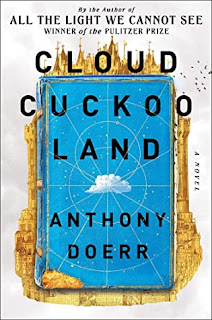
Cloud Cuckoo Land by Anthony Doerr: A review


I wasn't sure I was going to like this one at all. It started slowly for me and I found it hard to get my head around the story Anthony Doerr was telling. But I kept reading because it's what I do and, in the end, I was handsomely rewarded. In fact, the story just about blew me away.

Doerr gives us five different stories of five different characters that take place over a period of centuries. They might in fact be five separate books, but all of these characters are connected in a special way. They are in many ways very similar characters, one might even say the same character. They are all outsiders who embark on what Joseph Campbell would call the hero's journey. They all have challenges and they suffer on their journeys but they all achieve a final homecoming. And each of the characters is fascinated by an ancient text, a supposed work by Diogenes called Cloud Cuckoo Land (actually an invention of Doerr's). It is the story of Aethon and all of his many adventures and misadventures as well as mishaps involving other characters. Fragments of that book are included in this novel. The ways in which the text survived destruction over the centuries is the theme that connects all of the characters.

The first character that we meet is Zeno Ninis in present-day Idaho. He is in his 80s, a veteran of the Korean War where he was a prisoner of war and learned Greek from a fellow prisoner during his captivity. He is directing a group of children at the local library in a play that he's written based on an ancient text that he translated called Cloud Cuckoo Land. Their rehearsal is interrupted by the intrusion of a sensitive young man named Seymour Stuhlman who has been radicalized by the destruction by developers of the wilderness that he loves. He has come to the library with a gun and an explosive device to leave the bomb in a corner of the library that shares an adjoining wall with the real estate developers. He's not interested in damaging the library; he wants to destroy the developers' office but since he can't get into that office, he places the bomb in the library in the hope that it will cause as much destruction as possible.

Then, before a resolution of the library incident, the scene shifts to five hundred years earlier. In 15th century Thrace, we meet Omeir, a harelipped teenager who society scorns because of his defect, and his two beloved oxen. His oxen are requisitioned by the Saracens for their assault on Constantinople. As their driver and caregiver, Omeir must go with them. Inside Constantinople reside Anna and her sister, Maria, orphans who live in a house of women who make their living embroidering robes for priests. When Maria is injured, Anna develops a side occupation as a cat burglar to raise money for her sister's care. On one of her burgling forays, she finds a book that tells the story of Aethon. She reads the book to her sister to comfort her. The stories of Omeir and Anna will eventually merge.

Finally, we have a young teenager named Konstance who lives at some undefined time in the future. Konstance is alone in a sealed vault on a spacecraft called Argos that is traveling in search of a new home away from the blighted, ruined Earth. She has never actually set foot on Earth. She was born on the spacecraft and after an epidemic kills the other passengers on the craft, she spends her lonely time remembering the story of Aethon that had been told to her by her father and copying what she remembers of the story onto scraps of paper. 

The plot construction of the book takes us back and forth through the centuries and between these five characters' stories. It is only tantalizingly slowly that the nature of the connections between them comes into focus. Doerr is a master storyteller and his book is in ways small and large an homage to the power of literature to persist through the centuries and to affect and guide people's lives. At one point a bibliophile character in the book reminds us of all the works that have been lost: thousands of Greek plays, several books of the Bible, Lord Byron's memoirs, works by Melville, Shakespeare, and Aristotle. And yet, so much has been saved because people loved it and refused to let it die.

These characters from two epochs of history and the present and one of the future have disparate storylines and lives and it is a work of great creativity to be able to keep those stories coherent and compelling throughout. I found the conclusion of it all incredibly moving and shed more than a few tears. Yes, it really did blow me away and I'm glad I stuck with it through a sometimes confusing beginning.

My rating: 5 of 5 stars 

Saturday, December 18, 2021

Poetry Sunday: Bare Tree by Anne Morrow Lindbergh

Occasionally I will find a poem that just stops me right in my tracks. It can seem as though the poet was addressing me directly. 

The first sentence of this poem, "Already I have shed the leaves of youth, stripped by the wind of time down to the truth of winter branches" caught me. I thought, yes, that's me; no leafy branches to hide me anymore. And after exploring the imagery of the bare branches, the poet delivers her final line: "Blow through me, Life, pared down at last to bone, so fragile and so fearless have I grown!"  

Anne Morrow Lindbergh definitely knew a thing or two about the experience of being an old woman.  

Bare Tree

by Anne Morrow Lindbergh

Already I have shed the leaves of youth,
stripped by the wind of time down to the truth
of winter branches. Linear and alone
I stand, a lens for lives beyond my own,
a frame through which another's fire may glow,
a harp on which another's passion, blow.

The pattern of my boughs, an open chart
spread on the sky, to others may impart
its leafless mysteries that I once prized,
before bare roots and branches equalized,
tendrils that tap the rain or twigs the sun
are all the same, shadow and substance one.
Now that my vulnerable leaves are cast aside,
there's nothing left to shield, nothing to hide.

Blow through me, Life, pared down at last to bone,
so fragile and so fearless have I grown!

Friday, December 17, 2021

This week in birds - #481

 A roundup of the week's news of birds and the environment:


Pine Warblers are always welcome winter visitors.

*~*~*~*

It's been a week of strange and often deadly weather events throughout this country and indeed right around the world. Among the worst of the events was the series of tornadoes that swept through the Mid-South of the country one night earlier this week, killing a still undetermined number of people.

*~*~*~*

But that was hardly the end. On Wednesday, more than twenty tornadoes hit the Midwest leaving at least five more people dead.

*~*~*~*

A warming world is adding fuel to these tornadoes, making them stronger and more deadly and apt to occur at any time, even in December. Cautious scientists always tell us that individual weather events cannot be connected to climate change, but common sense and the preponderance of evidence argue for that connection.

*~*~*~*

There was also much disturbing news from both of our planet's poles this week. Rising temperatures due to climate change have altered both the Arctic and the Antarctic and that puts the rest of the world in peril. 

*~*~*~*

The heating up of the poles is epitomized by the event that happened on June 20, 2020. On that date, the temperature in the Arctic reached 100 degrees F. It is the hottest temperature ever recorded there.

*~*~*~*

Meanwhile, in the Antarctic, the ice is melting from below, releasing carbon dioxide. The winds have become stronger and they are altering the ocean currents. All of this feeds even more climate change.

*~*~*~*

The changes in the Antarctic have destabilized the ice shelf that is holding back one of the frozen continent's most dangerous glaciers and scientists say it could shatter within three to five years freeing the glacier. That would contribute further to a rise in sea level.

*~*~*~*

The New York Times published an extensive report this week about the effects of climate change on individual countries around the world.

*~*~*~*

A recent report identified one-third of all shark and ray species that are at risk of becoming extinct, but scientists say there are a number of policy choices that, if taken and implemented, could help to save them.

*~*~*~*

Cane toads are an extremely toxic species that is native to the Americas but in recent years it has become an invasive species in many parts of the world. Now they are invading Taiwan where more than 200 of the critters have already been captured by researchers.   

*~*~*~*

In even more unsettled weather news, a super typhoon hit the Philippines this week causing extensive damage and more than 300,000 people to be displaced. At least twelve people were killed in the storm.

*~*~*~*

States in the northern Rockies region are attempting to get federal protections for grizzly bears lifted. They want to allow the hunting of the animals. Montana is the latest state to sign on to the plan.

*~*~*~*

A study focused in Denmark has found a connection between falling fertility rates and pollution caused by the burning of fossil fuels. Over the past fifty years, childbirth rates have steadily decreased. Researchers found that the decrease began with industrialization and they believe they can show a connection between the two.  

*~*~*~*

Native American farmers have 5,000 years of practice dealing with drought, heat, and scarcity of water. They have learned to farm successfully under those conditions and it is likely that their practices could help farmers around the world as they deal with the warming climate.

*~*~*~*

An artist in lockdown during the pandemic set herself a goal of drawing a new species of animal from around the world every day for a year. Project Animalia will soon produce its 365th animal and here are some of them.

*~*~*~*

The gray squirrels of Maine are packing on the pounds for winter and some of them have reached "Squirrelzilla" status!

*~*~*~*

Scientists are saying that they lack sufficient data about the "forever chemicals" lurking in food packaging and farmlands. They believe that the American food supply is riddled with far more dangerous toxins than the average consumer would suspect.

*~*~*~*

An endangered Mexican gray wolf, dubbed "Mr. Goodbar," was thwarted by the stupid border wall when he tried to cross into Mexico. The GPS-collared wolf walked 23 miles over five days in an attempt to get around the wall before heading farther north in the Gila National Forest in Arizona.

*~*~*~*

In this season of giving, Margaret Renkl recommends making donations to some conservation nonprofits that are taking positive steps to protect and defend the environment.

*~*~*~*

And finally, the story that I always love including in the roundup at this time of year: Wisdom, the 70-year-old Laysan Albatross, the oldest known wild bird in the world, has returned once again to her winter home on Midway Atoll. And here she is sitting on her usual nesting spot. It will be a sad December indeed should Wisdom fail to return some year.  
*~*~*~*

The weekly roundup will be absent next weekend as I celebrate the holidays with family. I hope that your holidays are joyful and peaceful and that you will join me again here next year.



Thursday, December 16, 2021

Powers and Thrones: A New History of the Middle Ages by Dan Jones: A review


Historians of the Middle Ages, roughly from the fall of the western Roman Empire until the dawn of the modern era in the 16th century, take considerable umbrage when the period is referred to as the "Dark Ages." They will argue that in spite of the barbarism and ignorance that were certainly a part of the era, it was not dark at all. It was in fact a period of considerable enlightenment that brought the Carolingian Empire that was produced by the sophisticated culture of the Germanic tribes, the legacy of the Roman Empire that continued brightly in Byzantium, and the many contributions of Muslim culture and writers throughout the Mediterranean area. Dan Jones will certainly make that argument and he does in his latest book, Powers and Thrones: A New History of the Middle Ages

The book is 656 pages long and yet it feels concise and approachable for the general reader like myself. Jones organizes the vast and complicated historical record of the era into a compelling story that reads almost like a novel. He makes that story relevant to the modern reader by showing the connection of events during the period to events of our day, and there are many connections.

He also keeps the reader's interest alive through the long book by balancing the recording of events with descriptions and discussion of some of the vivid personalities that were responsible for those era-defining events. Historical anecdotes abound and he shows how they have helped to create the building blocks of the modern age. 

He shows us that Ancient Rome lived on (and lives on) as the source of much of the law that still guides the West. It also lives through all the Romance languages and through the Christian faith that it was largely responsible for imparting to the world at large. The Germanic invasions of the Roman Empire that helped to bring it down were not simply a conquest by barbarians for the tribes created much of the political framework that still exists in Europe today. 

The Muslim conquest still affects the modern world as well since they brought with them their science and learning, but it was also the source of many of the religious splits and fragmentation that continue to this day. Moreover, the arrival of the Vikings shaped future Anglo-French connections, alliances, as well as competitions. And it provided the first connection between Europe and North America.

The book is arranged in basically chronological order but it is also organized around major themes and ideas that shaped the era. So, within the chronology, the writer sometimes skips around to show the progression of certain important ideas through the whole period. An exploration of knighthood, for example, considers its development and importance through eight centuries. Although this might occasionally be confusing, it does help to show how Europe - and this book essentially deals with Europe rather than the whole world - evolved during the period.  

Dan Jones has provided us with a highly readable and understandable exploration of the complicated period that we know as the Middle Ages. It was the period that in so many ways made us who we are today and we still live with its accomplishments as well as some of its complexities. It must have been difficult to organize and fit all of that into a book of manageable length. Fortunately, Jones was up to the task. I would definitely recommend the book to anyone interested in this fascinating era.

My rating: 4 of 5 stars

Wednesday, December 15, 2021

Garden Bloggers' Bloom Day - December 2021

It's been a warm and dry December so far here in zone 9a just outside of Houston and even though my garden shows the effects of its trials over the past year it still manages to give me a few blooms.  

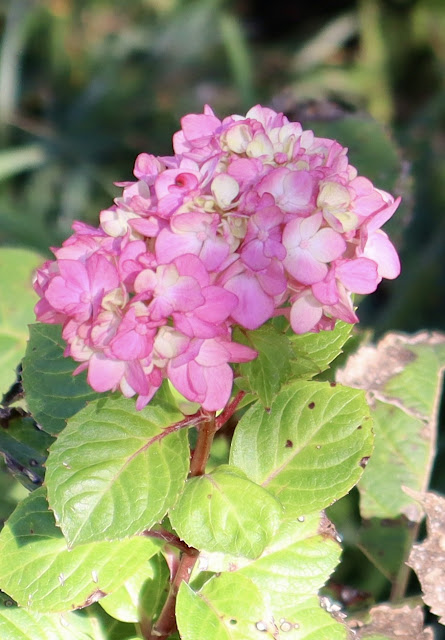
Yes, it really is December but this normally spring-blooming hydrangea is very confused.

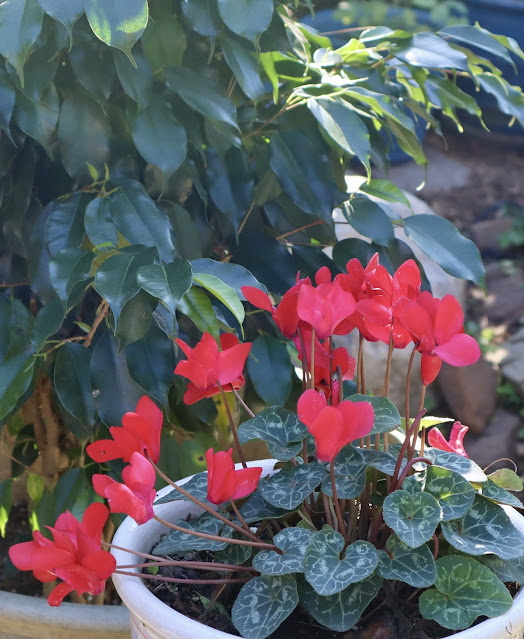
No confusion here. If it's December, I have to have a few pots of red cyclamen around the yard. Can't have them in the house because my evil cats eat them. 

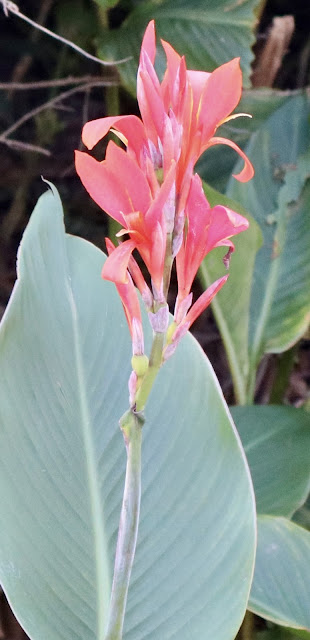
This yellow canna has done its best this year. It's almost ready to rest but still has a bloom or two.
This old orange canna is basically undaunted by anything.

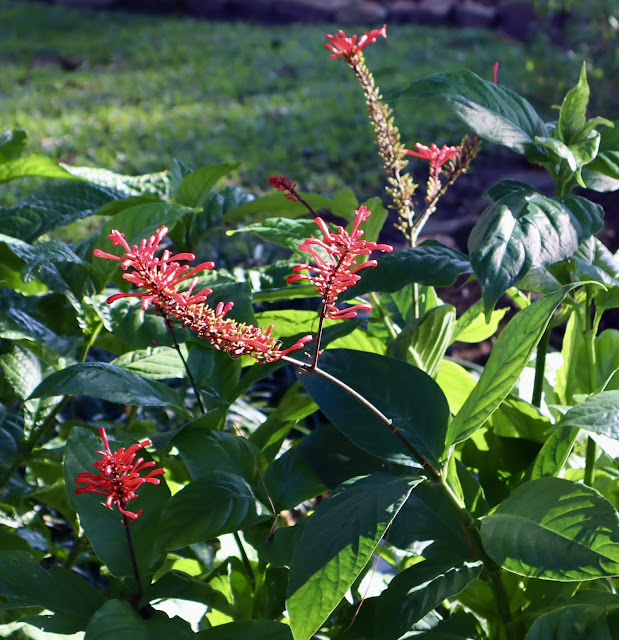
The firespike blooms have been open for a while and are almost at the end - literally.


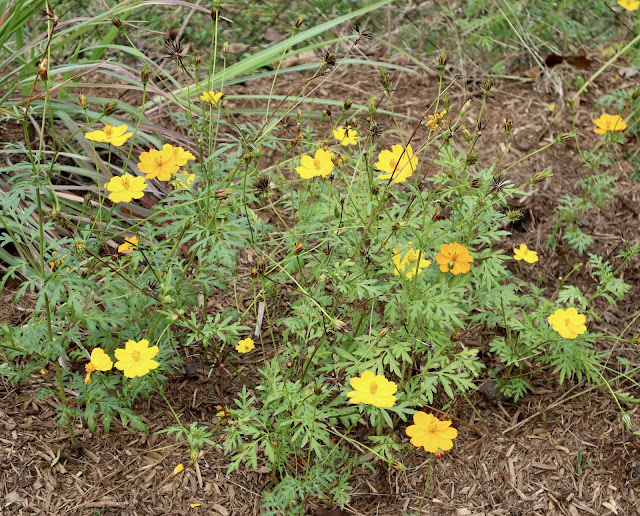
The cosmos bloomed all summer, then reseeded itself and is now blooming again.

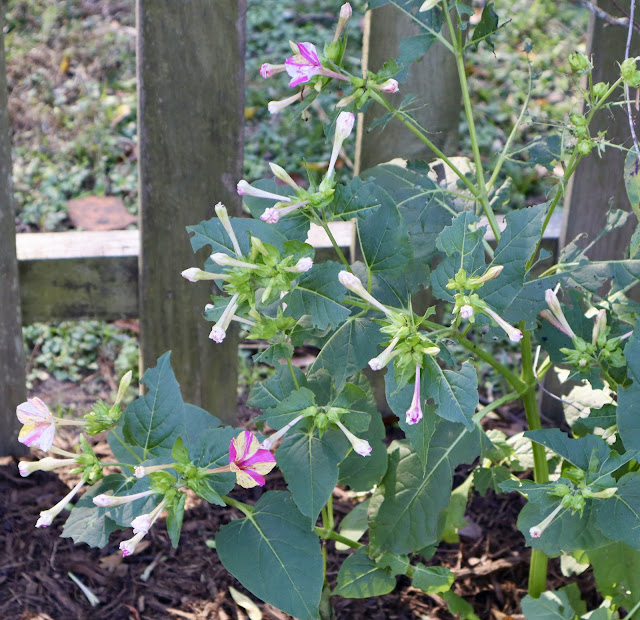
Likewise this four o'clock. They bloomed all summer and have now reseeded. The warm weather encourages them.

Pink Knockout rose - a constant bloomer.

'Julia Child' rose is almost as constant.

'Belinda's Dream' rose.

Esperanza, yellow bells.

The petunias seem to be mostly resting at the moment but still have a few blooms.

The Cape honeysuckle has been the star of the garden these last couple of months and shows no signs of slowing down.


Another constant bloomer for about ten months of the year - yellow cestrum.

The pentas by the patio are still blooming.

As are the white pentas by the front entry. 

Purple trailing lantana.

Turk's cap 'Big Momma.' It lives up to its name, covering much of the south side of the house. 

Carolina jessamine has its major blooms in January/February but it is getting an early start.

The blue plumbago still sports a few blooms.

The loquat tree is full of these sweet-smelling blossoms, promising a lot of delicious fruit in two to three months.

The man who takes care of our lawn for us surprised me by having his crew plant pansies all around all the bare places in my front yard beds. All those leaves are from the red oak tree. They cover the yard every time the wind blows, which is often in December. 


Now I have these sweet little faces looking at me every time I go outside.

Of course, sometimes they hide their faces.

They always make me happy. Merry Christmas to me!

The echinacea is still blooming.

And more echinacea.

And finally, the Encore azalea.

Thank you for visiting me this month. Whatever end-of-the-year holidays you celebrate, I hope you are able to joyfully spend them with family and loved ones, and may our new year bring us all good things and especially a successful garden!

Thank you, Carol of May Dreams Gardens for hosting this meme.

Saturday, December 11, 2021

Poetry Sunday: The Darkling Thrush by Thomas Hardy

This poem by Thomas Hardy, first published in 1900, starts on a rather desolate and pessimistic note. The land itself is "spectre-grey" and offers little spirit, even as the poet himself feels spiritless. But then he hears the joyous sound of a thrush's song and the song causes him to recognize the existence of emotions beyond despair and isolation. Birdsong can do that for us.

The Darkling Thrush

by Thomas Hardy

I leant upon a coppice gate
When Frost was spectre-grey,
And Winter's dregs made desolate
The weakening eye of day.

The tangled bine-stems scored the sky
Like strings of broken lyres,
And all mankind that haunted nigh
Had sought their household fires.

The land's sharp features seemed to be
The Century's corpse outleant,
His crypt the cloudy canopy,
The wind his death-lament.

The ancient pulse of germ and birth
Was shrunken hard and dry,
And every spirit upon earth
Seemed fervourless as I.

At once a voice arose among
The bleak twigs overhead
In a full-hearted evensong
Of joy illimited;

An aged thrush, frail, gaunt, and small,
In blast-beruffled plume,
Had chosen thus to fling his soul
Upon the growing gloom.

So little cause for carolings
Of such ecstatic sound
Was written on terrestrial things
Afar or nigh around,

That I could think there trembled through
His happy good-night air
Some blessed Hope, whereof he knew
And I was unaware.

Friday, December 10, 2021

This week in birds - #480

A roundup of the week's news of birds and the environment

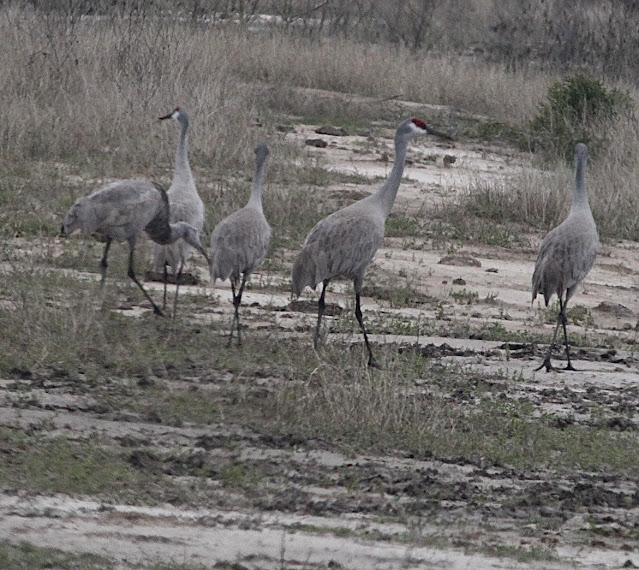
The Sandhill Cranes are back to spend their winter along the Texas coast.

*~*~*~*

New Zealand has the right idea. They are banning smoking for the next generation and the plan is to ban it outright by 2025.

*~*~*~*

Balmy Hawaii was under a rare blizzard warning this week. Meanwhile, 65 weather stations across the country recorded record high temperatures. Meteorologists attributed the latest spate of weather extremes to a stuck jet stream and the effects of a La Niña weather pattern in cooling Pacific waters.

*~*~*~*

And in the Pacific, that Great Pacific Garbage Patch of plastic detritus is being colonized by coastal species that are adapting to the newly created territory. Nature finds a way.

*~*~*~*

There may be some relief on the horizon for drought-stricken areas along the West Coast. Storms are expected to bring some heavy precipitation to the parched area. 

*~*~*~*

The population of North Atlantic right whales has been so seriously decimated that the birth of one whale baby is cause for celebration.

*~*~*~*

The eruption of the Mount Semeru volcano in Indonesia has devastated a wide area, leaving hundreds homeless and killing at least fourteen.

*~*~*~*

And in Montana, a combination of record-high temperatures and high winds has sparked a series of unusual December prairie fires.

*~*~*~*

The Bureau of Land Management has moved to scrap a decision made in the previous administration that granted a pipeline right-of-way to Cadiz Inc. without the required environmental review. The pipeline would have taken water from a fragile aquifer under the Mojave Trails National Monument near the Mojave National Preserve.

*~*~*~*

The mountain gorillas of Rwanda were once dwindling in numbers but their population is now on the rise and they are attracting much-needed tourism in the area that is boosting the local economy. A win-win for both gorillas and local people. 

*~*~*~*

A study has found that the natural regrowth of tropical forests yields better results than interference by human plantings. Such forests are able to regenerate themselves within twenty years.

*~*~*~*

A fish called the Batman River loach has been found in Turkey by scientists working on the Search for the Lost Fishes project. The fish had not been seen in the wild since 1974 and was feared extinct.

*~*~*~*

Florida's manatees are in dire straits and wildlife officials there have made the decision to give them extra feeding. The mammals have suffered catastrophic losses in the past year.

*~*~*~*

Fossilized footprints in Tanzania that had been thought to have been those of a bear are now believed to have been made by an unidentified human ancestor more than 3.6 million years ago.

*~*~*~*

The warming waters of the Arctic have made the area friendlier to orcas and they are taking advantage of places that were once blocked by ice. The effect of their predation is being felt up and down the food chain.

*~*~*~*

Planting trees to restore a green canopy to urban spaces also aids in the overall restoration or reclamation of an area. This can be especially helpful to under-resourced neighborhoods primarily of people of color that are disproportionately affected by climate change.

*~*~*~*

Bat pups learn their way around the neighborhood from their mothers while being carried rapidly through the air, upside-down at night.

*~*~*~*

Somebody is poisoning wolves in Oregon. So far, eight animals have been killed. Police have been unable to catch the killer. There are calls for additional protections for gray wolves. 

*~*~*~*

The climate crisis has hit the wine industry in the West particularly hard. Between frosts, heat waves, and wildfires it has been hard to keep vineyards going and healthy.

*~*~*~*

A British man out for a walk in a Singapore park was attacked by a family of otters and seriously bitten. Apparently, the animals had been startled when another man ran towards them and they vented their fury on the poor innocent walker.

*~*~*~*

In one of New York City's most ambitious green infrastructure improvement projects, a long-buried brook,  Tibbetts Brook in the Bronx, will be unearthed and allowed to run free again. 

*~*~*~*

The Blackfeet Nation of Montana is restoring bison to their territory there. So far they have returned 90 animals to their land.

*~*~*~*

Did you know that there is such a thing as a camel beauty contest? And did you know that apparently, some owners of the camels in the contest are using botox injections to enhance the appearance of their camels? The Saudis who run the contest are cracking down on the "manipulators" and will impose strict penalties they say.

Wednesday, December 8, 2021

Crossroads by Jonathan Franzen: A review


Having finished with William James' The Varieties of Religious Experience may have prepared me for reading Jonathan Franzen's latest. It is a book with strong religious themes and each member of the Hildebrandt family around whom he builds his story experiences religion or rejection of religion in his/her own individual way. Franzen has said that this book is the first in a planned trilogy that, in a nod to Middlemarch, he calls A Key to All Mythologies

This is a very different book from his others that I have read. For one thing, it is long, nearly 600 pages and it builds very slowly. It is set in the 1970s and the feeling of it is mellow, definitely lacking the acerbic manners of some of his previous novels.

The Hildebrandt family lives in suburban Chicago in fictional New Prospect. It is comprised of husband Russ, wife Marion, and four children: Clem, Becky, Perry, and Judson. Russ is the associate pastor of a local liberal church called First Reform where there is a popular youth group called Crossroads. Its name is a reference to the choices young people must make about their lives, but here it also refers to Russ who seems to be at a crossroads in his own life. And throughout the book, each of the Hildebrandts, except for the youngest, Judson, faces a crossroads of some kind.

Russ is middle-aged and dissatisfied. He is a tall, attractive man, who reminds people of Charlton Heston while his wife, Marion, after four children and years of being stuck in mommyhood is now overweight and a bit unkempt, and a careless dresser. Russ definitely feels that he could do better and he has a candidate in mind. She's a pretty, young, blond widow in his church who has reached out to him for counseling. She has a teenage son who knows and idolizes Perry, Russ' son.

In his flirty interactions with the widow, Russ mentions that he is a fan of the blues and owns a lot of old blues records, including those of Robert Johnson, who, according to the legend, met the devil at the crossroads of Highways 49 and 61 in Clarksdale, Mississippi and exchanged his soul for mastery of the guitar. The allegory is clear. Russ, too,  must decide what the devil has to offer him. He loans some of those records to the widow, hoping they will have the desired effect.

Marion, meanwhile, is not unaware of Russ's desire to stray and essentially gives him permission to do it. She is taking stock of her own life and making changes, not to get her husband's attention but to regain her own self-respect and self-image. She will be a frump no longer. 

As we learn about Marion's life, it becomes clear that there is much of her background that is unknown to Russ. In her 20s, she had had an affair with a married man and became pregnant. The only recourse available to her for an abortion was from a man who as payment got to rape her repeatedly over many days. She suffered from severe depression and spent months in a mental hospital. When she got out, she turned to religion and the church to sustain her. It was at the church that she met Russ. She later told him that she had had a brief marriage that ended in divorce; she did not tell him the truth about her background.

For me, Marion was the most fully realized character of the novel. I admit that may be a gender bias, but she was the character I could most, if not identify with at least understand where she was coming from, what motivated her. She describes herself as a mother of four "with a 20-year-old's heart." She feels that she is not a good person, but she is determined to change her life for the better.

As for the Hildebrandt children, Clem is off to college where he experiences sexual awakening and a moral dilemma. He is so obsessed with his new sexual relationship that he's unable to concentrate on course work and his grades suffer. He decides that he doesn't deserve to keep his academic exemption from the draft. He writes to his draft board that he is quitting school and giving that up and he's ready to be drafted and to go to Vietnam. This is a blow to his pacifist father and that is part of the attraction for Clem.

Becky is the most strictly religious of the children, her father's favorite. She is the social star at her high school. Everybody wants to be in her group. She has her own awakening when she is attracted to Tanner, a boy at the church who is part of a rock 'n' roll band. Through him, she enters into that world which also gives her an experience with drugs. Her sexual relationship with Tanner changes the course of her life forever.  

Perry may be a genius. He's certainly very smart, but not smart enough to stay away from drugs. He becomes not just a consumer but a purveyor of drugs and his promising life spins out of control.

Judson is a bit of an enigma. He is a very laid-back and seemingly well-adjusted child. We don't see much of him in this novel but I suspect he may play a larger role in the sequels that follow.

There's a lot going on in this book including adultery, suicide attempts, arson, a car wreck, and the list goes on. It's difficult to sum it all up. Much of the action relates to that church group's work with the Navajos. Russ is very deeply involved in that. He suffers several professional humiliations when the group no longer wants him and he is replaced by a younger, cooler man. He hates that man and refuses to speak or interact with him. He plots ways to thwart him. Marion, meanwhile, loses her excess weight and recovers her former selfhood. In her reformed life, she manages to deflate Russ's own high opinion of himself. 

This is one of those books that stays with you and that one mulls over its meaning. I remember one of the reviews that I read of it made the comparison to the work of Joseph Campbell and I think I can see that now. God and sex - those are the major themes of the book; how those two "cultural ideas" control our lives in so many ways. It's a book that does not lack for sympathy with human frailties. That, too, is a bit of a difference from some of Franzen's earlier novels that were less forgiving. When I finished reading the book last week, I initially rated it as four stars, but I want to amend that. Having given it more thought, I think it deserves five. Of all the Franzen books I've read, I feel this is the best. It will be interesting to see where the trilogy goes.

My rating: 5 of 5 stars

Monday, December 6, 2021

Harlem Shuffle by Colson Whitehead: A review


It is the 1960s in Harlem and Ray Carney is a furniture store owner there. He also has a side business as a fence. People bring him stolen goods and he either buys and sells them or passes them on to others who will. At one point, in a conversation with another character named Pepper he describes himself as an entrepreneur. Pepper replies, "That's just a hustler who pays taxes."

Ray is a family man. When we meet him, he has a wife and daughter and another child on the way. They are his incentive to maintain respectability and legitimacy. He is, in fact, considered a man of standing in the community. But there is another influence that keeps pulling him in the opposite direction. His name is Freddie. 

Freddie is Ray's cousin and he is the one who gets Ray involved in all kinds of illegal schemes and heists. The book is divided into three sections; one is set in 1959, one in 1961, and one in 1964. The first one details the major heist of a hotel that Freddie sucks his cousin into as an accessory against his will. Ray's self-image as a legal businessman takes a serious hit and his life is changed.  

The fictional stick-up heist of the Hotel Theresa (a real hotel in Harlem) goes off without a hitch. The hotel is described as "the headquarters of the Negro world" so robbing it is a headline event. The description of this caper is the high point of the book. Whitehead seems to be enjoying writing it. The prose is crisp and often gleeful and downright funny. I found the two following sections of the book to be somewhat less dynamic.

In the second section, Carney is steaming over being cheated out of $500 by a sleazy Harlem banker and most of the action involves him scheming of a way to exact revenge against the banker. In the third section, Carney's moral struggles continue as he is once again involved by Freddie as an unwilling accomplice in a crime that will have tragic consequences for some of his loved ones. 

Whitehead, the double Pulitzer Prize winner, has always delivered novels that are original and quirky and are notable as expansions of whatever genre they might be assigned to. So it is with Harlem Shuffle. It is essentially a crime saga but it also manages to embody cultural satire and it is a page-turning, entertaining literary novel.

And now I must confess: I finished reading this book two weeks ago and when I sat down to write my review today, I found I really couldn't remember much about it. I'm not sure what that says about this book or about me as a reader; nothing good about either, I expect. I had to resort to reading the publisher's synopsis and some of the reviews of the book to jog my memory. I can't really explain why that would be because I did enjoy the book while I was reading it, but I never really felt "connected" to any of the characters. There were no female characters or at least none of consequence and perhaps that's why it was hard for me to identify with the male characters. 

So, the plot of the book was not particularly memorable for me for whatever reason. I could actually better remember The Nickel Boys. Now we only have to wait for Colson Whitehead to collect his third Pulitzer for this "unmemorable" book.

My rating: 4 of 5 stars