Thanks for Following

Friday, September 30, 2022

This week in birds - #520

A roundup of the week's news of birds and the environment

Birds come and go through my yard throughout the year but the Northern Mockingbird we always have with us.

*~*~*~*

The big environmental news on this continent this week has been Hurricane Ian which continues to wreak havoc as it passes up the eastern coast.

*~*~*~*

Meanwhile, next door in New Mexico a huge wildfire has been raging causing many problems for residents, one of which is a severe shortage of drinking water.

*~*~*~*

In California, one of the efforts involved in trying to prevent or control wildfires has been to remove drying and dying plants from the landscape.

*~*~*~*

This may only be tangentially related to environmental news but is a very important story: In Zimbabwe more than 700 children have died of measles, a disease easily prevented by immunization. Why didn't their parents have them immunized? Because of the influence of an evangelical church that preaches against vaccinations.

*~*~*~*

Urban "heat islands" put city residents at risk of injury to their health from the heat. 

*~*~*~*

Human activities have imperiled waterways and the species that make their homes in and around them.

*~*~*~*

The American Bird Conservancy's Bird of the Week is this little beauty, the Blue-headed Vireo

*~*~*~*

Here's a story with a photo album of animals that have been added to the National Zoo in Washington since March 2020.

*~*~*~*

The Department of Agriculture is encouraging climate-smart farming techniques and practices. They have $20 billion earmarked for the effort.

*~*~*~*

And many gardeners across the country, like this couple in Los Angeles, are embracing the idea of drought-friendly gardens.

*~*~*~*

The State of the World's Birds report warns that fully half of the world's avian species are in decline.

*~*~*~*

Here are some incredible pictures from an animal sanctuary in Bolivia.

*~*~*~*

In efforts to reach an agreement on a global plastics pollution treaty, the U.S. is reaching out to other countries in hopes of creating a coalition to drive negotiations. 

*~*~*~*

And then there is noise pollution which is particularly deadly in the world's oceans.

*~*~*~*

The Environmental Protection Agency is seeking to address the disproportionate harm that climate change is doing in low-income areas and communities of people of color.

*~*~*~*

Cephalopods are little known and understood by much of the public. One scientist is working to correct that.

*~*~*~*

Rather than creating a manicured landscape around your house, how about creating a "wildscape" like this family in Connecticut?

*~*~*~*

The sinking of a fishing boat off the shores of the state of Washington created potential dangers for the orcas that frequent those waters.

*~*~*~*

Here are pictures from the bird paradise of Ghana.

*~*~*~*

In Germany, this little wild boar piglet has been adopted by a herd of cows. Will he perhaps grow up to be bilingual?


Wednesday, September 28, 2022

The Marriage Portrait by Maggie O'Farrell: A review

I fondly remember Robert Browning's poem "My Last Duchess" from my long-ago high school literature class. According to Maggie O'Farrell, Alfonso II d'Este, Duke of Ferrara, was the inspiration for Browning's poem. Alfonso's duchess, Lucrezia di Cosima de Medici, is the inspiration for O'Farrell's novel.

Lucrezia was a fifteen-year-old girl when her family gave her in marriage to Alfonso. Less than a year later she would be dead. According to her husband, she died of a fever, but it seems more likely that she died at the hand of a murderous husband.

It wasn't supposed to be like this. Lucrezia's older sister had been the intended bride for Alfonso, but when she suffered an untimely death, Lucrezia, as the next sister in line, was substituted for her. Had it not been for that unfortunate circumstance, Lucrezia might have had a long and happy life. 

Of course, the official cause of death for Lucrezia is listed as tuberculosis, but her death seemed highly convenient for her ambitious husband and rumors have persisted for four hundred years that he, in fact, poisoned her. That is the basis of the story that O'Farrell tells us.

Early in her marriage, Lucrezia intuits that her husband means to kill her. This is the reality she is forced to live with and she is an observer as the plot plays out. She is trapped and unable to protect herself. We see it all through her eyes.

We get to know Lucrezia in her adolescence in Tuscany. She is a precocious girl living in her father's palace. She is not unaware of the contradictions of her position which, though giving her a life of ease, also in effect imprisons her. 

She has no real control over how her life is spent and must go where her all-powerful father sends her. And where he sends her is to be a wife to Alfonso because that will assure him (her father) even more power. The well-being of Lucrezia is of little concern. Where her father sends her is to her death.

Her one consolation in her new life is painting. She herself paints; it is something she learned in her parents' home and continues for a time in her husband's home. Her husband hires painters to paint her portrait and she is fascinated by their work. She begins to suspect that this portrait is actually meant to replace her, a suspicion that is made stronger when she hears her husband refer to her as his "first duchess"!

O'Farrell gives us a memorable portrait of a woman - a child really - trapped, and yet determined to live her life as best she can to its fullest. Lucrezia is a character that will likely stay with the reader. She will not be easily forgotten or relegated to the yellowed pages of history. Alfonso underestimated her. We would do well to recognize her for the strong woman she was. 


Monday, September 26, 2022

Lucy by the Sea by Elizabeth Strout: A review

Whenever I see that Elizabeth Strout has a new book out, I jump right on it, because she is one of my favorite writers. Moreover, Lucy Barton is one of my all-time favorite characters. So when I saw that Strout had written a new "Lucy" book, my joy was complete. Lucy by the Sea did not disappoint. 

The time frame of this novel encompasses the early part of the Covid pandemic. In the beginning, Lucy is living in New York and like many is pretty much blissfully unaware of what is about to hit. Her ex-husband and current friend, William, is a bit more clued into what's coming. He, after all, has a background in science and he can see trouble is coming. He persuades Lucy to go with him to a small town in Maine where there are few people and where he thinks they may be safe. 

Lucy, meantime, is beset not only with her own personal concerns but with those of her two adult daughters as well. During her lockdown with William, she has plenty of time to worry about her daughters and to reflect on her pre-pandemic life, her regrets, and her grief about past mistakes.

One of the things she reflects on is the family that she came from, her mother and father, and her siblings. Her ardent desire for her life was that she should not be the kind of mother that her mother was. It seems that she has fulfilled that desire and that she has been able to forge a more positive relationship with her own daughters.

In this novel, we do learn quite a bit about Lucy's daughters and their lives. We learn about their personal as well as professional lives and about their relationships with their parents which were not without their challenges. 

It is easy for me to identify with Lucy, perhaps in part because I also have two daughters, but also, like Lucy, I tend to dwell on the mistakes I've made rather than positive accomplishments. Maybe that is just a human tendency that Lucy and I share with others. The pandemic certainly increased our sense of isolation and disconnect from society in general, and Strout is so good at conveying that in her prose and through this wonderful character that she has created. It is easy for readers (at least this reader) to lose themselves in this prose and to forget for a time that Lucy is a fictional character. She seems more like a living, breathing friend, one with whom you can share your troubles or share a laugh. One who will understand and not judge you. What a wonderful gift it is to be able to write such a character.  


Saturday, September 24, 2022

Poetry Sunday: September Midnight by Sara Teasdale

September seems to have been quite a popular topic for poets through the years. I googled "September poetry" and got a plethora of choices in reply. I decided to feature this one from 1914 by Sara Teasdale mostly because I liked its description of the "passionless chant of insects" that is, indeed, ceaseless and insistent at this time of year. The birds are mostly quiet now, many of them molting, and while they concentrate on growing new feathers, they tend to prefer to be as inconspicuous as possible. But the insects take up the slack and provide their own unique music - the music of late September, by which time we are all a little "tired with summer."

September Midnight

by Sara Teasdale 

Lyric night of the lingering Indian Summer,
Shadowy fields that are scentless but full of singing,
Never a bird, but the passionless chant of insects,
Ceaseless, insistent.

The grasshopper’s horn, and far-off, high in the maples,
The wheel of a locust leisurely grinding the silence
Under a moon waning and worn, broken,
Tired with summer.

Let me remember you, voices of little insects,
Weeds in the moonlight, fields that are tangled with asters,
Let me remember, soon will the winter be on us,
Snow-hushed and heavy.

Over my soul murmur your mute benediction,
While I gaze, O fields that rest after harvest,
As those who part look long in the eyes they lean to,
Lest they forget them.

Friday, September 23, 2022

This week in birds - #519

 A roundup of the week's news of birds and the environment:

At certain times of the year, Common Grackles are prominent in my yard, but just now I seldom see them here. This one is a rarity who appears to be in the middle of his molt. His beak is open in response to the heat which still lingers in the upper 90 degrees Fahrenheit every day.

*~*~*~*

Pakistan has been suffering from floods that have killed more than 1500 people in that country. A study of the floods has linked them to climate change.

*~*~*~*

Poor nations are asking the United Nations to consider a global tax to pay for human-caused climate-led loss and damage. 

*~*~*~*

In this country, California is still suffering a punishing drought and has instituted rules regarding water usage, but it seems that some ranchers are ignoring those rules

*~*~*~*

Smoke from wildfires in the West has the potential to reverse much of the progress that has been made in recent years toward cleaner air.

*~*~*~*

How many ants would you say there are on this planet? Researchers are estimating 2.5 million for every human on Earth.

*~*~*~*

Lithium is an indispensable ingredient in electric car batteries and it is in short supply, but there is a mine in Quebec that might be able to help.

*~*~*~*

This is the Bar-tailed Godwit, the bird that holds the long-distance flying record. The bird makes the 7,000-mile non-stop flight between Alaska and New Zealand twice a year.

*~*~*~*

Incredibly, regulators are allowing states to spread toxic sewage sludge containing "forever chemicals" even though they have in some instances poisoned water and ruined livelihoods.

*~*~*~*

Researchers found a unique and clever way to study ancient mariners: They built a replica of the ship that had been sailed by those seafarers and sailed it themselves.

*~*~*~*

And speaking of clever, I give you raccoons!

*~*~*~*

The January eruption of the Tonga volcano that sent water vapor into the stratosphere is expected to have a slight, though likely temporary, warming effect on the planet's climate.

*~*~*~*

In yet another negative effect of the warming climate, it may be responsible for helping to spread a brain-eating amoeba that lives in warm fresh water.

*~*~*~*

Miami Beach is suffering from an invasion of non-native iguanas and some want to fight the problem by putting a bounty on the critters to have the public bring them in, dead or alive.

*~*~*~*

Those who have read and enjoyed Shelby Van Pelt's novel Remarkably Bright Creatures will likely appreciate this story about how octopuses hunt.

*~*~*~*

Despite the Colorado River bordering more than 100 miles of land belonging to the Hualapai tribe, the tribe is unable to take water from it.

*~*~*~*

The mayfly is the world's oldest winged insect and it is in trouble. They are among Nature's best environmental sentinels so maybe we should pay attention to what they are telling us.

*~*~*~*

Honeybees have been in trouble for a few years now, but there may be a better and healthier way for beekeepers to house them that could help.

*~*~*~*

Island nations that are in danger of being swamped by rising seas caused by climate change are proposing an initiative that they hope will help.

*~*~*~*

A mystery ancient "alien goldfish" that swam some 330 million years ago was similar to modern sea slugs, according to paleontologists. 

*~*~*~*

I love spiders. They are endlessly fascinating critters and here's one that is especially interesting.

*~*~*~*

The Senate finally this week ratified a global climate treaty that would phase down the use of hydroflourocarbons that help to trap heat in the atmosphere.

*~*~*~*

The changing quality of light beginning in September is our clue that autumn is almost here even if the thermometer hasn't yet got the message. Margaret Renkl has an appreciation of this time of year.  


Hilary Mantel

This morning, I opened the online news sites that I visit every day and learned that Hilary Mantel had died. It came as a shock, as a blow to the heart and to the mind that learned to love her writing, especially her Thomas Cromwell trilogy. 

I looked back at my reviews of those books and discovered that I had never posted the review of the first one on the blog, so here it is for those who may be interested:

*~*~*~*

January 13, 2010

Wolf Hall

by Hilary Mantel 

"The fate of peoples is made like this, two men in small rooms. Forget the coronations, the conclaves of cardinals, the pomp and processions. This is how the world changes: a counter pushed across a table, a pen stroke that alters the force of a phrase, a woman's sigh as she passes and leaves on the air a trail of orange flower or rose water; her hand pulling close the bed curtain, the discreet sigh of flesh against flesh..."  (Excerpt from "Wolf Hall" describing a meeting between Cromwell and the French ambassador.)

This is a novel about how a people's fate is determined. It is also about how an individual's - Thomas Cromwell's - fate is determined. It follows Cromwell from his childhood with an abusive father in Putney to his place at the right hand of the king, from whom he derives and wields enormous power.

I first made the acquaintance of Thomas Cromwell last year when I read C.J. Sansom's Matthew Shardlake series. Cromwell was Shardlake's mentor and protector early in his career. He was an interesting and conflicted character in those books, and so he is in this one as well.

This book, of course, was the Man Booker Prize winner of 2009 and it is easy to see why. It is lyrically written and it gives us the man, Cromwell, with his warts intact, but ultimately it is a sympathetic telling of his story. The reader feels that Mantel had a real empathy for Cromwell and was interested in helping the reader see the world through Cromwell's eyes.

The portraits that she gives us of Henry VIII, Katherine of Aragon, and Anne Boleyn, as well as the lesser players in the story, are many-layered and complex. And always at the edges of this story is the young Jane Seymour, a lady in waiting to Anne - and queen in waiting to Henry.

All in all, it is a riveting story and it kept my interest throughout. One minor quibble and really the only reason I didn't give the book five stars - Mantel seems allergic to the use of quotation marks. Oh, she does use them, but now and then, she will slip into a long passage where they are totally absent and I found it sometimes difficult to know who was speaking at these times. Usually, when her indirect quotes indicate "he said" she is talking about Cromwell, but at times it is just unnecessarily confusing and irritating (at least to this reader).

*~*~*~*

And here are links to the other two reviews:

Bring up the Bodies and The Mirror and the Light.

Hers was a unique talent and I think we will not see her like again.

Thursday, September 22, 2022

Effigies by Mary Anna Evans: A review

Here's another archaeological mystery from Mary Anna Evans featuring archaeologist Faye Longchamp and her Native American friend and associate Joe Wolf Mantooth. This one takes place in Mississippi in Neshoba County where the great Nanih Waiya mound is located. Choctaw tradition says that this is the mound from which their nation and people sprang. 

Faye and her team hope to excavate a nearby mound but the farmer who owns the property refuses to give his permission. Not only does he refuse to allow excavation, but he also takes a bulldozer and attempts to level the mound. 

Faye and her associates as well as the local Choctaw people rush to defend the mound and the farmer's neighbors line up with him to press his rights as the property's owner. A standoff ensues and the young sheriff of the county is caught in the middle.

Things then take an even more serious - and deadly - turn. That night the farmer is found murdered. His throat had been sliced by a stone blade. Was his attempt to destroy the mound a motive for his murder and did an archaeologist do it? Or was the reason for his murder totally unrelated to the current controversy over the mound? Instead of a standoff over property rights and the demands of archaeology, the sheriff now has to deal with murder. 

Interspersed among the telling of this modern-day story are traditional Choctaw stories as told by a local resident. I found this to be the most interesting part of the tale. It blended well into the more current events and gave some added perspective to them. 

I very much like the characters created by Mary Ann Evans, particularly Faye and Joe. Their personalities and relationship are very believable. Moreover, Evans' description of the community and its residents and attitudes toward the mound are all quite realistic. I grew up in such a community with mounds like these and I could relate very easily to the situation as described.

The twists of the plot are sufficient to keep the reader guessing and just when you think you have it all figured out there is another twist and you realize that maybe you don't. This was the third entry in this series. I had read and enjoyed the two earlier books and now I look forward to reading the later ones. It is an interesting and well-written series.  


Wednesday, September 21, 2022

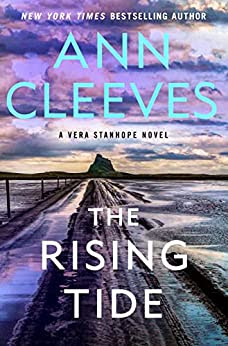
The Rising Tide by Ann Cleeves: A review

A visit with Vera Stanhope is always one of my favorite reading destinations. I actually had this visit almost two weeks ago and forgot to do a review. Let's see if I can remember what happened.

On beautiful and windswept Holy Island, five friends have been meeting annually for fifty years to commemorate and celebrate their first meeting as teenagers when they were students at Kimmerston Grammar. They had become a strongly bonded group and those bonds have held for all the years since through triumphs and tragedies.

The main tragedy that has forever marked the group was the death of one of their members, Isobel Hall, who, years earlier, had been lost to the rising tide across the causeway leading to the island. The surviving members are Philip Robson, who is a priest; Ken Hampton, an ex-teacher now afflicted with dementia and cared for by his devoted wife, Louise; Annie Laidler who is part owner of an enterprise called Bread and Olives; and Rick Kelsall who is a former celebrity journalist who has been fired after sexual assault complaints by an intern.

The group gathers to drink and tell their stories of the past and they learn that Rick, in spite of his recent troubles, is quite upbeat, telling the others that he has plans that will put him back on top. Those plans are never going to reach fruition though because the next morning he is found dead. At first, it appears to be suicide, but why would a man with plans for the future that he was excited about commit suicide? DI Vera Stanhope doesn't think it is likely and when the post-mortem results are in, she is proved correct. It was murder. 

Because of Kelsall's notoriety, the murder gets lots of attention from the media and the pressure is felt by Vera's boss, Superintendent Watkins, who passes along that pressure to Vera and her associates, demanding a quick result. Vera, along with her crack team of DS Joe Ashworth and DC Holly Clarke, goes to work to ferret out the murderer.

Vera's theory is that the solution to the case is to be found in the past of this group of friends. Joe and Holly have their doubts but Vera is the boss and they follow her lead. And, of course, she's right! She's Vera, after all. 

Cleeves does her usual excellent job of setting up the story, providing background, and making the island come alive with all its fog and mist and the danger of the rising tide. Moreover, the portrait that she paints of her main character, as well as her two main associates, really makes the reader see them and feel the associates' (sometime) impatience with their boss who to the rest of the world looks like nothing so much as a bag lady. It's a useful disguise for a detective who wants the world to underestimate her. As her opponents will soon learn, that is a very big mistake.

Tuesday, September 20, 2022

The Lost Gospel by Joe Edd Morris: A review and a special note


This book, as you might gather from the title, involves something called the "Q gospel," the original lost sayings of Jesus. It is set in modern-day Israel and in the Israel of the years following Jesus' death. It follows the adventures of archaeologist Christopher Jordan and ancient manuscript expert Kathryn Ferguson as they attempt to transport two recently discovered jars that are believed to contain early Christian documents and get them into the custody of experts who know how to handle them.  

The jars had been discovered by an American fundamentalist student who was working on a dig in the area and that student, when we meet them, is acting as a driver for Kathryn and Christopher. The ownership of the jars, if their existence were known, would be in dispute between the Israeli and Palestinian antiquity authorities, one more possible escalation of the ongoing percolating resentment in the region. The student/driver is hardly a dispassionate observer of events; rather his fundamentalist religious leanings give him a definite prejudice in the matter.

The second timeline of the story takes us back to 67 A.D. and the life of Jairus who was an early chronicler of the sayings of Jesus in and around Galilee. We also meet Jairus' friend Ezra who guides and advises him. We see how the decision was made to seal these documents recounting Jesus's sayings in jars and to hide them in what, in the 21st century, are disputed territories ruled by Israel.

I liked the way that Morris was able to build his story by alternating between the two timelines. In doing so, he is able to explicate the realpolitik of this fraught region of the world in both ancient and modern times. Moreover, it is easy to see a bright line leading from the turmoil of the Roman era to the powder keg situation that seems to be the region's constant political state of affairs today. 

This book combines two of my favorite interests: archaeology and thrillers/mysteries. Overall, it was a very satisfying read. 

*~*~*~*

Finally, I would be remiss if I did not mention that this is Banned Books Week in America, a week to shine a bright light on the untiring efforts of some in this country to control what we and our children are able to read. My suggestion is that we as readers familiarize ourselves with the list of books that the fascists are attempting to ban and read them all as if our freedom depended on it. Because it does. Let's make sure we are never reduced to the point of having to seal our books in the equivalent of clay jars and hide them away to keep them safe. 

Saturday, September 17, 2022

Poetry Sunday: September by Helen Hunt Jackson

American poet Helen Hunt Jackson was a contemporary of Emily Dickinson. She never quite achieved the same fame as Dickinson, but she wrote some lovely and evocative poems. This is one of them. 

Judging by the last line of the poem, this month was special to the poet. I particularly like the line "September days are here, with summer's best of weather, and autumn's best of cheer."  Is there a better description of the year's ninth month? If so, I haven't heard or read it.

September

by Helen Hunt Jackson

The golden-rod is yellow;
The corn is turning brown;
The trees in apple orchards
With fruit are bending down.
The gentian’s bluest fringes
Are curling in the sun;
In dusty pods the milkweed
Its hidden silk has spun.
The sedges flaunt their harvest,
In every meadow nook;
And asters by the brook-side
Make asters in the brook.
From dewy lanes at morning
the grapes’ sweet odors rise;
At noon the roads all flutter
With yellow butterflies.
By all these lovely tokens
September days are here,
With summer’s best of weather,
And autumn’s best of cheer.
But none of all this beauty
Which floods the earth and air
Is unto me the secret
Which makes September fair.
‘T is a thing which I remember;
To name it thrills me yet:
One day of one September
I never can forget.

Friday, September 16, 2022

This week in birds - #518

 A roundup of the week's news of birds and the environment

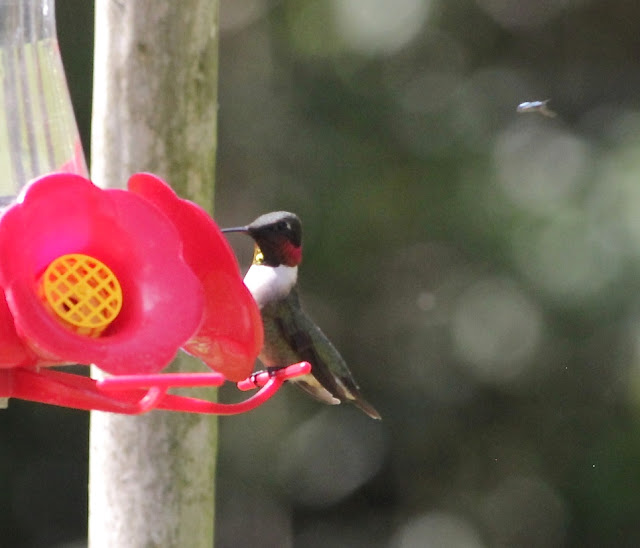
Ruby-throated Hummingbirds are passing through. Some have been with us all summer while others spent the season farther north and are now on their way to their winter homes. If we are lucky, maybe we'll get some of their cousins, the Rufous Hummingbirds, to spend the winter with us.

*~*~*~*

Is our planet the only one in the universe with life on it? That would seem to be an utterly ridiculous assumption. With the unimaginable abundance of planets, surely there are others with life. But how to find and connect with them?

*~*~*~*

Meanwhile, on our planet and our continent, a climate disaster unseen in 1200 years is unfolding. The American Southwest is experiencing a historical drought.

*~*~*~*

How can a study of history help to preserve an endangered species? That is the area of expertise of the "historical ecologist."

*~*~*~*

Coastal landowners in the United States are being urged to let rising sea waters into their property.

*~*~*~*

Once near extinction, the California Condor is making a recovery with a little help from its friends. 

*~*~*~*

Another species near extinction is the Chittenango ovate amber snail. Friends of the species are attempting to stave off that extinction.

*~*~*~*

Wildfires in California, Oregon, and Washington have caused air quality in the area to plummet.

*~*~*~*

Archaeologists in Borneo have discovered the earliest known evidence of surgery. It occurred 31,000 years ago and involved the amputation of the lower left leg. 

*~*~*~*

Not all so-called "marine protected areas" are created equal.

*~*~*~*

In British Columbia, an Indigenous-led project established a carefully guarded pen to protect pregnant caribou and their newborn calves. As a result of their efforts, the herd is flourishing.

*~*~*~*

This is the Mountain Plover, the American Bird Conservancy's Bird of the Week. A bird of the high plains of North America, like many birds of that habitat its numbers are decreasing.

*~*~*~*

The American chestnut tree was virtually wiped out by a blight-causing fungus a century ago, but now there is an attempt to bring it back, or at least to bring a hybrid back to the damaged lands where the trees once stood.

*~*~*~*

In other tree news, here's a story about an ancient ponderosa pine.

*~*~*~*

The Greenland ice sheet has just experienced one of its strongest late-season melts on record. It is September and the sheet is still melting.

*~*~*~*

Here's a link to the winners of the best bird photographs of the year.

*~*~*~*

There's a presidential election in progress in Brazil and the result of that election may well determine the fate of the Brazilian Amazon.

*~*~*~*

The energy crisis has inspired German cities to turn off night lights at landmarks, monuments, and prominent buildings as a way of conserving. It's an idea that we can hope will be emulated in other places.

*~*~*~*

Finally, in Connecticut, a family had an unexpected guest at their birthday party; a black bear showed up to demolish their cupcakes!


Thursday, September 15, 2022

Garden Bloggers' Bloom Day - September 2022

Why bother with a Bloom Day post this month, I thought to myself. I don't really have many blooms in the garden, do I? But I took my camera out to the garden anyway and found that I probably had more blooms than I had realized.

By my little pond, the inland sea oats have already "bloomed" and ripened into oats. 

Likewise, the beautyberry bushes have already bloomed and are now full of tasty berries for the birds. I would show you my white beautyberries but those are already gone. The birds pounce on them as soon as they ripen. Apparently, they are very tasty. The purple berries last longer.

It wasn't 4 o'clock yet so this 4 o'clock plant (Mirabilis jalapa or marvel of Peru) was not yet in full bloom.

This pink one though always seems to bloom a bit early.

The crape myrtles are full of their flouncy blooms all summer long and into the autumn.

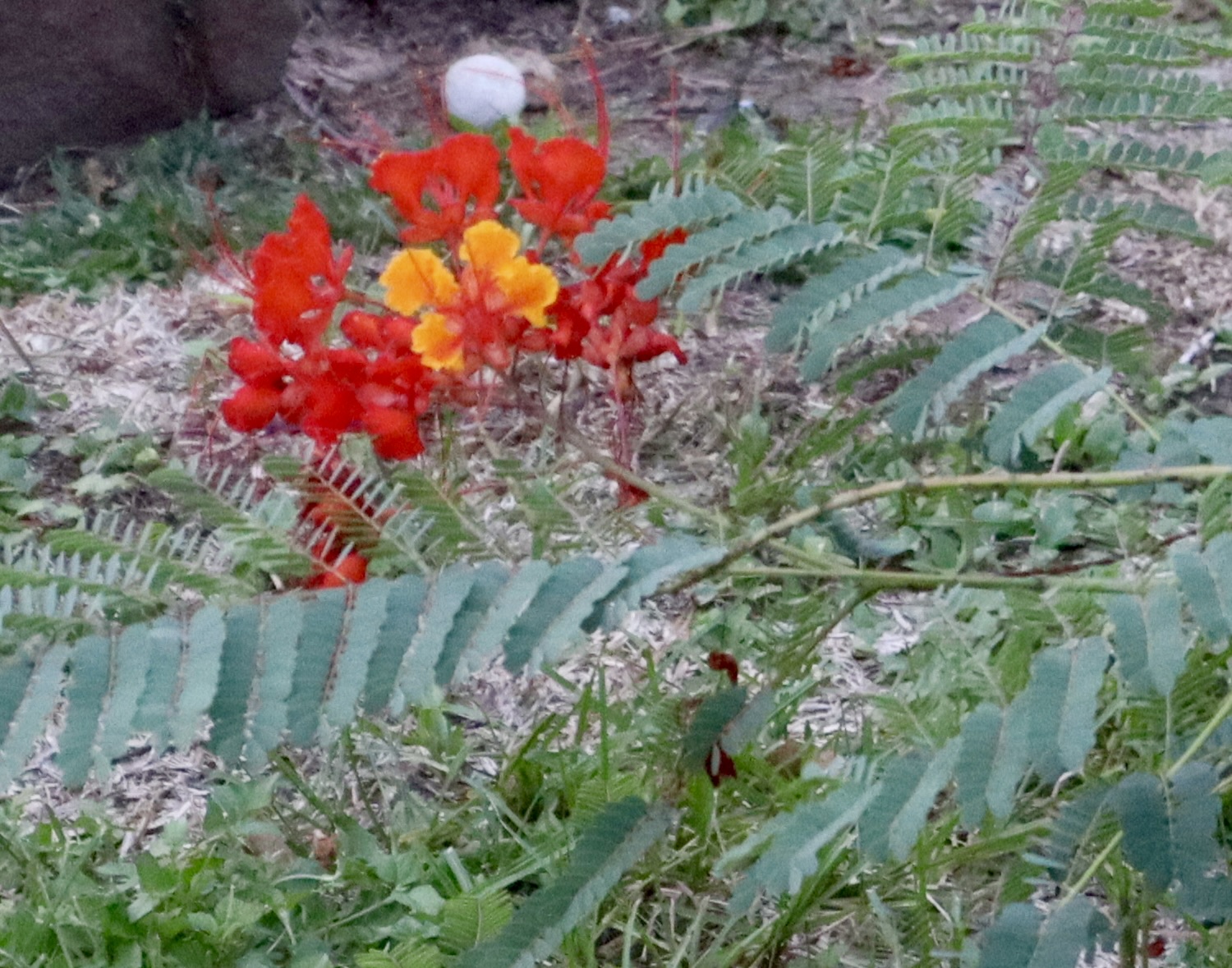
Pride of Barbados, aka peacock flower.
 
Sweet-smelling almond verbena.

Single-flower zinnias.
 
Tropical butterfly weed. The bloom cycle of the native butterfly weed is long since over.

The blooms of the Duranta erecta ripen into yellow berries that are devoured by the birds as soon as they appear.

An old canna blooms on.

As does the oleander.

The yellow cestrum, of course, blooms year-round in my garden.

The old lantana still has some blooms.

Hamelia patens, aka Mexican firebush. 


My 'Julia Child' rose is still good for a few blooms.

And 'Belinda's Dream' is still dreamy, although the blossoms are a bit battered.

Last but not least, wedelia blooms among the rocks.

Thank you for walking through my garden this month. I'm always happy to be a part of Bloom Day.


Wednesday, September 14, 2022

The Last White Man by Mohsin Hamid: A review

Mohsin Hamid really needs to go to punctuation school. His sentences in this book run on forever, for a full paragraph in some cases. Very long paragraphs. I previously read his book Exit West and I don't remember that being a problem with that one, so I assume that he made a conscious choice to write this book in this manner. I can't speak for other readers but I just found it distracting and annoying.

The story is briefly summarized in the very first sentence: “One morning Anders, a white man, woke up to find he had turned a deep and undeniable brown.” At some time and place that are never fully identified, people start changing color. At least White people start changing color. We see this through the eyes of the protagonist, Anders, a White man who wakes up one morning to discover that his skin is turning dark. He talks to his lover, Oona, about it, and soon learns that this is happening to others as well. This creates an unsettled atmosphere and some people seek to resist the change, but how?

Predictably, when people are faced with something they don't understand with all the shock and fear that result, conspiracy theories abound and this creates even more shock and fear and resultant violence and doomsaying. And yet, life goes on. People are born and they live and die.

We meet Anders' father and Oona's mother. Anders' father is a widower dying of cancer. Oona's mother is a widow in mourning for the loss of her son, Oona's brother. She is easy prey for conspiracy theorists. She just soaks it all in. She was, in fact, one of the most interesting characters in the book for me. She sees herself and the people she comes from as "the only people who could not call themselves a people in this country, and there are not so many of them left." She feels they are on their way to becoming extinct.

Long ago, I read Franz Kafka's The Metamorphosis. I've seen this book compared to that one. In fact, some reviewers have referred to it as a reimagining of that classic. Those comparisons are apt, although in this case, instead of turning into a giant insect, the protagonist and many others remain human but change colors. But in a world where skin color still defines an individual in the minds of many people, perhaps the change from white to dark is not unlike being changed into a bug that is vulnerable to being squashed.

This was an interesting idea for a book and it was generally well-written except for my caveat about the run-on sentences. That was just extremely annoying to me and hindered my enjoyment of the book. Moreover, I know that my sainted English teacher, Mrs. Rubenstein, would not be amused, and I thank you, dear Mrs. Rubenstein, for teaching me better.   

Saturday, September 10, 2022

Poetry Sunday: I Worried by Mary Oliver

Are you a worrier? I confess I am at times even though I know full well that it will not change anything or make anything better. It seems simply inbred and uncontrollable. Mary Oliver addressed that in this poem. 

I Worried

by Mary Oliver

I worried a lot. Will the garden grow, will the rivers
flow in the right direction, will the earth turn
as it was taught, and if not how shall
I correct it?

Was I right, was I wrong, will I be forgiven,
can I do better?

Will I ever be able to sing, even the sparrows
can do it and I am, well,
hopeless.

Is my eyesight fading or am I just imagining it,
am I going to get rheumatism,
lockjaw, dementia?

Finally I saw that worrying had come to nothing.
And gave it up. And took my old body
and went out into the morning,
and sang.

Tracy Flick Can't Win by Tom Perrotta: A review


If you are looking for a contemporary novel with humor that has a darker edge to it, this may be just the book you want. Tom Perrotta introduces us to Tracy Flick, the assistant principal at a New Jersey high school where the long-time principal Jack Weede has just announced his retirement. And just like that, Tracy Flick's career that had seemed stalled looks like it might have an opening to move forward. Will this finally be the time when Tracy Flick can win?


Tracy is energized by the prospect of a promotion and she throws herself into her work with a renewed vigor, hoping to prove to everyone that she is ready for the next step up. But while focusing on her career, she also must manage a somewhat complicated personal life involving her ten-year-old daughter, her doctor boyfriend who seems particularly needy, and her sideline of leading a growing meditation practice. It may be too much even for diligent and hard-working Tracy.

Things never come easy for Tracy and while she looks forward to a possible promotion, she must serve on the Selection Committee for Green Meadow High School's Hall of Fame. It's a position fraught with peril for an ambitious woman. The top candidate preferred by all the male members of the committee is the school's former star quarterback Vito Falcone. (And of course it would be a star quarterback!) Following high school, Vito had a brief and undistinguished career in the NFL. Reflecting on Vito's career leads Tracy to also consider her own which has left her feeling thwarted and unable to fulfill her potential.

While considering the Hall of Fame selection, Tracy ponders her chances for the promotion that she longs for. She wonders if the Superintendent is plotting against her and whether the School Board will really fairly consider her or if there are ulterior purposes at work that may deny her the position that she deserves. It's a situation that may feel familiar to anyone who has ever waited out a decision on a much-desired promotion.

In Tracy, Tom Perrotta has given us a sympathetic character that many of his readers will be able to identify with. He tells the story with humor, sometimes laugh-out-loud humor, but underneath is the serious situation of a middle-aged-woman looking at what may be a last chance to move ahead in her career and in her life and haunted by the feeling that, no matter what, she just can't win. Readers will be fervently hoping that Tracy is proved wrong.

Friday, September 9, 2022

This week in birds - #517

 A roundup of the week's news of birds and the environment:


The beautyberries are ripe and that is always good news for the birds like this American Robin.

*~*~*~*

A new study warns that the planet is on the brink of five dangerous climate tipping points and indeed may have already passed some of them.

*~*~*~*

Meanwhile, a September heat wave is breaking records in the United States.

*~*~*~*

California has suffered a triple threat this week: a heat wave, fires, and a hurricane.

*~*~*~*

The heat wave in the West has broken records in California, which has suffered temperatures in excess of 110 degrees F.

*~*~*~*

Here in the Gulf region, things have been hot but quiet. No hurricanes to contend with so far.

*~*~*~*

Those wildfires in California have proved deadly. Two people died in the fires there this week. Prescribed burns in certain areas are being used to try to control the fires.

*~*~*~*

In an unusual move to help protect the critically endangered North Atlantic right whale, lobsters have been red-listed there because the whales frequently become entangled in the lobster nets and pots.

*~*~*~*

A highly virulent form of bird flu has been found in a bottlenose dolphin and a stranded porpoise.

*~*~*~*

Researchers said this week that large swathes of the Amazon rainforest have reached a tipping point and may never recover.

*~*~*~*

People continue to put their lives on the line to try to save that rainforest and sometimes those lives are lost. It happened again this week.

*~*~*~*

Farmers and ranchers are frequently at war with beavers but they would be wise to see them as partners in protecting the land.

*~*~*~*

In Canada, a woman walking along a beach with her dog found a fossil from an unknown reptile that is probably older than the dinosaurs.

*~*~*~*

A seven million-year-old fossil cranium found in Chad has provoked a rancorous debate over whether it is an ape or perhaps the oldest human yet found.

*~*~*~*

And in Georgia (the European one not the American one) a 1.8 million-year-old tooth belonging to an early human has been found showing that humans lived there at least that early. 

*~*~*~*

The Yakima Water Basin in Washington provides a successful example of water management for areas like the Colorado River Basin where seven states need to agree on a plan of usage.

*~*~*~*

A new paper out this week warns of the need to protect Earth's 60,000 tree species in order to stave off global ecological disaster.

*~*~*~*

Three bottlenose dolphins that had spent years in captivity in a resort hotel were released into the open seas of Indonesia this week.

*~*~*~*

In India, an 80+-year-old woman has devoted her life to planting and nurturing trees in order to prevent deforestation.

*~*~*~*

A new study has revealed some striking differences between Neanderthals and modern humans in the development of their brains.

*~*~*~*

The persistent drought in Europe has brought some ancient monuments to light including a structure that is being referred to as the "Spanish Stonehenge."

*~*~*~*

Can an animal truly live forever? Maybe this jellyfish can.

*~*~*~*

Sea lions along the southern California coast are being poisoned by a naturally occurring neurotoxin that is present in tiny single-celled marine algae.

*~*~*~*

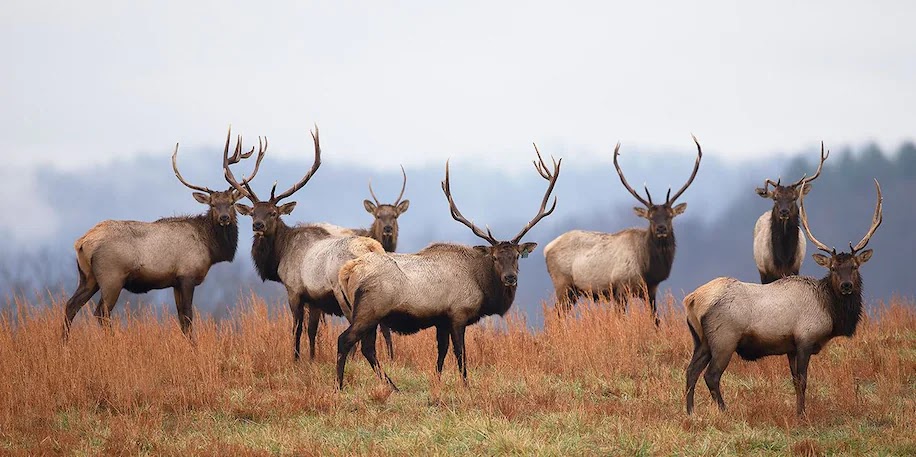
Elk in Virginia? Yes, indeed, and here they are.

*~*~*~*

Motion-triggered cameras in the Olympic National Forest in Washington have documented the presence of the Pacific marten, a rare native carnivore of that area. 

*~*~*~*

Using Nature as a weapon in war? It may in fact be the ultimate weapon.


Wednesday, September 7, 2022

The Hotel Nantucket by Elin Hilderbrand: A review

If it is summer, it must be time for another Elin Hilderbrand Nantucket novel, and sure enough, here it is. The Hotel Nantucket is her latest exploration of the culture of that unique little island off Cape Cod.

The history of the Hotel Nantucket began in the gilded age and was interrupted by a tragic fire in 1922. A young chambermaid named Grace Hadley was killed in the fire, but her death was not the accident that it was believed to be. 

But death was not an end for Grace. She is still hanging around the hotel, haunting it until the truth about her death is finally revealed. In the meantime, she amuses herself by performing mostly harmless "haunting" shenanigans. She is considered by many to be one of the attractions of the hotel. 

Since that 1922 fire, the hotel had fallen on hard times and had become nothing more than an abandoned eyesore, but all of that changes when London billionaire Xavier Darling buys the hotel and renovates it to its former glory. To complete the project, Xavier hires Lizbet Keaton of Nantucket as the hotel's manager and she makes it her goal to pull together a staff worthy of her vision for the hotel. 

Lizbet aims to make the hotel the unique and desirable destination for visitors to the island. As the new staff learn to get along and work with each other and to keep the guests satisfied, the Hotel Nantucket begins to live up to Lizbet's hopes for it.

As always in a Hilderbrand novel, we get the story from many points of view which deepens our understanding of events and gives us more choices of characters with whom to identify. That strategy can sometimes be confusing but in this case, it seemed quite effective. The main point of view that we get is from the ghostly presence of Grace who sees all and knows all. Moreover, she does everything she can to make sure that others become aware of the truth that she knows. 

The author is particularly good at setting up her story and getting the reader involved in the narrative. It makes the book hard to put down because we are always wanting to learn how each particular sidebar plays out and how it all fits together in the whole. 

It's all about the relationships and how those relationships affect events and the hotel itself. Hilderbrand knows Cape Cod very well and The Hotel Nantucket reveals its laid-back summer ambiance as well as the importance of those relationships. The author is on top of her game with this one, so chalk it up as another entertaining Hilderbrand summer read. 

Monday, September 5, 2022

Gold Dust by Reavis Z. Wortham: A review

This book was a heady mix of cattle rustlers, murderers, grave robbers, CIA turncoats, and rural crime families, and all of it is centered in the little northeast Texas community of Center Springs. We experience it all mostly through the characters of teenage cousins Top Parker and Pepper Parker. 

Top lives with his grandparents. His grandfather is the local constable, Ned Parker, who is charged with keeping the community safe and keeping the kids on an even keel. He's a man who has lived a lot of years and has garnered a lot of common sense along the way. His wife doesn't get as much ink in these stories, but of course, it is she who is the glue that holds everything together.  

The plot this time involves government experimentation with a biological agent that is alleged to be benign but may not be. When a crop duster sprays the stuff over the area and Top comes in contact with it, the boy, who already suffers from asthma, lands in the hospital fighting for his life. His grandfather seeks answers for what has happened to Top and ends up heading to Washington, D.C. to find those answers. 

There is a subplot here involving Pepper who found a mysterious gold coin and spreads some wild story about it which generates a "gold rush" in the area as strangers rush in to try to discover the cache of gold. Pepper is a headstrong girl and though she can be pretty annoying at times, I admit I quite like her.

This tale is set in the late 1960s and I felt that Reavis Wortham pretty well nailed the ambiance of the period in that part of the world. The dialogue among his characters and his descriptions of those characters seemed spot on. I recognized several of them among people I had known in East Texas during the'70s. 

This is actually the seventh book in this Red River mystery series. I used to be a stickler for reading a series in order but I've given up on that - life is just too short. I have found, however, that most writers of series do a reasonably good job in each new entry of cluing the reader in on all the necessary background and that is the case with Wortham. I had read only one other book in the series (Unraveled which I read earlier this summer) but I still felt comfortable with what I knew about the recurring characters and their relationships. I may eventually go back and read some of the earlier ones whenever I feel the need for an undemanding comfort read.  

Saturday, September 3, 2022

Poetry Sunday: September Midnight by Sara Teasdale

Sitting outside on a September evening, one hears a chorus of insect voices, "the passionless chant of insects, ceaseless, insistent." Sara Teasdale described it very well in this poem that was first published more than a hundred years ago in March 1914. Thankfully those voices are still there, the background music for a late summer evening.

September Midnight

by Sara Teasdale

Lyric night of the lingering Indian Summer,
Shadowy fields that are scentless but full of singing,
Never a bird, but the passionless chant of insects,
Ceaseless, insistent.

The grasshopper’s horn, and far-off, high in the maples,
The wheel of a locust leisurely grinding the silence
Under a moon waning and worn, broken,
Tired with summer.

Let me remember you, voices of little insects,
Weeds in the moonlight, fields that are tangled with asters,
Let me remember, soon will the winter be on us,
Snow-hushed and heavy.

Over my soul murmur your mute benediction,
While I gaze, O fields that rest after harvest,
As those who part look long in the eyes they lean to,
Lest they forget them.