Thanks for Following

Saturday, December 31, 2022

Poetry Sunday: To the New Year by W.S. Merwin

On this the first, unblemished day of this brand new year, all things are achievable. World peace. A cure for cancer. Justice for Donald Trump. It could happen. For on this day, all our hopes are "invisible before us - untouched and still possible." 

To the New Year


by W.S. Merwin

With what stillness at last
you appear in the valley
your first sunlight reaching down
to touch the tips of a few
high leaves that do not stir
as though they had not noticed
and did not know you at all
then the voice of a dove calls
from far away in itself
to the hush of the morning

so this is the sound of you
here and now whether or not
anyone hears it this is
where we have come with our age
our knowledge such as it is
and our hopes such as they are
invisible before us
untouched and still possible

Friday, December 30, 2022

This week in birds - #531

A roundup of the week's news of birds and the environment


A pair of Whooping Cranes searching for crabs in the waters of the Gulf.

*~*~*~*

Though it hasn't been as cold here as in more northerly parts of the country, it has been pretty cold relatively speaking. We can handle 102 degrees Fahrenheit quite well but temperatures in the 20s not so much. The same is true for wintering bats in the area, many of whom had to be rescued and nursed back to health. 

*~*~*~*

The top conservation issues for 2023 include rising sea levels and the need for the protection of wetlands.

*~*~*~*

The Revelator rates its best articles of 2022.

*~*~*~*

Fossils of a 30-foot-long prehistoric lizard have been found near the North Sulphur River in North Texas.

*~*~*~*

What will the human epoch of geologic time be called?

*~*~*~*

The iconic California mountain lion known as P-22 is no more. He was euthanized after apparently having been hit by a car. His fame made him an ambassador for city wildlife

*~*~*~*

The government has declared that the Ivory-billed Woodpecker is extinct but some birders as well as professional ornithologists refuse to give up hope that it still survives somewhere in a southern swamp.

*~*~*~*

The Biden administration has finalized rules that protect hundreds of thousands of small streams, wetlands, and other waterways under the Clean Water Act. This act has made a significant difference in American life, including cleaning up New York Harbor.

*~*~*~*

In order to keep the archaeological park of Pompeii from being overrun by vegetation, its keepers have employed a low-tech solution: hungry sheep.

*~*~*~*

Could offshore wind power be the wave of the future in energy production?

*~*~*~*

It's turtle shells all the way down - the ubiquitous ingredient of the planet's fossil record.

*~*~*~*

And speaking of ubiquitous, ants may be the most ubiquitous creatures on Earth.

*~*~*~*

Jaguars once roamed freely across the southwestern mountains of this country and there are plans afoot to ensure that they do so once again. 

*~*~*~*

Canadian researchers, taking inspiration from the construction of the feathers of Gentoo Penguins, have created a wire mesh to shed ice from surfaces.

*~*~*~*

One hazard of low temperatures in South Florida is stunned iguanas falling from trees.

*~*~*~*

Some scientists believe that Arctic warming is altering the jet stream and pushing frigid air down our way more frequently than in the past.

*~*~*~*

It seems somewhat contradictory but parts of the planet are warming more slowly than others.

*~*~*~*

Bird flu is still around and creating misery. Europe is having its worst-ever avian flu season and the virus is spreading. 

*~*~*~*

There has been a dramatic decline in the number of polar bears in the western part of Hudson Bay on the southern tip of the Canadian Arctic.

*~*~*~*

Roughly 190 nations have approved a United Nations agreement to protect 30 percent of the planet's lands and oceans by 2030. Unfortunately, Republicans have blocked this country's participation in the agreement.

*~*~*~*

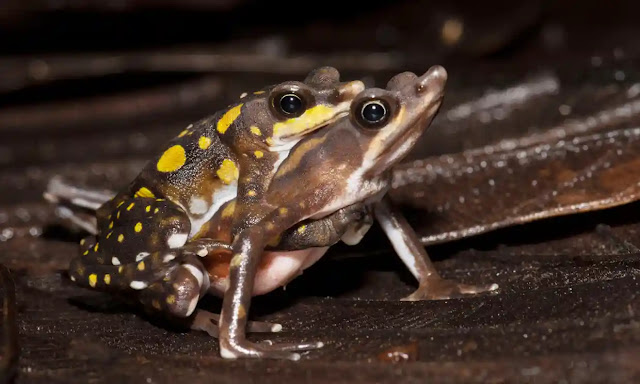
This is the longnose harlequin frog, native to Ecuador's Intag Valley and, contrary to reports of its extinction, it is very much alive!

*~*~*~*

Stone tools found in Idaho have been dated to about 16,000 years ago, meaning that migrants must have arrived on this continent earlier than had previously been thought.

*~*~*~*

These are Emperor Penguins. They, along with two-thirds of other native Antarctic species, are at risk of extinction as a result of global warming.  

*~*~*~*

There is a move afoot to plant chestnut trees across the country's mid-Atlantic region. The trees would be a benefit to the environment but would also be a boon to farmers and could help provide food security for communities.

*~*~*~*

The unique dragon's blood tree is seriously endangered but the islanders where it grows are working hard to ensure that it doesn't go extinct.

*~*~*~*


*~*~*~*

New designs have been discerned among the famous geoglyphs on Peru's Nazca plain.

*~*~*~*

It turns out that not all black bears are black. Some are cinnamon-colored.

*~*~*~*

Can the endangered white rhino be saved from extinction? There is hope.

*~*~*~*

The Keystone pipeline continues to be an environmental disaster, having suffered its third major spill in five years.

*~*~*~*

An Alaskan Native group is declaring 44,000 acres of its land near Bristol Bay to be off-limits to future development.

*~*~*~*

Rewilding is now a thing and it provides hope for the future.

*~*~*~*

Nature rules at a famous Parisian cemetery where many celebrities are buried.

*~*~*~*

How well did you keep up with news of Nature in 2022? Take The Guardian's quiz and find out!


Thursday, December 29, 2022

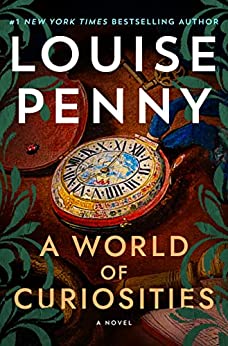
A World of Curiosities by Louise Penny: A review


It is always a pleasure to spend time in the cozy little village of Three Pines and that continues to be true in Louise Penny's latest addition to her Inspector Gamache series. This is the eighteenth in the series and the stories have lost none of their freshness.

In this entry, we find two young people, a brother and sister, who had entered Gamache's and Jean-Claude Beauvoir's lives several years earlier when they were children. Their mother had been murdered, shattering her children's lives. And now they have returned to the village but the question is why? This is a complicated tale that has its roots in that long-ago tragic event.

Of the two, the brother and sister, the sister seems to have survived the tragedy with greater resilience. Her name is Fiona and she has lived with the Gamaches and now is graduating from school. Her brother, Sam, also attends the ceremony and seems determined to stay in Three Pines. This concerns Inspector Gamache because Sam is a very disturbed individual, possibly even psychopathic.

In another offshoot of the story, a historical letter written by a long-dead stonemason leads to the discovery of a walled-in attic space that contains some hidden treasures including a grimoire (which I learned is a book of spells and invocations) and a version of a famous painting called the Paston Treasure with its illustration of "a world of curiosities." The painting contains hidden messages and puzzles that alarm Gamache, alerting him to a possible danger to the village which he holds dear.

This was another entertaining read in this long and much-loved series about ordinary people living their lives in an ordinary village. All the beloved residents of that village are present once again to entertain the reader with their interactions, including my favorite, the prickly poet, Ruth Zardo, and her duck, Rosa. Everyone should have a Ruth and Rosa in their life. 

Wednesday, December 28, 2022

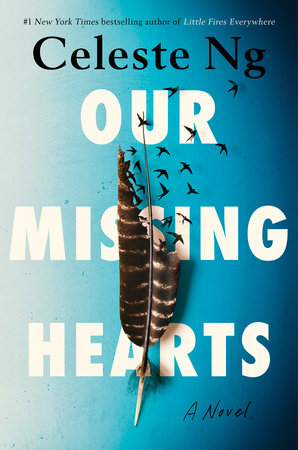
Our Missing Hearts by Celeste Ng: A review

(Note to readers: Celebrating the holidays has put me behind in reviewing the books I've read recently, so until I catch up, my reviews may be a bit more truncated than usual.)


Celeste Ng's latest is a cautionary tale for our times. She describes a time in America when the government has passed and signed into law the Preserving American Culture and Traditions (PACT) Act. The act allegedly is meant to "protect" American values from the influence of foreign entities, especially China. But what it really does is provide a framework and an excuse for institutionalized racism and violence against minorities. Many books are banned and internet searches for cultural and historical subjects are blocked. Children are being taken away from parents who are deemed "bad influences" and people who dare to question anything about the act are being arrested.

The protagonist through whose eyes we see and experience all of these events is a twelve-year-old boy named Bird. Bird lives in a dorm at Harvard with his father, a former professor turned librarian at the university. His mother, a Chinese-American poet, had abandoned the family three years earlier because her poetry was considered subversive and her vocal opposition to the government put them in danger. Bird dreams of finding her.

Bird finds a clue that leads him to believe that his mother is in New York City and he heads out, on his own, to try to locate her. In NYC, he encounters a rich heiress who had known his mother when they were both penniless and we learn of a secret society of librarians whose goal is to help reconnect children with their birth parents after they have been forced apart.

Ng's description of this dystopian America is certainly enough to give anyone pause, but in the end, the whole thing felt a bit one-dimensional to me. The characters never really "grabbed" me and I wasn't able to identify with them and feel involved in their story. In short, Our Missing Hearts, while certainly not a bad book, seemed to me to be missing a bit of heart.

Friday, December 23, 2022

Happy holidays!


I hope your holidays are merry, safe, and warm, and please accept all my best wishes for a healthy and happy 2023. 


Wednesday, December 21, 2022

Lessons by Ian McEwan: A review


Lessons, both learned and missed, are the foundations of life and history. In his latest book, Ian McEwan explores those foundations through the life story of his protagonist, Roland Baines. The story takes place during the mid-to-late twentieth and early twenty-first centuries in England. It is a long book, close to 500 pages and it is deserving of a thoughtful read.

We meet Roland as a child. His father is in the army, stationed in Libya. Roland is sent 2,000 miles away from his family to an English boarding school. There he has "lessons" with piano teacher Miss Miriam Cornell, but the lessons aren't only about the piano. Not to put too fine a point on it, Miss Miriam seduces her vulnerable young student. The affair, if we can dare call it that, scarred Roland for life. 

Fast forward to April 1986 and we find the grown-up Roland married to Alissa. They have a seven-month-old son named Lawrence. As the novel begins, Alissa has just left Roland and her son. There was no warning or explanation and just like that Roland finds himself to be the sole carer for Lawrence.

Roland's and Lawrence's story is essentially the story of European history from the mid-twentieth century to the present. We get the aftermath of World War II and the Cold War, the Cuban missile crisis, the Berlin Wall's rise and fall, Chernobyl, 9/11, Brexit, and on and on right up to our current pandemic. 

McEwan shows us the societal norms and culture of each period in that entire era. His great talent as a writer is the ability to depict the utter humanity of his characters, both their strengths and weaknesses, as they attempt to make sense of things and to live their lives in the best way they can. We can see how each action, each decision they make along the way leads inevitably to the next event.

Reading this book really brought home to me what a rich and colorful period of history Roland and I have lived through. Roland was haunted by the missed opportunities of his life, as many of us probably are. We seek to console ourselves in various ways but the ultimate question is, can we actually control the course of our lives? Or are we, in fact, simply riders of the storm, tossed whichever way the wind blows us? And in the end, does it really matter? Can we, in fact, learn from the "lessons" of our lives?   

Saturday, December 17, 2022

Poetry Sunday: December by Edwin Arnold

Our "whirl around the sun" for this year is almost done. Sad or glad, we'll soon let the "Old Year" go as we look forward to the blank slate of 2023. What will it bring? What will our thoughts be one year from now as we look back? 

December

by Edwin Arnold

In spangle of frost, and stars of snow,
Unto his end the Year doth wend;
And sad for some the days did go,
And glad for some were beginning and end;
But sad or glad, grieve not for his death,
Mournfully counting your measures of breath;
You that, before the worlds began,
Were seed of woman and surety of man;
You that are older than Aldebaran!
It was but a whirl round about the sun,
A silver dance of the planets done,
A step in the Infinite Minuet
Which the great stars pace to a music set
By Life Immortal and Love Divine
Which sounds, in your span of threescore and ten,
One chord of the Harmony, fair and fine,
Of What did make you women and men.
In spangle of frost, and stars of snow
Sad or glad—let the Old Year go!

Friday, December 16, 2022

This week in birds - #530

 A roundup of the week's news of birds and the environment:

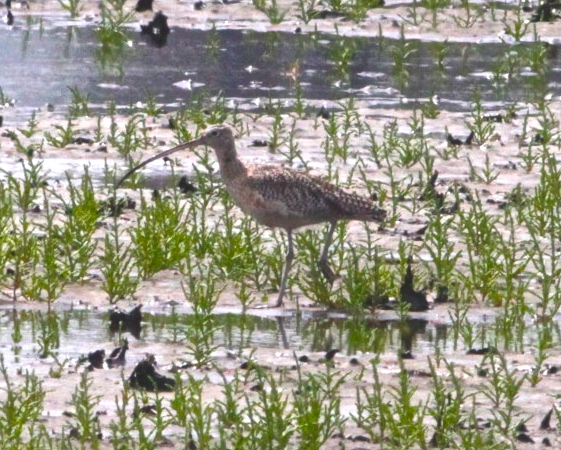
The very appropriately named Long-billed Curlew takes a stroll along the edge of the Gulf.

*~*~*~*

We all know about the pleasures of bird watching but it turns out there are positive health benefits as well. And perhaps the greatest benefits can be realized by "slow birding."

*~*~*~*

California's most famous and beloved mountain lion, P-22, is getting quite aged for a cat in the wild and may be experiencing distress. Wildlife officials are planning to capture the big cat to assess his health. 

*~*~*~*

And, in fact, P-22 has now been captured and taken to a wild animal facility for that assessment. The assessment revealed he probably had been hit by a car at some point. It is unlikely he will be returned to the wild. 

*~*~*~*

The Arctic's weather is changing, becoming wetter and stormier. The effects of such changes will be widespread, reaching far beyond the Arctic.

*~*~*~*

A Maryland couple decided to make their yard a habitat instead of a boring lawn and they ended up changing a state law.

*~*~*~*

Are you familiar with a website called iNaturalist? If not, maybe you should be.

*~*~*~*

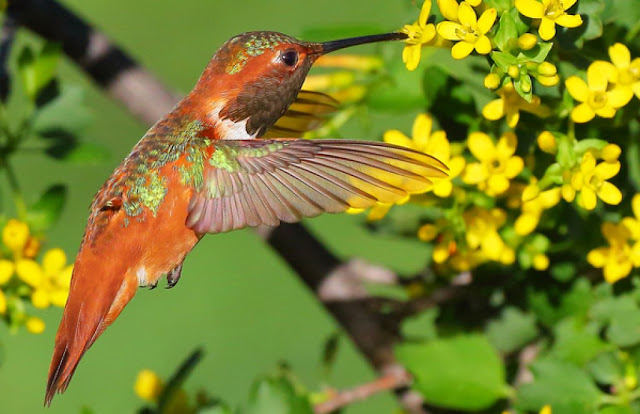
Meet the American Bird Conservancy's Bird of the Week: the Allen's Hummingbird.

*~*~*~*

The right-wing's fever dream for years has been to build a wall along the border with Mexico and now Arizona's governor who has poorly disguised ambitions for higher office has made their dream come true by stacking shipping crates along the border to make what must be an impregnable wall!

*~*~*~*

A humpback whale suffered a broken back, probably after being hit by a boat, but that did not deter her from making her 3,100-mile migration from British Columbia to Hawaii.

*~*~*~*

A flurry of births among the gray wolves of California is proof of the species' amazing comeback in a state where they had been exterminated a century ago.

*~*~*~*

Brazilian gold miners are laying waste to the forest in an Amazon reserve.

*~*~*~*

Scientists are raising concerns about the potential for a population collapse among critically endangered eels. 

*~*~*~*

There's very bad news from the world's forests: In Oregon, millions of conifers have suffered a record die-off. And in the East, ash trees are vanishing due to an onslaught from the ash borer. 

*~*~*~*

But there is some hope. In Haiti, a magnolia that had been thought to be extinct for a hundred years has been found alive and well.

*~*~*~*

In Canada, the critically endangered caribou has been given protection under the Endangered Species Act.

*~*~*~*

The benefits of cover crops in agriculture have long been known and now farmers in the Midwest have heeded the call to repair the soil and slow erosion by planting them.

*~*~*~*

Snow Geese in flight. How do they keep from bumping into each other?

*~*~*~*

Honeybee hives in Florida were decimated by the destructive power of Hurricane Ian.

*~*~*~*

As humans take over much of the planet, they are pushing wildlife out. Will there be any space left for those creatures to live?

*~*~*~*

The Keystone Pipeline has had at least three significant spills within the last five years.

*~*~*~*

NASA's SWOT (surface water and ocean topography) satellite will give an unprecedented view of the planet's oceans, lakes, and rivers. 


Thursday, December 15, 2022

Garden Bloggers' Bloom Day - December 2022

There isn't a lot of blooming going on in my garden at the moment, but here's a taste of what is.


Wedelia, always a dependable bloomer.

If it is December, then of course the loquat is in bloom. 

Turk's cap.

The little lemon tree, gifted to me by my children to replace my old tree that finally succumbed to the cold last winter, is now in bloom.

Purple oxalis, constant bloomer.

Sweet-smelling almond verbena perfumes my entire backyard.

                                                 Yellow cestrum.


                                                      Carolina jessamine.


This azalea, the variety name of which I've forgotten, was gifted to me on the death of my mother in 2004, so it has significant sentimental value for me. I think it holds the record for the longest I've been able to keep a potted plant alive.


The glowing orange of the Cape Honeysuckle blooms light up my backyard.


                                             Lantana - always in bloom.


                                                 'Pink Knockout' rose.


                                                'Julia Child' rose.


                          'Belinda's Dream' rose - always dreamy in bloom.

And that's about it. As I said, not much going on, but these "old dependables" are very much appreciated.

Once again, thanks to Carol of May Dreams Gardens for hosting this monthly meme and a very happy Bloom Day to all. I hope you and your garden are flourishing. 


Monday, December 12, 2022

Note to readers

 My blog has recently been under attack by some unknown entity that has been attempting to use the comment section to pass along information to some other entity. Consequently, I have been forced to activate comment moderation. Please be assured that any legitimate comment will be approved and published as soon as I can get to it. I love your comments and look forward to reading them.

Sunday, December 11, 2022

We Spread by Iain Reid: A review


I have not read any of Iain Reid's previous books, but based on my enjoyment of this, his latest, one, I think I will certainly be seeking him out in the future.

My first quandary in attempting to describe the book is to decide just which category I should assign it to. It is literary fiction, certainly, but also it is a thriller, a mystery, with even a bit of horror thrown in for good measure. Reid has the perfect subject on which to expound on all those themes - old age.

His protagonist is named Penny and when we meet her, she has already had a very long life. She is at a crisis point in her life. Sometime earlier, her life partner had died but before he died, he had made arrangements for Penny to have a residence at a unique long-term care facility. Now, after a series of concerning "incidents," she has decided to take up that residence.

The house in which the facility is located is surrounded by beautiful woods. It is quite a peaceful site and at first, Penny is very content there. In her earlier life, she had been a painter and now she begins to paint again. She settles in, enjoying the companionship of her peers who are the other residents, and relishing the experience of being cared for.  

As time passes, however, Penny begins to have a sense of unrest about her new surroundings. She begins to distrust her caregivers and to become disoriented concerning the passage of time and regarding her own place in the world. Is this all just the unavoidable effect of aging or is there something more sinister going on here?

Reid's telling of this tale was quite compelling. I found the book hard to put down. His writing was spare and unembellished but almost hypnotic in its propulsive quality. He is a relatively young person and yet he was able to compassionately relate the story of his characters growing old and losing some of the autonomy that they had enjoyed in their lives. Being able to do so, it seems to me, is a mark of real talent as a writer. It will be interesting to see where that talent leads him in the future.

Saturday, December 10, 2022

Poetry Sunday: It sifts from Leaden Sieves by Emily Dickinson

A snowfall has the power to change the look of the land as it wraps the world in a layer of "fleece." It's not something that happens where I live now but I remember the snowfalls of my childhood. Those were magical times.

And then the sun came out and melted the snow and everything turned to slush. But Emily Dickinson preferred to write of the beauty of the snowfall itself.

It sifts from Leaden Sieves

by Emily Dickinson

It sifts from Leaden Sieves - 
It powders all the Wood. 
It fills with Alabaster Wool 
The Wrinkles of the Road - 

It makes an even Face 
Of Mountain, and of Plain - 
Unbroken Forehead from the East 
Unto the East again - 

It reaches to the Fence - 
It wraps it Rail by Rail
Till it is lost in Fleeces - 
It deals Celestial Vail

To Stump, and Stack - and Stem - 
A Summer’s empty Room - 
Acres of Joints, where Harvests were, 
Recordless, but for them - 

It Ruffles Wrists of Posts 
As Ankles of a Queen - 
Then stills its Artisans - like Ghosts - 
Denying they have been -

Friday, December 9, 2022

This week in birds - #529

A roundup of the week's news of birds and the environment

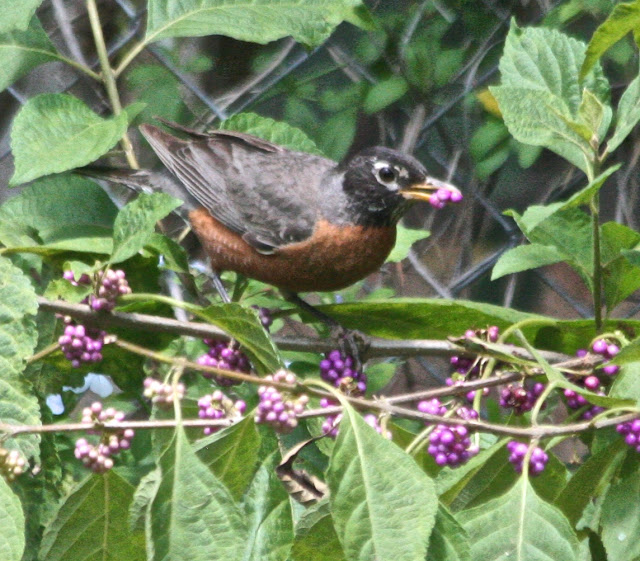
The beautyberries are ripe and the American Robins and other fruit-eating birds are grateful. Interestingly, I have a couple of bushes that produce white berries and those have already been stripped. Apparently, there is something about the white berries that tastes particularly good to the birds. There are plenty of the purple berries left to help feed them through the winter. 

*~*~*~*

Let's start this roundup with a positive story: In a report published this week, the International Energy Agency says that renewables will overtake coal to become the main source of electricity generation by 2025.  

*~*~*~*

At this point, is it even possible to save Nature? That is a question being considered at the COP15 meeting in Montreal this week.

*~*~*~*

One writer believes that a good way to save Nature and the planet is to focus on saving wild cats.

*~*~*~*

The continuing eruption of the Mauna Loa volcano has given scientists a rare look into the Earth.

*~*~*~*

Here's the latest from the American Bird Conservancy, including news of the rediscovery of the Black-naped Pheasant Pigeon, a bird that had been presumed extinct.

*~*~*~*

If the Rediscovering America's Wildlife Act successfully makes its way through Congress and becomes law, it will offer some hope for the survival of Florida's perilously endangered panthers.

*~*~*~*

In other news of Florida's wildlife, an invasive iguana got into an electricity substation in Lake Worth Beach this week and in the process committed suicide and caused a large-scale power outage.

*~*~*~*

Peyote is important to the religious practices of some Native American groups and its continuing existence is being threatened by land development and over-harvesting.

*~*~*~*

A bill curbing private ownership of big cats is expected to be swiftly signed into law by President Biden. 

*~*~*~*

Hurricane erosion of a Florida beach has uncovered a shipwreck dating back to the 1800s.

*~*~*~*

Greenland is no longer very green but evidence has been uncovered that shows it was quite the lush environment a couple of million years ago. 

*~*~*~*

The Ankylosaurus had a sledgehammer-like tail club that was capable of delivering bone-cracking blows. Apparently, it was deployed against its own kind as well as against predators.

*~*~*~*

A volcano erupting on Java forced the evacuation of around 2,000 people this week.

*~*~*~*

The Texas Public Policy Foundation is all about protecting the high-carbon lifestyle and trying to make it even more dominant in the world. Who cares about climate change!

*~*~*~*

Is an underground greenhouse actually a thing? Well, yes, it is.

*~*~*~*

Park rangers in Mozambique are getting sneaky; they are using silent offroad ebikes to catch poachers.

*~*~*~*

This little beauty is an Allen's Hummingbird and it is the American Bird Conservancy's Bird of the Week.

*~*~*~*

Illegal gold mining in Venezuela is destroying a sacred mountain in a protected national park. Obviously, that "protection" is not being taken seriously by Venezuela's government.

*~*~*~*

The world's wildlife is disappearing primarily because it is running out of places to live.

*~*~*~*

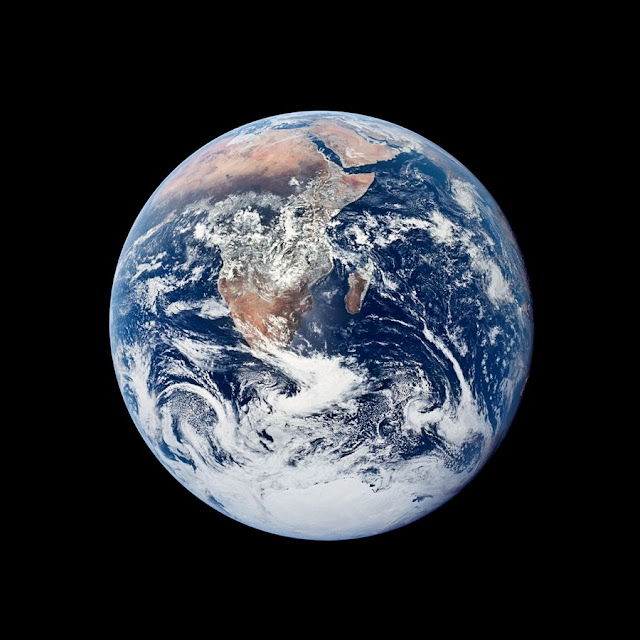
Here's that famous picture I never get bored with looking at - the view of Earth as captured by the crew of Apollo 17 as they headed toward the moon.

*~*~*~*

The Steller's sea cow has been extinct for almost 200 years but it may have been instrumental in shaping California's kelp forests.

*~*~*~*

It seems that not even a war and the threat of mines and unexploded projectiles can keep Ukrainians from hunting mushrooms.

*~*~*~*

The city of Port Townsend, Washington, has proclaimed that Southern Resident orcas have legal rights. One can only hope that this is an idea that will spread to other areas and species. 

Monday, December 5, 2022

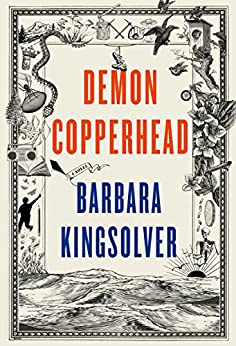
Demon Copperhead by Barbara Kingsolver: A review


Barbara Kingsolver's latest is essentially her retelling of Charles Dickens' David Copperfield set in the southern Appalachian Mountains of Virginia. The main character of her opus was named Damon by his teenage mother but, of course, that was easily turned into "Demon" by the other kids. 

Demon was born to a single mother in a single-wide trailer. His mother was a troubled adolescent who had not the first clue about caring for a baby. Demon inherited his good looks from his father who had died before he was born. Part of those looks was his distinctive copper-colored hair.

Demon soon became a ward of the state's foster care system. As such, he experienced an often traumatic existence, but from somewhere - either genes or some of his caregivers along the way - he developed a strong instinct for survival. In school, it was discovered that he had some athletic talent and that helped to smooth his way through the system.

Kingsolver tells her story through Demon's voice. The narrative is unsparing in its recitation of all the perils that he faced. Some of his foster parents forced him into child labor. The schools that he attended could be most kindly described as derelict.

After he was injured playing sports for his high school, he became addicted to painkillers. He had a long battle to overcome that addiction. He had some disastrous romantic entanglements and crushing personal losses. But that instinct for survival kicked in and he was able to overcome his challenges and setbacks.

This is quite a lengthy book of more than 600 pages and a LOT happens in it, all of which makes it a bit difficult to adequately sum up, but Barbara Kingsolver is such a terrific writer that the book never seems long. She keeps the action moving. 

In all that action, she takes us to some dark and depressing places but there is so much beauty in her telling of it that one never feels overwhelmed, never feels frustrated, or wants to hurl the book against the wall. What writing talent it takes to achieve that and to make the reader feel empathy for these characters, some of whom are not that attractive. 

I've already noticed that this book has a spot on most of the "best of 2022" lists that appear at this time of year. It would appear on my "best of" list as well. Another winner from Barbara Kingsolver.   

Saturday, December 3, 2022

Poetry Sunday: Winter Trees by William Carlos Williams

I love the look of the deciduous trees in winter after they've shed their leaves and stand naked under the sky. The trees in our yard are mostly evergreen - live oaks and magnolia - but we do have some that shed their leaves, notably a red oak that is a particular favorite of mine. Of course, it never sheds all of its leaves, as Penelope, the wife of Odysseus in Greek myth, was well aware. But in the present day, the "disattiring" of the trees is basically complete now. Winter, if not actually here yet, is waiting on the doorstep and the trees "stand sleeping in the cold."  

Winter Trees

by William Carlos Williams

All the complicated details
of the attiring and
the disattiring are completed!
A liquid moon
moves gently among
the long branches.
Thus having prepared their buds
against a sure winter
the wise trees
stand sleeping in the cold.

Friday, December 2, 2022

This week in birds - #528

 A roundup of the week's news of birds and the environment:

Maybe my favorite of our winter visitors, the American Goldfinch has returned to us and that is always good news.

*~*~*~*

The United Nations projects that the world population of humans has now passed 8 billion, with much of the growth coming from the developing nations in Africa.

*~*~*~*

Humans love to give names to the various epochs of their history. Will future generations designate our time as the "Age of Extinction"?

*~*~*~*

Mauna Loa is blowing its top. The Hawaiian volcano has erupted for the first time in nearly forty years.

*~*~*~*

Could the mighty Mississippi River actually dry up? It is difficult - and scary - to imagine but long stretches of it have in fact run dry. And out West, the Colorado River faces a similar fate.

*~*~*~*

Bats, it seems, have quite an amazing vocal range

*~*~*~*

There is a supervolcano at Yellowstone in northwestern Wyoming and it has a plentiful supply of magma stored beneath its surface. 

*~*~*~*

Three Native tribes in the Northwest that are threatened by climate change will each be paid $25 million by the U.S. government to move to higher ground.

*~*~*~*

The removal of dams seems to be a growing movement in Europe as well as in this country.

*~*~*~*

Florida's manatees are dying at an alarming rate and that has prompted a call for their return to the endangered species list. They were redesignated as threatened rather than endangered in 2017.  

*~*~*~*

Wild Turkeys are actually quite an amazing species. They are able to adapt to a variety of habitats, including suburban neighborhoods where they are not always welcomed by their human neighbors.

*~*~*~*

The pretty little Chestnut-collared Longspur, a bird of the grasslands, is American Bird Conservancy's Bird of the Week.

*~*~*~*

Last week's Bird of the Week was the wonderful Montezuma Quail, a bird of the Southwest and primarily of Mexico. 

*~*~*~*

I am familiar with Ruddy Turnstones, but did you know there is also a Black Turnstone? It is a bird of the Pacific shorelines.

*~*~*~*

It's hardly even news anymore that the American bison, sometimes referred to as buffalo, is making a comeback, helped in large part by the stewardship of their old nemesis, the Native American tribes. But not everyone is happy about that.

*~*~*~*

Here's a story about sightings of desert birds in the Mojave Desert scrub of northwestern Arizona.

*~*~*~*

The myth of Atlantis, that 2,300-year-old story told by Plato, will not die.

*~*~*~*

This is the endangered Island Marble butterfly, found only on San Juan Island in the Northwest. Strenuous efforts are underway to protect and save the little butterfly.

*~*~*~*

It turns out rumors of its extinction were premature. The Black-Naped Pheasant-Pigeon of Papua New Guinea, thought to be extinct for 140 years, has been found alive and apparently flourishing there.

*~*~*~*

Could our understanding of avian evolution be all wrong? New discoveries made by CT scans of fossils seem to make that a possible conclusion. 

*~*~*~*

Here's some concerning news: Global emissions from the burning of coal are on a pace to set a new record in 2022.

*~*~*~*

The Biden administration has proposed new rules to limit methane leaks from oil and gas drilling on public lands.

*~*~*~*

The Convention on Internationational Trade in Endangered Species of Wild Fauna and Flora (CITES) has moved to enact some of the most significant protection for shark species targeted in the fin trade and for scores of turtles, lizards, and frogs whose numbers are decimated by the pet trade. More than fifty species of sharks were given protection in the landmark vote.

*~*~*~*

Scientists have confirmed links between the heating up of the planet and events such as hurricanes, heat waves, and droughts, but the connections between global warming and tornadoes are more difficult to establish. 

*~*~*~*

I remember well that back in the 1980s there was significant fear that the California Condor was well on its way to extinction, but a determined group of conservationists said, "Not so fast!" Today, the condor is back just a bit from the brink.

*~*~*~*

It turns out that the mighty forest exists in large part because of the labor of some of its smallest inhabitants.

*~*~*~*

Over the last 11 years, 90% of the counties in this country have been hit by at least one weather disaster.

*~*~*~*

A determined woman in Finland is making a difference by gaining protection for reindeer and their habitats.

*~*~*~*

Did you know that ants produce milk? Well, no, not exactly, but they do produce a goo that seems to have some of the same functions as milk.

*~*~*~*

Meet the Natovenator polydontus, the earliest known example of an extinct dinosaur with a body designed for diving.

*~*~*~*

Here are some of the best wildlife photographs of the year.

*~*~*~*

Finally, here's Jonathan, a Seychelles giant tortoise who is just about to celebrate his 190th birthday. Happy birthday, Jonathan. You make me feel so young!

Tuesday, November 29, 2022

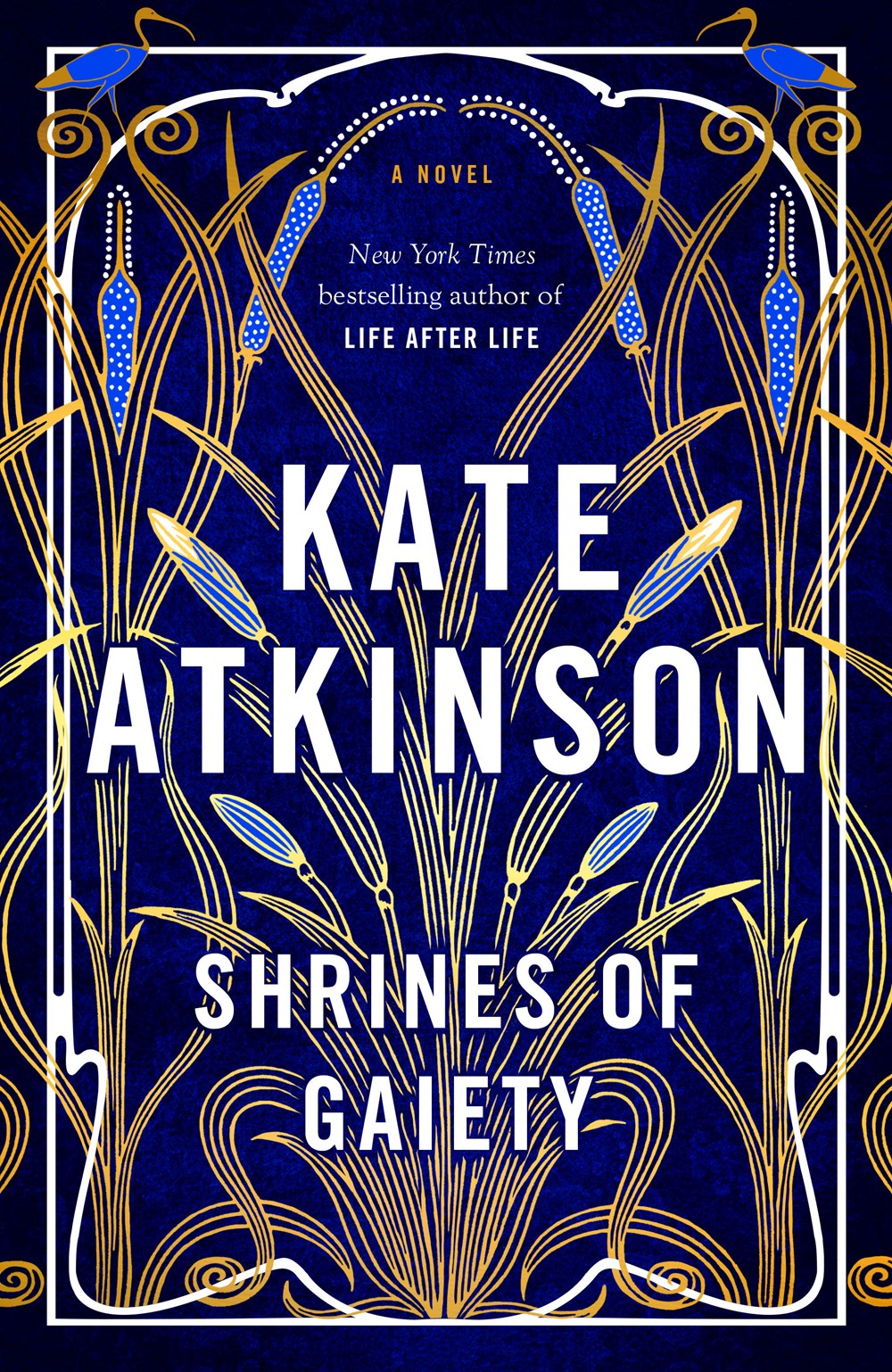
Shrines of Gaiety by Kate Atkinson: A review


In her latest book, Kate Atkinson gives us 1920s London. It was a fraught time and place with a multilayered society full of drugs, the sex trade, mob wars, and the posh clubs that were the center of it all. Overseeing all that was Nellie Coker, Ma Coker.

Nellie was the shrewd owner of a string of nightclubs. When we first meet her, she has just been released from a stay in prison. Even so, though she exists in a dangerous world and has enemies all around, she is the queen of all she surveys. 

Nellie was indeed Ma to six duplicitous children who, in addition to all of her business interests, kept her on her toes. We see many of the events through the eyes of the eldest child, Niven.  He is a rather enigmatic character, home from his recent service in World War I. His character was essentially forged by his experiences in that war, especially his time in the Somme.

In addition to Nellie and Niven, there are a multitude of other characters, almost too many to keep track of, but Atkinson is a pro and she gives each of them a unique voice which helps the reader to make connections and keep them all straight. 

Although it is eight years after the end of the Great War, England is still recovering and the frenetic nightlife of Nellie's clubs helps the patrons to forget, at least for a little while. There are hostile forces all around, many of whom would take Nellie's empire from her if they could, so in order to protect the empire and continue to provide for her children, with no husband there to help her, she must be on constant alert.  

There is so much here, it is really difficult to summarize it all in a brief review. Atkinson has obviously done much research on this period and she paints a vivid and memorable picture of post-war London. It is a compelling storyline that completely absorbed me from beginning to end. In fact, my initial rating on the book was four stars, but on reflection, I really can't think of any good reason to take away a star. Five stars it is!