Thanks for Following

Tuesday, January 31, 2023

The Age of Vice by Deepti Kapoor: A review

This is the first in a proposed trilogy of books, set in India, mostly in Delhi. It is centered around the Wadia family, but we see things mostly through the eyes of Ajay who works for Sonny, the scion of that family. 

When he was a young boy, Ajay was sold by his impoverished mother. It was under those circumstances that the boy grew up and eventually came to work for Sonny. 

The Wadia family essentially rules Delhi. Nothing can get done there without their consent. This creates an atmosphere that is rife with all manner of vice, including gangsters, kidnappers, murderers, drug addicts, and violent thugs of every stripe.

The story is a blend of family saga and crime drama and the writer takes her time in telling it. The book is over 500 pages long and yet it reads quickly. The action never drags and the reader feels compelled to keep turning those pages to find out what will happen next.

The book begins with a tragedy, a fatal car crash that killed five people including a pregnant woman. The driver of the car causing the crash - a Mercedes - was apparently drunk, but the investigation makes Ajay, the servant, the driver, and he is arrested and imprisoned.

We also meet Neda who is Sonny's girlfriend. She is a somewhat naive young journalist who seems to have little commitment to her profession. Instead, she just wants to be a part of the glamorous, hedonistic world represented by Sonny. 

Ajay, Sonny, and Neda - these are the three characters who give us this story. Ajay and Neda live in Sonny's wake and they put their trust in him, but he is not worthy of that trust.  

It was never entirely clear to me just what it was that made the Wadia family so bad. The family relationships and their actions are all left a bit shadowy. The vagueness was perhaps intentional on the part of the writer, but personally, I would have appreciated just a bit more exposition. One likes to know just what it is that makes this unlikable character so unlikable. But perhaps we will get more of that in the second and third entries of the series, which I definitely plan to read.


Saturday, January 28, 2023

Poetry Sunday: An Old Man's Winter Night by Robert Frost

Winter is winding down, both the season and the winter of our lives. Robert Frost understood such times. 

He knew, for example, about entering a room and not being able to remember why you came there and he expressed it well in this poem: "What kept him from remembering what it was that brought him to that creaking room was age." Yes. That. 

Well, there's not much we can do about age. It is inexorable, so it's best to simply accept it and move on, keep on "filling the house" and our lives as best we can. 

An Old Man's Winter Night

by Robert Frost

All out of doors looked darkly in at him
Through the thin frost, almost in separate stars,
That gathers on the pane in empty rooms.
What kept his eyes from giving back the gaze
Was the lamp tilted near them in his hand.
What kept him from remembering what it was
That brought him to that creaking room was age.
He stood with barrels round him—at a loss.
And having scared the cellar under him
In clomping there, he scared it once again
In clomping off;—and scared the outer night,
Which has its sounds, familiar, like the roar
Of trees and crack of branches, common things,
But nothing so like beating on a box.
A light he was to no one but himself
Where now he sat, concerned with he knew what,
A quiet light, and then not even that.
He consigned to the moon,—such as she was,
So late-arising,—to the broken moon
As better than the sun in any case
For such a charge, his snow upon the roof,
His icicles along the wall to keep;
And slept. The log that shifted with a jolt
Once in the stove, disturbed him and he shifted,
And eased his heavy breathing, but still slept.
One aged man—one man—can’t fill a house,
A farm, a countryside, or if he can,
It's thus he does it of a winter night.

Friday, January 27, 2023

This week in birds - #535

 A roundup of the week's news of birds and the environment:

A favorite winter visitor - the Chipping Sparrow.

*~*~*~*

Our ancestors were very hairy creatures and we still carry with us those genes for hairiness, so why don't we look like Australopithecus afarensis?

        Depiction of Australopithecus afarensis. 

*~*~*~*

Seven states rely on the shrinking Colorado River for water. Since they seem unable to come to an agreement for sharing the water, it seems that the federal government may have to impose such an agreement

*~*~*~*

Prescribed burns, a long-time Indigenous practice, can help to restore depleted lands. 

*~*~*~*

Inuit communities are calling for mandatory measures to reduce underwater noise pollution which they blame for the disappearance of narwhals and ringed seals from areas where they used to hunt them.

*~*~*~*

Why do the newts cross the road and why are there volunteers out there helping them to do it?

*~*~*~*

When scientists tagged a southern elephant seal in 2011, they could little have guessed the important information that would be provided by that tag.

*~*~*~*

This is the American Bird Conservancy's Bird of the Week, the Sharp-tailed Grouse and it is one tough customer!

*~*~*~*

The federal government has banned roads and logging in Alaska's Tongass National Forest, restricting development on more than nine million acres of the continent's largest temperate rainforest.

*~*~*~*

Did you know that freshwater stingrays exist? Well, they do exist in the Amazon and they have just received some much-needed protection.

*~*~*~*

A 600-square-mile iceberg has just broken off of the Brunt Ice Shelf in Antarctica. According to scientists, this was a natural event not related to climate change. 

*~*~*~*

New Yorkers have recently been delighted by the sight of common dolphins frolicking in the Bronx River, something that had not occurred for many years because of pollution in the river. Their return is a sign of the improving condition of the waterway.

*~*~*~*

Turf wars between salt marsh microbes dictate how much carbon the salt marshes store and how much methane they release into the atmosphere.

*~*~*~*

Precipitation has been above average in the West this winter but it will not be enough to pull the region out of drought conditions.

*~*~*~*

Seeds held in a seed bank, many of them as old as agriculture itself, may hold the key to our survival from climate change.

*~*~*~*

They are cute and furry and they may just be the key to saving the ecosystem of the West Coast. A non-profit conservation group is hoping to restore the sea otter all along the coast to help bring back its decimated kelp forests.

Remembering "American Dirt"

This op-ed piece in the Times reminded me of my own take on American Dirt which I read and reviewed three years ago. Apparently, the book is still stirring up feelings. Here were my thoughts on it at the time.

*~*~*~*

American Dirt by Jeanine Cummins: A review

Mexico is my next-door neighbor. I live in an area that is made immeasurably richer culturally by Mexican immigrants and people of Mexican heritage. My neighbors, friends, and, yes, employees are some of those people. For those reasons, I was particularly interested to hear about this book. And then shortly after I first heard of it, it seemed the book world exploded along a strict dichotomy of opinions; either it was a "new American classic" or it was a rank example of cultural appropriation and whitewashing.

At that point, I tried to distance myself from all the hoopla about the book. I wanted to read it myself and make up my own mind.

By now it seems that the plot of the novel is perhaps too well known to have to recount it here, but briefly: Lydia Quixano PĂ©rez is a bookstore owner with a comfortable life in Acapulco, living with her husband who is a journalist and her beloved son, Luca. One day a man comes into her bookstore and purchases some books that are among her favorites. They get into a conversation about literature and eventually bond and become friends over their mutual love of books. What naive Lydia fails to realize is that her new friend is the head of a drug cartel that is terrorizing the city. Her husband writes about these people and as a result of that writing, members of the cartel invade a quinceanera celebration at their home and kill sixteen members of Lydia's family, including her husband and mother. Only Lydia and Luca escape the carnage by hiding in a bathroom. Realizing, somewhat belatedly, that their lives are in danger, Lydia makes the decision to head north to join the flow of migrants to the United States. The greater part of the novel relates that journey with all the horrors and tragedies experienced or witnessed by Lydia and Luca.  

The great objection to the novel, I gather, is that the author is not Mexican and does not seem to have any real connection to that culture. She even addresses this herself in her author's note, wherein she also details the research that she did.

I guess I don't really understand the cultural appropriation complaint. Isn't this what writers do? Yes, I do know the dictum "write what you know" but this would certainly limit the scope of many writers. Are they not allowed to use their imagination and research? Are white people not allowed to write about brown people? Are brown people not allowed to write about white people? Can one only write about something one has personally experienced? Can only survivors of the Holocaust write about the Holocaust, for example? That just seems like a specious argument to me.

What one can legitimately complain about is the quality of the writing which is plodding and uninspired. Cummins' research does not seem to have clued her in to the richness and complexity of Mexican society. It is a country that certainly faces social and political challenges, but it is not defined by those challenges. The drug cartels exist. Violence exists. But there is so much more to Mexico than that. It is a great and diverse country, our neighbor and friend. We would do well not to forget that.

I don't doubt that this writer made a good faith effort to tell a story that she felt strongly about. The fact that, in her storytelling, she relied on so many stereotypes is perhaps the best indication of the limits of her research and of her ability to truly identify with the characters about whom she is writing. The result is that the reader - at least this reader - can never really believe in and empathize with the characters.

So, in the end, I could not agree that this is "the new American classic". On the other hand, I didn't consider it completely awful. It had its moments. What I do consider appalling is that the publisher has apparently canceled the writer's book tour because of fears of violence! Really? Is that what we've come to? It's a book, people! Buy it or don't buy it. Read it or don't read it. There are a number of books out there that I would vociferously disagree with, but it would never occur to me to threaten violence even against the most odious authors or to try to get their book tours canceled. I guess I'm just too nice.

My rating: 3 of 5 stars       


Wednesday, January 25, 2023

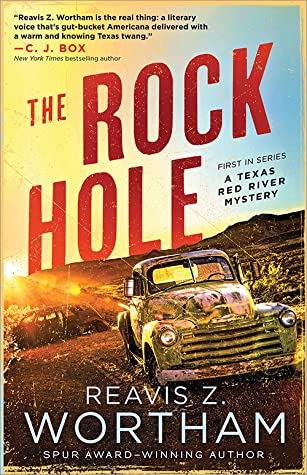
The Rock Hole by Reavis Z. Wortham: A review

I had read a couple of the later entries in this series and decided that perhaps I should go back to the beginning. This book was the first in the Red River mysteries series.

The events of the book take place in 1964 in East Texas, a time and place when racial tensions were a prominent part of everyday life. We meet Constable Ned Parker who is White and a Black deputy sheriff named John Washington. The two work together to deliver justice and to protect their community from evil.

In this case, this evil is exemplified by an individual who takes pleasure in torturing and killing animals. Of course, he doesn't stop there. He soon moves on to humans and the killer seems to be targeting the constable's family which includes his ten-year-old grandson Top who is now living with him after the death of his parents in a car crash. The story of the investigation is told mostly through the perspective of Top and his slightly older cousin, Pepper.

This is very different from the kinds of cases which the constable normally handles. He's used to dealing with drunks and moonshiners and the occasional domestic disturbance. This is an entirely different level of evil.

Woven in among the pursuit of the evil-doer is the story of the coming-of-age of Top and Pepper. Thus we get the contrast of their sweet innocence with the pure wickedness of which humans are capable.

Perhaps the strongest part of the story for me was the author's description of the setting. I'm pretty familiar with small East Texas towns and I found his descriptions of the culture of those places to be spot on. Moreover, the characters as he described them fit right into that setting. It's a community that is replete with small-town Western values, where everyone knows everyone and neighbors will look out for their neighbors. While the writer does tend to somewhat gloss over the racial tensions of that era, I think he gets the overall atmosphere pretty much right. And his characters are people that the reader can identify with and care about. This was a good start for the series and it left me wanting to read more about these people.

Monday, January 23, 2023

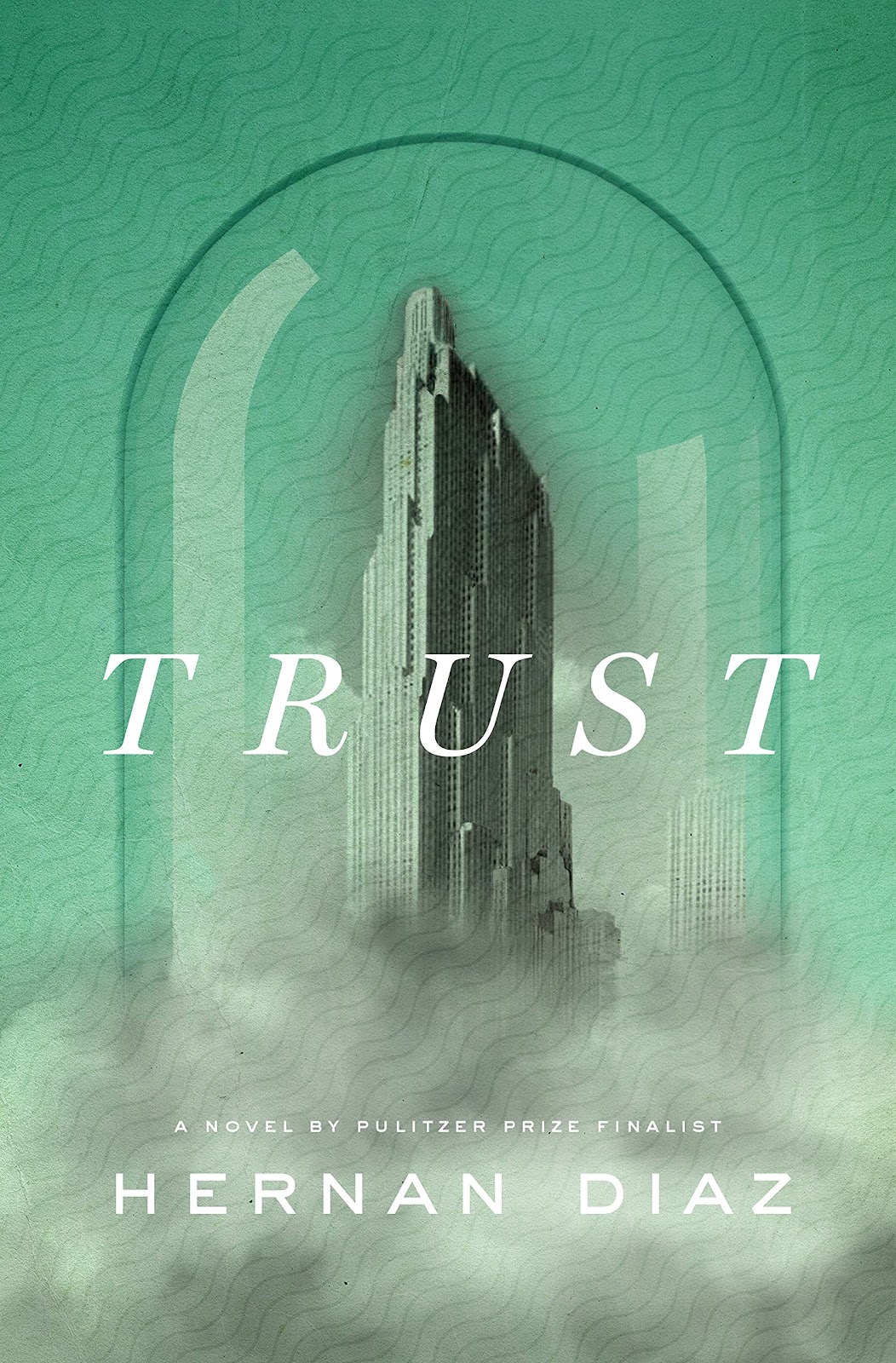
Trust by Hernan Diaz: A review

I finished reading this book a few days ago and, at the time, gave it a three-star rating. But when I sat down at my keyboard tonight to try to review it, I found I was completely blank. I couldn't remember the book. Maybe that three-star rating was a bit generous??? 

In the end, I had to refer to the Goodreads synopsis of the book to jog my memory and to try to recall why I had awarded it three stars. Not a very auspicious beginning for a book review.

I think the problem may have been not so much the book or the writing but simply that I was distracted by other things while I was reading. Sometimes a book can take one out of his/her distraction and focus attention but that proved to be difficult for me in this instance.

Anyway, bearing that caveat in mind, these are my best recollections of and reactions to Hernan Diaz's book.

The book is set primarily in the Roaring '20s in New York with some side trips to Europe. It is the story of a prominent financier Benjamin Rask and his wife Helen. Benjamin is a legend on Wall Street and Helen is the daughter of eccentric aristocrats. They seem to possess unlimited wealth and as such, are prime targets of envy and gossip. 

The book is divided into four parts. The first part is a novel within the novel by an author named Harold Vanner. The second is a short memoir by a financier named Andrew Bevel. In the third, a woman named Ida Partenza tells of her time working with Andrew Bevel to compile his memoirs. And, finally, the fourth section comprises journal entries for Mildred Bevel, the wife of Andrew. The plot centers on the world of finance in the late 1800s and up to about the mid-twentieth century. 

I think my main problem with the book was that I just couldn't get into that novel within the novel and I couldn't really make any connection to any of the characters. I couldn't really make myself care much about what happened to any of them. The shifting relationships and the slow reveal of the multiple layers of the story just left me somewhat confused and not really willing to make the effort to sort it all out. So, yes, maybe three stars were a bit generous, but it was my initial reaction and I'll let it stand.  
 

Saturday, January 21, 2023

Poetry Sunday: The Darkling Thrush by Thomas Hardy

Thomas Hardy is probably most well-known for his novels, but he wrote poetry also and it is still fresh after a hundred years. This one seems especially appropriate for late winter. I particularly like the image of the aged thrush, with his song, flinging his soul upon the growing gloom. He refuses to let the gloom defeat him. 

The Darkling Thrush


by Thomas Hardy

I leant upon a coppice gate
      When Frost was spectre-grey,
And Winter's dregs made desolate
      The weakening eye of day.
The tangled bine-stems scored the sky
      Like strings of broken lyres,
And all mankind that haunted nigh
      Had sought their household fires.

The land's sharp features seemed to be
      The Century's corpse outleant,
His crypt the cloudy canopy,
      The wind his death-lament.
The ancient pulse of germ and birth
      Was shrunken hard and dry,
And every spirit upon earth
      Seemed fervourless as I.

At once a voice arose among
      The bleak twigs overhead
In a full-hearted evensong
      Of joy illimited;
An aged thrush, frail, gaunt, and small,
      In blast-beruffled plume,
Had chosen thus to fling his soul
      Upon the growing gloom.

So little cause for carolings
      Of such ecstatic sound
Was written on terrestrial things
      Afar or nigh around,
That I could think there trembled through
      His happy good-night air
Some blessed Hope, whereof he knew
      And I was unaware.

Friday, January 20, 2023

This week in birds - #534

 A roundup of the week's news of birds and the environment:

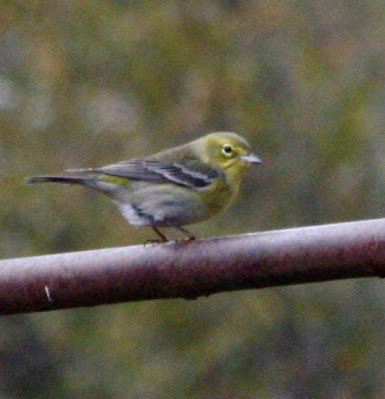
One of my favorite winter visitors - the Pine Warbler.

*~*~*~*

Dust that billows up from desert storms and arid landscapes is helping to cool the planet and may be obscuring the true extent of global warming caused by fossil fuel emissions.

*~*~*~*

California has suffered years of ongoing drought and even though it has recently received an abundance of snow and rain, it's not enough to make up for the years of drought. But many Californians are trying to find ways to hang onto the recent deluge.

*~*~*~*

A study of southern resident orcas off British Columbia has found that they have appallingly high levels of a "forever chemical" in their bodies.

*~*~*~*

The combined effects of a hydroelectric dam and earth-shifting livestock have altered the landscape in northern Brazil and have upended people's lives there.

*~*~*~*

The largest animal ever to exist on Earth is the blue whale. How did this titanic creature get to be so big?

*~*~*~*

Beavers are famed for building dams, but why do they do it?

*~*~*~*

A recent study has revealed that a fossil flower preserved in amber had been given a mistaken identity for 150 years.

*~*~*~*

Traditional lawns have lost some of their popularity recently because of their lack of biodiversity and their voracious appetite for fertilizer, herbicides, and mowing. Maybe trees are a better option.

*~*~*~*

Here are some amazing wildlife pictures from the past week.

*~*~*~*

'Fairy circles' are a mystery that has puzzled scientists for decades but they may be just a bit closer to solving that mystery.

*~*~*~*

This is a Sprague's Pipit, a bird of the grasslands of North America, and the American Bird Conservancy's Bird of the Week.

*~*~*~*

The Greenland ice is melting as parts of the island are hotter now than they have been at any time in the past 1,000 years.

*~*~*~*

The rare Rice's whale lives in the Gulf of Mexico and environmentalists fear it is facing extinction unless tougher oil and gas restrictions are implemented to protect it. 

*~*~*~*

It might be called "The Case of the Missing Claws." Why were some grizzly bears missing toes?

*~*~*~*

Oyster mushrooms would seem to be harmless denizens of the forest but it turns out they can be deadly for nematodes. They devour them! 

*~*~*~*

For beekeepers trying to protect their colonies from the deadly disease known as American foulbrood, there is new hope. It is the world's first vaccine for honeybees.

*~*~*~*

On Poland's Oder River, one man has found a way to protect native species from invasives like American minks and raccoons. He constructs predator-proof islands for the birds.

*~*~*~*

The plague that struck black-tailed prairie dogs in 2017 caused a huge die-off of that species, but it had consequences for other species as well.

*~*~*~*

The southern tip of South America is sometimes referred to as "the end of the world." But even there you will find birds.

*~*~*~*

The glow from artificial lighting on Earth is reducing the number of stars that are visible to the naked eye.

*~*~*~*

Moose are not supposed to be blond and yet here one is. It was recently spotted during an aerial survey in Alaska.

*~*~*~*

As global temperatures continue to be pushed higher by carbon emissions, scientists say by the end of the century the extreme heat could put 40% of land vertebrates in danger of extinction.  

*~*~*~*

A find of ten mummified crocodiles in an Egyptian tomb is shedding light on ancient mummification practices and on the lives of those who lived in the necropolis. 

*~*~*~*

A previously unknown colony of Emperor Penguins has been discovered using satellite images of one of the most remote and inaccessible regions of Antarctica. 

*~*~*~*

In the state of Washington, the Columbia Basin pygmy rabbit is the world's smallest bunny and it is endangered. Scientists are working on ways to protect and preserve it.

*~*~*~*

Here is the roll call of the dead: the species that were declared extinct in 2022.


Tuesday, January 17, 2023

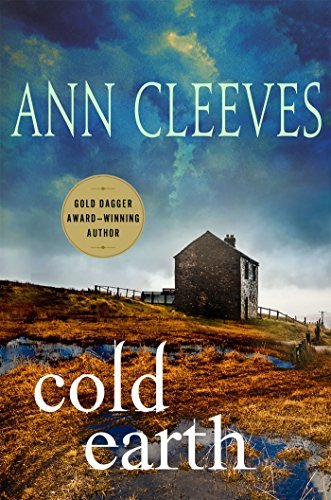
Cold Earth by Ann Cleeves: A review


Ann Cleeves' series set in the Shetland Islands is truly one of my favorite mystery reads. In Cold Earth, the original mystery is the identity of a woman found dead after a landslide that sends a house and part of a cemetery slipping down a hill into the North Sea. It soon becomes clear, however, that it was not the storm or the landslide that killed her. No, her death was caused by a human, not by Nature. She was strangled.

The landslide comes during a funeral. Jimmy Perez is present for the burial of his old friend, Magnus Tait, and he watches in horror as the flood of mud and peaty water smashes through a croft house in its path. The house was believed to be unoccupied but when he searches the wreckage he finds the body of a dark-haired woman wearing a red silk dress.

There is no identification on the body and the only possible clue to her identity is a wooden box containing two pictures, one of two small children and one of an elderly couple. There is also a handwritten letter that begins: "My dearest Alis." Is the mystery woman Alis? Perez and his team must answer that question in order to begin to solve the mystery of her death.

This is the seventh book in the Shetland series and they just get better and better. One of the best things about the series for me is the setting of Shetland. The culture of the islands is unique and Ann Cleeves describes it so well that I always feel that I am there, even though it is likely that I will never actually have the opportunity to go there. Moreover, the recurring characters in the series feel like old friends. I'm well aware of all their foibles and their history and I feel quite comfortable in their presence.

The main character, detective Jimmy Perez, is still trying to come to terms with the death of his lover and he has responsibility for the care of her daughter who she had bequeathed to him. The tragedy of his lover's death and his present relationship with the young daughter add depth to Perez's character. Also, his working relationships with his colleagues, Sandy and Willow, allow us to understand more of just how the island's society operates. All in all, a thoroughly enjoyable read. 

Saturday, January 14, 2023

Poetry Sunday: Birthday by Robert William Service

Looking for poems about or set in January, I came across this one by Robert William Service and it made me smile. I hope it does the same for you.

Birthday

by Robert William Service

(16th January 1949)

I thank whatever gods may be
For all the happiness that's mine;
That I am festive, fit and free
To savour women, wit and wine;
That I may game of golf enjoy,
And have a formidable drive:
In short, that I'm a gay old boy
Though I be
Seventy-and-five.

My daughter thinks, because I'm old
(I'm not a crock, when all is said),
I mustn't let my feet get cold,
And should wear woollen socks in bed;
A worsted night-cap too, forsooth!
To humour her I won't contrive:
A man is in his second youth
When he is
Seventy-and-five.

At four-score years old age begins,
And not till then, I warn my wife;
At eighty I'll recant my sins,
And live a staid and sober life.
But meantime let me whoop it up,
And tell the world that I'm alive:
Fill to the brim the bubbly cup -
Here's health to
Seventy-and-five!

Friday, January 13, 2023

This week in birds - #533

A roundup of the week's news of birds and the environment

A group of Roseate Spoonbills enjoying an afternoon nap.

*~*~*~*

According to climate researchers, the last eight years have been the hottest on record. Overall, the world is now 1.2 degrees Celsius (2.1 degrees Fahrenheit) hotter than it was in the second half of the 19th century.

*~*~*~*

And greenhouse gas emissions, the main cause of the Earth heating up, continue to rise.

*~*~*~*

Extreme weather events were the cause of 18 disasters and 474 human deaths in this country last year.

*~*~*~*

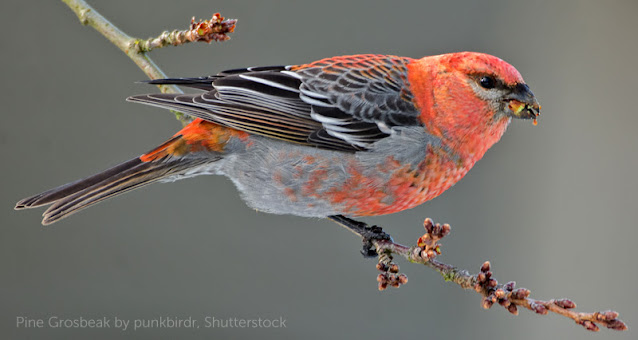
This is the beautiful Pine Grosbeak, a bird of the boreal forests that is the American Bird Conservancy's Bird of the Week.

*~*~*~*

The deal that Kevin McCarthy made in order to obtain the speakership of the House of Representatives for himself essentially cedes control of the House Republicans' agenda to the most extreme faction of his party. This does not bode well for action on climate issues for the next two years.

*~*~*~*

A nonprofit group is working to restore the shortgrass prairie of the western states and to allow the buffalo (American bison) to roam there once more. 

*~*~*~*

The Biden administration is proposing tougher standards for the emission of soot into the atmosphere from tailpipes, smokestacks, and wildfires. Reducing these emissions could help prevent thousands of premature deaths each year. 

*~*~*~*

On a beach in Maryland, a nine-year-old girl has found a treasure: a five-inch tooth of the Otodus megalodon shark species. The species died out approximately 3.5 million years ago. 

*~*~*~*

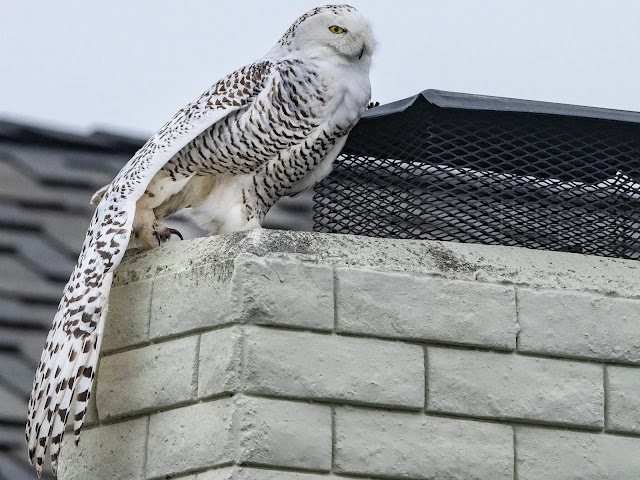
This beautiful Snowy Owl that decided to spend its winter in California is still drawing crowds to Orange County to see it.

*~*~*~*

The Japanese giant salamander is an endangered species that could become extinct but a male of the species in the Hino River of southwestern Japan is trying to make sure that doesn't happen as he guards hundreds of eggs

*~*~*~*

Everything in Nature is connected. As populations of insect pollinators decline, yields of fruits and vegetables are reduced, leading to increased disease and death in humans.

*~*~*~*

Scientists are warning that the Great Salt Lake could disappear in as little as five years. 

*~*~*~*

Human noise makes it harder for dolphins to communicate and cooperate on tasks which leads them to "shout" under water to make themselves heard by their fellows.

*~*~*~*

Here's a bit of good news: Scientists say that the restoration of the ozone layer, vital for protecting life on Earth, is proceeding on track.


Wednesday, January 11, 2023

The Lost Kings by Tyrell Johnson: A review


This was a dark, psychological thriller with an interesting twist at the end. Some readers claim they knew it all along. Well, I didn't.

The protagonist is named Jeanie King and she is one messed-up individual. She has a "twin" named Jamie. When she was still a child, she lost her mother in a car accident, after which she was cared for by her aunt and uncle while her father was away in military service. When her father is mustered out of the military, he moves the family to a remote cabin in rural Washington. 

The father has plenty of psychological problems of his own. He is an alcoholic who suffers from PTSD and is a seriously neglectful parent. One night he comes home covered in blood. The next morning he and Jamie are gone and Jeanie is left on her own.

Perhaps the only good thing Jeanie has going for her during this period is her friendship with a boy named Maddox. It is a friendship that endures and twenty years later when she is living in England, Maddox will again become a part of her life when he looks her up at her place of employment. 

Jeanie's life at this point is a complete disaster. She is a promiscuous alcoholic who has been carrying on an extended affair with a married man. She struggles to come to terms with the events of her life and with not knowing what happened to her father. When Maddox reenters her life, he tells her that he knows where her father is and can take her there.

Okay, this is all very sad and depressing and since I found Jeanie to be quite an unlikeable character, it was really hard for me to get into the story. While it was an interesting plot, because I found it difficult to care about the main character I didn't like the book as much as I had expected I would. 

Moreover, I was tempted to make this my first two-star review of the year, but in the end, decided to be generous and bumped it up to three. It was, after all is said and done, a well-written tale. It just wasn't one that I could especially enjoy.


Monday, January 9, 2023

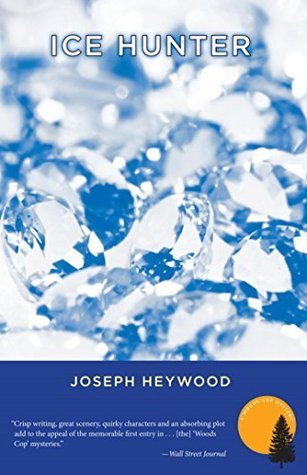
Ice Hunter by Joseph Heywood: A review


This is the first in Joseph Heywood's "Woods Cop" series of mysteries. The setting is Michigan's remote Upper Peninsula. It is a harsh and demanding terrain of vast wilderness and the people who choose to live there have their own codes and rituals. They are not particularly welcoming to outsiders or to the conservation officers whose duty it is to police the area.

One of those conservation officers is Grady Service. He is the protagonist of these mysteries. He is a former marine who served in the Vietnam War. I don't recall that the time frame of the action in this book was specifically identified, but the book was originally published in 2001, so we can assume (I think) that it is the late twentieth century. Grady is divorced. His ex-wife had accused him of having a death wish and told him she had no desire to be a widow. Now he lives a solitary life.

Grady is following in the footsteps of his father who was also a conservation officer working in the UP before he was killed. The area that he patrols is known as the "Mosquito Tract." It is well-named because mosquitoes are thick in the air. 

Grady's life rocks along placidly enough. Then diamonds are discovered in the Mosquito Tract. But that's not all. Strange things are happening in the Tract. Fires are being ignited by an arsonist in what seems to amount to controlled burns in the area. Moreover, there is a helicopter observed repeatedly quartering the area in what looks like a search pattern. What's up with all that? 

Someone makes it very clear to Grady that he should butt completely out of this whole situation. He should not investigate. He should just continue with his usual daily routines. But, of course, we know that isn't going to happen!

So, this book sets the stage for the series to follow and there is quite a bit of exposition and explanation of Grady's life and circumstances. He is a very likable character, one who is easy to identify with and to pull for. The reader wants him to succeed and be happy. He actually reminded me quite a bit of C.J. Box's Joe Pickett, a thoroughly decent man doing his best to uphold the law in an area where obedience to the law is not necessarily the common practice.

This was an easy and quick read. The storyline pulled me in and kept me turning the pages. I think I would like to get to know Grady better so I will be seeking other books in the series.

Saturday, January 7, 2023

Poetry Sunday: Hope is the thing with feathers by Emily Dickinson

I know I have featured this Emily Dickinson poem here before but it just seems especially appropriate at this moment. A new year filled with endless possibilities - surely a cause for hope.

Hope is the thing with feathers 

by Emily Dickinson

‘Hope’ is the thing with feathers –
That perches in the soul –
And sings the tune without the words –
And never stops – at all –

And sweetest – in the Gale – is heard –
And sore must be the storm –
That could abash the little Bird
That kept so many warm –

I’ve heard it in the chillest land –
And on the strangest Sea –
Yet – never – in Extremity,
It asked a crumb – of me.

Friday, January 6, 2023

This week in birds - #532

 A roundup of the week's news of birds and the environment

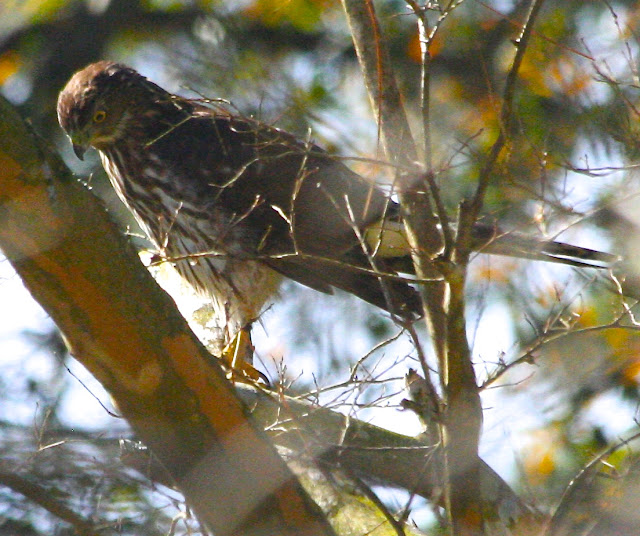
This Cooper's Hawk is on the lookout for his next meal. 

*~*~*~*

A federal disaster declaration was made this week for the area inhabited by the Havasupai Native American tribe that lives deep inside the Grand Canyon in Arizona. The area has experienced devastating floods.

*~*~*~*

Meanwhile, wild weather swings along the West Coast are causing possibly irreparable damage to California's trees.

*~*~*~*

2023 could be a critical year for many endangered and threatened species. It may be the year in which their ultimate fate is determined.

*~*~*~*

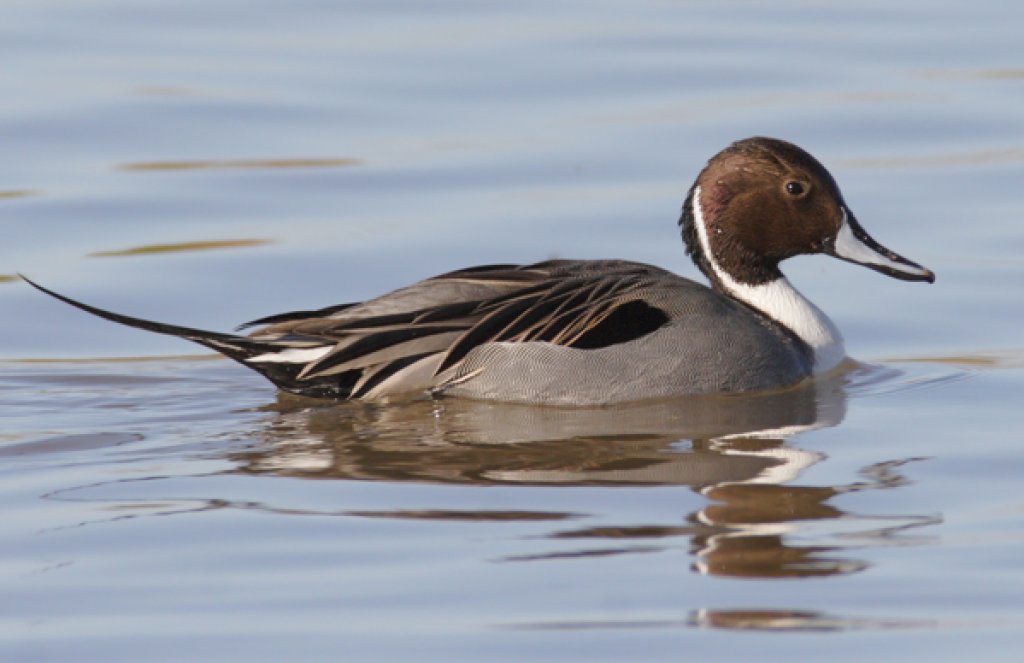
This is the American Bird Conservancy's Bird of the Week, one of the most beautiful of ducks in my opinion - the Northern Pintail.

*~*~*~*

Weather records have been falling all across Europe this January as the continent experiences an unusually warm winter month. 

*~*~*~*

This could also be a vitally important year for clean energy in this country, as both huge opportunities and huge threats are taking shape.

*~*~*~*

This is the Snowy Owl that has been exciting birders in California. What caused the bird to visit Orange County well out of its normal range? We can speculate but the bird, being a bird, isn't talking.

*~*~*~*

Climate change is contributing to algae blooms in Massachusetts, creating a toxic stew that could cost billions to clean up.

*~*~*~*

In the just-ended year, the United States became the world's largest exporter of liquefied natural gas.

*~*~*~*

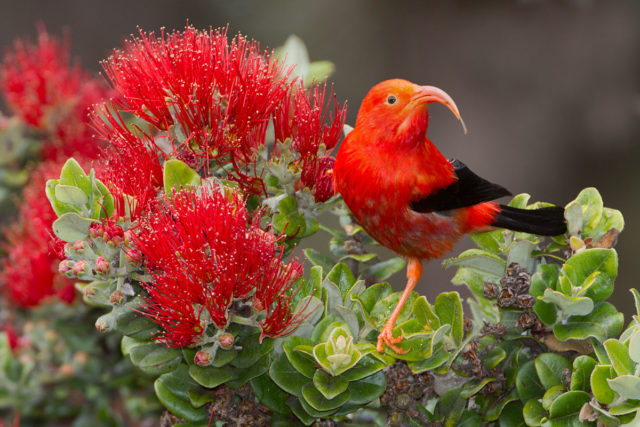
This is the 'I'iwi, an imperiled Hawaiian honeycreeper. Federal wildlife officials have now proposed that 275,000 acres be designated and protected as critical habitat for the bird.

*~*~*~*

And this is the endangered Takahe, a flightless bird that lives on Mana Island, a nature sanctuary off the coast of Wellington, New Zealand. 

*~*~*~*

A juvenile male walrus, given the name Thor, has been delighting crowds along the Northumberland coast by visiting the area, causing the town of Scarborough to cancel its New Year's Eve fireworks display to avoid distressing their unexpected guest.

*~*~*~*

The Environmental Protection Agency has revived an older more stringent set of protections for rivers, marshes, and waterways canceling out changes to the rules that had been instituted in recent years.

*~*~*~*

In some good news from Brazil, a woman dedicated to defending the Amazon rainforest has been named as the country's new environment minister.

*~*~*~*

Note to readers: Because of a continuing attack on the blog by an entity attempting to post inappropriate and offensive comments, I've had to block comments by "Anonymous" posters. If you have legitimately in the past posted comments anonymously, I do apologize for the inconvenience. Please know that I do treasure all who take the time to comment appropriately.

Thursday, January 5, 2023

Carrie Soto is Back by Taylor Jenkins Reid: A review


Carrie Soto was not a particularly likable character. Single-minded and driven, her one focus in life from the age of two had been tennis. It was at that age that her father, Javier, began training her to be a tennis champion. He, himself, had been a professional tennis player and he was determined that he would make his daughter the best that the world had ever seen.

He succeeded almost beyond his dreams. Carrie had a storied career in which she shattered all records. She earned twenty Grand Slam titles and had every right to rest on those laurels. But then at the age of thirty-seven, six years after her retirement, she watches as a young player named Nicki Chan is on the verge of taking her record from her. Carrie cannot bear it! She makes the unprecedented decision to come out of retirement and try to reclaim her record, once again coached by her father. 

Carrie really has nothing in her life besides tennis. She has no friends beyond her father and her devoted agent, Gwen. Other than tennis, "love" for her has only meant a series of one-night stands. She's never had a serious romantic relationship with a man, or, for that matter, with a woman.

Bowe Huntley is one of the men with whom she has a past. He, too, is now a struggling tennis player trying to hang onto the sport after finally getting sober and going through various personal trials in his life. Bowe is being trained by Javier and Carrie, reluctantly, agrees to train with him. She will not become friends with him but they will work together to be the best at the sport that has consumed their life. 

Well, of course, you must realize where this is headed. Carrie and Bowie do become friends and much more than that and Carrie learns that perhaps there is more to life than tennis and perhaps she can find happiness and fulfillment in other places than on a tennis court.  

In reading reviews of this book, I was reminded that Carrie actually made an appearance in another of Reid's books, Malibu Rising, which also happens to be on my "to-read" list. (For some reason, I thought I had already read it, but when I looked at the link, I realized I hadn't.) Carrie is a terrific - if unlikeable - character and I can understand why Reid would return to her. Over the course of this book, she actually does become somewhat more sympathetic and likable, so will we see her again in future Reid books? I wouldn't bet against it.