Translate

Showing posts sorted by date for query Before the Fall. Sort by relevance Show all posts

Saturday, June 21, 2025

Poetry Sunday: The Summer Day by Mary Oliver

Yes, yes, I know I've used this one here before. It's a personal favorite of mine: "I don't know exactly what a prayer is. I do know how to pay attention..." 

When the next summer comes, assuming I'm still here, I'll probably use it again. 

          Tell me, what is it you plan to do 
          With your one wild and precious life?

Enjoy!

The Summer Day

by Mary Oliver

Who made the world?
Who made the swan, and the black bear?
Who made the grasshopper?
This grasshopper, I mean--
the one who has flung herself out of the grass,
the one who is eating sugar out of my hand,
who is moving her jaws back and forth instead of up and down--
who is gazing around with her enormous and complicated eyes.
Now she lifts her pale forearms and thoroughly washes her face.
Now she snaps her wings open, and floats away.
I don't know exactly what a prayer is.
I do know how to pay attention, how to fall down
into the grass, how to kneel in the grass,
how to be idle and blessed, how to stroll through the fields,
which is what I have been doing all day.
Tell me, what else should I have done?
Doesn't everything die at last, and too soon?
Tell me, what is it you plan to do
With your one wild and precious life?

Friday, September 20, 2024

This week in birds - #602

A roundup of the week's news of birds and the environment: 

My yard is still alive with migrating Ruby-throated Hummingbirds. Sitting on my patio today, I counted nine at one time who were jostling over access to my feeders that hang next to the patio. But so far, I am seeing only adult females and immatures - nary an adult male like the one in this picture that I snapped last fall. I assume the males will be passing through soon.  

*~*~*~*

Floods and wildfires in Europe are a direct result of climate change according to authorities there. And it is not only in Europe that rising global heat is causing catastrophic damage.

*~*~*~*

Moreover, a new reconstruction of prehistoric Earth shows that it was indeed a very hot place.

*~*~*~*

Why do birds migrate?

*~*~*~*

The Zimbabwe government has ordered the culling of 200 elephants because an extended drought has caused food shortages for the animals.

*~*~*~*

Rising sea temperatures have contributed to a decline in the population of Florida's queen conchs. Now scientists are stepping in to try to aid the endangered shellfish.

*~*~*~*

Some states are petitioning the Environmental Protection Agency to regulate "forever chemicals" air emissions.

*~*~*~*

The nearly extinct Sihek, aka Guam Kingfisher, is getting an assist from biologists who are intent on saving the species.

*~*~*~*

Are Indigenous peoples protecting Earth's biodiversity? That has been a widely spread factoid but it is now being debunked by scientists.

*~*~*~*

Vultures are essential to the proper functioning of Nature and when they die out it is bad news for Nature and that includes humans.

*~*~*~*

The Fish and Wildlife Service has petitioned the court to delete the gray wolf from protections of the Endangered Species Act, saying that the species has now sufficiently recovered to no longer require protection.

*~*~*~*

The shy and secretive Bachman's Sparrow is decreasing in numbers. It is the American Bird Conservancy's Bird of the Week.

*~*~*~*

Scientists are using in vitro fertilization to produce young corals that can survive record heat events and reverse the widespread bleaching of reefs. They are planting them in reefs around the Gulf of Mexico.

*~*~*~*

White-nose syndrome has devastated North American bat populations but scientists are finding ways to combat it.

*~*~*~*

Eelgrass is an important part of a coastal environment so its decline along the coast of Maine is cause for concern.

*~*~*~*

Thousands of people gather in Portland, Oregon to watch the nighttime routine of migrating Vaux's Swifts. (Maybe there is hope for humanity, after all.)

*~*~*~*

Did you know there is a contest to see which water lily can hold the most weight? The answer is "quite a lot," as it turns out.

*~*~*~*

A high school in Los Angeles was built over a bone bed from the Miocene era and a shell bed from the Pleistocene era and now researchers are revealing some of the secrets buried there.

*~*~*~*

A federal study has found that climate change will boost the use of hydropower in the Pacific Northwest.

*~*~*~*

The Canada Goose is familiar across the continent, at least in migration. But familiarity does not necessarily mean understanding.

*~*~*~*

The rock art of the San people of South Africa may reveal a knowledge of paleontology that predates the Western study of that field.

*~*~*~*

Native to eastern Asia, the giant joro spider has found its way to North America. First seen in Georgia in 2014, they've recently been sighted for the first time in Pennsylvania.

*~*~*~*

The Dodo lived quite successfully on Earth for millions of years before being wiped out by humans. The last one died in 1662.

Wednesday, July 17, 2024

Homeland Elegies reconsidered

I was reading an article in The New York Times today regarding the best books of the 21st century and one of the book critics quoted there referred to Homeland Elegies by Ayad Akhtar. It sparked my own memory of reading that book and my appreciation of it. The book did not make the NYT list, but I gave it a rare 5-star rating. Here is my review.

*~*~*~*


This book had not been on my radar at all until I read President Barack Obama's annual list of the best books of the year. This title appeared as one of his favorites. That was a sufficient recommendation for me and I put it on my list. As I started reading it though I found myself very confused. I had understood that it was a novel and yet it read exactly like an autobiography/memoir. Had I been mistaken? But there it is right on the cover - "a novel." I looked at Goodreads and discovered that I was not alone in my confusion. A number of other readers had thought they were reading a memoir.

The book, in fact, reads like a series of personal essays. The essays illustrate different aspects of the narrator's personality and background, a background many parts of which he shares with the author. Both are American-born writers, playwrights who have won a Pulitzer Prize. Both identify as part of the Muslim world and culture, even though neither is devoutly religious.

The narrator who had labored in relative obscurity, always on the edge of penury, had suddenly become a part of the cultural elite upon winning the Pulitzer Prize, and just as suddenly he is presented with extraordinary financial and sexual opportunities. He is swept off his feet by all these opportunities and eager to partake in the fullest, as he rubs elbows with celebrities and billionaires. He is made rich himself by a sudden windfall from a shady investment, which only increases his access to the sexual buffet. Consuming from that buffet ultimately gave him a case of syphilis.

But before all that, the narrator is the child of Pakistani immigrants and his view of America was formed by his childhood in Milwaukee and by his liberal arts education. His father, who is one of the most interestingly drawn characters in the novel, is almost jingoistic in his Americanism. He is a famous cardiologist and in the 1980s he is called in to treat a New York billionaire named Donald Trump. Trump charms the doctor and involves him in some of his real estate deals. He gets The Art of the Deal and keeps it in his living room, but like many blinded by its author's fame, he loses money on those real estate deals. His family's fortunes fall but even so, years later, when Trump runs for president, the cardiologist is a rabidly devoted supporter. After Trump becomes president, it is only slowly and with reluctance his former cardiologist admits what he is and disowns his support of him.

By 9/11/01, the narrator is living in New York and experiences the attack on the city in a personal way. Like thousands of others, he queues up to give blood as a way of showing his support. As he waits in line, he is unmercifully harassed by an Islamophobic man and to his utter shame, he wets himself in terror. Afterward, in order to protect himself from further attacks, he steals a crucifix pendant at a Salvation Army store and he wears it for several months. Years later when he confesses that to his Pakistani-American girlfriend, she is shocked. She could never wear a cross, she says. Instead, her family bought flags.

In 2008, the narrator and his father travel to Abbottabad in Pakistan to visit relatives. At the home of his uncle, the uncle lectures him about the "tactical genius" of the 9/11 attacks. He speaks of a Muslim philosophy that is based on the principles espoused by the Prophet Muhammad. It is one that integrates its military and political aspirations. The narrator disagrees with his uncle, but as a guest in his home, he finds it prudent to hold his tongue. His father is appalled by his brother's view and afterward, he harangues his son about how different and, in his words, how terrible the son's life would have been if his father had not emigrated to America. It is, of course, in that same Abbottabad three years later that Osama bin Laden was killed by American Special Forces. 

It is almost impossible for me to sum up this book in any meaningful or coherent way. It is a series of anecdotes that, in the end, create a vision for us of what it is like to grow up Muslim, to live as Muslim in America, especially in post 9/11 America. The wound inflicted on the Muslim community by that event has been deep and long-lasting. These are people for whom America was their home and who only aspired to be good citizens and live in peace. Suddenly their lives were thrown into turmoil and their dreams of belonging were tarnished in some cases for good.

As I finished reading the book, the confusion that I had felt at the beginning had dissolved. I could not imagine the story having been told in any other way. It is a very moving narrative and offers us a clear-eyed view of the stressful contradictions that are a part of American Muslim life. I came away from it with, I think, a much better appreciation of the pressures and anxieties endemic to those lives. Thank you, Ayad Akhtar.

My rating: 5 of 5 stars 

Thursday, July 6, 2023

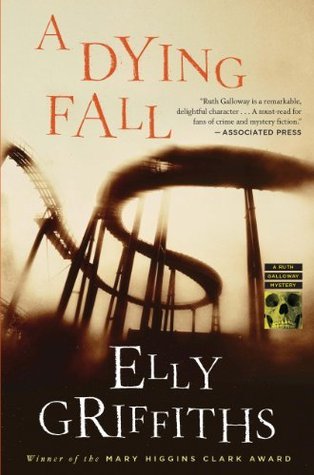
A Dying Fall by Elly Griffiths: A review


I've been working my way through the series by Elly Griffiths that features forensic archaeologist Ruth Galloway. This is number five in the series. 

The plot here is that an old friend of Ruth's has died in a house fire, but before he died he had written to her saying that he had made a ground-breaking archaeological discovery. He didn't explain what the discovery was. Could his discovery have had something to do with his death? And could the discovery have been related, as is hinted, in some way to King Arthur? Ruth, of course, is determined to find the answer to those questions and to find out what that mysterious discovery was. 

She travels to Blackpoll which just happens to be the home territory of DCI Harry Nelson with whom Ruth had had a brief - very brief - fling (Harry is married.) which resulted in her getting pregnant, and that resulted in their daughter Kate. So off she goes with Kate and, of course, Cathbad the druid who is Kate's godfather, in tow. 

Then one of Cathbad's friends, who may have some connection to the mystery, commits suicide. And the plot, as they say, thickens.

I find Ruth to be a very sympathetic character with her worries about her weight and her parenting skills. She is sensitive to how others see her and regard her both personally and professionally. Moreover, she is utterly devoted to her daughter but she has not been able to achieve true harmony in her life. Her relationships with men have been problematic and the one with her current boyfriend is faltering, and, based on what we know of him, that is probably a good thing! 

Archaeology has long been an interest of mine. In fact, at one point in my life, I wanted to be an archaeologist, but in the end, I chose another branch of the social sciences. The fact that Elly Griffiths manages to weave strands of information regarding archaeology and history into her Ruth Galloway plots is one of the strengths of this series and one of the reasons that I greatly enjoy reading her books. There are at last count (I believe) fifteen books in the series so I have at least ten more chances to experience that enjoyment.
 

Friday, March 4, 2022

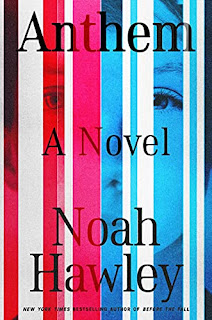
Anthem by Noah Hawley: A review


This is either a polemic about the unsettled nature of modern society or it is a book about a ragtag bunch of teenagers out to save the world. Maybe it is both. Frankly, it is really hard for me to say just what it is. The main story is fiction and yet the author keeps interrupting himself with personal observations, explanations, and apologies. He can't seem to just let his fiction speak for itself. In one of his personal interjections, he writes: "First of all, your author would like to apologize for the world he has created. He knows it is ridiculous. The fact that the world he lives in is also ridiculous is no excuse. The author's job is to make sense of the senseless." Well, yes, that is sort of the writer's job description and in this instance, Hawley has failed miserably.

The chief failure from my perspective is that the book has too many characters and we never really get to know any of them. It was extremely hard to keep them all straight and, after a while, I didn't even try. Also, the narrative jumps around, starting in 2009 as we see 9-year-old Story Burr-Nadir singing the national anthem during a school recital in Brooklyn. But then it leaps ahead by several years to a time that is after the Covid pandemic when the latest fad among teenagers seems to be committing suicide. Suicide becomes performance art. Hawley writes that it is as if the species were giving up on itself.

The only ones of those multitudinous characters that we even halfway get to know are Simon Oliver and Louise Conklin. Simon is the son of the chief executive of Rise Pharmaceuticals and he has an older sister named Claire. One day young Simon discovers the body of his 17-year-old sister who has committed suicide in their parents' bathroom by ingesting an overdose of the pills that her father's conglomerate sells. Before she died, she wallpapered the room with "small foil packets of oxycodone." It's hardly surprising that walking in on such a scene served to cause Simon to become somewhat unhinged. 

The parents' response to Simon's traumatic experience was to send him to a psychiatric facility for children of the fabulously wealthy, a place called Float Anxiety Abatement Center. There he meets Louise and a boy who is called Prophet, plus a bunch of other traumatized teenagers of wealthy parents, but, again, at this point, I was having a really hard time keeping all these people straight.

It was just about at this point that the story really began to go off the rails for me. We've got multiple plotlines shooting off in different directions. There's Story Burr-Nadir, now 22 years old, who has gone missing. Meantime, her mother, Margot Nadir, is being considered for the position of justice on the Supreme Court. There is a character called E.L. Mobley, aka the Wizard, who is another of those fabulously wealthy people. He is a sex addict and his hobby is kidnapping adolescent girls and impregnating them. He has an employee called the Troll who finds and captures the girls for him. One of the victims is a girl called Katie, aka Bathsheba DeWitt, who the Prophet is obsessed with setting free from the Wizard's compound in West Texas. (Of course, it would be in West Texas!)

The gang of teenagers from the Float Center escapes their confines and sets out to save themselves and, incidentally, the world. Catastrophes pile on top of each other and the pace of the novel's action becomes quite herky-jerky and scattered. Chaos ensues and the outcome is left ambiguous for the reader to decide.

In 2016, I read Noah Hawley's previous book, Before the Fall, and I loved it. It was easily a five-star read for me, so I went into this one with very high hopes and expectations. Sadly, those hopes and expectations were not to be realized.

My rating: 1 of 5 stars 

Tuesday, November 23, 2021

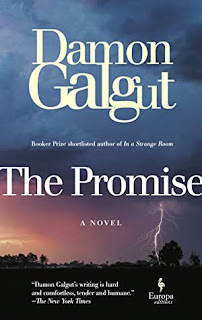
The Promise by Damon Galgut: A review


Can I share a shameful secret with you? I don't think I had ever heard of Damon Galgut before he won the Booker Prize for fiction with this book. If I had heard his name mentioned or seen it in print, it obviously did not register with me for I'd forgotten it. But he has actually published eleven novels beginning in 1983 when he was only seventeen. His works have been highly praised and some have won prizes and he had previously been shortlisted for the Booker in 2003 and 2010. He is also a playwright. His writing documents life in his native South Africa both during apartheid and after it was abolished.

This current novel details the experiences and actions of the Swart family who live on a farm outside Pretoria. There are three adult children. It begins during the apartheid period and stretches all the way to the present. When we meet the family, their mother has died and they gather for her funeral. Before she died, she extracted a promise from her husband that he would sign over to their Black maid Salome the house that she lives in. She had served the family for many years and had faithfully nursed her during her final illness. The promise was witnessed by the youngest sibling in the family, Amor.

There is much resentment in the family, especially from Pa because his wife had abandoned their conservative Christian faith and had returned to her Jewish roots. She requested a Jewish funeral and he complies but he's not happy about it. He resents all the trappings and traditions of the Jewish faith.

After the funeral, Amor reminds him of the promise that he made to her mother. It is clear almost from the first that he has no intention of fulfilling that promise. So things continue much as they had. Salome continues serving the family and continues living in a house that she had hoped would be legally hers. More cause for resentment, both from Salome and from Amor who expected the promise to be honored.

Years pass and eventually Pa dies also, leaving the older daughter, Astrid, in charge. Astrid was in her second marriage and had two children, twins. Once again, Amor brings up the promise that was made to Salome and urges Astrid to sign over the home to her. But Astrid has an acquisitive nature and does not want to give up any part of what the family owns. I think you can see where this is headed.

Meantime, Amor has moved on with her own life. She had been living in London prior to the death of her father. Returning, she decides to move to Durban and train as a nurse, a decision that confounds her family. This is during the worst of the HIV/AIDS epidemic and she takes a position nursing the victims of the horrible disease. She is disgusted with the behavior of her family, their excess drinking, marital infidelities, self-deceptions, and general moral bankruptcy. She cuts her ties to them. But then tragedy strikes and she has to be notified. The only one who has her phone number is Salome and she calls her to tell her that Astrid has been murdered. Once again, Amor comes home for a funeral.

Amor's brother, the middle child, Anton is now in charge of the farm. Amor approaches him as she had her sister and father previously and reminds him of the promise that was made to their mother long ago. He reassures her that he will take care of it but he continually finds excuses to delay the deed transfer. It's clear that it really isn't going to happen. Salome once again is denied.

More than thirty years pass since that original promise was made. Anton is a drunk who is an incompetent manager. Apartheid has now passed into history, but still, Salome and her son Lukas are tied to the land and the Swart family. And then the unexpected happens. Anton is found dead, a result of his overindulgence. Finally, ownership and management of the farm fall to Amor and there is nothing preventing her from accomplishing the deed transfer which she does. But now there are other threats to the land that make it less than valuable and Lukas views Amor's action as an empty gesture. He responds in fury.

This family's story appears to be Galgut's way of depicting the history of South Africa during this whole period; the squandering of opportunities and failures to live up to its promise are not just familial failures but a society-wide picture of moral insolvency. It is a portrait of a country with deep and abiding divisions as it attempts to put apartheid behind it and move toward a more equitable society. Galgut accomplishes all of this deftly and with great finesse. I suspect all of the praise and awards he has received over the years for his writing are well-earned.

My rating: 4 of 5 stars


Tuesday, October 26, 2021

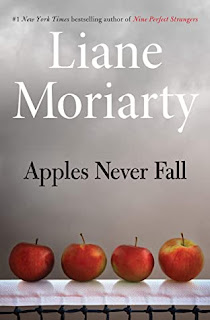
Apples Never Fall by Liane Moriarty: A review


I had never read Liane Moriarty before, but if this book is any indication, her reputation for writing engrossing cliffhangers is well-earned.

Apples Never Fall gives us the Delaney family, Stan and Joy Delaney and their four grown children: Amy, the oldest and artsy one; Troy, a highflying businessman very proud of his wealth and losing no opportunity to flaunt it; Brooke, the youngest, a businesswoman who has not had much success in the romance department; and Logan, the disheveled teacher with a heart of gold. This is, in fact, a family saga that turns into a mystery and a bit of a thriller before the end.

Moriarty is very adept at giving us an in-depth portrait of each of these family members. That, I felt, was one of the book's strengths and something that I really liked about it. She describes each of their backstories of experiences along with their struggles and mistakes along the way. In spite of their weaknesses and mistakes, the reader gains a real empathy for each of them. One feels that one knows them. They might be our neighbors. They might even be our family.

The Delaneys are famous in the tennis world. Both Joy and Stan are former Australian tennis stars and after their playing career ended, they started a tennis academy where they instructed young players, including their own children, for years. They had hopes that one or more of their children might someday play at Wimbledon, but they were disappointed in that. Although talented, none of them had sufficient talent or desire to be such a star.

Their real prodigy was Harry Haddad who went on to become a Grand Slam champion. As a student at the academy, he was a rival of the younger Delaneys, both as a player and for their father's affection. But Harry eventually broke Stan's heart. At seventeen, he left Harry as a coach and signed on with someone else. It was that coach who got him all the way to the Grand Slam. 

Now it is several years later and Harry had retired from tennis, but he's decided to try for a comeback and he is about to release his memoir. Meanwhile, Joy and Stan are retired after selling their tennis academy. Joy will soon turn seventy, and Stan is already in his seventies. They are both a bit bored and at loose ends since retirement. Then something happens to change all that. A young woman turns up on their doorstep.

Her name (she says) is Savannah and she's supposedly running from an abusive boyfriend and she does have some physical injuries to support her story. Open-hearted Joy takes her in, gives her one of her children's old rooms, and she becomes a guest of the family. This guest though certainly earns her way. It seems she is an excellent cook and soon Joy and Stan are eating better than ever before.

Of course, this idyllic situation doesn't last. The Delaneys learn something about Savannah's background that makes them suspicious of her. Stan and Joy have a serious argument and shortly afterward, Joy disappears. Has Stan done away with her? That seems to be the consensus opinion. Or has Savannah done away with her? Were Savannah and Stan having an affair?

There are no apparent clues and as the disappearance lengthens into weeks, everyone fears the worst. Red herrings abound. Still, no body has been found. Even so, the two detectives investigating the case prepare to arrest Stan for murder. Moriarty builds the suspense layer upon layer until we are sure that some truly horrible fate has befallen Joy. And then we learn... But, no, you'll have to read the book to find out!

I enjoyed this book from the first page to the last. I particularly liked the character of Joy and found it easy to identify with her. And the lessons of the book seem to be that, yes, we all make mistakes, and sometimes we betray those we love, either intentionally or unintentionally. Love is not always easy but it is built on upon our willingness to accept mistakes and to forgive. To forgive others and to forgive ourselves. That's not a bad thing for a novel to demonstrate.

My rating: 5 of 5 stars 


Friday, October 15, 2021

Garden Bloggers' Bloom Day - October 2021

Welcome to my October garden. I do actually have a few blooms to show you this month, although if you have visited my garden before, you've probably seen them in the past. I haven't really added anything new this fall yet, but I hope to soon. Here in zone 9a near Houston, as in many parts of the country and world, we have endured an unusual year of weather. It has not been kind to the garden and my plants show that. So please understand if a number of my plants do not appear at their best.


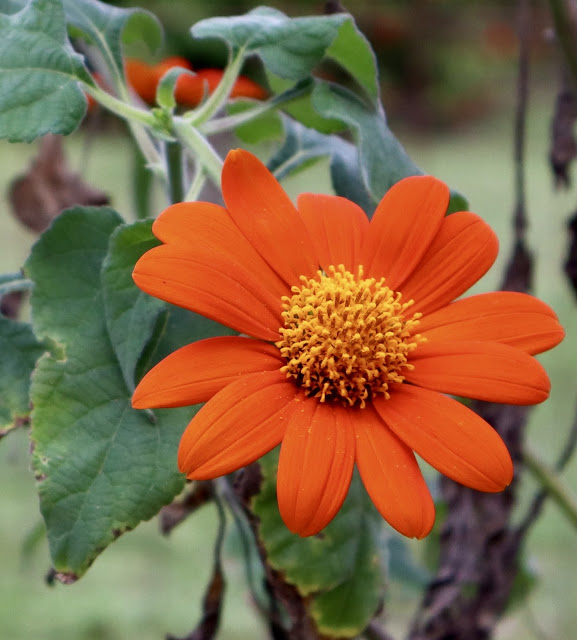
My tithonia plants are in a part of the garden that is not easy to water and they show that they have been deprived of moisture. Still, they bloom on, undaunted.


The cosmos bloomed in the summer and reseeded itself and now it blooms in autumn.


These crinums still put out a few blooms from time to time.


Do you ever forget that you've planted something? That happened to me with these yellow lycoris plants. I had completely forgotten that I had them until a few popped up to remind me.


This is the more common lycoris and I hadn't forgotten about it.

Duranta erecta, aka golden dewdrops.
 
The Cape honeysuckle is full of blooms.

'Cashmere Bouquet' Clerodendrum, aka Mexican hydrangea.

The cooler autumn weather has triggered the start of blooms in the purple oxalis.

Blue plumbago.

Pentas.

And more pentas.

Tropical milkweed, a gangly, somewhat unlovely plant but butterflies do like it.

The buddleias are still going strong, although the blooms are smaller now. (Yes, I do know I need to deadhead!)

And more buddleias.

Firespike, Odontonema strictum.

The muscadine grapes have been hurt by the year's weather but they still managed to produce some fruit that the wildlife will be glad to get.

The beautyberries seem impervious to weather. All of my several plants are fully loaded with berries.

This lantana was attacked by insects a few weeks ago but it is recovering and beginning to bloom again.

Peaches and cream lantana.

Purple trailing lantana, a favorite of butterflies.

The blooms of the almond verbena are not very noticeable to the eye, but if you have a sense of smell you can't miss them. Their scent is heavenly. Those are the neighbor's huge pine trees in the background.

Turk's cap, 'Big Mama.'

Justicia 'Orange flame.'
 
Cestrum.

Autumn sage.

While out taking pictures of flowers, I came upon this little guy resting on a fallen red oak leaf. I'm not 100% sure but I think it is a Tiger Swallowtail caterpillar. Please correct me if you know better.

The roses are responding to the cooler weather with blooms. This is pink Knockout.

'Peggy Martin.'
'Julia Child.' The blooms fade as they age. The one at the top is several days older than the bottom one.

 
'Caldwell Pink,' an antique polyantha.

'Belinda's Dream.'

'Lady of Shallott.'

I can always depend on the "blooms" of the bottle tree next to the Texas sage. You may be able to see a few of the fuchsia blooms remaining on the sage and there is one of those loaded beautyberry shrubs in the background.

I hope you and your garden are both doing well this October. I look forward to visiting you. Happy Bloom Day!

(Linking to Carol of May Dreams Gardens, our host.)


Friday, August 27, 2021

This week in birds - #465

 A roundup of the week's news of birds and the environment:

This week's "Bird of the Week" from the American Bird Conservancy is the Tennesee Warbler which does not in fact live in Tennesee although it passes through there on migration. The bird nests in boreal forests and thickets and winters in open woods and hedges in Central and South America.

*~*~*~*

Floods have dominated the environmental news this week. Flash floods in Tennesee and North Carolina took more than a score of lives. Scientists found that climate change contributed to the record rainfall that led to violent and deadly flooding in Germany and Belgium last month. The floods were a 400-year-event, meaning that in any given year there was a 1 in 400 chance of such an event occurring. And New York City had its rainiest hour on record on August 21 when 1.94 inches of rain fell from 10 to 11 p.m. In total 4.45 inches of rain fell that day, followed by 2.67 inches on August 22.

*~*~*~*

The New York Times has an interactive map that allows readers to track Western wildfires. 

*~*~*~*

On the Greenland ice sheet 500 miles above the Arctic Circle, something happened last Saturday that had never happened before: It rained. The rain showers were another troubling sign of a changing Arctic which is warming faster than any other region on Earth.  

*~*~*~*

Meanwhile, the National Oceanic and Atmospheric Administration forecasts that the Western drought will last into the fall or even longer. Currently, almost half the land area of the lower 48 states is experiencing drought.

*~*~*~*

The megadrought is so bad that wildlife officials are airlifting water to animals in the wild to relieve their thirst and help keep them alive.

*~*~*~*

A new comprehensive study in England has found that air pollution is linked to an increased severity of mental illness. The researchers said the findings were likely to be applicable to cities in most developed nations and cutting air pollution could benefit millions of people. 

*~*~*~*

A study of 40 years of volunteer data from the Canadian Lakes Loon Survey has helped to explain the mysterious decline in the population of the iconic Common Loon as fewer loon babies are being raised to independence.

*~*~*~*

Lake Tahoe, the azure gem of the Sierra Nevada is being suffocated by smoke from the Caldor fire. The thick, toxic smoke was causing residents to flee the area this week.

*~*~*~*

Female White-necked Jacobin Hummingbirds which are found from Mexico to Brazil avoid harassment by looking like males. Those with plumage that resembles the male birds are less likely to be chased, pecked-at, or body-slammed by aggressive males.

*~*~*~*

In Stanley Park in Vancouver, there have been 40 attacks on humans by coyotes in the last nine months. That is four times the total over the last 30 years! Wildlife officials are perplexed as to what is causing the attacks.

*~*~*~*

A man and his Boykin spaniels track turtles not to harm them but to save them. He fixes transmitters to their shells in order to track them and find out more about the habitats where they roam in hopes of protecting those habitats. 

*~*~*~*

Brush-tailed bettongs, a small marsupial, disappeared from mainland South Australia a hundred years ago but now they are being reintroduced. Twelve males and 28 females were released in the area on August 17.

*~*~*~*

Is geoengineering the only way left to save our planet?

*~*~*~*

The One Million Trees initiative in Dubai seemed like such an excellent idea. The aim was to increase green areas in Dubai through afforestation but then it all went awry. Today the area is a tree graveyard.

*~*~*~*

The Marbled Murrelet is a unique seabird that forages for food at sea but nests inland in mature forests. This increases their vulnerability and makes protecting them more of a challenge.

*~*~*~*

What if the mighty moose went the way of the Passenger Pigeon? The moose is abundant today but then so once was the Passenger Pigeon. It's important to protect these species before they get into trouble.

*~*~*~*

It's an attractive insect but the invasive spotted lanternfly is destroying crops of apples, grapes, and hops, as well as native trees such as maple, walnut, and willow. Officials advise exterminating the insects wherever they are found. 

*~*~*~*

Suckerfish that were once the backbone of the seasonal food system of tribes in the Klamath Basin are endangered and can no longer be legally harvested. In the battle for decreasing available water in the basin, the fish are often the losers.

*~*~*~*

A half-mile-long beaver dam in Canada's Wood Buffalo National Park is said to be the largest beaver dam in the world.


Sunday, June 20, 2021

A World on the Wing: The Global Odyssey of Migratory Birds by Scott Weidensaul: A review


My favorite of all the books that I read in 2020 was Migrations by Charlotte McConaghy. It was a novel about the amazing migratory flight of the Arctic Tern and of one woman's obsession with it. Scott Weidensaul's book is the nonfiction version of that and many other birds' migration stories and of the scientists and dedicated amateurs who track and study those migrations to better understand and protect the birds. Weidensaul is a naturalist and an active field researcher himself and he also offers his commentary and insights. We know that the numbers of songbirds, shorebirds, waterfowl, and raptors have all plummeted in recent years. The study of their migrations offers some clues as to why this is happening. 

Studying bird migration also offers us a panoply of almost miraculous stories. There are the tiny Ruby-throated Hummingbirds that cross the Gulf of Mexico in a single nonstop flight. Then there are Whimbrels that nest in the Canadian Arctic and in the fall travel east for the width of the continent before flying into the North Atlantic, straight into the violent winds of seasonal storms. It turns out that Whimbrels know what they are doing; the winds give them a boost for their nonstop transoceanic flight from the Canadian Maritime Provinces to Brazil where they spend the winter.

In addition to the actual flight, there are equally amazing preparations for flight. In getting ready for their flights, birds pack on the fat. If they were human, they'd be termed morbidly obese and yet they do not suffer the negative effects of such obesity. They are also able to add muscle where they need it and during the long flights, the birds can actually cannibalize their own organs to provide the sustenance they need. Many species arrive at their destination with their organs shriveled and they need to feed immediately to restore them. And then, of course, there are their remarkable eyes that contain electrons that allow them to "see" Earth's magnetic fields which they can use as navigation aids. Weidensaul is able to relay all of these incredible facts in a manner that is accessible for the layperson but in no way shortchanges the science. 

The writer spends a considerable amount of time explaining the advances in technology that have enhanced the capability of scientists to track the birds every mile of the way on their flights. There are ever-more-sophisticated miniaturized tracking devices that can be attached to the birds (even tiny hummingbirds) without interfering with their ability to fly and these allow the scientists to see not only where the birds end up but also where they stop along the way. Protecting those layover sites where the birds stop to rest and feed becomes one of the most essential parts of safeguarding migratory routes. One of those sites is the Yellow Sea, an expanse along the Chinese coast that provides a banquet for millions of migrating shorebirds each year, including some that are critically endangered. It is absolutely essential to the continued survival of these birds that this area be protected.  

Sensitive readers should be forewarned that parts of this book make for difficult reading. The obstacles faced by the migrating birds on their routes are many and varied and most of them are human-made. For example, songbirds migrating from Africa across southern Europe must evade those humans who consider them delicacies for their cooking pots. Some of the methods that these people use to capture the birds they want to eat are particularly cruel.

But in contrast to these horror stories, there are also some heartening tales of humans working to ease the way of the migrants. In one such instance, conservationists came up with a plan to pay the rice farmers of California's Central Valley to flood their rice fields during the times when wetland birds would be arriving in the area to provide appropriate habitat for them. The plan has worked brilliantly benefiting both the birds and the farmers. A World on the Wing presents such stories as a way that conservation can be a win-win for both birds and humans. 

Weidensaul is a passionate advocate for the birds and he seeks to inspire his readers to take up the battle to staunch the flow of losses that threatens to deprive future generations of the joy of birds. We cannot bring back the three billion birds that have vanished from North America over the last thirty years, but if we can stop or slow those losses, then we can trust birds to find a way to survive and regenerate. They have outlived the other dinosaurs; they are nothing if not adaptable. Given half a chance they will outlive us as well.

My rating: 4 of 5 stars    

Friday, June 11, 2021

This week in birds - #454

 A roundup of the week's news of birds and the environment:

I always enjoy his dulcet songs when I'm out and about in my yard. House Finches are an almost constant presence.

*~*~*~*

One of the biggest environmental stories of the week was the cancellation of the Keystone XL pipeline. The sponsor of the pipeline pulled the plug on it after Canadian officials were unsuccessful in changing President Biden's mind about the project. Environmentalists who had fought the project since it was first announced in 2008 called the cancellation a "landmark moment" in the effort to curb the use of fossil fuels.

*~*~*~*

More good news for the environment: Officials of the Biden administration have moved to reinstate the roadless rule in the Tongass National Forest in Alaska. This revives the 20-year-old protections for the forest that were stripped by the previous administration three months before the end of its term in office.

*~*~*~*

And in more reversals of policies put in place by the previous administration, President Biden moved to undo many of the ways that administration altered the means by which habitats of plants and animals on the verge of extinction are protected and kept from total collapse.

*~*~*~*

Lake Mead is the largest reservoir in the U.S. by volume but it has fallen to historic lows as a result of the devastating drought in the West. It will be at its lowest point since the 1930s when Hoover Dam was built and officials are expecting it to go even lower. The human-made lake is currently at approximately 36% of its capacity. 

*~*~*~*

In a 2011 survey by the Fish and Wildlife Service, it was found that 93% of birders were White and only 4% were Black. Black Birders Week was instituted to bring attention to the hobby for those who might feel left out of it. The message is "Birds are here for everyone."

*~*~*~*

How can the world's richer countries best help poor countries deal with the challenges associated with climate change? The G-7 leaders meeting this week acknowledge that adequate climate financing for the most at-risk countries must be a central priority.

*~*~*~*

One of the climate problems facing some of those poor countries is wetter monsoons. Scientists have known for years that climate change is disrupting the monsoon season. Increased moisture in the warmed atmosphere is expected to result in rainier summer monsoon seasons and unpredictable, extreme rainfall events.

*~*~*~*

The desert seems an ideal place for constructing large solar projects to generate clean energy but it is important to plan such projects so that they do not harm rare plants and animals.

*~*~*~*

In 2019, Audubon reported that without meaningful action to mitigate the effects of climate change, two-thirds of American bird species like this Northern Parula could be at risk of extinction. Now they have published the Natural Climate Solutions Report that provides a scientific framework for addressing the existential threat.

*~*~*~*

Salmon are facing extinction in the American West and four dams are the prime cause of their plight. But 17 million juvenile Chinook salmon that need to reach the ocean in order to complete their life cycle are getting a helping hand from the state of California. The state is transporting the fish to the ocean in trucks.

*~*~*~*

Microscopic animals called rotifers that were frozen in the Siberian permafrost when woolly mammoths still roamed the planet have been restored to life as though no time had passed. These must surely rate as some of the toughest creatures on the planet.

*~*~*~*

Analysis of the fossil record shows that there was a mysterious mass extinction of sharks some 19 million years ago. The event decimated the diversity of sharks in the world's oceans and they have never fully recovered that diversity.

*~*~*~*

Protection Island, Washington, about two-and-a-half miles off the coast of that state, has one human resident and plenty of wildlife. The human, Marty Bluewater, has a lifetime tenancy on the Protection Island National Wildlife Refuge that has been his home for fifty years. 

*~*~*~*

Peacocks that are descendants of a small population that were imported by a wealthy businessman in the late nineteenth century are threatening to overrun Los Angeles County. The birds have flourished in the climate there and are often fed by residents. But now such feeding is being forbidden by ordinance and scofflaws can be fined up to $1000 or sent to jail for six months.

*~*~*~*

In other news from California, the majestic redwoods that were seriously damaged by wildfires last year are showing signs of recovery.

*~*~*~*

Republicans in several states around the country are taking their stand on the side of global warming. They are threatening retaliation against banks that refuse to lend to coal, oil, and gas companies. Apparently, they don't believe in the power of the marketplace after all - at least when it behaves in ways they don't approve of.

*~*~*~*

This story just makes my blood boil! A drone that was being flown illegally over the Bolsa Chica ecological reserve in California crashed on a beach that was the nesting site of Elegant Terns. The frightened terns, believing they were being attacked by a predator, abandoned their nests. Those nests had about 3,000 eggs in them waiting to hatch.

*~*~*~*

The EPA is set to reverse the previous administration's efforts to scale back the number of streams, marshes, and other wetlands that fall under federal protection. The EPA and Army Corps of Engineers will craft a new set of protections for waterways that provide habitats for wildlife and safe drinking water for millions of Americans.

*~*~*~*

The annual count of Red Knots along Delaware Bay beaches has shown another severe drop in the numbers of the birds. It is the steepest decline in years and it threatens the Red Knots' continued survival.

*~*~*~*

Scientists have compiled a detailed database from tens of thousands of hours of observation of African elephant behavior. 

*~*~*~*

The Lesser Prairie-Chicken will now be protected under the Endangered Species Act according to an announcement from the U.S. Fish and Wildlife Service this week. The bird's range includes parts of five states: Texas, Oklahoma, Kansas, Colorado, and New Mexico.