Translate

Friday, March 11, 2022

This week in birds - #492

 A roundup of the week's news of birds and the environment:

Most winters our bird feeders are constantly covered in these hungry little birds. They are Pine Siskins, noisy, active, argumentative, and always fun to watch. This winter I have not seen a single one. Where are they? I have missed them.

*~*~*~*

As Russia has pressed its invasion of Ukraine, the main concern has been the fate of the humans caught in its path. But what about Ukraine's environment? War inevitably brings environmental destruction and this one is no exception.

*~*~*~*

In all the squawking about high gas prices, conservatives have been quick to point the finger at the country's conservation policies, implying that we would be energy self-sufficient if we just "Drill, baby, drill!" But this report says we can't drill our way out of the problem. 

*~*~*~*

The Pacific Flyway of migrating birds is in serious danger of collapse because of the water crisis in the Klamath Basin, one of the continent's most important wetlands.

*~*~*~*

Gray wolves are making a comeback in California, but, predictably, not everyone is thrilled about that.

*~*~*~*

The Smiley-Woodfin Native Prairie Grassland is the largest remaining section of tall-grass prairie in Texas. It is considered a living museum, but its continued existence is threatened by plans to install solar panels there.

*~*~*~*

An ice age painting on a rock in Colombia depicts giant sloths and other animals now extinct in the Americas.

*~*~*~*

Scientists say that the Amazon rainforest is near the "tipping point" from which it would be impossible to recover. This would have dire implications for the planet.

*~*~*~*

Long ago, FDR had called for the establishment of an international park with Mexico that would encompass a great transboundary conservation area spanning the Rio Grande. That dream is still alive and maybe its time has come. 

*~*~*~*

Redlining which allowed for federal discrimination in housing based on race was outlawed more than half a century ago, but it still has a negative impact on people's lives. 

*~*~*~*

The endangered Hill's horseshoe bat that was feared to be extinct has been found still clinging to life in a dense Rwanda forest to the delight of conservationists.

*~*~*~*

Birds possess a magic that is even able to capture the imagination of teenage boys.

*~*~*~*

Salmon are suing the city of Seattle. More accurately, the Sauk-Suiattle Indian Tribe is suing in the name of the salmon as part of the "rights of Nature" movement. They hope to force the removal of three dams that impede the salmon's ability to spawn.

*~*~*~*

The state wildlife resources commission in North Carolina has voted to allow bear hunting in three bear sanctuaries, provoking an outcry from local residents and animal rights groups. The commission's justification of the action is that there have been "increased human-bear interactions."

*~*~*~*

You'll never hear the call of an Ivory-billed Woodpecker in the wild but thanks to recordings, you can listen to the voice of the woodpecker and many other extinct birds.  

*~*~*~*

The EPA plans to allow the use of toxic pesticides that paralyze bees, butterflies, and other insects in spite of moves by the European Union to ban the use of the toxins that have been blamed for a serious decline in insect populations. 

*~*~*~*

The last intact forest in Tallahassee, Florida is threatened with destruction as the private owners of the forest want to cut it down and build a housing development.

*~*~*~*

The White Ibis is the iconic bird of Florida's Everglades, but it is moving to the suburbs in search of food handouts from humans.

*~*~*~*

Scientists say there are five common personality traits in animals and that they are important to study in understanding the roles that the animals play in their particular ecosystems.

*~*~*~*

It's easy to feel helpless and overwhelmed when faced with a problem as big as climate change but here are six steps that one can take in one's life that will help to reduce the carbon emissions driving the change. 

*~*~*~*

The American Bird Conservancy's Bird of the Week is the Red Phalarope, female pictured here. It is a shorebird that nests on coastal tundra and winters at sea.

*~*~*~*

Even with all the terrible problems in the world, it is still possible to find joy in the imminent arrival of spring and the new beginnings that it promises.
Wednesday, March 9, 2022

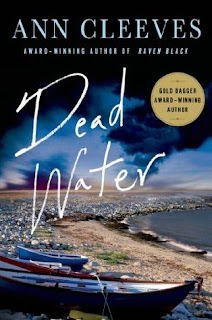
Dead Water by Ann Cleeves: A review

Continuing with my reading of Ann Cleeves' Shetland series, this is the fifth entry. Those who have read the series or have at least read the fourth book will remember that Inspector Jimmy Perez suffered a personal tragedy in that one. The action of this book takes place just a few months later and Perez is still in deep mourning and on leave from his job. It could be read as a standalone, as Cleeves provides enough background information so that such a reader would not be lost.

The Procurator Fiscal (prosecutor) Rhona Laing, a resident of Shetland, discovers a body on the boat that she regularly takes out. The murdered man is Jerry Markham, a former resident of Shetland who had recently returned for a visit and to investigate a story he was considering writing about. Markham was a journalist who was apparently looking into an island group that is promoting green energy through ocean tides. There seems to be some controversy around the issue with some groups supporting and some opposing it and emotions do run hot on the island, especially when money is involved.

Detective Inspector Willow Reeves is assigned to investigate the crime and she initially works with the sergeant, Sandy Wilson, in Inspector Perez's absence. Reeves intuits almost immediately that Rhona Laing is withholding information and she suspects that she may have had something to do with the murder, but Wilson defends Laing and is quite sure that she couldn't be involved. But we know that she's not telling everything she knows.

The murder victim, it turns out, may have had plenty of enemies on the island. Years earlier he had run out on his pregnant girlfriend there. That, needless to say, did not go down well with her family and they have long memories. The girlfriend, after a miscarriage, got on with her life and now seems settled and happy. But resentments against the man who wronged her linger. To complicate things even further, soon another murder occurs and the police have their hands full investigating.

And soon Jimmy Perez is drawn into the investigation to provide local information to the investigator. His understanding of the locals and their interrelationships is key to solving the crimes. At the same time, we get a view of Perez's personal life as he tries to adjust to his new situation and his role of caretaker to a small child, a precocious and sweet little girl, the daughter of his former friend, Duncan Hunter, who is much too busy to take responsibility for his child.

The murder investigations proceed in a logical manner and there are plenty of clues as well as red herrings along the way. And we know that, in the end, it will be Jimmy Perez who comes up with the solution, even if he is not officially involved.

As in all her books, Cleeves describes her characters so well that we feel as if they are standing in front of us. This includes the detectives as well as all the suspects involved. In this one, particularly, we get a real feel for the relationships between the detectives as they work. And her descriptions of the physical aspects of the island and its culture provide a vivid setting for the action. My only real complaint about the book is that it seemed to go on too long. The solution, the ending, was a bit drawn out. Those are fairly minor quibbles. This was another strong entry in an interesting series.

My rating: 4 of 5 stars  


Monday, March 7, 2022

A Game of Fear by Charles Todd: A review


Charles Todd has been the name used by a mother and son writing team of mysteries. In a sad note at the beginning of this book the son informs us of the death of his mother. They've had a good run. This is the 24th in the Ian Rutledge series.

The time is the spring of 1921. As we are reminded at one point in the book, Inspector Ian Rutledge, the World War I veteran, is still quite a young man in his twenties. His superior at Scotland Yard is still the odious Chief Superintendent Markham who despises and is jealous of him and takes every opportunity to give him assignments that have a high potential for failure. In this case, the assignment is to go to the small village of Walmer in Essex and find a killer who is a ghost.

The ghost is one Captain Roger Nelson who was killed in the recent war, but Lady Felicia Benton who is herself a war widow and who knew Captain Nelson claims that as she stood by a window of her manor house she witnessed him kill someone. No body has been found and the local police are understandably skeptical about her story. But Lady Felicia is a relative of the Chief Constable of Scotland Yard and so Rutledge is dispatched to sort it all out.

What he finds in Walmer is a set of mysteries all surrounding what was once a busy airfield housing airmen and support staff for the RAF. Lady Felicia lives in a house that was formerly an abbey located next to the airfield. She had entertained many of the airmen in her home during the war. Rutledge finds her to be a sensible woman of sound mind and not likely to have imagined the crime that she reported. He seeks other explanations for what happened and soon finds them.

He is approached by a woman whose son, a local boy, had disappeared during the war, never to be accounted for. Several people in the community also reported having seen a ghost during the war who foretold the deaths of pilots. A bunch of kids had reported something at the old airfield before it was torn down, something that has scared them into silence. Mysteries seem to abound in this remote village and an entire shoal of red herrings swims around the place muddying the waters.

There are many dead-end leads that confuse things and Rutledge keeps getting redirected to other places. He's back and forth to London and finally is sent to France to follow an obscure lead. And every time he gets sidetracked, it seems that something terrible happens. Moreover, there is a side plot concerning Rutledge's attraction to Kate Gordon which has been hinted at now in a couple of the books, and the reader wonders if this is actually finally going somewhere. We also learn in the last chapter that Rutledge is being promoted to Chief Inspector, a prospect that appalls the odious Markham.

Maybe I was subliminally affected by the knowledge that half of the writing team had died while the book was being prepared, but I felt that its plot was really scattered and all over the place. The action just seemed to jump around without any clear plan in mind. Even though in the end all the clues came together and the solution was explained, the whole thing felt awkward and forced. Certainly not the best effort in this very long series.

My rating: 3 of 5 stars

Saturday, March 5, 2022

Poetry Sunday: March by William Cullen Bryant

The winds of March are upon us. No storms, at least not yet, but working outside is a constant struggle to keep windblown hair out of my eyes. We are finally having pleasant days, other than the wind, and I have been able to get outside and do work in the garden this past week. It's a great release after being cooped up inside for much of the winter. Unlike most years, we have actually had a sustained winter this year. Normally, we have about a week of cold weather and then straight into spring, but not this year. And so, I am better able to appreciate the coming of March and the changing of the seasons that it brings. William Cullen Bryant appreciated it, too.  

March 

by William Cullen Bryant

The stormy March is come at last,
With wind, and cloud, and changing skies;
I hear the rushing of the blast,
That through the snowy valley flies.

Ah, passing few are they who speak,
Wild stormy month! in praise of thee;
Yet, though thy winds are loud and bleak,
Thou art a welcome month to me.

For thou, to northern lands again,
The glad and glorious sun dost bring,
And thou hast joined the gentle train
And wear'st the gentle name of Spring.

And, in thy reign of blast and storm,
Smiles many a long, bright, sunny day,
When the changed winds are soft and warm,
And heaven puts on the blue of May.

Then sing aloud the gushing rills
And the full springs, from frost set free,
That, brightly leaping down the hills,
Are just set out to meet the sea.

The year's departing beauty hides
Of wintry storms the sullen threat;
But, in thy sternest frown abides
A look of kindly promise yet.

Thou bring'st the hope of those calm skies,
And that soft time of sunny showers,
When the wide bloom, on earth that lies,
Seems of a brighter world than ours.

Friday, March 4, 2022

This week in birds - #491

A roundup of the week's news of birds and the environment

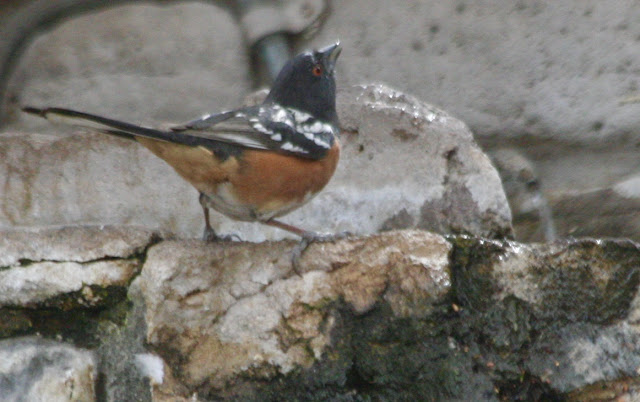
Spotted Towhee having a drink. Photographed at Fort Davis in West Texas.

*~*~*~*

The climate scientists assure us that there is still hope but the projections of the Intergovernmental Panel on Climate Change, reported this week, make clear that we are barreling toward a hot and hellish future on Earth unless we take the necessary steps to prevent it.

*~*~*~*

The country's oldest national park, Yellowstone, has passed its 150th birthday and it is busier and wilder than ever, according to the park's 'winterkeeper.' 

*~*~*~*

And here, in celebration of Yellowstone's birthday, is a photo diary of that magical place. 

*~*~*~*

California, always a leader in environmental protection, wants to eradicate microplastics and they have come up with a 22-step action plan to try to accomplish that.

*~*~*~*

Here's a bit of good news for the environment: The American Bird Conservancy is touting its success in getting the rodenticide d-CON removed from the market. This occurred in 2015. Rodents poisoned by the pesticide were then eaten by predators who were also poisoned. However, the victory is not complete because it can still be bought in bulk from agricultural supply stores so the fight goes on.

*~*~*~*

Life on Earth without its insects would be much more boring. Here are 10 little-known facts about the critters.

*~*~*~*

In addition to the threat to innocent humans as a result of the Russian invasion of Ukraine, there are twenty endangered species that are at risk because of the fighting.

*~*~*~*

The Interior Least Tern has had a dramatic recovery because of its protection under the Endangered Species Act. Its increased population may soon lead to its delisting, a welcome sign of its recovery.

*~*~*~*

If they have the right kind of tree lions can climb them, but many of them don't. The question is why. 

*~*~*~*

The New York Times has a map that shows where biodiversity is most at risk in the country. It is cause for concern.

*~*~*~*

Florida's Key deer population has bounced back from its low a few years ago, primarily because it was given endangered species protection. But the Fish and Wildlife Service has been working on proposals that would strip the deer of those protections, even though the agency's own scientists have highlighted the ongoing threats to the animal's habitat.

*~*~*~*

Here's something that should keep you awake at night: The U.S. Supreme Court is signaling that it may restrict the federal government's ability to address the climate crisis. The court currently has six out of nine justices that are staunchly, some might say rabidly, conservative and who have evinced little concern about the protection of the environment.

*~*~*~*

Elephant seals as spies? In a manner of speaking. Biologists have attached audio recording devices to some of them in order to eavesdrop on other marine life, including sperm whales.

*~*~*~*

A botanist has created a forest with tree species that she has picked specifically because of their ability to withstand a warming climate. It is quite literally a forest planted to endure.

*~*~*~*

Bills currently pending in Congress would give conservation protections to 7,000 miles of rivers and help to safeguard drinking water, biodiversity, and recreation. They represent a historic opportunity for this Congress to act to protect the environment and our children's future.

*~*~*~*

In Hawaii, fences are being built to protect fast-disappearing endangered species such as the Palila and sensitive species like the Laysan Albatross. The fences are meant to help protect the birds from invasive species.

*~*~*~*

A greater reliance on clean energy would be one way to effectively combat Russian incursions.

*~*~*~*

This gaudy fellow is the Gang-gang Cockatoo, common to Canberra's suburbs and the nearby bush reserves. Its numbers have seriously declined because of bushfire disasters and climate change and it is now set to be listed as an endangered species.

*~*~*~*

The southeastern coastal region of Australia has suffered its worst flooding in a decade because of recent torrential rains. Homes have been washed away and power lines cut and thousands of people have had to be evacuated. 

*~*~*~*

California's plan to demolish four massive dams has cleared a major hurdle with federal regulators. It is hoped that the destruction of the dams would help to save the imperiled migratory salmon.

*~*~*~*

The American Bird Conservancy, having just passed its 20th anniversary, is taking the opportunity to celebrate some of the victories for the birds that it has won in those twenty years.


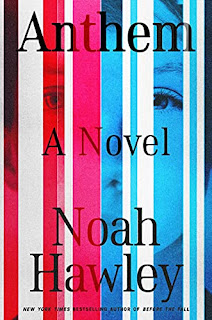
Anthem by Noah Hawley: A review


This is either a polemic about the unsettled nature of modern society or it is a book about a ragtag bunch of teenagers out to save the world. Maybe it is both. Frankly, it is really hard for me to say just what it is. The main story is fiction and yet the author keeps interrupting himself with personal observations, explanations, and apologies. He can't seem to just let his fiction speak for itself. In one of his personal interjections, he writes: "First of all, your author would like to apologize for the world he has created. He knows it is ridiculous. The fact that the world he lives in is also ridiculous is no excuse. The author's job is to make sense of the senseless." Well, yes, that is sort of the writer's job description and in this instance, Hawley has failed miserably.

The chief failure from my perspective is that the book has too many characters and we never really get to know any of them. It was extremely hard to keep them all straight and, after a while, I didn't even try. Also, the narrative jumps around, starting in 2009 as we see 9-year-old Story Burr-Nadir singing the national anthem during a school recital in Brooklyn. But then it leaps ahead by several years to a time that is after the Covid pandemic when the latest fad among teenagers seems to be committing suicide. Suicide becomes performance art. Hawley writes that it is as if the species were giving up on itself.

The only ones of those multitudinous characters that we even halfway get to know are Simon Oliver and Louise Conklin. Simon is the son of the chief executive of Rise Pharmaceuticals and he has an older sister named Claire. One day young Simon discovers the body of his 17-year-old sister who has committed suicide in their parents' bathroom by ingesting an overdose of the pills that her father's conglomerate sells. Before she died, she wallpapered the room with "small foil packets of oxycodone." It's hardly surprising that walking in on such a scene served to cause Simon to become somewhat unhinged. 

The parents' response to Simon's traumatic experience was to send him to a psychiatric facility for children of the fabulously wealthy, a place called Float Anxiety Abatement Center. There he meets Louise and a boy who is called Prophet, plus a bunch of other traumatized teenagers of wealthy parents, but, again, at this point, I was having a really hard time keeping all these people straight.

It was just about at this point that the story really began to go off the rails for me. We've got multiple plotlines shooting off in different directions. There's Story Burr-Nadir, now 22 years old, who has gone missing. Meantime, her mother, Margot Nadir, is being considered for the position of justice on the Supreme Court. There is a character called E.L. Mobley, aka the Wizard, who is another of those fabulously wealthy people. He is a sex addict and his hobby is kidnapping adolescent girls and impregnating them. He has an employee called the Troll who finds and captures the girls for him. One of the victims is a girl called Katie, aka Bathsheba DeWitt, who the Prophet is obsessed with setting free from the Wizard's compound in West Texas. (Of course, it would be in West Texas!)

The gang of teenagers from the Float Center escapes their confines and sets out to save themselves and, incidentally, the world. Catastrophes pile on top of each other and the pace of the novel's action becomes quite herky-jerky and scattered. Chaos ensues and the outcome is left ambiguous for the reader to decide.

In 2016, I read Noah Hawley's previous book, Before the Fall, and I loved it. It was easily a five-star read for me, so I went into this one with very high hopes and expectations. Sadly, those hopes and expectations were not to be realized.

My rating: 1 of 5 stars 

Tuesday, March 1, 2022

Never Let Me Go by Kazuo Ishiguro: A review


In this book which was shortlisted for the 2005 Booker Prize, Kazuo Ishiguro gives us an alternate reality of England in the 1990s. Human cloning takes place in this world and the person through whose eyes we see that world, Kathy H., is herself a clone. The clones are created to be organ donors. Kathy describes herself as a carer, one who looks after the donors. She has been a carer for about twelve years at the time of this narration. 

Kathy reminisces about her time at a boarding school called Hailsham where the teachers were known as guardians. One of the guardians was called Miss Lucy and one day Miss Lucy told the students that they were clones created to donate organs to others. After their donations, they are destined to die young. She believes that if the students are to live their best lives they must know the truth. The students simply accept what she is telling them without response. Miss Lucy is soon removed from her position because of her unauthorized disclosure.  

During her time at the school, Kathy developed close friendships with two other students, Ruth and Tommy. Tommy is bullied by the other students and Kathy supports him and often talks privately with him. They seemed on the point of developing an even closer relationship but then he and Ruth became romantically involved instead.

When they were sixteen, Ruth, Tommy, and Kathy were moved to a place called the Cottages. For the first time they are allowed in the outside world, but they still mostly stay in their insular world. Ruth and Tommy are still together and Kathy has sexual relationships with various partners. When two older students tell them that they have seen a "possible" for Ruth - i.e., an older woman who resembles her and from whom she could have been cloned - they all decide to go on a trip to find the woman. While on the trip, the older students discuss a rumor they have heard that a couple can have their "donations" deferred if they can prove they are truly in love. The former Hailsham students had heard nothing about this. They do find the "possible" but the resemblance is so superficial that Ruth becomes angry, wondering if they were all cloned from "human trash."

During this momentous trip, Tommy and Kathy separate from the others and go looking for a cassette tape that Kathy had loved but that had been lost while they were at Hailsham. The (fictional) cassette was called "Songs After Dark" by Judy Bridgewater. The fact that Tommy remembers all this is indicative of his feelings for Kathy. They do find the cassette but do not tell Ruth about it. Later, Ruth does find out about the tape and her jealousy causes her to try to drive a wedge between the two. She tells Kathy that Tommy could never have a relationship with her because of her checkered sexual history. Soon after that, Kathy becomes a carer and does not see the other two for about ten years. When she does see them again, it is as their carer after they have begun their donations of organs.

The world that Ishiguro creates of clones and their carers is so richly described as to seem real even though there is nothing related in the chronology of the novel that we can recognize. This is in spite of the fact that it takes place in the recent past. It is a horror story masquerading as science fiction and the most horrible thing about it is that the narrator accepts everything as perfectly normal. It can certainly be seen as a parable about human mortality. The students of Hailsham tell each other stories to ward off the truth about their fates even as we tell ourselves stories to keep from facing the fact of our inevitable deaths.

Every book of Ishiguro's that I read just increases my awe of the man's imagination and talent. I feel fortunate to be living at the same time as he. In the citation for the award of the Nobel Prize for Literature in 2017, the committee wrote that Ishiguro "in novels of great emotional force, has uncovered the abyss beneath our sense of connection with the world." Yes, what they said.

I would rank this one just slightly below The Remains of the Day that I recently read, but not by much.   

My rating: 4 1/2 of 5 stars