Translate

Saturday, September 30, 2023

Poetry Sunday: September Song by Kurt Weill and Maxwell Anderson

And just like that, here we are in October. September, it seems we hardly knew ye! But as we view that departed month in our rearview mirror, let's give it one last wave goodbye. And what better way to give it that sendoff than with the lyrics of one of my favorite songs.

September Song

by Kurt Weill and Maxwell Anderson

When I was a young man courting the girls
I played me a waiting game
If a maid refused me with tossing curls
I'd let the old Earth make a couple of whirls
While I plied her with tears in lieu of pearls
And as time came around she came my way
As time came around, she came.

When you meet with the young girls early in the Spring
You court them in song and rhyme
They answer with words and a clover ring
But if you could examine the goods they bring
They have little to offer but the songs they sing
And the plentiful waste of time of day
A plentiful waste of time.

Oh, it's a long, long while from May to December
But the days grow short when you reach September
When the autumn weather turns the leaves to flame
One hasn't got time for the waiting game.

Oh, the days dwindle down to a precious few
September, November
And these few precious days I'll spend with you
These precious days I'll spend with you.

*~*~*~*

And, as a bonus, here's a link to Frank Sinatra performing the definitive version of that song.

Friday, September 29, 2023

This week in birds - not

"This week in birds" is taking a break this week. I apologize to my faithful readers who look for it each week. 

Thursday, September 28, 2023

The Raging Storm by Ann Cleeves: A review


This is the third entry in Ann Cleeves' latest series of mysteries, the one featuring Detective Matthew Venn. I must confess up front that Matthew Venn is not my favorite of Cleeves' creations. (Are you ever going to give us another Vera Stanhope mystery, Ms. Cleeves?) But I'll take what I can get.

This tale is set in the little village of Greystone in Devon. It involves a former member of that community named Jem Rosco. Rosco has made a name for himself as a sailor and adventurer who has roamed the world. Now he has returned to rent a nearby cottage, but, within a month of returning, he disappears and soon his dead body is discovered in a dingy off Scully Cove. He had been murdered.

The case is assigned to Matthew Venn and he and his sergeant Jen Rafferty along with another member of the team, Ross May, hurry to the scene. We learn that Greystone has troubling memories for Venn whose problematic family history is so much a part of his personal makeup. Many residents of Greystone are members of the strict religious community to which Venn's parents belonged and which he was a part of as a child. He left all that behind as soon as he was able but it still haunts him in many ways.

The detectives discover a complex story with many tangled relationships and the more they investigate the more convoluted the story becomes. The investigative team's own personal relationships with each other also play a role in the probe. Jen is a single mother of two teenagers and struggles to balance her work with her personal life. Ross is jealous of her. He is younger and feels that he is not sufficiently appreciated, even though it seems like Venn goes out of his way to praise him and make him feel a part of the team.  

Cleeves gives us a very atmospheric tale and builds suspense around the storms that constantly threaten the coastal town. The book is also filled with the strong characters that are a forte of her writing. She is a master at describing those characters in such vivid detail that we feel we know them and would recognize them if they walked in the door. 

The books in this series could easily be read as standalone novels, but I feel they are enhanced by reading them in order. And now I will be looking forward to number four in the Matthew Venn series. 


Wednesday, September 27, 2023

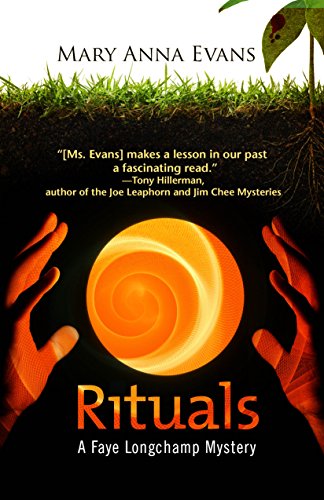
Rituals by Mary Anna Evans: A review

This is the eighth book in the Faye Longchamp mystery series. I was interested in reading the series in the first place because of its archeological connection. Faye is an archaeologist. But the series seems to be evolving into an archeological romance/mystery with an emphasis on the romance. While the series in general has been a fairly enjoyable read, I'm not sure I will continue with it after this entry as romance is not really my main reading interest. And there are so many other books on my "to-be-read" list that are demanding my attention.

Rituals finds Faye and her adopted teenage daughter, Amande, in a rural New York town called Rosebower. Faye has been hired to organize her client's amateur museum. The client, Samuel Langley, has artifacts that he believes prove that aliens from outer space long ago landed in New York and that Scandinavians were the original settlers of the Americas.

In evaluating her client's artifacts, Faye discovers documents that relate to the origins of Spiritualism and to the 1848 women's rights convention in nearby Seneca Falls but nothing to support the client's "aliens from outer space" theories. While the documents are of historical significance and interest, they are not what the client had been hoping for.

Of course, there are malevolent interests at work here also and Faye and Amande find themselves in some peril. Interestingly, Faye's husband, Joe Mantooth, has been left at home this time to take care of their young son, but he does make an appearance late in the book.

Overall, these books adhere to a pretty rigid formula of storytelling, and while they are of some interest and do have sympathetic main characters, I think it's probably time for me to wave goodbye to Faye, Joe, and Amande and move on to other entries on that aforementioned TBR list.  

Saturday, September 23, 2023

Poetry Sunday: Late September by Amy Lowell

This poem by Amy Lowell was written more than a hundred years ago and yet it still seems fresh and fitting for this "late September."

Late September

by Amy Lowell

Tang of fruitage in the air;
Red boughs bursting everywhere;
Shimmering of seeded grass;
Hooded gentians all a'mass.
Warmth of earth, and cloudless wind
Tearing off the husky rind,
Blowing feathered seeds to fall
By the sun-baked, sheltering wall.
Beech trees in a golden haze;
Hardy sumachs all ablaze,
Glowing through the silver birches.
How that pine tree shouts and lurches!
From the sunny door-jamb high,
Swings the shell of a butterfly.
Scrape of insect violins
Through the stubble shrilly dins.
Every blade's a minaret
Where a small muezzin's set,
Loudly calling us to pray
At the miracle of day.
Then the purple-lidded night
Westering comes, her footsteps light
Guided by the radiant boon
Of a sickle-shaped new moon.


Friday, September 22, 2023

This week in birds - #565

 A roundup of the week's news of birds and the environment:

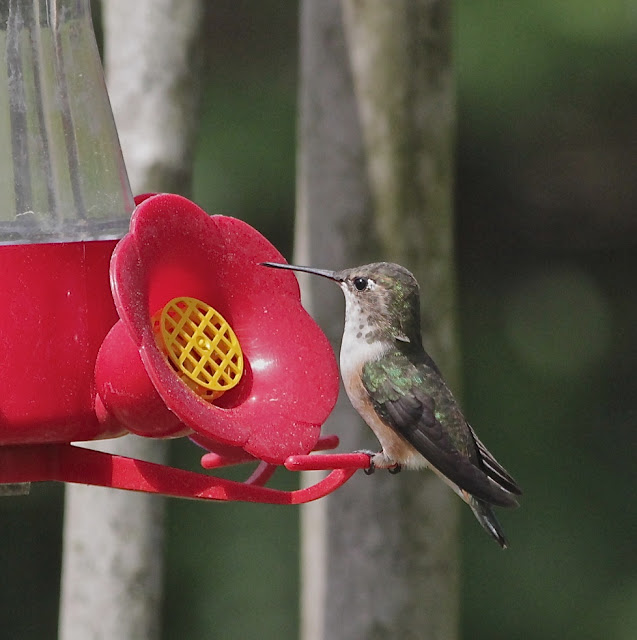
The hummingbird wars continued this week with the Ruby-throated and Black-chinned Hummingbirds passing through. I haven't yet seen any Rufous Hummingbirds like this baby from a previous year but they should be arriving soon.

*~*~*~*

The famous 150-year-old banyan tree that was burned in the recent fires on Maui is showing signs of recovery

*~*~*~*

Did you see the amazing sight of the fireball that slammed into Jupiter last month? Astronomers got pictures!

*~*~*~*

The financially struggling private ownership of a herd of 2,000 rhinos has sold the animals to a conservation group that will release them into the wild. 

*~*~*~*

The hottest August on record followed a similarly record-breaking June and July. I think I'm sensing a trend here.

*~*~*~*

Even though it is winter in South America, it is hot there, too.

*~*~*~*

ExxonMobil went to great lengths to try to undermine climate science. Recently revealed files expose those efforts.

*~*~*~*

Here are some pictures of summer avian visitors to Quincy, California.

*~*~*~*

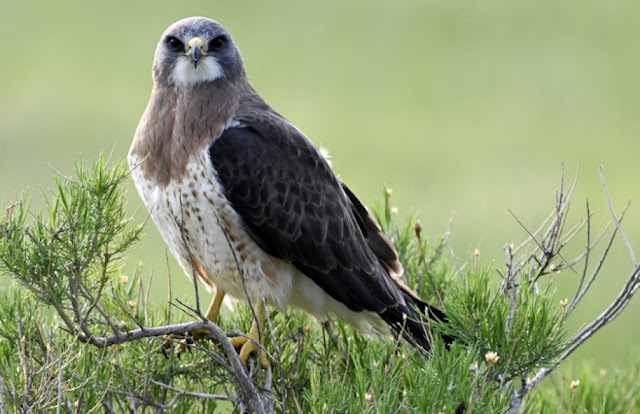
This handsome bird is the American Bird Conservancy's Bird of the Week, Swainson's Hawk

*~*~*~*

A nonagenarian lungfish called Methuselah is the world's oldest living aquarium fish.

*~*~*~*

A network of indigenous burial mounds in Ohio has been proclaimed a Unesco World Heritage site. I grew up in an area where there were many of these mounds and they are quite amazing and impressive.

*~*~*~*

Here's a wasp that can drill through plastic.

*~*~*~*

Female turtles return to the same area every year to lay their eggs.

*~*~*~*

Here are some amazing pictures of whales off the coast of Long Island as seen from above.

*~*~*~*

And here are some pictures of adorable baby birds.

*~*~*~*

It seems that being brainless is no barrier to learning

*~*~*~*

Meet a man who "parents" squirrels!

*~*~*~*

And lastly, here's another "feel good" story about a girl and her dogs.

Tuesday, September 19, 2023

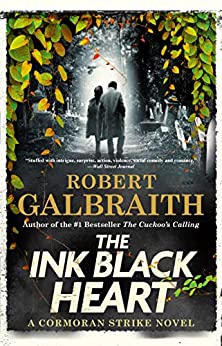
The Ink Black Heart by Robert Galbraith: A review

Let me get my main complaint about this book off my chest up front: The book is quite long and the reason it's so long is that it spends so many pages transcribing online chat transcripts. I don't need that! Just describe and summarize for me, please.

As for the story itself, it was engrossing. Robert Galbraith, aka J.K. Rowling, is quite adept at coming up with good ideas for a novel, developing a storyline, and peopling it with interesting characters. 

The story here involves a popular cartoon called "The Ink Black Heart." One of the co-creators of that cartoon, Edie Ledwell, turns up at the offices of detectives Cormoran Strike and Robin Ellacott where she meets Robin and begs for her help in identifying a mysterious online figure who calls himself (herself?) Anomie. 

Anomie has been persecuting Edie and making her life miserable. Robin, however, does not think the agency, which has a full load of cases, can help in this particular instance and she turns Edie down.

A few days later, Robin reads the news that Edie and the co-creator of the series have been attacked in Highgate Cemetery, the location where the cartoon is set. Edie had been tasered and then murdered. Consequently, Robin and Cormoran feel compelled to investigate and discover Anomie's true identity and whether it is related to Edie's murder.

There are a lot of characters in this book and a lot of extraneous plotlines that don't seem to lead anywhere. The plot is stinking with red herrings but I guess if you are the editor of a book by a fabulously successful author like Galbraith/Rowling you are very hesitant about second-guessing her and suggesting eliminating or shortening passages or removing characters. And, truthfully, once I got into the story, I could hardly bear to put it down, so perhaps the writer and her editors knew what they were doing.

Saturday, September 16, 2023

Poetry Sunday: Song for Autumn by Mary Oliver

The autumn described by Mary Oliver in this poem is certainly not the kind of autumn that we experience here in Southeast Texas. Our autumns are more like the summers in much of the country. 

No, Oliver's autumn is the ideal picture-postcard autumn of the northeastern part of the country. It's the perfect autumn that we can only dream of as we swelter in our humid days. 

Song for Autumn

by Mary Oliver

In the deep fall
don’t you imagine the leaves think how
comfortable it will be to touch
the earth instead of the
nothingness of air and the endless
freshets of wind? And don’t you think
the trees themselves, especially those with mossy,
warm caves, begin to think
of the birds that will come – six, a dozen – to sleep
inside their bodies? And don’t you hear
the goldenrod whispering goodbye,
the everlasting being crowned with the first
tuffets of snow? The pond
vanishes, and the white field over which
the fox runs so quickly brings out
its blue shadows. And the wind pumps its
bellows. And at evening especially,
the piled firewood shifts a little,
longing to be on its way.

This week in birds - #564

 A roundup of the week's news of birds and the environment:

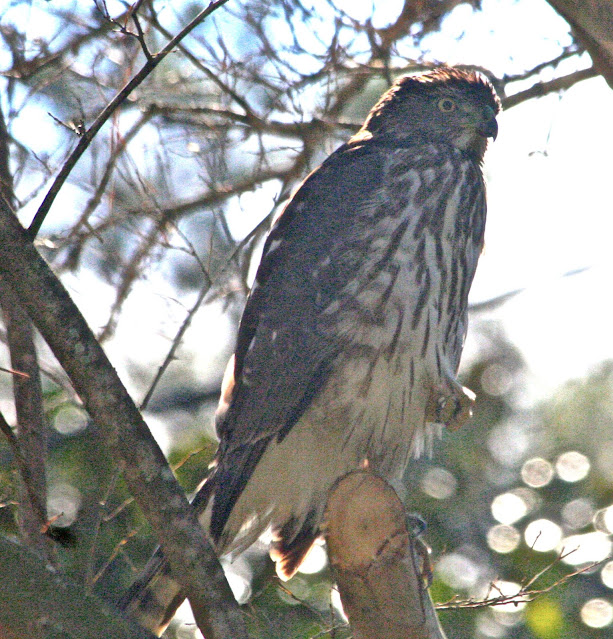
A Cooper's Hawk checks out my yard for a possible meal.

*~*~*~*

Let's start with some good news: A new court settlement will allow the Environmental Protection Agency to more tightly regulate pesticides.

*~*~*~*

But in much worse news, this has been Canada's worst wildfire season on record.

*~*~*~*

The National Oceanic and Atmospheric Administration calculates that 2023 is likely to become Earth's hottest year on record.

*~*~*~*

And it seems that the heating up of the planet may mean that so-called "Forever" glaciers are not forever after all.

*~*~*~*

Flamingos have recently turned up in some very unusual places across the continent. They were likely blown there by Hurricane Idalia.

*~*~*~*

And speaking of hurricanes, the old aphorism may be true: "It's an ill wind that blows no good." Hurricanes help to keep the planet's energy in balance.

*~*~*~*

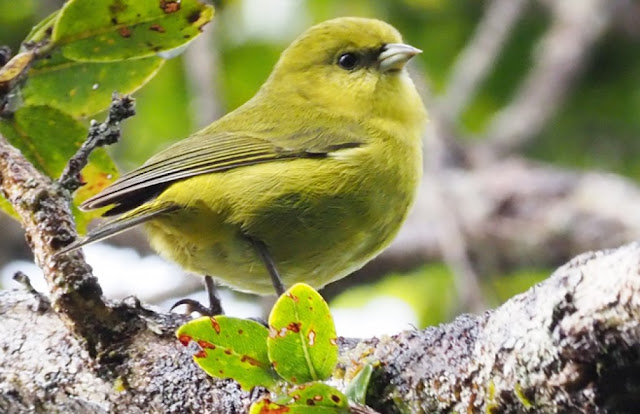
This little bird is the 'Akeke'e or Hawaiian Crossbill and it is the American Bird Conservancy's Bird of the Week.

*~*~*~*

Global warming may be reducing the volume of Antarctica's sea ice which could have repercussions for both local Antarctic ecosystems and the global climate system.

*~*~*~*

Off Colombia's Pacific coast, humpback whales put on quite a show during their migration. Tourists flock there to watch. 

*~*~*~*

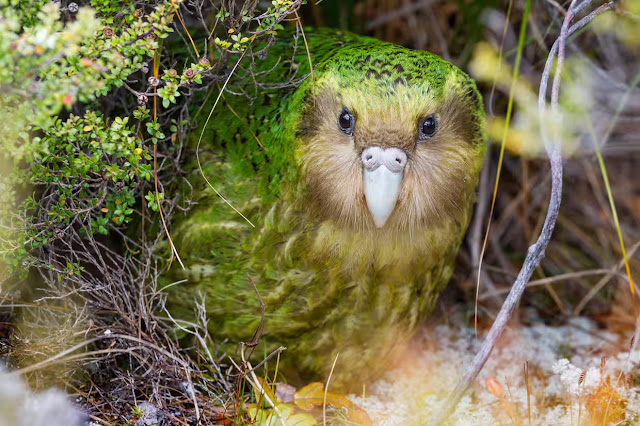
The Kākāpō is one of the native species of New Zealand that are being protected by eliminating invasive predators.

*~*~*~*

I've long been fascinated by the Neanderthals and their place in the history of our species. Here's a man who may be the expert on all that.

*~*~*~*

It may be that the meteor that ultimately caused the extinction of the dinosaurs also allowed flowers to bloom.

*~*~*~*

A couple in Vermont decided to give up on having a neatly manicured lawn and planted wildflowers instead. May their tribe increase!


Friday, September 15, 2023

Garden Bloggers' Bloom Day - September 2023

 Just a few blossoms from my garden on this Bloom Day:


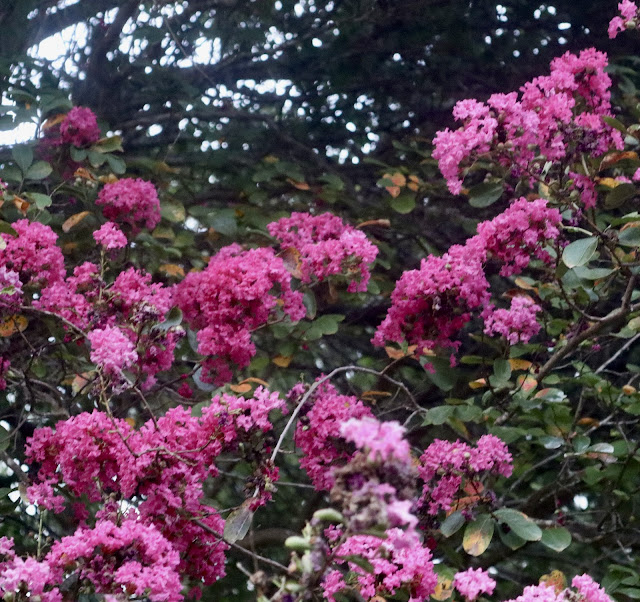
Crape myrtle, of course.
 
Lantana, also of course.


The unobtrusive but very sweet-smelling blooms of almond verbena.


The ever-reliable bloomer Hamelia patens, aka firebush.


Duranta erecta, aka golden dewdrop.


Inland sea oats "blooming" by my little goldfish pond.


Beautyberry has, of course, finished blooming and is now full of its namesake.


Sometimes called "devil's trumpet," the night-blooming datura.


A single beautiful datura blossom.

Thanks for visiting my garden and a happy Bloom Day to you!

Saturday, September 9, 2023

Poetry Sunday: In Summer by Paul Laurence Dunbar

Paul Laurence Dunbar was born in 1872 and was one of the first African-American poets to earn national recognition. I've always felt an affinity for his poetry and here is one that speaks eloquently of our current season - a season that will soon be ending.

In Summer

by Paul Laurence Dunbar

Oh, summer has clothed the earth
In a cloak from the loom of the sun!
And a mantle, too, of the skies' soft blue,
And a belt where the rivers run.

And now for the kiss of the wind,
And the touch of the air's soft hands,
With the rest from strife and the heat of life,
With the freedom of lakes and lands.

I envy the farmer's boy
Who sings as he follows the plow;
While the shining green of the young blades lean
To the breezes that cool his brow.

He sings to the dewy morn,
No thought of another's ear;
But the song he sings is a chant for kings
And the whole wide world to hear.

He sings of the joys of life,
Of the pleasures of work and rest,
From an o'erfull heart, without aim or art;
'T is a song of the merriest.

O ye who toil in the town,
And ye who moil in the mart,
Hear the artless song, and your faith made strong
Shall renew your joy of heart.

Oh, poor were the worth of the world
If never a song were heard,—
If the sting of grief had no relief,
And never a heart were stirred.

So, long as the streams run down,
And as long as the robins trill,
Let us taunt old Care with a merry air,
And sing in the face of ill.

Friday, September 8, 2023

This week in birds - #563

A roundup of the week's news of birds and the environment:  

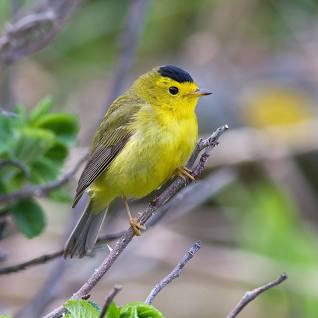
The warblers are passing through on their way farther south for the winter. Today I had a visit from a Wilson's Warbler (not this one - I didn't have my camera on me) that spent time resting, preening, and feeding in a crape myrtle tree in the backyard. Pretty little bird!

*~*~*~*

The simple act of dimming nighttime lights in cities can help to save the lives of migrating birds, many of which do their migrating during the hours of night and can become confused by bright lights.

*~*~*~*

Scientists are trying some rather unconventional methods to try to save corals.

*~*~*~*

The tiny pearl darter which vanished from some southern rivers fifty years ago is being reintroduced to those rivers.

*~*~*~*

Why did early human ancestors turn stones into spheres? Scientists can only speculate.

*~*~*~*

The Biden Administration plans to bar drilling for oil and natural gas in the Arctic National Wildlife Refuge.

*~*~*~*

Here are the pictures of the winners of the 2023 photography of birds.

*~*~*~*

A mysterious "golden orb" found on the ocean floor off the coast of Alaska is puzzling scientists.

*~*~*~*

The underwater eruption of a Pacific volcano in January 2022 was one of the most powerful eruptions ever recorded.

*~*~*~*

It is fitting that, in this time of warbler migrations, the Blackpoll Warbler is the American Bird Conservancy's Bird of the Week.

*~*~*~*

Invasive species can create terrible problems in the environment when they turn up where they don't belong.

*~*~*~*

Is aquaponics the future of growing food, especially in the city?

*~*~*~*

A 1,000-year-old mummy with long brown hair has been unearthed in Peru

*~*~*~*

Heatwaves around the world are making air quality even worse, according to climate scientists.


Thursday, September 7, 2023

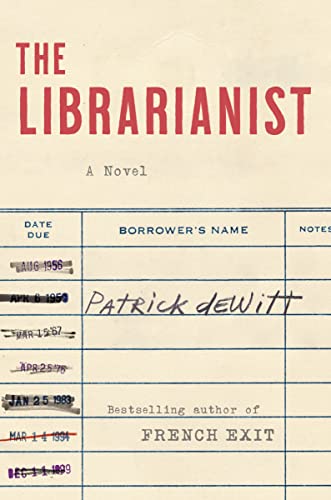
The Librarianist by Patrick deWitt: A review

Bob Comet is an introvert. He is also a retired librarian who lives a solitary life surrounded by books in his mint-colored house in Portland, Oregon.

Bob goes on a daily walk each morning and on one of those mornings, he encounters a confused elderly woman. He learns that she lives in a nearby senior center and he helps to return her to her home. Bob's life has existed at a bit of loose ends since his retirement and now he sees an opportunity to perhaps fill the void by volunteering at the center.

At the center, he finds a community of his age peers and through his interaction with them, details of his life begin to be revealed. We learn that he had been an unhappy child and that during the final days of World War II, he had run away from home. As a runaway, he had met various characters whom we learn about. Some of them were interesting; others could have been better left out altogether in my opinion.

The story is told in sections and my favorite section involved Bob's wife and best friend. Their backstory was important to understanding Bob and why he was the way he was. He had been hurt by them and that had provided much of the motivation for his actions in later life.  

Bob had wanted to share his love of books with the residents at the senior center. He had hoped to read to them, but he soon learned that the residents really had no interest in being read to by him and so he had to find other ways to perform his volunteer work. The volunteering did give his life a new purpose and he learned that he enjoyed getting to know the residents.

I think I would have liked the book more if it had stuck with the timeline and interactions at the senior center rather than spending so much time in Bob's childhood. Understandably, the writer was interested in exploring the background and providing context for Bob's character but a little of that went a long way for me and I would have preferred to spend more time in his present. All in all, I enjoyed the book quite a bit but felt that I would have enjoyed it more had the focus been tighter on Bob's present rather than his past.

Tuesday, September 5, 2023

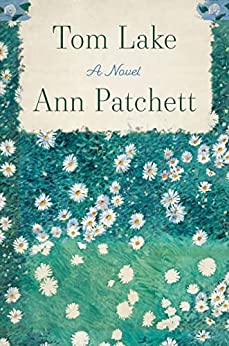
Tom Lake by Ann Patchett: A review


Ann Patchett's latest book, Tom Lake, is set during the current pandemic and the action takes place in a cherry orchard in Michigan. Similarities to Chekhov's play, The Cherry Orchard, are most definitely intentional.

The story concerns former actress Lara Kenison and her husband Joe Nelson and their three grown-up daughters, Emily, Nell, and Maisie. The pandemic has brought all of the family together on the farm to shelter in place. Because of the pandemic, Joe has not been able to bring in the migrant workers who normally help to gather the cherries and so the family works to try to take up the slack and get the crop in.

As they work, the daughters press their mother to entertain them by telling them of the time when she worked in a summer theater production of Thornton Wilder's Our Town in Tom Lake, Michigan. Also in the cast was an actor named Peter Duke who was an unknown at the time but later became quite famous. During their time in the play, Lara had a brief romance with Duke. 

Lara's story of that time is interspersed between present-day events of the family's life and their work in the orchard. The family's interactions also reveal more about the three daughters and their own aspirations for their lives. Emily, the oldest of the daughters, plans to take over running the farm in the future. The middle daughter, Maisie, is studying to be a veterinarian. The youngest, Nell, wants to be an actress.

Tom Lake is Lara's first-person perspective and as such we are privy to her memories and her thoughts about them. We also share her private deliberations on just how much of her past to tell her daughters about. 

This is a character-driven narrative and each of the family member's characters is fully developed. It is a slow-paced story and is very much attuned to the times in which we live. Patchett seems intent on getting us to slow down and think about things, to think about what we are reading and how these pandemic times will continue to play out in our lives.

All in all, I found this to be a very satisfying and affecting story. I liked the Kenison-Nelson family quite a lot. It was hard to put the book down and I was sad to see it end. 


Saturday, September 2, 2023

Poetry Sunday: September Days by Helen L. Smith

Summer has not left us here in Southeast Texas and probably won't for at least a couple more months, but still we can look forward to those "fairer, rarer days" and hope for the coolness of autumn. Maybe in December!

September Days

by Helen L. Smith 

O month of fairer, rarer days
Than Summer's best have been;
When skies at noon are burnished blue,
And winds at evening keen;
When tangled, tardy-blooming things
From wild waste places peer,
And drooping golden grain-heads tell
That harvest-time is near.

Though Autumn tints amid the green
Are gleaming, here and there,
And spicy Autumn odors float
Like incense on the air,
And sounds we mark as Autumn's own
Her nearing steps betray,
In gracious mood she seems to stand
And bid the Summer stay.

Though 'neath the trees, with fallen leaves
The sward be lightly strown,
And nests deserted tell the tale
Of summer bird-folk flown;
Though white with frost the lowlands lie
When lifts the morning haze,
Still there's a charm in every hour
Of sweet September days.

Friday, September 1, 2023

This week in birds - #562

A roundup of the week's news of birds and the environment

I feel you, Bro! It's hot in Texas. My husband informed me earlier that the forecast is for continued high temperatures in the triple digits (Fahrenheit) at least through the middle of September. Perhaps we'll get some relief in October.

*~*~*~*

Profligate use of groundwater is damaging aquifers throughout the nation an investigation has found.

*~*~*~*

The global avian flu outbreak is devastating wild birds and poultry and is threatening to make the jump to humans.

*~*~*~*

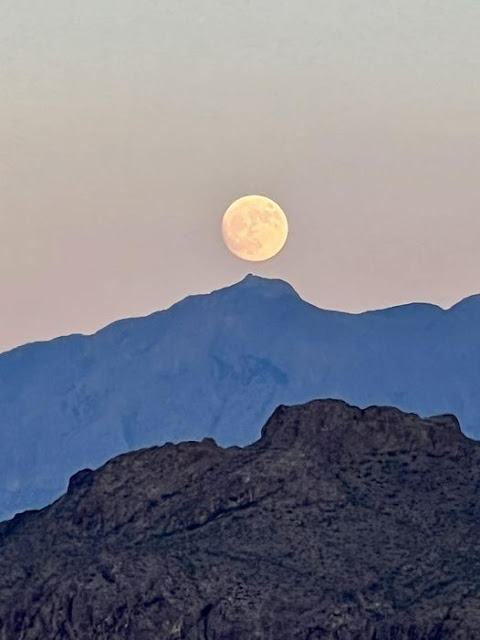
"Blue Moon" photographed over Texas' Big Bend this week.

Did you witness the "Blue Moon" this week? If not, you won't have another chance until 2037.

*~*~*~*

Tracking songbirds on migration is a daunting task, but thank goodness there are dedicated scientists who do it.

*~*~*~*

The summer evenings of my childhood were lit by fireflies but now those fireflies are disappearing

*~*~*~*

Climate scientists continue to warn us, as they have for years, that drastic action is needed if we are to keep the "crazy" extreme weather we are seeing from becoming the norm of the future. 

*~*~*~*

People have been searching for a Loch Ness monster for 1,300 years and they are doing it again this weekend.

*~*~*~*

A growing number of countries are considering passing laws to make environmental destruction a punishable crime.

*~*~*~*

The Least Tern is the American Bird Conservancy's Bird of the Week.

*~*~*~*

Following the Supreme Court's decision weakening the protections for waters under the Clean Water Act, the Environmental Protection Agency has announced new rules regarding such protections.

*~*~*~*

It turns out you can learn quite a lot from jaguar poop without ever having to capture the big cats.

*~*~*~*

There was a bee emergency in Ontario this week when boxes containing the bees fell off a truck, but beekeepers were soon on the job corralling the angry fliers.

*~*~*~*

As the climate changes, birds are moving into new territories and suddenly birders in places like New York City are getting a chance to see birds they never expected to be there. 

*~*~*~*

The recent wildfires in Maui may have been caused by bare power lines and obsolete poles.

*~*~*~*

Margaret Renkl writes in praise of "ruined flowers."

*~*~*~*

The beloved wild horses of North Dakota's Theodore Roosevelt National Park may be removed. That does not appear to be a popular idea.

*~*~*~*

A large-scale study of Indian birds found 178 species needing immediate priority for conservation.

*~*~*~*

Reefs made from sunken trees could help some marine habitats recover.

*~*~*~*

Migrating birds face many hazards and protecting them requires working and cooperating across international boundaries.

*~*~*~*

Fungi are important to ecosystem health and should be protected alongside flora and fauna.

*~*~*~*

North American grassland birds are in significant peril but in order to protect them we must protect and preserve their habitat.

*~*~*~*

Ancient bird calls were often made from bird bones.

*~*~*~*

"Nemesis birds" are a familiar and frustrating concept for devoted birders.