Thanks for Following

Saturday, April 30, 2022

Poetry Sunday: It is Not Always May by Henry Wadsworth Longfellow

Can it really be May already? Where did those first four months go? 

But as Henry Wadsworth Longfellow pointed out in this poem, it will not always be May. Soon enough June will arrive and we will wonder where those first five months have gone. So let us enjoy the pleasures of this month while they last. 

It is Not Always May

by Henry Wadsworth Longfellow

No hay pajaros en los nidos de antano.
Spanish Proverb


The sun is bright,--the air is clear,
The darting swallows soar and sing.
And from the stately elms I hear
The bluebird prophesying Spring.
So blue yon winding river flows,
It seems an outlet from the sky,
Where waiting till the west-wind blows,
The freighted clouds at anchor lie.
All things are new;--the buds, the leaves,
That gild the elm-tree's nodding crest,
And even the nest beneath the eaves;--
There are no birds in last year's nest!
All things rejoice in youth and love,
The fulness of their first delight!
And learn from the soft heavens above
The melting tenderness of night.
Maiden, that read'st this simple rhyme,
Enjoy thy youth, it will not stay;
Enjoy the fragrance of thy prime,
For oh, it is not always May!
Enjoy the Spring of Love and Youth,
To some good angel leave the rest;
For Time will teach thee soon the truth,
There are no birds in last year's nest!

Friday, April 29, 2022

This week in birds - #499

 A roundup of the week's news of birds and the environment:

A Willet in flight over Galveston Bay.

*~*~*~*

Scientists warn that the warming climate will likely give rise to future pandemics

*~*~*~*

Southern California officials have declared a water shortage emergency and have limited outdoor watering to only one day a week.

*~*~*~*

A highly contagious disease called stony coral tissue loss disease (SCTLD) is ripping through the Caribbean's coral reefs causing devastating losses.

*~*~*~*

Even more devastating losses may be on the horizon. Scientists warn that if fossil fuel emissions continue at their present pace there could be a mass extinction of sea life by 2300.

*~*~*~*

Despite the Cop26 deal to halt and reverse deforestation by the end of the decade, the relentless destruction of the rainforest is continuing with the tropics having lost 11.1 million hectares of tree cover in 2021.

*~*~*~*

On the plus side, some are trying to help make up for that loss by planting more trees

*~*~*~*

This iris may not appear black to you but it is called the "black iris" and is endemic to Jordan where it is the national flower.

*~*~*~*

The National Butterfly Center in South Texas closed its doors to the public after a campaign of lies and disinformation by far-right conspiracy theorists, but the good news is that it has now reopened.

*~*~*~*

Wildfires in Arizona, New Mexico, and Nebraska have burned more than 150,000 acres, caused at least one death, and destroyed hundreds of structures.

*~*~*~*


*~*~*~*

And then you can listen to this music of the frogs; it's the male wood frogs' springtime chorus as they search for mates.

*~*~*~*

Three-quarters of Greenland lies within the Arctic Circle but climate change has reached even this remote region and is having its effect on the weather there.

*~*~*~*

A UN report states that up to 40% of the world's land is degraded, mostly by its use for food production. The damage to the land puts at risk its future ability to feed the planet's growing population.

*~*~*~*

A new study published in Nature magazine states that one-fifth of reptile species face potential extinction and that would have a devastating impact on the planet.

*~*~*~*

Here are some scenes from the ongoing spring migration of birds.

*~*~*~*

After years of decline along its Pacific Coast range, the Monarch butterfly is back. With a bit of help from humans, there has been more than a 100-fold increase over the previous year's total, according to the Xerces Society.

*~*~*~*

An ancient species of flightless swan that lived eleven million years ago in Japan was an ocean-going creature according to scientists who have studied it.

*~*~*~*

In 2021, wildfires accounted for more than a third of the world's tree cover losses. That is the largest percentage on record.

*~*~*~*

Rapa Island in French Polynesia is a place of a remarkable number of endemic species, at least 300. But all of this diversity is threatened by invasive species.

*~*~*~*

Wild Turkeys can be very aggressive in their encounters with humans. They are big birds with the potential to do considerable damage to the human body.

*~*~*~*

The glaciers of the Olympic Peninsula in Washington are receding and are expected to have disappeared completely within the next fifty years. 

*~*~*~*

There are Bluebirds and then there are blue birds. Here are portraits of several species of birds of that hue that call North America their home.

Monday, April 25, 2022

When I'm Gone, Look For Me in the East by Quan Barry: A review

How do I even begin to sum up this book? How can I describe the experience of reading it? It is set in a culture so completely alien to my own that it is difficult to find any reference point from which to start to understand it. And yet I found reading it an entirely mesmerizing and lyrical experience.  

The story briefly is this: The setting is Mongolia. There, twin brothers, Chuluun and Mun, had become Buddhist monks. They had been "discovered" when they were eight years old and Mun had been recognized as the reincarnation of a deceased lama. They had subsequently been taken to live in a monastery. 

The twins are now in their twenties. About a year before the action of the novel, Mun had renounced the monastic life. He was drawn to the temptations of the world and had chosen to live a secular life. Chuluun, however, has been faithful to the monastic calling and it is through his eyes that we experience events. He is our narrator.

The twin brothers have a gift that is something like telepathy with each other. Each knows what the other is thinking. For Chuluun particularly, this is a problem as he is privy to his brother's carnal mental images. Each of the brothers does have the capacity to shut off his brain from invasion by his twin, and each brother freely uses that ability.

As the story opens, a lama has died and Chuluun has been chosen as one of the monks to be sent out to search for his reincarnation. He enlists his brother's rather reluctant aid as a driver to take him on the quest. The rest of the story relates their trip out into the countryside with the monks interviewing young boys who may be the lama's reincarnation.

The research that went into the writing of this novel is impressive indeed. There is so much detail here about the culture of Mongolia and Tibet and about Buddhism in general. I found it all fascinating. It made for a slow read, not because it was not interesting but because it was. I sometimes found myself rereading passages to ensure that I was understanding what the writer intended. 

I had not read any of Quan Barry's work before but I was not surprised to learn that she is an award-winning poet. Her fiction, too, sometimes felt like reading poetry. For example, at one point Chuluun reflects: "Renunciation is an act of liberation. It sets loose the light shining deeply within each of us, a light we can count on in the darkest dark. When you drop the world's bait, you see the world as it is. When you desire absolutely nothing, you become free." That last sentence would serve as a suitable mantra for one's life.

This tale of an intriguing culture told through the voice of a very relatable and sympathetic character counts as one of the most completely different and interesting books I have read so far in 2022.

My rating: 4 of 5 stars

Saturday, April 23, 2022

Poetry Sunday: The Sleep of Seeds by Lucia Cherciu

I was busy in the garden all last week, mostly weeding and planting plants. And watering. We've had a very dry spring so far, not an auspicious start to the growing season. I have a small - very small - vegetable garden this year and I've been trying to encourage those plants to grow. And I've been adding some more perennials to the garden for flowers. They all need water and the weather has not been cooperative, so out with the watering can, hoses, and sprinklers. I haven't resorted to prayer as the gardener in this poem did but to each his own. Whatever works.

The Sleep of Seeds

by Lucia Cherciu

It didn’t rain all summer.
Instead of water, my father used prayer
for his garden. Despite his friends’ laughter,
he planted spinach and lettuce,
countless rows of cucumbers
in beds lined up meticulously
ignoring old people’s warnings
about the drought.
Every afternoon, he pushed his hat back,
wiped off his sweat,
and looked up at the empty sky,
the sun scorching
the acacia trees shriveling in the heat.
In July, the ground looked like cement.
Like the ruins of a Roman thermal bath,
it kept the vestiges of a lost order,
traces of streams long gone.
He yelled at me to step back
from the impeccable architecture
of climbing green beans,
the trellis for tomatoes,
although there was nothing to be seen,
no seedlings, no tendrils,
not even weeds,
just parched, bare ground—
as if I were disturbing
the hidden sleep of seeds.

Friday, April 22, 2022

This week in birds - #498

 A roundup of the week's news of birds and the environment:

Cooper's Hawk in the neighbor's tree keeping an eye on the birds in my yard.

*~*~*~*

President Biden has reversed the action of his predecessor by restoring a landmark environmental law. The new rule will require agencies to consider the impacts on the climate of proposed highways, pipelines, and other projects and it will give local communities more input on those projects.

*~*~*~*

The Sixth Extinction which many scientists believe is now occurring is such an overwhelming concept that it is hard to wrap our minds around or to find ways to talk about it. The Revelator has some suggestions.

*~*~*~*

How much do you actually know about climate change? This quiz will help you find out. (Full disclosure: I got 8 out of 10 right.)

*~*~*~*

Uh oh. This is not good news. Avian flu is abroad in the land once again. It's the worst outbreak among domestic poultry since 2015, but, unfortunately, it is also affecting wild birds. Since February, at least 36 Bald Eagles have died in fourteen states. 

*~*~*~*

Indigenous farmers in western New Mexico are passing on traditional farming methods and seeds in an effort to protect against the climate crisis. 

*~*~*~*

An executive order issued by President Biden on Friday is intended to lay the groundwork for protecting the biggest and oldest trees in America's forests.

*~*~*~*

Here's an idea whose time may have come: Earthships. These are houses that are off the grid and climate-resilient and they are built from trash!

*~*~*~*

Here are six little furry reasons to rejoice. They are red wolf pups born in the Alligator River National Wildlife Refuge in North Carolina. It is the first time in six years that pups have been born to the critically endangered species there. 

*~*~*~*

A megafire raged for three months in British Columbia in 2017. Canada counts it as a "natural disturbance" beyond human control and does not count the emissions from it under the Paris climate agreement.

*~*~*~*

The American West faces increasing threats from big wildfires that are fueled by a climate that is steadily getting warmer and drier and smoke from those fires has a seriously detrimental effect on public health.

*~*~*~*

Westerners paying for the privilege of hunting markhor, ibex, and wild sheep in Tajikistan are inadvertently helping to conserve the endangered snow leopard. Revenue from the hunts helps to protect the big cat and also provides income for villages in the region.

*~*~*~*

Here's a report on Ospreys that nest in the San Francisco Bay area.

*~*~*~*

I guess this really should not be a surprise: Communities that are majority Black or Latino have a higher level of oil drilling and pollution. Research by the University of California at Berkeley and Columbia University in New York confirms that communities of color are disproportionately exposed to pollution and the resultant health risks

*~*~*~*

China made a pledge at climate negotiations in Glasgow last year to pivot away from coal-fired power plants, but six months later there doesn't appear to have been any movement toward that goal.

*~*~*~*

The U.S. houses hundreds of millions of tons of phosphogypsum in open-air stacks. Regulation of this fertilizer is inconsistent and environmentalists are targeting these stacks to try to bring them under firmer regulatory control.

*~*~*~*

This orange wildflower was named Gasteranthus extinctus because it was thought to be extinct. But it seems that reports of its extinction were exaggerated. The flower has been found alive and thriving in the Centinela region in western Ecuador.

*~*~*~*

Wind-driven springtime wildfires are tearing through parched evergreens and brush across Arizona, New Mexico, and Colorado leading to speculation that "fire season" in the West may now be a year-round threat

*~*~*~* 

On the other side of the world, an early continuous and brutal heatwave has left people in South Asia gasping for air.

*~*~*~*

The Yurok tribe of northern California is readying four young California Condors for release into the wild. They consider it their sacred responsibility to help maintain balance in the natural world.

*~*~*~*

Scientists find inspiration in Nature that gives them hope as they confront climate change. 

*~*~*~*

This would not give the scientists or us laypeople much hope. It seems that the rate at which the Arctic ice is melting has been underestimated. The latest data indicates that it is heating up four times faster than the rest of the planet.

*~*~*~*

The popularity of renewables is growing; more and more people are signing on. The bad news is that the wait times to connect to the grid are increasing and discouragement is causing more projects to drop out of the process.

Thursday, April 21, 2022

Olga Dies Dreaming by Xochitl Gonzalez: A review


I have been busy in the garden and consequently have been neglecting to review the books that I've read and now I am soooo far behind. But the only way to catch up is to make a start - one book at a time - so here goes:

Olga Dies Dreaming is the debut novel of Xochitl Gonzalez, but it doesn't really read like a debut. The writing is very assured and engaging. The plot is quite a vivid page-turner and the characters are relatable. What more could a reader ask?

The book is based on Puerto Rican culture and features a sister and brother, Olga and Prieto. We see events primarily through Olga's eyes. She is a much-in-demand wedding planner for Manhattan's elite. Her brother is a popular congressman who represents their Brooklyn neighborhood, a mainly Latin area that is quickly becoming gentrified.

Olga and Prieto were raised primarily by their grandmother because twenty-seven years earlier their mother, a Young Lord turned radical named Blanca, had abandoned her family to advance the militant political cause that she believed in. Their father, too, was mostly absent from their lives. Even though their mother left them in the care of their grandmother, however, throughout their lives she wrote them letters that helped to keep her "present" for them. Now, with Hurricane Maria bearing down on the island, their concern for their mother brings her more urgently back into their lives.

It should be noted that a good part of the plot of this book addresses the U.S. government's entirely inadequate response to that 2017 hurricane and its effects on Puerto Rico and the lives of the people there. The lack of concern of the government then in power in Washington was completely typical of that time. The plot deals, at least tangentially, with the effects of political corruption and with the ideal that is the so-called American Dream. And Puerto Rico is, of course, a part of that America.

Both Olga and Prieto have their own personal problems. Olga struggles with her love life - such as it is. She has not yet found the love of her life. And then along comes Matteo. Prieto is a closeted gay man in politics with all the stresses that that brings. I liked both of these characters quite a lot which certainly made it easier to enjoy the book. I think that Xochitl Gonzalez may have a future in writing fiction.

My rating: 4 of 5 stars

Saturday, April 16, 2022

Poetry Sunday: An April Day by Henry Wadsworth Longfellow

Henry Wadsworth Longfellow describes an April Day; a day "When the warm sun, that brings Seed-time and harvest, has returned again," and "'T is sweet to visit the still wood, where springs The first flower of the plain." The day as he describes it seems just about perfect to me.


An April Day
 
by Henry Wadsworth Longfellow

When the warm sun, that brings
Seed-time and harvest, has returned again,
'T is sweet to visit the still wood, where springs
The first flower of the plain.

I love the season well,
When forest glades are teeming with bright forms,
Nor dark and many-folded clouds foretell
The coming-on of storms.

From the earth's loosened mould
The sapling draws its sustenance, and thrives;
Though stricken to the heart with winter's cold,
The drooping tree revives.

The softly-warbled song
Comes from the pleasant woods, and colored wings
Glance quick in the bright sun, that moves along
The forest openings.

When the bright sunset fills
The silver woods with light, the green slope throws
Its shadows in the hollows of the hills,
And wide the upland glows.

And when the eve is born,
In the blue lake the sky, o'er-reaching far,
Is hollowed out and the moon dips her horn,
And twinkles many a star.

Inverted in the tide
Stand the gray rocks, and trembling shadows throw,
And the fair trees look over, side by side,
And see themselves below.

Sweet April! many a thought
Is wedded unto thee, as hearts are wed;
Nor shall they fail, till, to its autumn brought,
Life's golden fruit is shed.

Friday, April 15, 2022

This week in birds - #497

 A roundup of the week's news of birds and the environment:

This male Northern Cardinal serenaded me as I worked in the garden.

*~*~*~*

The latest report of the Intergovernmental Panel on Climate Change (IPCC) is out and the good news is that it is not without hope. It offers some practical suggestions for dealing with the problem of climate change, but will the world listen and implement them?

*~*~*~*

According to an in-depth analysis of the net-zero pledges made by nations at the UN Cop26 climate summit in December, keeping the rise in the planet's temperature to less than 2 degrees centigrade is doable. The bad news is that the 1.5C goal no longer seems possible.

*~*~*~*

You would think that if any plant would be able to adapt to a warming planet it would be the cacti, but it seems that even they are not safe from the effects of climate change.

*~*~*~*

Remember the excitement of a few years ago when it seemed that perhaps the Ivory-billed Woodpecker was not extinct after all? Well, ultimately that excitement proved to not be well-founded and last year the species was declared extinct by the U.S. government. But wait! Maybe that declaration was a bit premature.  

*~*~*~*

Forever chemicals are living up to that name and that is particularly bad news for a farm in Maine. 

*~*~*~*

When war breaks out, as between Russia and Ukraine, we focus on the harm caused to our own species, but Nature also is a casualty, a silent victim of war.

*~*~*~*

As hurricane season looms, scientists are telling us that climate change is fueling an increase in the rainfall that accompanies tropical storms. 

*~*~*~*

The evidence indicates that living a greener lifestyle can lead to greater happiness in both rich and poor countries.

*~*~*~*

Learn about some of the birds of Ukraine, who are also affected by war.

*~*~*~*

Climate change appears to have brought Australia an increase in tropical diseases. They have recently had an outbreak of Japanese encephalitis which has so far infected 34 people and killed three.

*~*~*~*

An eruption of an underwater volcano in Tonga in January created a planetary-scale pressure wave, or shockwave, in the atmosphere, something that had not been seen in more than fifty years.

*~*~*~*

Purple Martins are wonderful birds but when they gather in the thousands in cities during migration, they can create some not-so-wonderful problems. Mainly bird poop, and lots of it.

*~*~*~*

Did you know that in 2022 alone - 3+ months - Madagascar has been hit by five major storms? No, neither did I, but as a result of these storms, thousands of people are in urgent need of food assistance.

*~*~*~*

A new study has found that sunscreen chemicals are accumulating in Mediterranean seagrass and may pose harmful effects on that environment.

*~*~*~*

Another new and alarming study says that urban air pollution is rapidly increasing in the tropics and will lead to hundreds of thousands of preventable deaths if stronger regulations are not put in place. 

*~*~*~*

European Starlings really can't help the fact that humans imported them into an environment in which they didn't belong. In truth, they are a handsome and resourceful species. They are survivors just doing what their species' history tells them to do. 

*~*~*~*

And here's a great idea whose time has come: Wildlife bridges. In California, the world's biggest wildlife bridge will allow the animals of the Santa Monica mountains safe passage across a busy and dangerous 10-lane highway.

*~*~*~*

Native plants and perennials are finally coming into their own with American gardeners. In the era of climate change, that stretch of thirsty green lawn has lost favor. Homeowners and landscapers are looking to plants that can take what the changing climate throws at them and use less water doing it.

*~*~*~*

Long ago I lived in a city apartment that looked out on the flat roof of a business building where urban Rock Pigeons gathered. And so I became a pigeon watcher. Let me tell you those are some pretty interesting and entertaining birds

*~*~*~*

Seed banks from the Arctic to Lebanon are a way that humans are seeking to insure against a global food crisis that could be brought about by climate breakdown and worldwide conflict. 

*~*~*~*

Climate scientists have long warned about the potential for a methane feedback loop that creates a surge of methane in the atmosphere. Now they are saying that it may be becoming a reality due to increasing heavy rainfall.

*~*~*~*

Adélie Penguins are in trouble on the western side of the Antarctica Peninsula where warming has occurred faster than almost anywhere on Earth. But on the eastern side of the peninsula, they are doing quite nicely, thank you. 

*~*~*~*

Manatees in Florida are not doing so well, as we know. Pollution has killed the seagrass that they normally feed on, leading to widespread starvation. They are being fed massive quantities of lettuce in an attempt to save them. But will it be enough? The jury is still out.

*~*~*~*

Here's another problem being caused by climate change that may not affect you but it is of some concern in my household: Septic tanks. Intensifying rains that flood backyards can render the tanks ineffective.

*~*~*~*

Every habitat on Earth has its own sonic signature made up of the thousands of voices present there. It took hundreds of millions of years for this sonic diversity to emerge. When those sounds begin to disappear it is a subtle sign of the beginning of Nature's apocalypse.

*~*~*~*

And yet another "sound" problem is the sonic pollution of the planet's oceans. This pollution is harmful to marine life.

*~*~*~*

A DNA analysis has provided support to the claim of the Muwekma Ohlone Tribe for its ancient roots in California. According to this evidence they have lived in the Bay Area for thousands of years.

*~*~*~*

The story of a pair of Peregrine Falcons named Annie and Grinnel in California had been monitored on television and followed by many viewers for a couple of years. Their story ended in tragedy on March 31 when Grinnel was killed by being hit by a car. But there may be yet another act left in the story. Annie had already laid her eggs by the time Grinnel was killed. One parent alone likely would not be able to successfully raise the chicks but now another male has shown up and Annie seems to be tolerating him. So we'll see what happens.  

*~*~*~*

Domed bird nests give the appearance of greater protection but species that build simpler nests may have a better chance of adapting to changing conditions.

*~*~*~*

The Sarus Cranes of India often add a third bird to the mated pair, forming a trio but not necessarily a throuple. The third bird seems to act as a kind of au pair.


Garden Bloggers' Bloom Day - April 2022

 I'm a bit late with my Bloom Day post this month. My excuse is that I've been busy... gardening. And then along came one of those April showers before I could take pictures. My plants really appreciated that brief rain. 

And now here we go with my April blooms. Let's start with the roses.

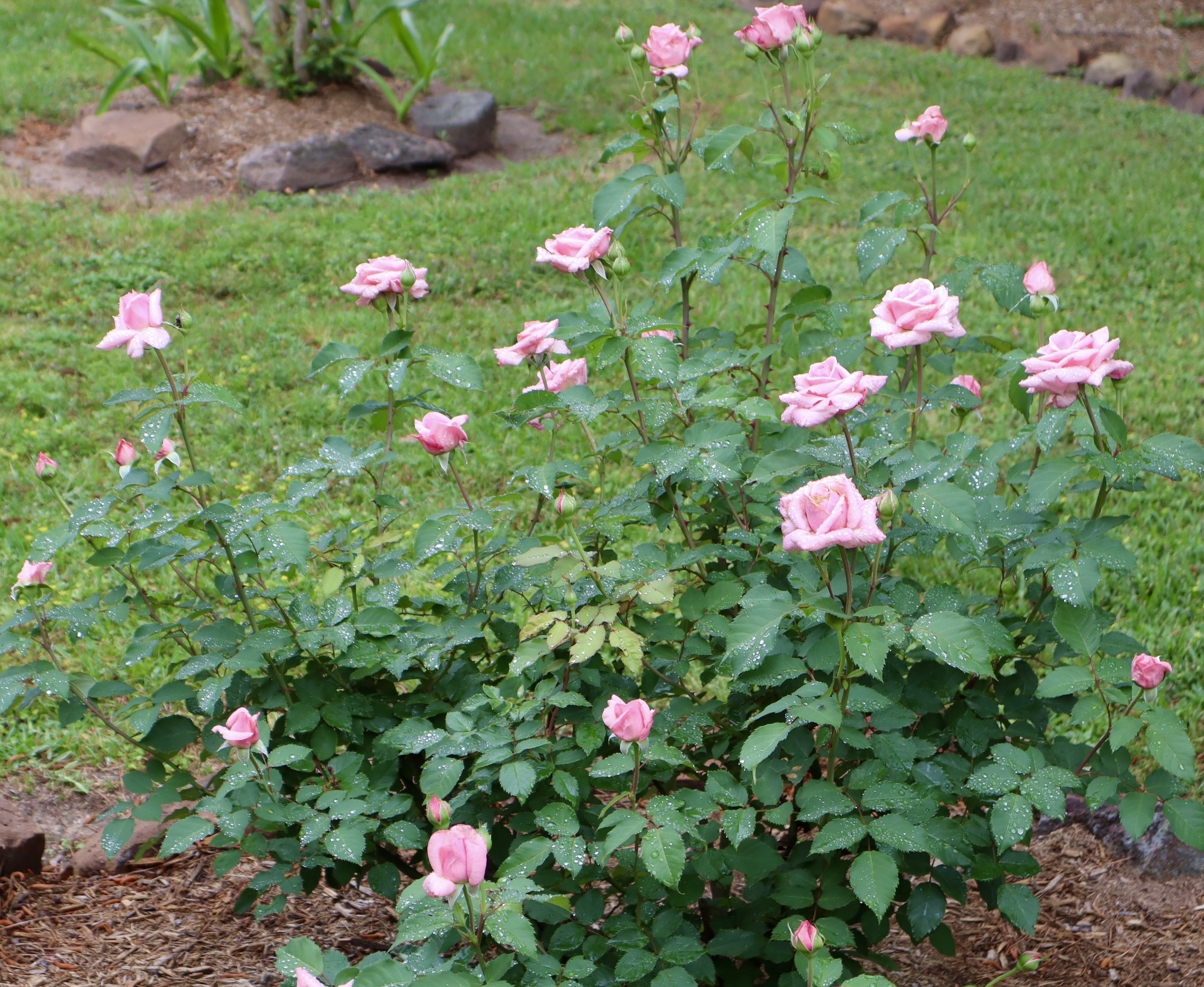
'Chrysler Imperial.'

'Belinda's Dream.'

I do love 'Belinda.'

'Julia Child' was my first rose to bloom this spring.

'Old Blush' is my ever faithful bloomer.

Pansies...

... pansies...

... pansies... these are just about at the end of their bloom cycle...

... and still more pansies.

And not pansies but violas. These were hidden "volunteers" in a pot of echinacea that I planted in a garden bed this week, so I popped them into their own little pot.
 
Salvia.

The 'Tangerine Beauty' crossvine only had this one sad little bloom on it today, but more are on the way.


I'm not sure of the name of this succulent but it has performed beautifully for me all during winter and now into spring.

And another succulent in bloom in its pot on the patio.


The yellow cestrum in the backyard is in full bloom.

The cyclamen is almost gone but a few blooms are still hanging on.

Dianthus with a bit of blue pansy on the side.

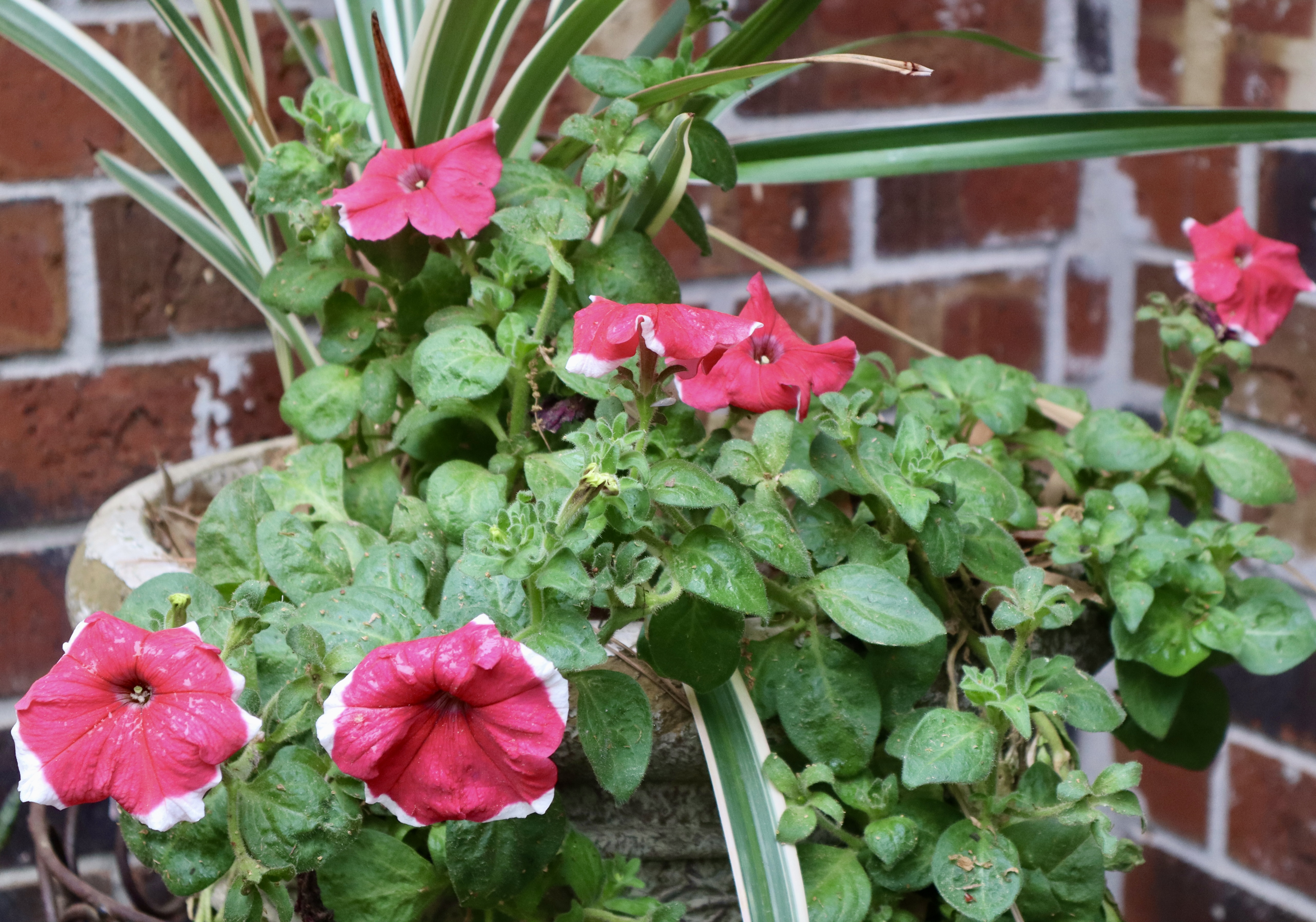
These petunias bloomed in their pot near the front door all winter long and now into spring.


The larkspur is almost there.

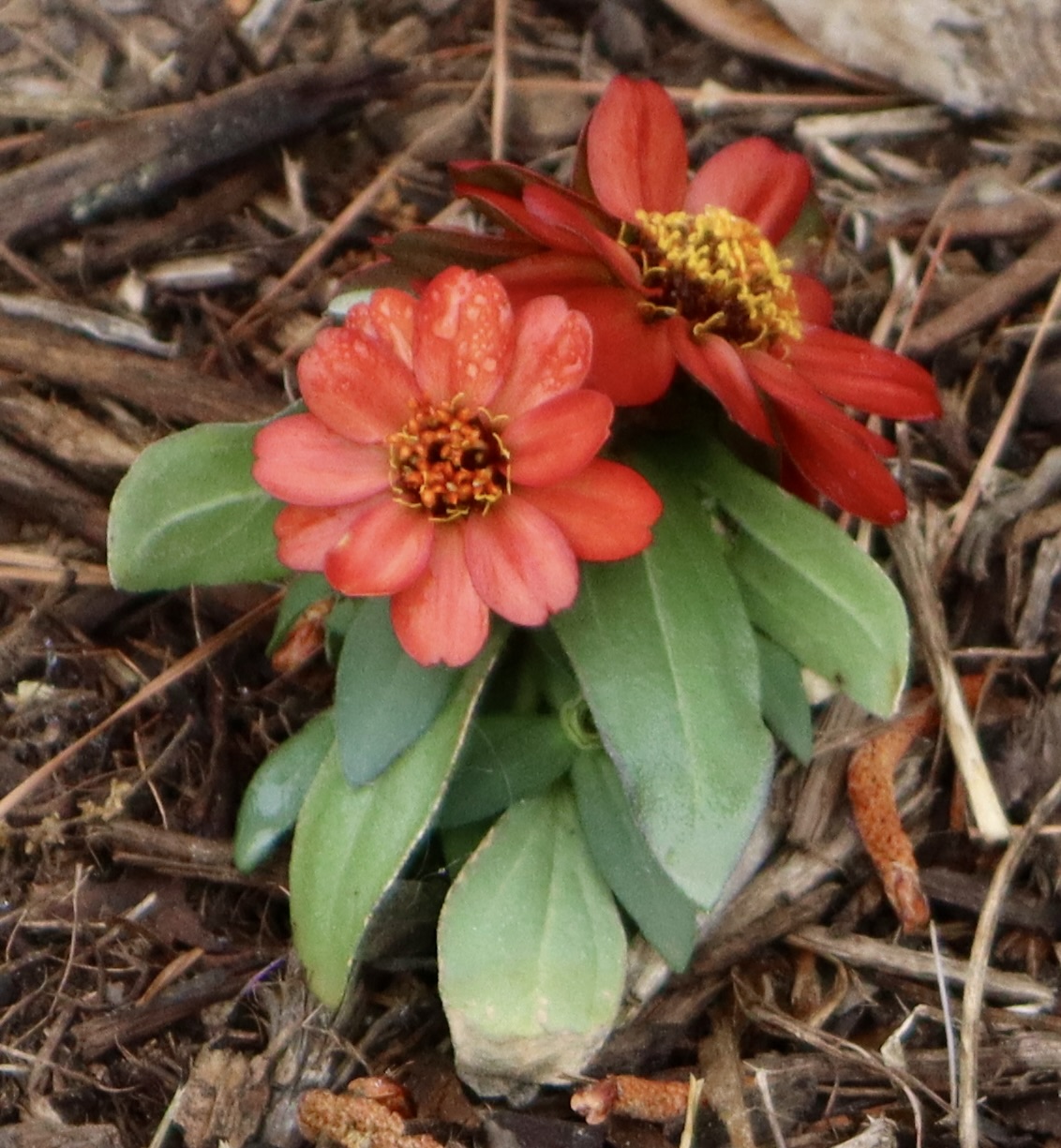
I know I should have removed the blossoms from these little zinnias before I planted them, but I didn't have the heart to do it.

More of the zinnias.

And still more.

This mandevilla vine was just recently purchased and planted.

Purple oxalis. On this cloudy and misty day, the blooms never fully opened.

A few yarrow blooms are still hanging around.

The Japanese maple has been full of blooms, although you can hardly discern them at the end of the branches. 

I just set up these pots next to the patio with petunia, yellow cockscomb, and salvia. They will grow to fill the pots.

Is there any happier blossom than the gerbera daisy?

She's not exactly a blossom but her name is Rosie. She sits on her cat tree on the back porch and looks askance at the camera. The tip of her left ear was removed by the vet at Texas Litter Control to show that she has been spayed.

And this is her brother Rocky who doesn't have a tip removed yet but that will happen next week. They are both diligent helpers in the garden.

Thank you for visiting my garden this month and thank you Carol of May Dreams Gardens for starting this meme so many years ago. I'm always happy to participate.  

Happy April and happy gardening to all.


Tuesday, April 12, 2022

The Anthropocene Reviewed by John Green: A review


Here's a contribution to my attempt to keep my pledge to read more nonfiction this year. The Anthropocene Reviewed is a series of essays by writer John Green that actually gives ratings using the one- to five-star method regarding various elements and events, past and present, of human life on Earth. 

The Anthropocene, of course, is the name given to the geological age in which we live. Its name recognizes the impact that human activity has had in shaping the planet and its biodiversity.

The subjects of Green's essays are wide-ranging, to say the least. He jumps around from topics as diverse as hot-dog eating contests to his relationship with his brother Hank to why we have the QWERTY keyboard and many more just as random. He makes each of his topics personal and relates them in such a way that they have emotional impact while never overloading them with subjectivity. It's a delicate balance and for the most part, he succeeds, I think.

The essays are short and briskly written. Each one pulls you along because you want to see where he is headed with this subject. In most instances, I found them well-reasoned and thought-provoking. I frequently found myself wanting to read more on a particular subject. 

And so we hear from Green about Canada Geese, about air conditioning, about the game of Monopoly, about plagues from Covid to Cholera, about the Yips, the Lascaux Cave paintings, Halley's Comet, the Penguins of Madagascar, and about his own struggles with OCD. Well, you get the idea. As I indicated, "wide-ranging" hardly even begins to describe it. The essays are not all of the highest quality. Some of them drag a bit, but overall, I would say that each of them had some valuable information and/or wisdom to impart.

John Green is, of course, most well known for his YA fiction writing. His best-known books are probably The Fault in our Stars and Turtles All the Way Down. I haven't read either of those or, in fact, any of his fiction, but I think that is probably his forte. This book, I believe, was his first venture into nonfiction and it is not a bad beginning. He kept his essays brief. They are of a length and substance that one could easily read one or two just before retiring at night and that is usually the time that I chose to read them. If he decides to do more essays in the future, I would look forward to adding them to my reading list.

My rating: 3 of 5 stars 


Saturday, April 9, 2022

Poetry Sunday: Do Not Stand At My Grave and Weep by Mary Elizabeth Frye

This poem speaks to anyone who has ever lost someone they love to death, which, I guess, is all of us. The physical body dies but the spirit lives on for the people who loved them. And as long as we remember them, they are never truly gone.

Do Not Stand At My Grave and Weep

by Mary Elizabeth Frye

Do not stand at my grave and weep
I am not there. I do not sleep.
I am a thousand winds that blow.
I am the diamond glints on snow.
I am the sunlight on ripened grain.
I am the gentle autumn rain.
When you awaken in the morning's hush
I am the swift uplifting rush
Of quiet birds in circled flight.
I am the soft stars that shine at night.
Do not stand at my grave and cry;
I am not there. I did not die.

Friday, April 8, 2022

This week in birds - #496

 A roundup of the week's news of birds and the environment:

The warblers are passing through on spring migration. A Wilson's Warbler stopped for a drink at our little fountain.

*~*~*~*

Human-produced microplastics have invaded the ocean where they become part of the "marine snow" that is then colonized by microbial hitchhikers and inevitably becomes part of the environment.

*~*~*~*

Oil drilling in Canada's boreal forest is changing the environment for the animals that call it home. Species like wolves and caribou are being crowded closer together and it is changing how the species interact with each other.

*~*~*~*

The changing climate is causing birds to lay their eggs earlier. Many species are now laying eggs as much as a month earlier than they did in the past.

*~*~*~*

Xavante villagers in Brazil collect seeds from native trees in order to replant one of the world's most biologically rich regions, thus seeking to restore areas that have been deforested by logging.

*~*~*~*

Government data has revealed that methane emissions into the atmosphere rose by a record amount last year.

*~*~*~*

The American Bird Conservancy's Bird of the Week is one of our most familiar wading birds, the Great Blue Heron. The stately bird is hard to miss in any landscape.

*~*~*~*

The pandemic has had some positive effects for the environment: It has helped to keep humans at home and not out mucking it up. A case in point is Maya Beach in Thailand which has had a chance to recover from being overrun by our species.

*~*~*~*

Do whales experience menopause? It would seem so as female whales can live many years after they are no longer reproducing.

*~*~*~*

Wolverines may be expanding their habitat. The first one ever to be captured live in Utah was recently fitted with a GPS collar so that it could be tracked.

*~*~*~*

The third and final report from the Intergovernmental Panel on Climate Change was issued this week. Its bottom line is that we have to overcome the influence of the oil industry in order to successfully tackle climate change.

*~*~*~*

Salamanders need water in order to breed and lay their eggs and that sometimes means they have to cross a road to get to that water. With predictable results: Many of them get crushed by traffic. In Marquette, Michigan, the solution to that problem is that they close the salamander-crossing road and have a festival to celebrate the critters.    

*~*~*~*


*~*~*~*

Kenya's Kinangop Grasslands are home to about 200 species of birds, many of them endangered. It is vital that the grasslands be preserved from development.

*~*~*~*

An unexpected consequence of the Russian invasion of Ukraine is the effect that it has on Russian scientists' participation in international collaboration with their peers from other countries. 

*~*~*~*

The Environmental Protection Agency is working under a new definition of what constitutes "forever chemicals" and it is one that is at odds with much of the rest of the scientific community.

*~*~*~*

This is the raptor sometimes known as the "Gray Ghost." It is a Harrier and it can be found throughout much of the North American continent at some point during the year.

*~*~*~*

The coy-wolf, a hybrid of the coyote and the gray wolf, is very much at home in dense, human-built environments. 

*~*~*~*

The combination of lithium mining and climate change has had a negative impact on the population of Flamingoes in South America. Some areas have lost 10 to 12 percent of their Flamingo population in eleven years.

*~*~*~*

Here's a look at some of the wonderful birds of eastern Panama.

*~*~*~*

This Steller's Eagle, a native of East Asia, has been exploring the eastern area of North America for much of the past two years. Scientists say it is likely not lost, nor are most vagrants; rather they are exploring and adapting to new ranges

*~*~*~*

The Sumatran Rhino is the most critically endangered rhinoceros species but their numbers just increased by one. A calf was born at the Sumatran Rhino Sanctuary in Indonesia.

*~*~*~*

This is a male Emu with chicks. Emus are unusual in that the fathers tend the nest and raise the hatchlings for eighteen months after birth.

*~*~*~*

The State of Washington has created the first of its kind sea grass and kelp sanctuary in the waters offshore of Everett. 

Wednesday, April 6, 2022

The Wind-up Bird Chronicle by Haruki Murakami: A review


Haruki Murakami is a highly acclaimed writer of fiction and I have read and enjoyed books by him before, books such as Killing Commendatore in 2019 and Kafka on the Shore in 2017. I had had this one in my reading queue for a while and kept putting off reading it because it is over 600 pages long and I didn't want to commit myself to the time and effort it would take. But finally, it was time to just bite the bullet and get on with it. I had actually looked forward to reading it and anticipated a challenging but ultimately enjoyable reading experience. That is not the experience that I had.

I'm not sure how Murakami envisioned this book. Did he mean it as a fairy tale? A detective story? Science fiction? A bit of all three or maybe something else? In the end, after 600+ pages I just couldn't decide. 

In addition to all the above, the author gives us a bit of World War II and post-World War II Japanese history and examines Japanese guilt in all of this. It is a very heavy load for a book of fiction to have to carry. In the final analysis, it was too much and the narrative collapsed under the weight.

The protagonist of the story is Toru Okada. He had worked as a kind of general factotum at a Tokyo law firm, but he had recently quit his job. After that, his cat disappears and while he is out looking for it, he runs into all kinds of bizarre events. Then his wife disappears as well, leaving without a word, and he has to reassess their life together and try to figure out what went wrong. Toru Okada doesn't have a clue.

As he searches for his wife and his cat, Toru encounters a series of strange people. Though seemingly unconnected, as the story unfolds, we learn that in fact there are weird coincidences that link them. The writer uses these associations to build the plot and subplots. Oh, so many subplots! I had the sense that I was wading through tall grass that I couldn't see over. Is that what Murakami intended for his readers?

It seems that perhaps the author really did envisage this as a detective story because he drops a copious number of red herrings all through the plot. The world that he describes is a very mysterious place, one that seems to shift back and forth between reality and fantasy. 

And did I mention that when the world is too much with him, Toru climbs to the bottom of a well and sits there in the dark to consider things? He spent quite a lot of time in that well and I felt just as much in the dark as he was. 

I confess I looked at the reviews and ratings of this book on Goodreads to get a sense of what my fellow readers thought. I saw a lot of five-star and four-star ratings and glowing reviews of what a terrific book it was. All I can say is they must have read a different book than I did.

My rating: 1 of 5 stars

Sunday, April 3, 2022

Girl in Ice by Erica Ferencik: A review


It seems to me that I have been reading a lot of books lately that I can most charitably describe as fairly mediocre. It doesn't do much to recommend my choice in reading material. So, imagine my delight that I finally picked a book that I unqualifiedly enjoyed! Erica Ferencik's Girl in Ice was a thriller that actually thrilled me.

First of all, the protagonist was someone that I could identify and sympathize with and that was a good start. Her name is Val Chesterfield and she is a linguist in an extremely esoteric discipline, dead Nordic languages. She has had a successful career, but she suffers from anxiety and possibly agoraphobia. Moreover, she had a twin brother named Andy, who was an accomplished climate scientist. Andy had been stationed with a research team on a remote island off Greenland's barren coast. But now Andy is gone, having committed suicide by venturing unprotected into 50 degrees below zero weather. Or, was it suicide? Val is inconsolable and she has her doubts.

Then Wyatt, the leader of the research team that Andy was a part of, contacts Val and asks for her help as a linguist. His team has uncovered what seems to be a scientific impossibility. They have found a young girl who was encased in ice for hundreds of years and when the ice thawed, they discovered that the girl is alive! 

She's alive but they are unable to communicate with her because she speaks an unknown language. It is the very definition of a dead Nordic language and that is right up Val's professional alley. Wyatt asks Val to come and try to comprehend and communicate with the child. Val sees the request as a justifiable subterfuge that will allow her at the same time to investigate what happened to her brother. It takes every bit of courage that she can muster but she accepts the assignment.

Arriving on-site, Val is at first overwhelmed by fear. The landscape is even more harrowing than her worst nightmares and she does not know what to make of the enigmatic Wyatt. But then she meets the girl and she remembers why she is there. Her emotional connection with the child is almost instantaneous, even though she cannot immediately understand her language. 

As Val begins to be able to communicate with the girl, she is alarmed to see that she is not well. In fact, she appears to be dying and she seems to be desperately trying to let Val know of something that she needs, possibly something that will help her condition. She draws pictures to try to make herself understood, but will Val be able to figure it all out in time to help her? 

I had not read anything by Erica Ferencik previously so I can't say if this is typical of her but she excels in this book at describing the frigid Nordic landscape that is the setting of her story. She really makes the reader feel as though she were there, to the point that I sometimes felt the need to put on a sweater while reading. This is especially important since the forbidding landscape and climate are such integral parts of the story. Ferencik is also really excellent at making one feel the claustrophobia of the research station through her vivid descriptions of the close quarters and the human odors of the place that have no way of dissipating. Overall, I was really impressed with her descriptive powers and her ability to create an atmosphere of dread and uncertainty as Val struggles to help the child while also trying to understand the part that Wyatt may or may not have played in her brother's death.

The only negative thing I have to say about the book is that the ending was a bit rushed and it didn't necessarily seem to follow from the facts we had gathered, but overall, this was a read that definitely lived up to its billing as a thriller.

My rating: 4 of 5 stars