Translate

Sunday, July 27, 2014

Poetry Sunday: The New Colossus

Statue of Liberty 7.jpg
Statue of Liberty 

The colossal neoclassical sculpture that is known to us as the Statue of Liberty, located on Liberty Island in the middle of New York Harbor in Manhattan, was originally called "Liberty Enlightening the World." It was designed by Frederic Auguste Bartholdi and was a gift to the United States from the people of France. Dedicated on October 28, 1886, it has become one of the iconic sights of New York and, indeed, of the country.

The statue features a robed female figure representing Libertas, the Roman goddess of freedom. She bears a torch and a tablet upon which is inscribed the date of the Declaration of Independence, July 4, 1776. A broken chain lies at her feet. This symbol of freedom is a welcoming signal to immigrants and visitors arriving from abroad.

American poet Emma Lazarus (1849 - 1887) wrote a poem called "The New Colossus" that was a donation to an auction that was conducted to help raise money to construct a pedestal for the statue. The poem played no role in the actual opening of the statue in 1886, but later, after her untimely death, friends began an effort to memorialize the poet and her poem. Success came in 1903 when a plaque bearing the text of the poem was mounted on the inner wall of the pedestal, where it remains today, a reminder to us from this "Mother of Exiles" that we are a nation of immigrants. Lest we forget...

The New Colossus
by Emma Lazarus

Not like the brazen giant of Greek fame,
With conquering limbs astride from land to land;
Here at our sea-washed, sunset gates shall stand
A mighty woman with a torch, whose flame
Is the imprisoned lightning, and her name
Mother of Exiles. From her beacon-hand
Glows world-wide welcome; her mild eyes command
The air-bridged harbor that twin cities frame.
"Keep ancient lands, your storied pomp!" cries she
With silent lips. "Give me your tired, your poor,
Your huddled masses yearning to breathe free,
The wretched refuse of your teeming shore.
Send these, the homeless, tempest-tost to me,
I lift my lamp beside the golden door!"

Saturday, July 26, 2014

This week in birds - #118

A roundup of the week's news of birds and the environment:

It's that time of the year when some of our backyard birds begin looking decidedly strange. If you don't know what's going on, you might think they are sick, but no, it's all part of a natural process called the molt.  Summer through early fall, the adult birds, now mostly finished with their family-raising duties, begin to lose their old worn-out feathers and to put on fresh new ones for the winter.  By the time of late fall, all the transformations will be complete and the birds will be dressed in their pristine feathers for the new season. The Northern Mockingbird pictured above is getting an early start on the process.

*~*~*~*

When will architects and city planners ever begin to take the needs of migrating birds into consideration? Probably only when laws make them do so, and considering the current state of our law-making body of government, which essentially doesn't believe it should make any laws, that isn't going to happen. And so, we have structures like the new Minnesota Vikings football stadium going up. The stadium is expected to have 200,000 square feet of glass that could lure thousands of birds to their death every year. Up to 988 million birds a year die needlessly in this country through collisions with buildings, mostly glass windows, and this stadium, as it is planned, would only add to that total. Conservationists are fighting to have the design modified to make it safer for birds, but it is unclear if they will be able to succeed.

*~*~*~*

I remember very well when I saw the very first Eurasian Collared-dove in my yard. It was in February 2005 and for the next couple of years, they were the most numerous doves in my yard. Then the White-winged Doves arrived and most of the Collared-doves moved on. Since then, the Collared-doves have shown up and made themselves at home in most of the contiguous 48 states, and now, they've finally made it to New York City! In June, one was sighted by a birder in Manhattan. If they can make it there, they can make it anywhere.

*~*~*~*

The "Big Year" is a popular activity (sport? competition?) for obsessive listers of birds and last year was a very Big Year for birder Neil Hayward. He set out to see as many birds in North America as he could in a year, hoping to break the record of 748. By December 31, he had recorded 750 species of birds. Three of his sightings are considered "provisional" by the ABA and have not yet been certified, but Hayward thinks it might be possible to log up to 760 birds on the continent. But that birder would have to be extremely lucky.

*~*~*~*

And speaking of Big Years, a birder named Dorian Anderson is biking and birding across the country this year to raise money for conservation. His bird total as of today stands at 508. He blogs about it at Biking for Birds.

*~*~*~*

Peter Gleick writes about how California's response to the severe drought wracking the state has been complicated by its water system itself with its diverse sources of water and water rights, regulations, and demands.

*~*~*~*

A few years ago, we had a pair of Monk Parakeets resident in our neighborhood. (I should say we had two parakeets in the neighborhood - I'm not sure they were a pair because they never nested.) After about three years of entertaining us, they disappeared and we've not seen any of their species here again. But these birds are becoming numerous in many parts of the country and they are right at home on city streets.

*~*~*~*

Western states and energy companies are cooperating to try to make the world safe for the Greater Sage Grouse. Their aim is to try to keep the bird off the Endangered Species list which would give it much greater protection and impose more onerous regulations on the energy companies.

*~*~*~*

Researchers tracking migrating Wood Thrushes with the use of GPS "backpacks" have discovered that the birds that migrate farthest north in the spring also migrate farthest south in the fall, giving them overall the longest migration route in the species.

*~*~*~*

There is some good news for a change from the world of endangered species this week. A pair of wild California Condors in Utah have successfully hatched a chick in a nest there for the first time since the species was released back into that area in 1996. And farther south, a litter of five Mexican wolves were born to parents that were released into the Sierra Madre Mountains there about eight months ago.

*~*~*~*

Colombia has actually made significant strides in recent years in protecting areas for the preservation of wildlife. Now, conservation groups there have established a new protected area in the cloud forest of the mountains, an overlooked habitat. The preserve is only 750 hectares but it is a bird paradise and is home to many threatened and endemic species.

*~*~*~*

eBird reports that sea ducks have been unusually numerous this summer on the Atlantic Coast all the way from the Carolinas down to Georgia.

*~*~*~*

The United States has fallen sadly behind in the production of renewable energy like solar or wind power, mostly because of the obstructionist tactics of elected representatives who are beholden to oil, gas, and coal companies. But in some areas, the gap is being closed. California is about to break ground on another big desert solar project and additional solar power plants will be built within Los Angeles city limits.

*~*~*~*

Around the backyard:

"I tawt I taw..." 

Is it possible? Sitting in my backyard late one afternoon this week, I was gazing in the direction of a Hamelia patens ("hummingbird bush") when I became aware that the shrub was being visited by a hummer. But just as I noticed it, another hummer flashed in and chased the first one away. I sat and looked for quite some time, hoping he would return so that I could get a better look but he never did; however, in that instant that I saw him, his back appeared rusty-colored like a male Rufous Hummingbird. The other hummer was definitely a male Ruby-throat because he flashed his gorget at me.

It seems very early for a Rufous hummer to be here, but it certainly looked like one. I'm still on the lookout for him whenever I'm outside.

Friday, July 25, 2014

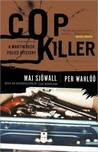
Cop Killer by Maj Sjowall and Per Wahloo: A review

Cop Killer (The Martin Beck)Cop Killer by Maj Sjöwall
My rating: 4 of 5 stars

I can't help noting the similarity in titles between this book and the first of the Ed McBain books that I read earlier this month. McBain's book was Cop Hater. Maj Sjowall and Per Wahloo stated that McBain's work was an inspiration and model for their Martin Beck series, so was this title an homage to McBain?

Whether it was or not, Sjowall/Wahloo's writing style continues to owe much to that established by McBain in his police procedurals. The writing is spare and straightforward, although the series does allow for considerable character development. We've gotten to know Martin Beck and the members of his team very well in the course of these books.

The books have gotten progressively better as the series has continued, in my opinion, and I have to say that this one, the penultimate entry, is my favorite so far.

Cop Killer focuses on the working relationship between Martin Beck and Sten Lennart Kollberg, his most trusted colleague. Together they go to the village of Anderslolv in southern Sweden to investigate the disappearance of a woman. A few days into the investigation the woman's body is found in an out-of-the-way  location near a lake. She has been murdered, so now the two have a murder case on their hands. They are aided in the investigation by a local policeman, Herrgott Allwright, who seems to know everything about everyone in the small village.

Suspicion immediately falls on the woman's next door neighbor who turns out to be the culprit who was apprehended by Beck and his team in the first novel, Roseanna. The man had been released from prison and was trying to make a new life for himself in Anderslolv.

Beck's superiors insist that the neighbor be arrested and Beck and Kollberg reluctantly comply although neither really believes the man is guilty and they continue investigating.

Meanwhile, in another part of the country, two inept young criminals have burgled an unoccupied summer cottage and taken everything that wasn't nailed down. In their escape, they drive without turning on their headlights which gets the attention of a police patrol and they are stopped by the infamous Karl Kristiansson and his new partner (His first one was killed in The Abominable Man.) Kenneth Kvastmo, who is just as inept as his old partner but is much more zealous in the pursuit of criminals. It is Kvastmo who insists on pursuing and stopping the car and he emerges from the police vehicle with his gun drawn. Before the encounter ends, two policeman are shot and another is injured in a very weird way and one of the young criminals is dead. The other one escapes and later ditches his car and steals another one. As serendipity would have it, that car turns out to be connected to Beck's murder case!

It all turns into a typical horrible mess, again exemplifying the ineptitude of the Swedish police system. As always in these books, Sjowall/Wahloo are very critical of the brutality and excesses of the police which they see as an outgrowth of failings of the Swedish welfare state of the period. All of this is portrayed in a very sardonic way in their prose. They use humor very effectively to make their points and often the reader can't help chuckling over some of the Inspector Clouseau-like episodes.

At the same time, individual policemen like Beck and Kollberg and several of their colleagues - Gunvald Larsson, Fredrik Melander, Per Mansson, etc. - are shown as dedicated and hard-working, if flawed, professionals who doggedly pursue their investigations of criminality, even in the face of bureaucratic indifference or ignorance.

On a lighter note, we finally see Martin Beck in a satisfying romantic relationship after so many years in a very unfulfilling marriage that ended in divorce. Rhea Nielsen, a woman that he met in the last novel, has become his lover and for the first time since we've know him, he actually seems happy! But will it last?

Only one more book to go in the series. I miss Martin Beck already and he's not even gone.


View all my reviews

Thursday, July 24, 2014

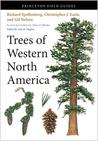
Trees of Western North America by Richard Spellenberg, Christopher J. Earle, and Gil Nelson: A review

Trees of Western North AmericaTrees of Western North America by Richard Spellenberg
My rating: 4 of 5 stars

For those readers and Nature-lovers who need a comprehensive field guide to help them identify the trees of western North America, here is your book. This new guide, soon to be published by Princeton University Press, covers both native and naturalized trees of the western United States and Canada. The territory covered extends as far east as the Great Plains.

This book is very easy to navigate. It is divided into two main sections, the gymnosperms and the angiosperms, and within those sections it is further divided into families of trees. Overall, there are descriptions of some 630 species, which the publisher says is more than any comparable field guide. (I guess I'll take their word for it!)

An important part of any field guide, maybe the most important part, is the pictures. Trees of Western North America has thousands of meticulous color paintings of trees by David More. These are invaluable identification aids. The paintings are further enhanced by the detailed easy-to-understand descriptions and the accompanying range maps which, together, provide a quick and easy view of the individual species.

There is also copious information about recently naturalized species, as well as "Quick ID" summaries which make the information on each species more accessible. There is a key to shapes and structures of leaves along with an introduction to tree identification, forest ecology, and plant classification and structure.

The book defines trees broadly enough to include in its descriptions many small, overlooked species that are normally thought of as shrubs and it includes treelike forms of cacti and yuccas. The descriptions offer details of size and shape, growth habit, bark, leaves, flowers, fruit, flowering and fruiting times, habitat, and range.

In short, the book has everything one could ask for in a field guide of trees in western North America and it certainly seems to nicely fill that niche. I think it should become a very useful and popular tool among those who are interested in this subject.

(A free copy of this book was provided to me by the publisher in exchange for an honest review. The opinions expressed here are entirely my own.)


View all my reviews

Tuesday, July 22, 2014

Beautiful Ghosts by Eliot Pattison: A review

Beautiful Ghosts (Inspector Shan, #4)Beautiful Ghosts by Eliot Pattison
My rating: 3 of 5 stars

By now the pattern of the plots of these Inspector Shan mysteries is well established. We've got the official from Beijing who is corrupt and criminal, who will stop at nothing to achieve his aims. We've got the Chinese official who is the good socialist, who initially appears to be an enemy of Inspector Shan, but in the end proves to be an honest ally. We have the misguided American who during the course of the book is converted to the wisdom and peace of Buddhism. And, of course, we have Shan, the former inspector from Beijing who lost everything when he ran afoul of a powerful figure in the Chinese government and was sent to a work camp in Tibet, which proved to be his spiritual salvation. And we have Tan, who in my opinion is one of the most interesting characters in these books. He was the official in charge of the work camp that Shan was assigned to and it was he who authorized Shan's unofficial release after the prisoner helped him solve a mystery at the camp.

Moreover, in this book, we have a repetition of the action of the previous novels, in that Shan and his two Buddhist teachers Gendun and Lokesh accompany an expedition on a turgid progression through caves and tunnels in the mountains of Tibet. Those caves and tunnels are filled with the most preposterously elaborate Buddhist temples and treasures that are guarded by secret groups of the faithful who manage to keep Buddhism alive in the face of the strong opposition of the Chinese government. These travels continue endlessly (almost literally, it seems) and nothing much ever happens except that "old Tibetans" frequently and "suddenly" (always suddenly) give small "cries of delight" or "groans of despair" and knowing glances are passed routinely among those in the know. If I had a dollar for every time an old Tibetan or an old lama suddenly emits cries or groans in this book, I could probably go to dinner and a movie. Really, the whole thing gets extremely tedious after a while.

The first half of the book seemed utterly muddled and confusing to me, but it improved in the second half once the mystery part of the novel actually got under way. The writing seemed at least marginally sharper and better plotted.

The mystery begins at the ancient ruins of the Zhoka monastery where hill people have gathered for a celebration of the Dalai Lama's birthday. Local herders bring in a body of one of their own and claim that he was murdered by "godkillers." Then Surya, a monk who is a talented artist and an old friend of Gendun's, appears, covered in blood and announces that he has killed a man and that, therefore, he is "No more a monk. No more a human."

Confusion reigns and the ensuing investigation brings Shan's old nemesis - and savior - Colonel Tan into the picture. Before they reach the resolution of the mystery, more murders will be revealed and will occur, one of them in far away Seattle. And the source of all this evil will be revealed to be greed for the possession of art and the theft of the unique art from some of those aforementioned decorated caves. Shan finds himself teamed with an FBI agent named Corbett in trying to solve the crimes and bring a little justice to both their worlds.

One other spanner thrown into the works here is the introduction of Shan's son, Ko, whom he had not seen since he was a small child. He is now a young man of nineteen and a criminal, sent to work coal mines in Tibet. Shan is promised an opportunity to meet him if he will aid the investigation, but when he does meet him, he seems to be a cruel sociopath with no redeeming qualities. More pain for a father who has already borne so much pain.

In the end, things are, if not totally resolved, at least moved forward and, yes, a kind of rough justice is achieved. The ending between Shan and his son is actually quite moving.

The character of Shan is a sympathetic one and Colonel Tan is intriguing, and so I do find myself caring, almost against my will, about what happens in these books. In the past, I have given the author a pass on the confusion of his plots, putting it down to my unfamiliarity with the philosophy of Buddhism, but that pass has expired. I read books all the time about cultures I'm not familiar with and have no problem understanding them, when they are clearly written. Obfuscation rather than enlightenment, though, seems to be the aim of Pattison in this series and that is annoying. The other possibility is that he's just not a very good writer.


View all my reviews

Monday, July 21, 2014

Rick Perry, presidential candidate

So, our esteemed governor, Rick ("Oops!") Perry, is deploying 1,000 National Guard troops to Texas' border with Mexico. It's unclear what exactly they are supposed to do there - other than bolster Perry's image for toughness with the radical immigrant-hating base of the Republican Party. It's that base who will select the next presidential candidate of that party, and Rick Perry is running hard for that position.

Perry just came back from a weekend in Iowa, the state that holds the first presidential primary. It was his fourth visit there in eight months. He's also making the rounds of all the right-wing media outlets, accusing the Obama administration of failing to secure our southern border, even though Obama has deported more illegal immigrants crossing that border than any other president in history and has increased the number of Border Patrol agents along the border to record numbers.

In fact, the border is most likely more secure than it has ever been, but when did a Texas Republican ever let the facts get in the way of the narrative he wants to tell? Perry is simply following the example of the master, George W. Bush, and his "Saddam Hussein has weapons of mass destruction" lie.

In order to further enhance his image, Perry has added glasses with "intellectual" frames to make him look smarter and he's ditched the ostentatious cowboy boots in favor of loafers to make him look more...urbane and sophisticated...I guess. And the whole thing has worked brilliantly!

The Washington Post proclaims that Perry is "So hot right now." Fred Barnes of The Weekly Standard writes that Perry is "alive, well, and hyperactive as a national political figure." And Washington Post blogger Jennifer Rubin writes, “In 2014 we see a more mature and humbled version of Perry, one without the Texas swagger. It is that more serious figure, bespectacled and more relaxed, whom voters now see.” The television networks - and not just the predictable Fox News - are clamoring to have him appear on their programs where he can give his "expert" analysis of the humanitarian crisis at our border.

You can bet that not one of those television or print "journalists" is going to ask Perry about the fact that he has ordered more people executed than any other governor in modern history or the strong evidence that some of those people were innocent of the crimes for which they were convicted. You won't see them asking him about the millions of people in Texas who have no health insurance protection because he has refused to expand Medicaid. Texas still has the highest rate of uninsured of any state in the country. You definitely won't hear them asking about rates of teen pregnancies in the state or the fact that Texas under Perry's leadership continues to try to shut down Planned Parenthood and other such clinics that provide access to birth control information and supplies, under the pretense that all these clinics do is abortions. And they won't be asking about pervasive, entrenched poverty and the state's niggling programs to assist those (mostly women, children, and the disabled) who are trapped in its grip.

No, they will ask him about the "crisis on the border," giving him a chance to look serious and wise (thanks to those intellectual glasses frames) and to pontificate, and giving all the right wing conventional wisdom pundits an opportunity to swoon over how smart and hip and relevant Rick Perry has suddenly become.  

It is a strange, strange world that we live in when lightweights like Rick Perry are taken seriously.