Translate

Thursday, June 30, 2022

The Woman in the Library by Sulari Gentill: A review


This book features a story within a story which made it (sometimes) confusing for me to follow. 

The library in the title is the Boston Public Library which is where one of the book's characters, Australian thriller writer Hannah Tigone, sets her story. We never really meet Hannah except through the emails addressed to her by someone named Leo. Leo is apparently an aspiring writer himself and a fan of Hannah's. He reads her manuscript and offers her suggestions, as any good editor would, about her language and the plot of her novel.

Leo's emails come at the end of each chapter of Hannah's manuscript. Those chapters almost always end on a cliffhanger.

The story within the story, i.e. Hannah's manuscript, has an Australian woman named Winifred, aka Freddie, living in Boston on a scholarship. The book opens with her sitting at a table at the BPL with three strangers when they are shocked by a scream. The authorities tell everyone to remain in place while they sort out what has happened. 

What has happened is that a woman has been murdered and we are apprised up front that one of those people at the table with Freddie is the murderer.

Freddie herself is attempting to write a novel and she decides to use her tablemates as characters in the book. She refers to them as Handsome Man (Cain), Freud Girl (Marigold), and Heroic Chin (Whit). As they are trapped at the table by circumstances, they converse and establish friendships. A bond of those friendships is the fact that they are now each other's alibis. But not everything is as it seems.

As I indicated in the beginning, this twisty plot was a bit of a challenge to follow and I sometimes felt lost. It was a clever story and Sulari Gentill, a writer I had never read and indeed had never heard of before, did yeoman duty in attempting to keep it all straight, but I frankly felt that the Leo gambit added no value to the tale and if his comments had been omitted, I think it would have made for a better read. His comments just interrupted the flow of the story, again to no positive effect.

I looked Gentill up after the fact and learned that she has a LOT of books published all the way back to 2010. The majority of her books are part of a crime fiction series featuring a character called Rowland Sinclair. Maybe I'll get around to reading some of them one of these days.

Monday, June 27, 2022

Bayou Book Thief by Ellen Byron: A review

This is one of the two audiobooks that I listened to on my recent road trip. It is the first in a cozy mystery series set in New Orleans. The protagonist is a twenty-eight-year-old widow named Ricki James. Ricki was born in New Orleans but was living in Los Angeles with her husband, a stunt performer until he died during one of his stunts. Then she learned that her boss was a criminal. Her world seemed to be collapsing around her and so she headed home to the city of her birth to start over.

Ricki's hobby was collecting vintage cookbooks, and looking for a way to support herself, she decided to turn that hobby into a paying job. She would open a gift shop in the home turned museum of Genevieve Charbonnet, who had had one of the finest restaurants in the city before her death.

At first, everything goes pretty smoothly for Ricki in her new position but then she makes the distressing discovery that there is a thief among her colleagues. Then, even more distressingly, in the process of searching for a missing rare book, she discovers a dead body. Not just dead but a murder victim. It seems like Ricki's fresh start in life is being derailed.

Ellen Byron has done a good job of describing the atmosphere and culture of the unique city of New Orleans, the city where my new husband and I spent our honeymoon so many years ago. My fond memories of the place are only reinforced by Byron's narrative. She includes a lot of information about the city's history as well as about historical cookbooks. All of it is a seamless part of the story of Ricki and her efforts at solving a murder mystery.

Byron also has done a clever melding of various plot twists and side stories that help to move her chronicle along. Some of the side stories involve quirky secondary characters that add spice to the tale and make for a more entertaining and varied account. Overall, it was a creditable beginning to what is intended as a series featuring Ricki James and it gives the author quite a solid foundation on which to build.

My rating: 3 of 5 stars

Saturday, June 25, 2022

Poetry Sunday: The Breezes of June by Paul Hamilton Hayne

The soft breezes of a late June afternoon are much appreciated as I sit in the swing on my patio at the end of the day. It's the best time of day to venture out just now. Then, or else the early morning. Only a very foolish person would spend much time outside in the mid-day heat. Either a foolish person or one whose job requires him/her to endure the triple-digit temperatures. Those who must earn their living under this brutal June sky have my sympathy and concern. 

If we make it through the heat of the day, those late afternoon "sweet and soft" breezes that whisper through the leaves of the trees are our reward. But if June comes, can July and August be far behind? It doesn't bear thinking about!

The Breezes of June

by Paul Hamilton Hayne 

On! sweet and soft,
Returning oft,
As oft they pass benignly,
The warm June breezes come and go,
Through golden rounds of murmurous flow,
At length to sigh,
Wax faint and die,
Far down the panting primrose sky,
Divinely!

Though soft and low
These breezes blow,
Their voice is passion's wholly;
And ah! our hearts go forth to meet
The burden of their music sweet,
Ere yet it sighs,
Faints, falters, dies
Down the rich path of sunset skies—
Half glad, half melancholy!

Bend, bend thine ear!
Oh! hark and hear
What vows each blithe new-comer!
Each warm June breeze that comes goes,
Is whispering to the royal rose,
And star-pale lily, trembling nigh,
Ere yet in subtlest harmony
Its murmurs die,
Wax faint and die
On thy flushed bosom, passionate sky,
Of youthful summer!

Friday, June 24, 2022

This week in birds - #506

 A roundup of the week's news of birds and the environment:

My beautyberries are a favorite with American Robins as well as many other birds that visit my yard.

*~*~*~*

The big environmental story of the week was the devastating earthquake in Afghanistan that killed more than 1,000 people and injured at least 1,600. Intense relief efforts are underway in the region.

*~*~*~*

In Iran this week, on the first day of summer temperatures in the city of Abadan soared to a scorching 126 degrees Fahrenheit.

*~*~*~*

Wildfires were much in the news this week. A fast-moving wildfire in New Jersey threatened to become the state's biggest fire in fifteen years. In New Mexico, a government-prescribed burn got out of control and became the state's largest recorded wildfire. The Forest Service admitted that it had failed to adequately account for the effects of climate change in starting the blaze.

*~*~*~*

The southwestern United States is baking under record levels of heat. The temperatures in our area, for example, are expected to climb into triple digits on most days during the next ten-day period.

*~*~*~*

Levees that restrict the flow of rivers are not working as they were intended and their removal benefits the rivers as well as wildlife and communities in the area.

*~*~*~*

Extreme weather conditions have spread to China which has been experiencing scorching heat and massive flooding that has displaced up to half a million people.

*~*~*~*

In Bangladesh, also, the country is reeling from massive floods caused by unusually heavy rains during the monsoon season.

*~*~*~*

In some areas, goats are important allies in helping to prevent forest fires.

*~*~*~*

Rewilding is an idea whose time seems to have come - at least in some areas. Devon, for example

*~*~*~*

Polar bears, at least some of them, seem to be finding ways to adapt to a world with less sea ice. 

*~*~*~*

At the height of the tourist season, record rainfall and resultant flooding and mudslides forced closures in Yellowstone National Park this week. None of our national parks are untouched by the effects of extreme weather caused by climate change.

*~*~*~*

A UN spokesperson has warned that a massive humanitarian relief effort is needed to save Somalia from famine after it has suffered four consecutive failed rainy seasons and experienced the worst drought in four decades.

*~*~*~*

Hooray for Canada! The country is planning to ban the manufacture and importation of harmful single-use plastics by the end of this year. 

*~*~*~*

We've known for a while that Burmese pythons have become an invasive species in Florida but this week a team of trackers captured the largest member of that species ever found in the Everglades. She was almost eighteen feet long and weighed 215 pounds. Some of that weight was the 122 eggs that she had inside her. 

*~*~*~*

Research has proven that trees communicate with each other. What might happen if we learned to listen to them?

*~*~*~*

Scientists have created a tiny self-propelled robo-fish that can swim around and remove free-floating microplastics from the water. The invention also has the capacity to fix itself if it gets damaged.

*~*~*~*

Indigenous farmers in Hawaii are attempting to restore the ancient food forests that once fed their ancestors.

*~*~*~*

The American Bird Conservancy's Bird of the Week is the beautiful Bay-breasted Cuckoo that inhabits the dry lowland forests of Hispaniola.

*~*~*~*

An unprecedented agreement makes five Native American tribes essentially co-managers with the federal government of Bear Ears National Monument in Utah.

*~*~*~*

The Biden administration is returning to the old definition of "habitat" and tossing out the shrunken definition that was used by the previous administration.

*~*~*~*

Researchers in Colombia report that common brown rats may be the primary pollinator in urban settings for the feijoa plant. The plant produces a fruit that is widely consumed in the country. 

*~*~*~*

Russia's invasion of Ukraine has worsened a worldwide fertilizer shortage but a solution is at hand: Patriotic peeing or peecycling.  Human urine, it seems, is full of the nutrients that plants need to thrive.

*~*~*~*

Viruses do not necessarily get gentler over time. The rabbit killer virus, myxoma, is a case in point. 

*~*~*~*

In a real live "incredible journey," three African wild dog sisters traveled 1,300 miles and crossed national borders in a quest to forge a new dynasty.

*~*~*~*

Is it the tilt of our planet that makes life possible here? Some scientists argue that it is that fortuitous angle that makes our blue marble of a planet livable. 

*~*~*~*

Does it seem to you that the pollen in the air is especially thick this year? Well, you are not wrong and those who suffer from allergic reactions to it will confirm that if they can stop sneezing long enough.

*~*~*~*

A hybrid monkey in Malaysia appears to be the result of mating between a proboscis monkey and a silver langur. Researchers believe that the mating is the consequence of habitat loss which meant that the male proboscis was unable to reach females of its own species.

*~*~*~*

Avian influenza in the wild does not just affect birds; the virus can infect mammals as well.

*~*~*~*

"Plastitar" is a term coined by researchers in the Canary Islands to describe a new form of pollution that is a mix of tar and microplastics. 

*~*~*~*

Scientists are testing forgotten wheat varieties from around the world to find those with heat- and drought-tolerant traits that may help them survive the climate crisis.

*~*~*~*

Tortoises and turtles are not just long-lived; they also barely age while they are alive. Galápagos giant tortoises, for example, seem unscathed by the ravages of aging as they plod into their 100s.

*~*~*~*

Dolphins appear to be making a comeback in the waters around New York, as confirmed by an array of underwater microphones that track the feeding noises of marine mammals there.

Thursday, June 23, 2022

Love and Saffron by Kim Fay: A review

This is the story of a friendship between two women, told in their letters to each other over the years. It's a friendship based on the love of food and the good life. It begins with a gift of saffron.

Twenty-seven-year-old Joan Bergstrom lives in Los Angeles and has just started writing for the food section of the newspaper there. Imogene Fortier is fifty-nine years old and lives on Camano Island outside of Seattle. She writes a monthly column for a Pacific Northwest magazine. Joan is a fan of Imogene's columns and she writes her a fan letter, enclosing a gift of saffron. Their friendship blossoms through their exchange of letters in the 1960s, as they discuss world events like the Cuban missile crisis and the assassination of President Kennedy in addition to the everyday events of their own lives.

This is a short novel, only about 200 pages. I listened to it as an audiobook during a recent road trip. It was a quick read and kept us entertained for a couple of hours.

Imogene (Immy) writes a humor column about her daily life on Camano Island. Joan's special interest is discovering and writing about foods from other cultures, particularly Mexican. Her guide in learning about Mexican food and culture is a man from that country. Their relationship deepens as they share their interest in and love of good food.

Both Joan and Immy enjoy exploring foods that are new to them and they share that love in their letters. They also reveal their inner lives and feelings in their letters, things that are unknown to others who are a part of their daily lives.

The 1960s were a time of growing interest in food, an interest that was spawned in large part by the success of Julia Child's television show, "The French Chef." It was hard to resist Julia's enthusiasm for good food. The show is referenced in the book. Both Joan and Immy are fans.

I found the book's narrative interesting, if not compelling. The narrator did a commendable job of presenting the story. None of the characters really "grabbed" me but the story was good and if you happen to be going on a road trip, I can recommend it as an audiobook that will definitely keep you entertained.

My rating: 3 of 5 stars
 

Wednesday, June 22, 2022

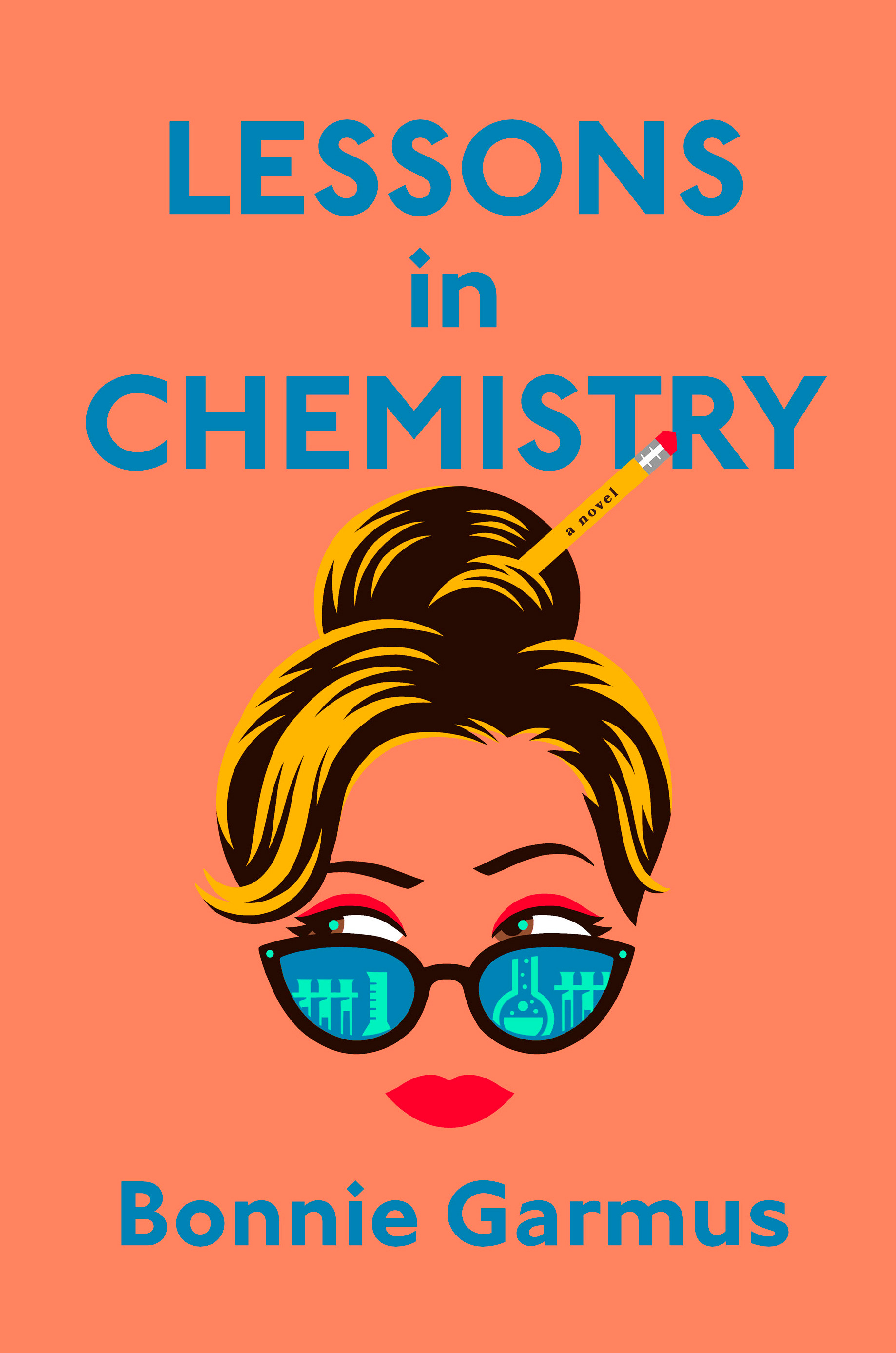
Lessons in Chemistry by Bonnie Garmus: A review


Abiogenesis. It's a word that describes a theory that life arose from simplistic, non-life forms. The heroine of Lessons in Chemistry is an expert on the subject. 

Her name is Elizabeth Zott and she is a scientist. She is a female scientist who has the misfortune to be practicing her profession in the 1960s, a most unenlightened decade when men were men and women were mostly decorative. An accomplished woman scientist was definitely an anomaly to which the world scarcely knew how to react.

She had the respect and the love of her fellow scientist, Calvin Evans. Calvin was a kindred spirit on every level. He was an expert rower and that was his passion outside of work. It was a passion that Elizabeth shared. Soon, she became another passion of his and together they made a daughter, Madeline. But an unfortunate accident took Calvin from Elizabeth and from his unborn daughter.

Elizabeth had little use for a kitchen and so she converted hers into something for which she did have a use. It became a lab complete with all the essentials even including a centrifuge. She had lost her job essentially due to misogyny because she wouldn't play the role that her sexist supervisor demanded of her and so she needed a lab of her very own from which she couldn't be ejected. Voila! Kitchen becomes lab.

Then, through a series of events, Elizabeth unexpectedly finds herself the host of a television cooking show called "Supper at Six." She needs a way to support herself and her daughter and the show provides that way. But she's not going to play the cutesy, aproned, smiling cook reading her cue cards. She's going to do it her own way, the scientific way. She undertakes her new role with the utmost seriousness, as a scientist in the kitchen and she seeks to empower the women who watch her show. While it may have been a watered-down version of her dreams, she chose to treat her forays in the kitchen as scientific experiments in molecular gastronomy. And women responded to having their work taken seriously. The show was a hit.

Bonnie Garmus delivers her story in a lighthearted manner, but underlying it is the frustration of all those women who longed to be taken seriously while engaging in useful careers in the 1960s. The sexism of the period was stifling and women had few options to pursue their dreams if those dreams involved a career in science or in anything other than secretarial work. It took a woman with determination and a bit of luck to overcome the barriers that society placed between them and the fulfillment of their ambitions. In Elizabeth Zott, Garmus has given us a character who had what it took, but the world is poorer for all those women who didn't have that bit of luck and whose desires for meaningful work were thwarted. 

Those of us of a certain age will remember a long-ago television commercial for a "woman's" cigarette called Virginia Slims, the tag line of which was, "You've come a long way, baby!" Reading Garmus' book, I was reminded that we have indeed come a long way since the '60s, but, oh, we still have so far to go!

My rating: 4 of 5 stars 

A Botanist's Guide to Parties and Poisons by Kate Khavari: A review


First off, I must confess that I finished reading this book several days before I left town on my recent trip and so much has happened since then that I really find it hard to recall a lot about the plot. You might gather from that that it didn't make a lasting impression on me and you would be right in that conclusion. At the time that I finished it, I rated it as a three-star read which means that it was not terrible but not great. It was basically mediocre.

I read somewhere that this was the writer's second novel, but I can only find this one listed under her name, so I'm assuming that it was, in fact, her first. She is a Texas writer, living in the Dallas-Fort Worth area. 

The time is 1923 and the place is London. Our protagonist, Saffron Erleigh, is a botanist at University College London. In this position, she is following in the footsteps of her late father. She is an assistant to Dr. Maxwell who is very supportive of her career ambitions. It's important that she has his support because she doesn't have that of her family from whom she is alienated.

The head of the botany department is Dr. Berking who is not a nice guy. He is a sexual harasser and Saffron does her best to steer clear of him whenever possible.

At a party for donors, faculty, and their spouses, Saffron meets a dishy and accomplished microbiologist named Alexander Ashton and we can sense immediately that this may develop into a romantic relationship. But also at the party, Saffron overhears a conversation detailing the many affairs of one of the professors, Dr. Henry. Soon after, she watches in horror as Mrs. Henry collapses and dies. Poison is suspected and soon confirmed.   

A few days earlier, Dr. Maxwell had had an explosive argument with Dr. Henry and now he becomes the chief suspect in what is determined to have been murder. Maxwell had been scheduled to lead a large research expedition to the Amazon, but now he finds himself arrested and charged with murder. His plucky assistant, Saffron, is determined to prove his innocence and realizes she will have to do it on her own. She does however get a helping hand from that dashing microbiologist that she met earlier.

So what we have here is a romance/mystery with the emphasis a bit more on the romance side featuring a spunky and impetuous heroine. It was a quick read with a likable main character. It held my interest and certainly did not tax my brain cells; in other words, it was a nearly perfect summer read. The chapters were short and the action moved along at a steady clip. But the characters were all pretty one-dimensional and frankly, I can't even recall most of them. I know there were others besides Saffron, Dr. Maxwell, Alexander, and the Henrys, but they are only a blur to me now. 

Still, not every book is Pulitzer-worthy but they can still be entertaining for a short while, if not particularly memorable in the long run. This one met those criteria. 

My rating: 3 of 5 stars


Tuesday, June 14, 2022

Mini reviews

I'm going to be on the road for the next several days but before I leave I thought I would give you mini-reviews of a couple of books that I've recently read because who knows what I'll be able to remember about them by the time that I return!

*~*~*~*

Sea of Tranquility

by Emily St. John Mandel

This is a science fiction book that has action taking place over a couple of centuries beginning in 1912. In that year, Edwin St. Andrew has been exiled from polite society in England because he had the audacity to make some ill-considered remarks at a dinner party. Edwin was eighteen years old at the time and likely had no understanding of the possible consequences of such remarks in the society in which he lived. 

The family's solution to this embarrassment was to send him to Canada. He travels by steamship but when he arrives in the Canadian wilderness, he unaccountably hears a violin playing in an airship terminal! What could this possibly mean? Why, Edwin, it appears you have become a time traveler and have arrived in a different era altogether!

That violin player makes repeated appearances in different circumstances over a couple of hundred years. For example, two centuries later he turns up as a character in a book by famous writer Olive Llewellyn. Llewellyn lives in a colony on the Moon but she has written a book about a pandemic on Earth that includes a passage about a man playing a violin in an air terminal. 

Finally, we meet Gaspery-Jacques Roberts, a detective in Night City, who is hired to investigate an anomaly in the North American wilderness and he uncovers all of these lives that have been turned upside down by some strange phenomenon.

I find it really difficult to describe the plot of this book in any sensible way, but it was an enjoyable read. Time travel has never been made to seem so ordinary and commonplace.

My rating: 3 of 5 stars 

*~*~*~*

The School For Good Mothers

by Jessamine Chan

This book is based on every mother's nightmare - a moment of inattention, one bad decision that could ruin her and her child's life forever. Such a moment of inattention by Frida Liu landed her in the "School for Good Mothers," a place no mother in her right mind would ever want to be.

Frida Liu is a bit of a disappointment to her Chinese immigrant parents. She seems unable in her career to be worthy of the sacrifices they have made on her behalf. Her marriage, too, is a disappointment, her husband, Gust, now having abandoned her for his younger mistress. There is one perfect thing in Frida's life and that is her toddler daughter Harriet. But then Frida has one very, very bad day and risks losing everything that is important to her. She risks losing Harriet.

In order to avoid such a catastrophe, a judge says that Frida must go to school to learn how to be a good mother, and by that he means a good upper-middle-class mother. Desperate to ensure that her daughter will not be taken from her, Frida agrees to go to the school while her ex and his new girlfriend care for Harriet. At the school, she meets other desperate women whom the state has separated from their children and learns their stories. The writer tells these stories with a dark humor that does not entirely obscure the serious problems that they explore.

The subtext of this novel for me was the complete lack of support for parents of young children which we provide through our supposed representative government. One would think that the most important job of a society would be to ensure the safety and well-being of its children by supporting parents and providing any assistance that they might require in the performance of their most important job. That that doesn't happen in our society is a serious failing that has far-reaching consequences.

My rating: 4 of 5 stars


Saturday, June 11, 2022

Poetry Sunday: June Thunder by Louis MacNeice

How I long to hear June thunder and see the catharsis of a cleansing downpour. But it is dry, dry, dry here. We haven't had rain in weeks and there is none in the offing that I can see. Nevertheless, a person can dream...

June Thunder

by Louis MacNeice

The Junes were free and full, driving through tiny
Roads, the mudguards brushing the cowparsley,
Through fields of mustard and under boldly embattled
Mays and chestnuts

Or between beeches verdurous and voluptuous
Or where broom and gorse beflagged the chalkland--
All the flare and gusto of the unenduring
Joys of a season

Now returned but I note as more appropriate
To the maturer mood impending thunder
With an indigo sky and the garden hushed except for
The treetops moving.

Then the curtains in my room blow suddenly inward,
The shrubbery rustles, birds fly heavily homeward,
The white flowers fade to nothing on the trees and rain comes
Down like a dropscene.

Now there comes catharsis, the cleansing downpour
Breaking the blossoms of our overdated fancies
Our old sentimentality and whimsicality
Loves of the morning.

Blackness at half-past eight, the night's precursor,
Clouds like falling masonry and lightning's lavish
Annunciation, the sword of the mad archangel
Flashed from the scabbard.

If only you would come and dare the crystal
Rampart of the rain and the bottomless moat of thunder,
If only now you would come I should be happy
Now if now only.

Friday, June 10, 2022

This week in birds - #505

A roundup of the week's news of birds and the environment

An American Robin cools off from the 100-degree heat in our birdbath.

*~*~*~*

Wind energy may finally be coming into its own as a potential source of renewable energy. 

*~*~*~*

Meanwhile, President Biden has ordered emergency measures to boost crucial supplies to U.S. solar manufacturers and declared a two-year exemption for tariffs on solar panels from Southeast Asia. 

*~*~*~*

Well, this is not good news: Researchers have found tiny plastics in freshly fallen snow in Antarctica for the first time. These plastics can be toxic to animals and plants. 

*~*~*~*

Plastic waste is not all wasted. Innovative ways to reuse the waste are being implemented all around the world. 

*~*~*~*

In the Southwest, deaths from extreme heat are mounting and in Arizona, emergency services are attempting to prepare to deal with temperatures in excess of 110 Fahrenheit.   

*~*~*~*

The extreme heat is making things worse in Salt Lake City where the Great Salt Lake is drying up in the extended drought.

*~*~*~*

Scientists warn that the vast tundra of Siberia could disappear under the effects of climate change. 

*~*~*~*

Also, the Arctic permafrost is melting and underneath that permafrost is a radioactive hazard, long hidden, that could be released.

*~*~*~*

Legal pressure from environmental groups is forcing the U.S. Fish and Wildlife Service to review its habitat protections for manatees which are continuing to die in record numbers.

*~*~*~*

In Canada, the Mamalilikulla First Nation has declared part of the territory on British Colombia's Central Coast that was lost to colonialism to be an Indigenous protected and conserved area as the first step toward sovereignty over the area. 

*~*~*~*

The National Oceanic and Atmospheric Administration has declared concentrations of carbon dioxide in the atmosphere in May reached levels that had not been seen on Earth in about four million years. 

*~*~*~*

The Army Corps of Engineers has blocked a proposed titanium strip mine that would have operated just outside the fragile Okefenokee Swamp in Georgia. This reverses an earlier decision to okay the project, a decision that was loudly protested by environmental groups and political leaders.  

*~*~*~*

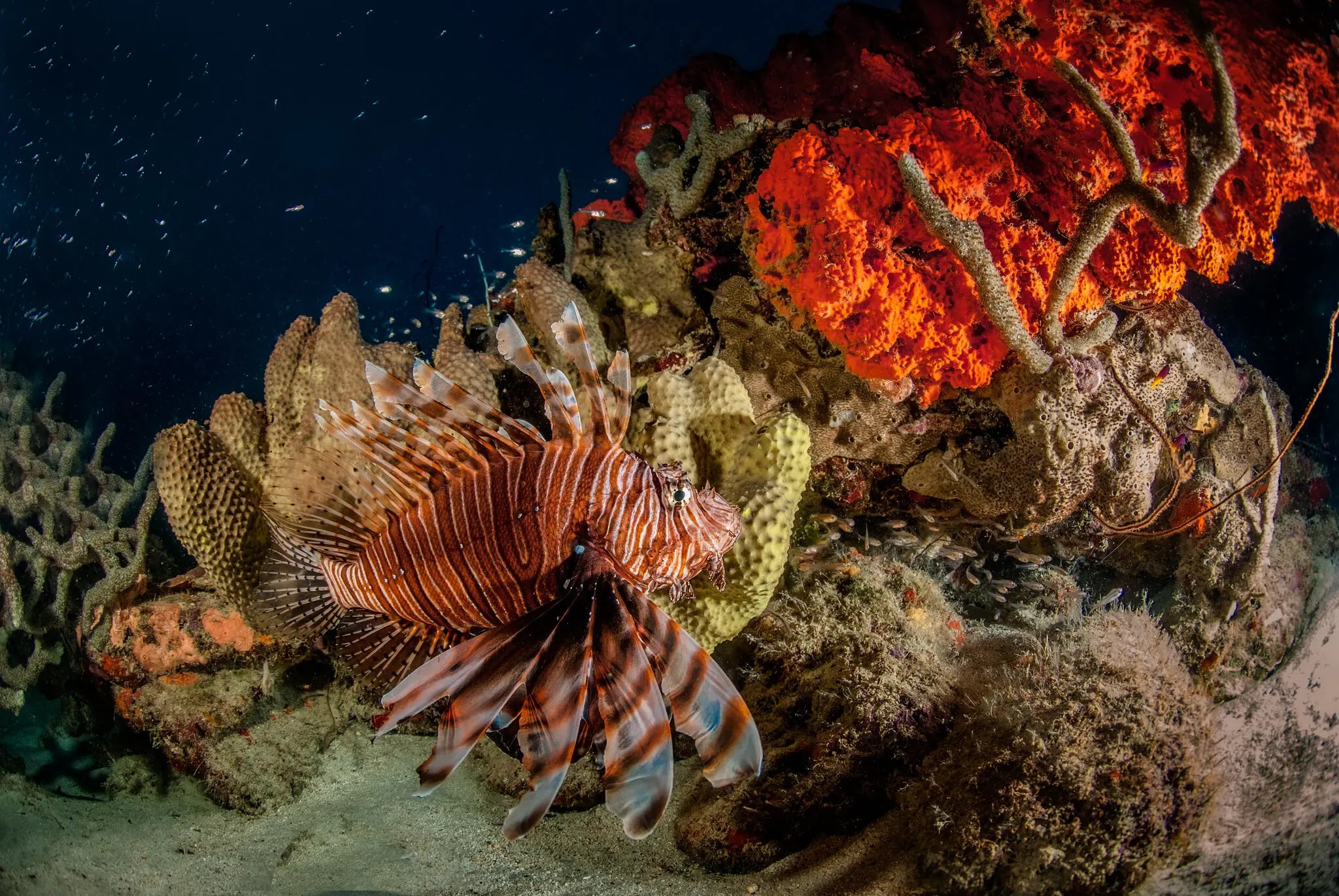
This is the lionfish, a beautiful but destructive creature that is wreaking havoc in the Gulf of Mexico and the Caribbean Sea where it has become established.

*~*~*~*

The House Science Committee is calling for tougher surveillance of methane emissions after a study showed that oil and gas companies have routinely underreported leaks of the greenhouse gas.

*~*~*~*

Warm, moist air that invaded Greenland in 2021 is causing widespread melting of the ice sheet.

*~*~*~*

Prehistoric artifacts, all made to a similar shape and template, offer evidence that ancient humans from 65,000 years ago shared knowledge. Similar artifacts have been found scattered over vast distances in Africa. 

*~*~*~*

Human civilization depends upon animals like this bee. It is time that we recognized our interdependency with other species.

*~*~*~*

Enjoy this week's pictures of wildlife from around the world.

*~*~*~*

This is the sassy Eastern Kingbird, the American Bird Conservancy's "Bird of the Week."

*~*~*~*

A rare species of Galápagos tortoise that was thought to be extinct has been discovered on Fernandina Island, a largely unexplored active volcano in the western Galápagos Archipelago.

*~*~*~*

The U.S. Fish and Wildlife Service is proposing placing endangered species outside of the species' traditional habitats where climate change and/or invasive species have made those habitats untenable.

*~*~*~*

Glyphosate weedkiller, the most widely used weedkiller, continues to kill wild bee colonies in addition to its intended victims.

*~*~*~*

U.S. summers are hotter than ever before. Average temperatures have increased by at least 2 degrees Fahrenheit since 1970 with higher spikes in the West and Southwest.

*~*~*~*

There is some disagreement among scientists regarding a new study that finds that Monarch butterfly populations are actually rising in some areas. 

*~*~*~*

Note to readers: "This week in birds" will be absent next week and possibly the following week also as I will be traveling and not in a position to gather the research necessary. Never fear: It will return!

Thursday, June 9, 2022

The Investigator by John Sandford: A review


I have read a few of John Sandford's books in the Prey series featuring Lucas Davenport. This book is a literal offspring of that series. It's the first in a series featuring Davenport's adopted daughter Letty Davenport.

Letty is in her mid-20s and a graduate of Stanford. She works for a U.S. senator named Christopher Colles in a desk job but she's bored with her assignments. Then the senator offers her a chance to go into the field as a liaison between his office and the Department of Homeland Security. 

In her first assignment in that position, she is sent to Texas along with DHS investigator John Kaiser to try to find out what is happening in regard to thefts of crude oil. The senator is not so concerned about the lost oil but wants to know where the money from its sale is going. Who is selling the oil and what they are doing with the profits? The suspicion is that a particularly nasty militia group led by a woman is involved.

Letty and Kaiser head out to Texas, developing their working relationship along the way. From an unpromising beginning to their association they soon learn to trust and depend on each other. The two have different areas of expertise and their talents balance one another, making for a stronger partnership. 

In Texas, the two investigators find your basic nest of vipers and have to figure out how to deal with them. Sandford is a master storyteller and his descriptions of the Texas border towns and the people who live there rang true. He excelled at his world-building and at creating compelling characters. He told the story from different points of view which gave the reader a better insight into Letty's and Kaiser's stories as well as that of their antagonists.

The story flowed well and the action came quickly and built to an exciting conclusion that made the book hard to put down. It seemed quite realistic as if it might have been plucked out of yesterday's headlines. It was a good beginning for a series that has possibilities for growth. Parenthetically, it reminded me quite a bit of Michael Connelly's series featuring female detective Renee Ballard as a spinoff from his Harry Bosch series. In this case, Sandford spins off of his Lucas Davenport series. Do I sense a trend among mystery writers developing here?

My rating: 4 of 5 stars 


Monday, June 6, 2022

The Gold Bug Variations by Richard Powers: A review


I have read and enjoyed other books by Richard Powers, most recently Bewilderment which I read late last year. So it was with some confidence that I would like it that I picked this early book of his to read. What the experience taught me is that one can't always depend on recreating one's enjoyment of a writer's later works with his earlier efforts. This book was published in 1991 and I hated it.

The first thing to be said about the book is that it is long, nearly 700 pages, and, in my opinion, if an unsparing editor had cut it to half that length, it might have been a better book. Powers seemed determined to never use only one word if ten could be employed to convey the same meaning. Moreover, he seemed equally determined to use some of the most obscure words in the language. (I'm sorry I didn't write any of them down to give you an example of what I mean; I was just too exasperated.) 

I take a back seat to no one in my appreciation of our language. I'm even currently slogging my way through a nonfiction book about its history and rise to dominance on the world stage today (The Rise of English: Global Politics and the Power of Language by Rosemary C. Salomone), but surely the first test of being a good writer is to use cogent and accessible language and not exasperate your reader by making her have to pick up a dictionary every five minutes. Powers failed that test for me with this particular book.

But about the plot...

There are two tracks to the plot. The first occurs in 1957/58 and the second takes place in 1983. The two stories are intertwined. In the earlier track, scientists, including Dr. Stuart Ressler, are attempting to decode the message of the DNA spiral. In the 1983 story, we learn that Dr. Ressler is working at a commercial data processing center and art historian Frank Todd has just started working there and is curious as to why Ressler abandoned research that might have won him the Nobel Prize. Todd gets a young research librarian named Jan O'Deigh to investigate Ressler's background. Soon after the effort begins, Ressler dies of cancer, so there is never an opportunity to ask him about his reasons. 

In the 1958 narrative, we learn that Ressler had an affair with another scientist with whom he worked, Dr. Jeanette Koss. Dr. Koss had given Ressler a vinyl record featuring Glenn Gould playing Bach's "Goldberg Variations." Ressler plays the record constantly and it becomes a kind of metaphor for their search for the message in DNA.

The 1983 narrative is essentially Jan O'Deigh's field notebook. From it we learn information about DNA and Ressler's and Koss's research. She is attempting to educate herself on the subject and, as we read, she educates us as well.

The construct of metaphor is essential to the novel's plot. In fact, it seems that the author may have meant it as an analogy between "The Goldberg Variations" and the DNA code, and I think the truth is that I may just not be smart enough to understand all that. To do so might require a firmer grounding in philosophy and science than I have. It is a complex and difficult plot that demands a lot of the reader and there were many references that are probably lost on the unprepared reader. I am quite sure there were many that were lost on me.

I've often felt that the time that one reads a particular book has much to do with one's enjoyment or lack of enjoyment of it, so perhaps I just picked this one up at the wrong time of my life. In looking at reader reviews of the book on Goodreads, I was struck by the fact that most of them were glowing. Those readers really, really liked this book! So, once again I am the rebel, the outlier. I can live with that.

My rating: 1 of 5 stars

Saturday, June 4, 2022

Poetry Sunday: June by James Russell Lowell

The June that James Russell Lowell describes in his poem does indeed sound like the perfect month, a time when "The flush of life may well be seen..." Wherever you are, I hope you are experiencing that "perfect" month.

June

by James Russell Lowell

What is so rare as a day in June?
Then, if ever, come perfect days;
Then Heaven tries the earth if it be in tune,
And over it softly her warm ear lays:
Whether we look, or whether we listen,
We hear life murmur, or see it glisten;
Every clod feels a stir of might,
An instinct within it that reaches and towers,
And, groping blindly above it for light,
Climbs to a soul in grass and flowers;
The flush of life may well be seen
Thrilling back over hills and valleys;
The cowslip startles in meadows green.
The buttercup catches the sun in its chalice,
And there's never a leaf nor a blade too mean
To be some happy creature's palace;
The little bird sits at his door in the sun,
Atilt like a blossom among the leaves,
And lets his illumined being o'errun
With the deluge of summer it receives;
His mate feels the eggs beneath her wings,
And the heart in her dumb breast flutters and sings;
He sings to the wide world, and she to her nest,—
In the nice ear of Nature which song is the best?

Friday, June 3, 2022

This week in birds - #504

 A roundup of the week's news of birds and the environment:

Pied-billed Grebes are definitely one of my favorite - and I think one of the cutest - of the water birds.

*~*~*~*

During the tenure of our most recent ex-president, the United States essentially stopped making any effort at the federal level to combat climate change. The result of this failure has been to leave the country far behind in the international ranking of countries' efforts.

*~*~*~*

A leading climate scientist warns that the world is heading for dangers that humans have not seen in 10,000 years of civilization and that we cannot adapt our way out of the crisis.

*~*~*~*

Developers since the days of George Washington have coveted the sprawling wetland that today makes up the Great Dismal Swamp National Wildlife Refuge. Scientists are in a race to try to restore as much of the peatland of the swamp as they can.  

*~*~*~*

Climate change is contributing to devastating dust storms that are plaguing Syria and other Middle East Gulf states causing more loss of life and destruction. 

*~*~*~*

The oil companies and their Republican allies spent years working to open up Alaska's Arctic National Wildlife Refuge to drilling but now those same companies seem to be abandoning the effort.

*~*~*~*

The largest plant in the world is a kind of self-cloning sea grass in Australia that is called Poseidon's ribbon weed. It covers an area the size of Cincinnati.

*~*~*~*

Republican legislators and their allies are engaging in an aggressive campaign to punish companies that attempt to address the climate change crisis.

*~*~*~*

We tend to focus our concerns for protecting the environment on the plants and animals of that environment. We often overlook the need to protect one of the most valuable organisms without which life on Earth would be unrecognizable - fungi. 

*~*~*~*

A federal judge has ordered U.S. wildlife officials to determine if wolverines should be protected under the Endangered Species Act. Officials were given eighteen months to make their decision.

*~*~*~*

The American Bird Conservancy's Bird of the Week is the beautiful Blue Grosbeak.

*~*~*~*

This is a depiction of the Bramble Bay melomys which holds the sad distinction of being the first mammal known to have become extinct because of the effects of climate change.

*~*~*~*

Why would a visitor to Yellowstone National Park not heed warnings to stay well away from bison? Do they think they are some big, furry, cuddly pets? Once again a visitor was seriously injured by one of the big animals when she got too close.

*~*~*~*

Unprecedented drought in Chile has made water a national security issue as more than half of the country's population live in areas of severe water scarcity. 

*~*~*~*

Cross-breeding might be one way to produce animals that are more resistant to the effects of global warming but it could also mean losing distinctive species altogether.

*~*~*~*

I think we would all agree that it is about time that we had some good news about Monarch butterflies and here it is: Mexican experts say that 35% more butterflies arrived to spend the season in the mountaintop forests during the most recent winter. The winter population of the butterflies covered seven acres. 

*~*~*~*

Some states are trying a new approach in the effort to reduce the amount of plastic that is thrown away in this country every year. It involves making product manufacturers responsible.

*~*~*~*

There is evidence that at least some of the dinosaurs may have started out as warm-blooded animals and only later become more cold-blooded like reptiles.

*~*~*~*

Many top scientists working on the problem do not believe that carbon capture technologies (greenhouse gas removal from the atmosphere) will be the answer to solving global warming.

*~*~*~*

Megalodons were the largest shark to ever live, but it seems they were the loser in a competition with great white sharks.

*~*~*~*

New Mexico is in the midst of one of the worst fire seasons in the state's recorded history, fed by abnormally dry and hot conditions and spread by strong winds.

*~*~*~*

There is an art to photographing birds. Here are some of the products of the artists who have mastered it.

*~*~*~*

Improving poor soil without the use of fertilizers is the goal of a "regenerative agricultural system."

*~*~*~*

Threatened species are further imperiled by our consumption practices, according to a recent study.

*~*~*~*

The tiny Pacific island of Niue is creating a marine park meant to protect its waters, an area the size of Vietnam, from illegal fishing. 

*~*~*~*

Here's a story with pictures of the battle between Blue-winged Teal around Lake Erie.