Translate

Sunday, September 7, 2014

Poetry Sunday: Desiderata

I spent much of the last week clearing out closets and drawers and divesting myself of extraneous possessions - clothing, household linens and other goods no longer used - and organizing what was left over. A lot of the stuff went into donation bags; some was not salvageable and went out with the trash.

It's always a revelation to me when I do one of these clear-outs. I always come across things that I had forgotten that I had. So it was again this week.

Tucked away in a corner of a shelf in the hall closet was a small wooden plaque with the inspirational poem Desiderata decoupaged onto it. Like many of my generation, I first became aware of this poem in the 1970s when a recording of the poem being read was very popular. It was meaningful to me then, perhaps because it came at a time when I particularly needed reassurance that I had "a right to be here."

Since the universe sent me this message again last week, let's make it the poem of the week.

Desiderata

Go placidly amid the noise and haste, and remember what peace there may be in silence.
As far as possible without surrender be on good terms with all persons.
Speak your truth quietly and clearly; and listen to others, even the dull and ignorant; they too have their story.
Avoid loud and aggressive persons, they are vexations to the spirit.
If you compare yourself with others, you may become vain and bitter;
for always there will be greater and lesser persons than yourself.

Enjoy your achievements as well as your plans.
Keep interested in your career, however humble; it is a real possession in the changing fortunes of time.
Exercise caution in your business affairs; for the world is full of trickery.
But let this not blind you to what virtue there is; many persons strive for high ideals;
and everywhere life is full of heroism.

Be yourself.
Especially, do not feign affection.
Neither be cynical about love; for in the face of all aridity and disenchantment it is as perennial as the grass.

Take kindly the counsel of the years, gracefully surrendering the things of youth.
Nurture strength of spirit to shield you in sudden misfortune. But do not distress yourself with imaginings.
Many fears are born of fatigue and loneliness. Beyond a wholesome discipline, be gentle with yourself.

You are a child of the universe, no less than the trees and the stars;
you have a right to be here.
And whether or not it is clear to you, no doubt the universe is unfolding as it should.

Therefore be at peace with God, whatever you conceive Him to be,
and whatever your labors and aspirations, in the noisy confusion of life keep peace with your soul.
With all its sham, drudgery and broken dreams, it is still a beautiful world. Be careful. Strive to be happy.

© Max Ehrmann 1927

                                                            ~*~

The news of the day certainly makes it hard to believe that "the universe is unfolding as it should," but our vision is limited, and, as a child of that universe, perhaps we just need to cultivate peace and acceptance of the things we cannot control but strive for high ideals and try to make things better where we can.

Little acts by individuals can add up and make a difference. I believe that. Still. 

Saturday, September 6, 2014

This week in birds - #124

A roundup of the week's news of birds and the environment:


Greater Roadrunners are certainly present in our area of Southeast Texas, but I see them only rarely here.  This is one that I photographed on an autumn trip to Big Bend National Park, where they are much more common. They are very comfortable in rocky desert habitats.
*~*~*~*

A federal judge ruled this week that BP was guilty of "willful misconduct" and "gross negligence" in regard to the massive oil spill in the Gulf of Mexico in 2010 in which 11 people died and enormous damage was done to the environment. The company could face fines of up to $18 billion.

*~*~*~*

The big news (pun intended) in the world of Nature this week was the discovery of the fossil of a previously unknown and incredibly large species of dinosaur in Argentina. Called Dreadnoughtus schrani by its discoverers, the beast was 85-feet-long and still growing when it died.

*~*~*~*

A new study by a team of Korean and American scientists makes the connection between the series of polar vortexes experienced by North America last winter and global climate change. Furthermore, indications are that we may not have seen the last of such phenomena.

*~*~*~*

Happy World Shorebirds Day! This is the day set aside for the appreciation of some of the world's most extreme migrants that travel thousands of miles in spring and again in autumn. Coincidentally, this is also International Vulture Appreciation Day, so while you are admiring the flights of the shorebirds, spare a little love for these under-appreciated but essential members of the avian family.

*~*~*~*

On September 1, 1914, between noon and 1:00 p.m., in the Cincinnati Zoo and Botanical Garden, Martha the Passenger Pigeon died, the last of her race on Earth. A species whose numbers only a few years before had darkened the skies for miles in their flight was no more. The extinction of this beautiful bird is a cautionary tale for us and several writers have taken the occasion of this centennial to publish books on the history of the bird and its demise.

*~*~*~*

The Guardian contrasts two new football stadiums being built - one in San Francisco and the other in Minneapolis. The one in San Francisco is an environmentalist's dream. The one in Minneapolis would be among that environmentalist's worst nightmares. The Minnesota Vikings' new stadium is a deathtrap for migratory birds traversing the Mississippi Flyway, i.e., millions of birds. How did this monstrosity ever get approved in its present design? Conservationists continue the fight to try to make it more environmentally-friendly, or at least not so deadly. San Francisco has shown that it can be done.

*~*~*~*

Citizen science has become an important adjunct to professional science in many fields. This is nowhere more true than in climate science. The reports of amateur observers, particularly those regarding birds' nesting and migratory activities, are providing invaluable information for scientists.

*~*~*~*

And speaking of migration, where are my Chimney Swifts? It has been weeks now since I saw or heard one. This is very unusual. Normally, the little birds can be depended on to hang around my yard until October at least, and there have been years where they've been present right into November. Not this year. They all seem to have abandoned me by the middle of August. But right across the continent now, the swift migration - Vaux in the west and Chimney Swifts in the east - is in full swing.

*~*~*~*

It was fifty years ago this week that President Johnson signed the Wilderness Act of 1964 into law. The legislation promised a solution to the problem of saving the country's most beautiful wild areas from industrial development and other intrusive human activities. Today about 5 percent of the United States is designated wilderness area. The passage of this act was a bipartisan effort. In today's Congress, it would never pass.

*~*~*~*

A graphic shows how the drought situation in California went from normal to dire in only three years. If it can happen in California, it can happen elsewhere - and probably will.

*~*~*~*

"Beetles in the Bush" features the interesting swamp milkweed leaf beetle.

*~*~*~*

In the spring, migratory birds are on a mission to get to their nesting grounds as soon as possible. Migration in the fall is a much more leisurely activity for them. They take things easy and may linger a while along the way as they head toward their winter homes.

*~*~*~*

Around the backyard:

I had an unusual birding treat this week. Friday morning, I was up early, right around 6:00, and I heard a bird calling from among the dense leaves of the red oak tree in my front yard. But it wasn't a robin or a cardinal or a Eurasian Collared-dove which are usually my early morning serenaders. No, this was a bird of a different feather altogether. It was a Great Horned Owl!

It's not the first Great Horned Owl I've heard calling from that tree in the early morning but, generally, I hear them in the winter so it was a bit of a surprise to hear one in late summer. A very nice surprise. It started my day off with a bang.

Of course, Great Horned Owls are permanent residents all over the continent and there are plenty of them. They are not endangered or threatened. They are, in fact, a very successful species because they are a very adaptable species. But just because they live all over the place doesn't mean that there's one to be found on every square acre of land, so I was very gratified to have evidence that they do flourish on my little acre - or half-acre.

Friday, September 5, 2014

The Bee: A Natural History by Noah Wilson-Rich: A review

The Bee: A Natural HistoryThe Bee: A Natural History by Noah Wilson-Rich
My rating: 4 of 5 stars

The argument could be and has been made that bees are essential to life on Earth as we know it. They are most certainly crucial to the reproduction and diversity of flowering plants.

The creatures are known to pollinate more than 130 fruit, vegetable, and seed crops that we rely on to survive and those plants make economic contributions in the tens of billions of dollars every year. Therefore, it is very important on many levels that we have a healthy population of bees.

But bees are in trouble. They are dying off at an alarming rate, and although in some cases the cause of the die-off has not been absolutely pinned down, scientists are pretty much in agreement that pesticides and the practices of modern agriculture are the main culprits.

In The Bee: A Natural History, Noah Wilson-Rich explores some of the challenges faced by bees and how we can ameliorate them in order to aid the bees. This book primarily focuses on honeybees, but it also has sections on solitary bees, bumblebees, and stingless bees, which takes in the various kinds of native bees that exist in this country.

Earth is, in fact, the home to more than 20,000 bee species of an astounding diversity, but all have some essentials in common. Wilson-Rich discusses their evolution and development, their anatomy and biology, and their society and behavior.

An entire chapter is given over to the discussion of bees and humans. A second chapter explores beekeeping from the basics to hive design and harvesting the honey, and it includes information about problems which might occur and pests which can invade the hives.

This book is written in an engaging and easily accessible style and it is illustrated throughout with pictures and drawings which enliven the text. For the person interested in beekeeping, it gives the basics of organic and integrated pest management techniques. Overall, it gives its readers insights into a holistic approach to bee health and to ensuring that a vibrant population of the little creatures is able to survive on the planet. It is a very practical handbook for anyone looking for ways to help the bees.

(A copy of this book was provided to me without charge by the publisher in return for an honest review. No other remuneration was provided. The opinions expressed here are my own.)


View all my reviews

Thursday, September 4, 2014

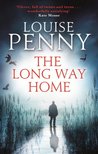
The Long Way Home by Louise Penny: A review

The Long Way Home (Chief Inspector Gamache)The Long Way Home by Louise Penny
My rating: 4 of 5 stars

Throughout this wonderful series featuring the humane and incorruptible Chief Inspector Armand Gamache, one of the recurring themes has been how art is made and how the lives of the artists affect their art. This theme has been explored most closely through the stories of the residents of the little village of Three Pines in Quebec, where many of Gamache's cases have taken him over the years. Long-time readers of the series, like myself, tend to think of those residents as old and treasured friends for, through his long association with them, that is what they have become for Gamache.

The Chief Inspector's recent cases, in addition to murder investigations, have been a battle against a dark corruption eating away at his beloved police force from within. The last book, How the Light Gets In detailed the climax of that battle, an effort which almost killed Gamache and tested the strength of his relationship with his beloved but drug-addicted junior partner, Jean-Guy Beauvoir. At the end of that book, we saw Beauvoir fighting his addiction and finally marrying the love of his life, Gamache's daughter Annie.

The Long Way Home finds Armand and Reine-Marie Gamache in their new home in Three Pines. Gamache has retired from the police force, leaving it in the very capable hands of his protege, Isabel Lacoste. After the traumatic events of the last few years, he is physically and emotionally spent and his first order of business in retirement is to heal himself. What better place to do that than this idyllic Quebec village, so remote that it does not even appear on maps?

He enjoys his quiet days, his walks with his dog Henri, and the companionship of his friends. But mysteries have a way of finding the former Chief Inspector, even in retirement, even in remote Three Pines.

The mystery here is a domestic one.  A year earlier, local artist Clara Morrow had finally gotten fed up with husband Peter's negativity, jealousy, and lack of support regarding her work. Peter was an artist, also, and was used to being the acclaimed one in the family, but then Clara was "discovered" and became the rage of the country's art world. Peter couldn't take it and tried to sabotage her. Clara kicked him out, but they still loved each other and they made a pact to get together again in one year to assess their relationship and decide how to proceed.

The anniversary date comes and Clara prepares for their meet. She buys food and wine for their dinner, but Peter never shows up and there is no word from him. Puzzled, hurt, and angry, Clara doesn't know what to think but then realizes that the meticulously organized Peter would not simply not have shown up. She becomes convinced that something is wrong and that she must find him. She asks for Gamache's help.

A preliminary investigation discovers that Peter has spent the last year traveling in Europe, Scotland, and finally back to Quebec. His journey seems to have given him a new perspective on his art, which had always been coolly intellectual, unemotional, rendered in non-colors - gray, white, black. Now he appears to be painting in a very emotional style, allowing his feelings, in brilliant colors, to spill all over his canvases. But what does that mean? Has he suffered a breakdown? Has he lost his true self? Or found it?

The investigative "team," including Gamache, Jean-Guy, Clara and her friend, Myrna the Three Pines bookstore owner, track Peter to a remote location up the St. Lawrence River. In her introduction to the book, Louise Penny wrote that The Odyssey and Conrad's Heart of Darkness were inspirations for this work. One can see those influences in the dark and dramatic conclusion, there in a remote village on the ancient river, to Clara's search for her wayward husband.

As with nearly all of Penny's works, this one benefits from meticulous plotting and from the adherence to her overarching theme which is the quest for the salvation of a man - an artist - who has lost himself to the negative emotions of envy and self-hate. In the end, we are reminded, with Gamache, of the words of the old spiritual "There is a Balm in Gilead." They, too, have been a recurring theme of the novel and they get the last words.  


View all my reviews

Tuesday, September 2, 2014

How the world sees us

Many Americans like to think of our country as being "exceptional" - by which they seem to mean that it was divinely created and that we are outside of history and are not subject to its laws.

That's all a lot of hooey of course. We are very much a part of history and, while the people who founded this country were certainly exceptional and enlightened far beyond the times in which they lived, we seem to have fallen very far from that ideal today, to the point where we no longer even honor science and learning. We seem to be turning in upon ourselves and refusing to see the world as it really is.

But how does that world, looking back, see us?

There is a clue from a recent report from the United Nations Committee on the Elimination of Racial Discrimination. The committee looked at seven different countries and analyzed the state of their racial relationships. One of the countries reviewed was the United States.

While the committee did find several positive things to praise about progress that has been made in the effort to establish equality of treatment in our country, they also found a number of areas in which we are falling short. This is the list of problems they found:

1. Lack of a national human rights institution
2. Persistent racial profiling and illegal surveillance 
3. Prevalence and under-reporting of racist hate speech and hate crimes 
4. Disparate impact of environmental pollution in low income and minority communities 
5. Restrictive voter identification laws leading to unequal right to vote
6. Criminalization of homelessness when homeless people are disproportionately minorities
7. Discrimination and segregation in housing
8. De facto racial segregation in education
9. Unequal right to health and access to health care
10. High number of gun-related deaths and “Stand Your Ground” laws, which disproportionately affect members of racial and ethnic minorities
11. Excessive use of force by law enforcement officials
12. Increasingly militarized approach to immigration law enforcement
13. Violence against women occurs disproportionately more frequently for women from racial/ethnic minorities
14. Criminal justice system disproportionately arrests, incarcerates and subjects to harsher sentences people from racial/ethnic minorities
15. Youth from racial/ethnic minorities are disproportionately prosecuted as adults, incarcerated in adult prisons, and sentenced to life without parole
16. Non-citizens are arbitrarily detained in Guantanamo Bay without equal access to the criminal justice system, while at risk of being subjected to torture
17. Unequal access to legal aid
18. Lacking rights of indigenous peoples (the report lists numerous different concerns)
19. Absence of a National Action Plan to combat racial discrimination
That's a pretty appalling list and it's impossible to refute any of it. Unfortunately, the solution to all of these problems is political and as long as one of the two major national political parties exists for the sole purpose of opposing anything that the president proposes, solutions are impossible to achieve.

It is a truly depressing state of affairs, but it seems that the image that we present to the world and how the world sees us is unlikely to become any more positive in the near future.
 

Monday, September 1, 2014

Indignation by Philip Roth: A review

(Happy Labor Day! I hope you are enjoying a rest from labor today. I am resting from my blogging "labors" by featuring some of my writing from the past. In this case, it is a review of Phillip Roth's Indignation which I read and reviewed in 2009. My review was originally published on Goodreads on April 1, 2009.)

IndignationIndignation by Philip Roth
My rating: 5 of 5 stars

This was a quick read for me, first of all because it is a short novel and second because once I started reading I was hooked and found it hard to put down.

Marcus Messner is someone I know.  I strongly identified with his college experience.  Going to a faraway school to get away from an oppressive atmosphere at home, being hopelessly innocent, naive, and "out of it" once you get to that school.  Yes, I remember those feelings very well - lo, these many years later.

Marcus is an extremely dedicated student - dedicated to getting all As and graduating as valedictorian of his class.  He has internalized the lessons taught by his hard-working parents in Newark.  He is their only child (Note: I, too, am an only child.) and carries the full weight of all their hopes and aspirations.

And he loves his parents.  But in the middle of his freshman year at a local Newark college, his father began to obsess about Marcus's safety and in the end that obsessiveness became a kind of madness.  He was driving his son crazy, too, and Marcus had to get away.  In his sophomore year, he did, transferring to a college in Ohio.

There, he is matched with roommates who, it turns out, piss him off even more than his father did.  He moves twice within a few weeks, finally winding up in the most undesirable room on campus, but it is heaven to him because he is alone.

He meets a girl.  He has his first sexual experience.  (Here, I was reminded strongly of Roth's early works such as Portnoy's Complaint and Goodbye, Columbus.)  But it turns out that his new love is a very fragile vessel and destined, it seems, to break.

This is a surprising book in many ways, including the enigmatic title which comes from a quotation by Bertrand Russell. The dialogue of the main character quotes extensively from Russell's lecture "Why I Am Not a Christian." Though it has its comic moments, it is full of human tragedy.  Through it all, Roth's deft writing kept me turning those pages and it was all over much too soon.    


View all my reviews