Translate

Showing posts sorted by relevance for query the overstory. Sort by date Show all posts

Friday, June 1, 2018

The Overstory by Richard Powers: A review

Trees compose the overstory on Earth; the rest of us lesser creatures and plants compose the understory. We humans in our arrogance and hubris designate ourselves as THE sentient beings. Little do we ken the emotional, intellectual, and social life of trees. We are only beginning to have the smallest inkling of how dependent we are - all of life is - on them.

Early in Richard Powers wonderful, monumental novel, there was this quote: 
"That's the trouble with people, their root problem. Life runs alongside them, unseen. Right here, right next. Creating the soil. Cycling water. Trading in nutrients. Making weather. Building atmosphere. Feeding and curing and sheltering more kinds of creatures than people know how to count."
Our root problem is, once again, our hubris. We see ourselves as at the pinnacle of all creation and we can't fathom the idea of something greater than ourselves.

Trees, after all, are plugged in to the Earth itself. Their roots run deep and touch the living heart of the planet. Moreover, trees communicate with each other. They form communities that support each other. If a tree is under attack, it may call on that community for assistance. Otherwise, trees compete with each other for their livelihood and they take care of their offspring, even, in some instances, giving up their bodies as nourishment for those offspring. But trees are long-lived. Many live hundreds, even thousands, of years and their time frame reference is very different from that of humans. So, even though we are ancient relatives and trees do essentially everything that humans do, they do it more slowly; so slowly that we, in our frantic pace, cannot see it.

Richard Powers is not the winner of a genius grant for nothing and he must know that people will not read a novel about the lives of trees and so, in The Overstory he gives us people and tells the story of the trees through their interactions with these people.

We meet the Hoels, Norwegian immigrants in the mid-west who plant an American chestnut, that magnificent and doomed tree of the eastern U.S. They document the tree's growth with pictures taken on the 21st of each month. It becomes an inter-generational family project. 

Chinese immigrants, the Ma family, have a connection to the mulberry tree. It's a connection that pulls the oldest daughter Mimi Ma, a respected engineer, back into the company of trees in her later life.

There is Douglas Pavlicek, Vietnam War veteran. When he is shot down during that war, his life is saved by falling into the limbs of a centuries-old fig tree. Meanwhile, the son of Indian immigrants, Neelay Mehta, has a much less happy encounter with a Spanish oak in California.

Most endearing for me was the outsider (these are all outsiders) Patricia Westerford. She has a hearing and speech impediment and, as a child, she didn't fit in anywhere, except with her father, who taught her about plants and soil and many of the creatures of the understory. He trained her to look, to really see and she grew to become Dr. Pat Westerford who spent years alone in forests doing her research. Initially, she was mocked by her peers for her discovery of the sentience of trees but later she became celebrated for those discoveries. And later in life, she meets Dennis, a misanthrope like herself, someone who finally understands her and with him, she learns that a successful marriage can mean only one hour a day spent together.

These are just a few of the human protagonists that we get to know. There are a dozen or more in all. One might be excused for at first thinking of this book as a series of short stories about these people, but it is so much more than that. Eventually, all of them are connected, even as trees in a forest are connected, and their stories merge in ways that we, with our limited vision, could not have foreseen.
"The world is failing precisely because no novel can make the contest for the world seem as compelling as the struggles between a few lost people..."
Well, Richard Powers has done the impossible. He has made the contest for the world compelling by showing it to us through the lens of the struggles of little, relatable human characters. The science is all there but it is translated and dished out to us in understandable bits. Brilliant!

I hope this book finds an audience. It needs to be read. Understanding it might just save our world. Not the planet - the planet will be fine - but our world, the world of human beings which, in the end, depends upon the continued survival and beneficence of trees.

My rating: 5 of 5 stars   
    

Wednesday, October 13, 2021

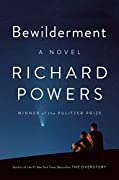
Bewilderment by Richard Powers: A review


I loved Robin Byrne, the child at the center of Richard Powers' new book, his first since the highly acclaimed The Overstory. When we meet Robin, he is eight years old and about to turn nine and already he is in serious trouble with the world. Two years earlier, his adored mother, Alys, an environmental activist died in a car crash. Robin and his father Theo who is the narrator of the book are still in mourning. 

One day at school Robin's best (and only) friend tells him that when his mother swerved to avoid hitting an animal in the road and hit a tree instead that she actually committed suicide. Angry and distraught, Robin hits him with his thermos and breaks his cheekbone. He avoids expulsion but the school insists that his father get help for him. Already he has been evaluated by several doctors because of his inability to control his rages. They've come back with a variety of potential diagnoses: Asperger's, OCD, or ADHD. One doctor tells his father that Robin is "on the spectrum." Theo opines, "We are all 'on the spectrum.' That's what a spectrum is." The doctors and the school authorities are unanimous in believing that Robin should be medicated. Theo, a university astrophysicist, refuses their advice: "He's nine years old! His brain is still developing."

Nevertheless, it is clear as Robin's behavior has become increasingly erratic and rageful that his father must do something. His first response is to take him on a wilderness trip. They spend their time exploring rivers and forests and sleeping under the stars and as long as they are there Robin is happy and well-adjusted. He is his mother's own son and is attuned to all of Nature's entities. His empathy embraces them all. But he can't stay in the wilderness. He has to go back to school and his father has to go back to his job. The world they return to is completely inhospitable for a child who is "different."

Theo is utterly out of his depth as a parent. He says in his narration, "I could no more raise a child than I could speak Swahili." In something approaching desperation, he contacts a scientist who is experimenting with a behavior modification technique called Decoded Neurofeedback. Before her death, his wife had participated in the experiment as a test subject and her mental landscape as recorded during her participation is still available. The decision is made to allow Robin to be a test subject and to use the technology to get closer to his dead mother's mind in the hope that it will advance his mental capacity and give him greater self control. The experiment succeeds beyond Theo's wildest hopes. For what happens next, well, you'll just have to read the book.

This book is apparently a reworking of Daniel Keye's famous sci-fi novel Flowers For Algernon. Unfortunately, I haven't read that book, but Theo's narration points out the similarities between Decoded Neurofeedback and the experimental technology in that book that enhances the mental capacity of a mouse first and later of a man with low IQ. 

The action of this book takes place in a dystopian near future when environmental collapse is accelerating and democracy is falling apart. The country is led by an autocratic ignoramus who sounds very much like our most recent former president. It's a country where armed private militias patrol for "unspecified foreign invaders." This is all happening in the background but what we get in the foreground is the somewhat claustrophobic relationship between Theo and Robin. The dramatic focus never wavers from this relationship with the result that, at some point, it all begins to feel a bit suffocating. Powers is at his best when describing the great American outdoors or the vastness of the universe and the possibilty of life on extrasolar planets. It is in these descriptions that the book is most expansive and lyrical. There is a lot to like about the book, even though I felt that it did not quite reach the heights of The Overstory.

My rating: 4 of 5 stars

Monday, December 31, 2018

My "Best of 2018"

Oh, my, that was hard! In 2018, I read 95 books, which was 11 more than my goal of 84, or seven per month. But that wasn't the hard part. 

What was really, really hard was coming up with a list of the best from that group, because, in fact, most of the books I read this year were good. There were very few stinkers. So, I had to set parameters to narrow the field.

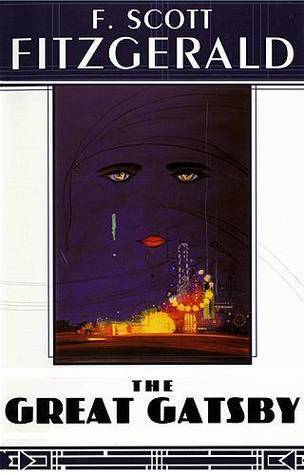
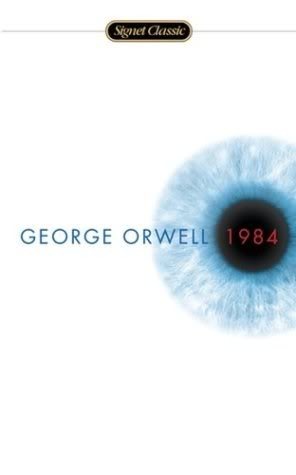
I had several rereads, or in some cases first reads, of classics; books like The Great Gatsby, 1984, Oryx and Crake, As I Lay Dying, and Heart of Darkness, and soon-to-be classics like Jesmyn Ward's Salvage the Bones. I enjoyed them all but immediately eliminated them from consideration, deciding to include only recent publications of this or the last year.

The next cut was really a no-brainer: I would include only those books that I had rated at five-stars. That should narrow things down, right? 

Well...

Actually, that left me with 24 books to be considered, an unwieldy number. Surely I could shrink that list a bit more to the "Very Best of the Best."

But no, I couldn't. Each of these 24 was exceptional in its own way and comparing them would have been like comparing apples to oranges. One is not better than the other; it just depends on one's taste at any given time. Honestly, how do those Pulitzer or Man Booker juries ever make up their minds?

So, here, without apology and in no particular order, is my unwieldy list of the 24 best books of 2018, along with links to my reviews of them.

The Written Word: How Literature Shaped Civilization by Martin Puchner - Puchner discusses the foundational texts of civilization and the philosophical, political and religious ideas that sprang from those texts.

Circe by Madeline Miller - Miller retells the Greek myth of Circe as a kind of autobiography in which Circe is a feminist heroine battling against the constraints that bind her.

The Overstory by Richard Powers - This is the story of trees as sentient beings that shape our world; beings on which we and all life ultimately depend. But, of course, since we are such narcissistic creatures, the trees' stories are told through their interfaces with human beings. 

The Mars Room by Rachel Kushner - Kushner gives us a portrait of life in a women's prison where the mind-numbing sameness of the days seems designed to extinguish any spark left in an inmate's soul. But sometimes it has the opposite effect.

Kudos by Rachel Kusk - This is the third in Kusk's trilogy, a subtle theme of which is the way that the work of women writers is judged differently from men writers. The main character, Faye, and her stories and experiences deal with ageism and sexism. 

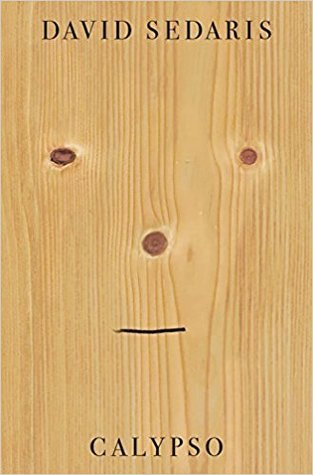
Calypso by David Sedaris - David Sedaris is a very funny fellow with lots of weird and wonderful family and friends. He proves all that again with this book. Highly recommended as an audio book for long road trips! 

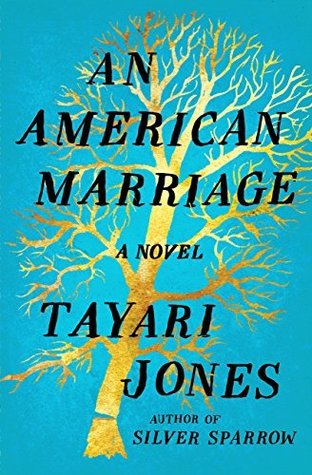
An American Marriage by Tayari Jones - This is the story of a middle class black couple who did everything right but still got caught in America's racial prejudice trap, resulting in the man being falsely accused of rape and sent to prison. The struggle to preserve the marriage is the focus of the novel.

Less by Andrew Sean Greer - The 2018 Pulitzer Prize for Fiction winner is the story of Arthur Less, a mediocre writer of moderate success. It is also one of the funniest, most enjoyable books I read this year.

The Female Persuasion by Meg Wolitzer - Wolitzer's novel is full of wit and insight for everyone for whom, to paraphrase the words of Barack Obama, men have been getting on their nerves lately.  

Clock Dance by Anne Tyler - What can I say? I'm a sucker for Anne Tyler but I did love and identify with her Willa Drake. 

There There by Tommy Orange - Orange's tale of a group of "urban Indians" whose lives converge at the Big Oakland Powwow made just about everybody's "best of" list this year. 

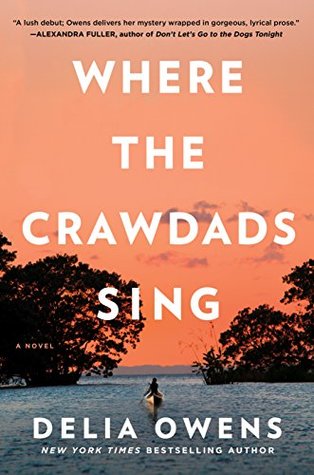
Where the Crawdads Sing by Delia Owens - If I were absolutely forced to name my favorite book of 2018, it might just be this one. Owens' story of an abandoned child learning to make her way in the world alone in the marshes of the North Carolina coast spoke to me on many levels.  

The Tangled Tree: A Radical New History of Life by David Quammen - One of just a handful of non-fiction books that I read this year (I do tend to stick to fiction), this was a fascinating, I could even say mind-blowing, history of the discovery of a "third domain" of life on Earth, something distinctly different from plants and animals.

Presidio by Randy Kennedy - This was one of the many first novels by writers that I read this year and this Texas noir tale about a professional car thief was a winner!

Lake Success by Gary Shteyngart - This story of a frankly unlikable character and his road trip across America against the background of the 2016 presidential election was one that I found mesmerizing and hard to put down.

Lethal White by Robert Galbraith - The fourth in the Cormoran Strike/Robin Ellacott mystery series is the best one yet, in my opinion.

My Year of Rest and Relaxation by Ottessa Moshfegh - A narcissistic (size 2, she wants to be sure we know) woman in New York City decides to spend a year on retreat from the world with the help of pharmaceuticals. Her year culminates just before the attacks on the Twin Towers on September 11, 2011. It makes for a strange and captivating novel.

Transcription by Kate Atkinson - A rousing good tale of espionage as practiced in World War II and its later consequences. Nothing and no one here is exactly what appearances suggest.

The Witch Elm by Tana French - I'll read anything this woman writes! Her mysteries just get better and better.

Melmoth by Sarah Perry - This story of an undead observer who bears silent witness to the cruelty and violence of which humankind is capable took a while for me to get into, but once I did, the momentum of the unusual story pulled me along right to the bang-up ending.

Shell Game by Sara Paretsky - If there is anyone who writes better, more literate and humane mysteries than Paretsky, I haven't met him/her. Her protagonist V.I. Warshawski never lets me down.

Godsend by John Wray - No ordinary coming-of-age story, Godsend tells the tale of an idealistic young woman from Santa Rosa, California, who travels to Peshawar, Pakistan, where she will pass as a man in order to study the Qu'ran at a madrasa. She becomes radicalized and finds herself behind enemy lines on 09/11/01.

Unsheltered by Barbara Kingsolver - Another book set with the background of the 2016 presidential election and another book with a house as one of the main characters. (And isn't it interesting that both Kingsolver and Anne Tyler have main characters named Willa in this year's books?)

Florida by Lauren Groff - The Sunshine State is not all fun in the sun. Some of its stories are pretty dark but all are absorbing. 

2018 has been a thoroughly depressing year on most fronts, but when it comes to literature, it has been a winner. There are a lot of good books being written these days and I've been privileged to read many of them this year. I can't wait to get started on 2019. The best may be yet to come!

Sunday, November 17, 2024

Playground by Richard Powers: A review

I must confess up front that I had a very hard time with this book. I read it during and just after this month's election and I was distracted, finding it hard to think about anything other than the election and the enormous blunder that the voters in this country have just made. So, I can't say I really gave the book the attention that it deserved and now find it hard to comment on what I read. But I'll give a try.

The setting of the book is the French Polynesian island of Makatea. It is a tiny atoll in the middle of the Pacific and at the time that the book's action takes place its people are considering a life-changing proposal for their island home. We experience the story through the eyes of four people on the island.

First is Evie Beaulieu who, as a twelve-year-old, tested one of the world's first aqualungs under the eyes of her father in their backyard swimming pool. It was the start of her love affair with the ocean and she now spends her life submerging herself into the depths of that ocean to study the ecology and the creatures there.

Second are friends Rafi Young and Todd Keane. As teenagers the two attended an elite Chicago high school where they bonded over playing board games. Rafi went on to be mesmerized by the world of literature while Todd became an entrepreneur whose work will lead to a major breakthrough in artificial intelligence.  

Finally, there is Ina Aroita who grew up on naval bases across the Pacific and for whom art was her way of seeing and dealing with the world.

Makatea was once a main source of phosphorous which helped to fertilize crops and feed the world. Now it has been chosen for a new project that will send floating, autonomous cities out onto the open sea. But before that can happen, the island's citizens must vote on whether they will allow their home to used in this way. If they refuse to greenlight the project then the seasteaders will have to come up with another plan.

Richard Powers' descriptions of Makatea and its people are awe-inducing and made it really hard to put the book down. The result was that I zipped right through the 389 page tome. His writing is beautiful as he explores themes of technology and its impact on the environment and how it all influences humanity. After reading The Overstory, a rare five-star read for me, and Bewilderment, a four-star read, I was expecting quite a lot from Powers' latest book. I was not disappointed.

Monday, December 10, 2018

My Year in Books (according to Goodreads)


I read 30,195 pages across 89 books
Img bookstack 96

We Should All Be Feminists by Chimamanda Ngozi Adichie
Img ruler 
SHORTEST BOOK
52 pages
We Should All Be Feminists
by
LONGEST BOOK
656 pages
Lethal White
by 
Lethal White by Robert Galbraith
AVERAGE LENGTH
339 pages

MOST POPULAR
3,370,645
people also read
The Great Gatsby
by 
The Great Gatsby by F. Scott Fitzgerald
How to Be an Urban Birder by David Lindo
Img temp desktop 2x
LEAST POPULAR
4
people also read
How to Be an Urban Birder
by 

MY AVERAGE RATING FOR 2018
4.2

Where the Crawdads Sing by Delia Owens
HIGHEST RATED ON GOODREADS
Where the Crawdads Sing
by 
4.63 average
Img badge

Autumn by Ali Smith
My first review of the year
it was amazing 
I finished this book a couple of days ago but just couldn't immediately think what to say about it in a review. I wasn't even sure how I felt about it. It really was unlike anything I had ever read before.

After giving it much thought - and there truly is a lot to think about here - I came to the conclusion that the book is brilliant. The more I thought about it the more I liked it. In that, I found myself in agreement with the Man Booker Prize c
 ...more
MY 2018 BOOKS
Autumn by Ali Smith
it was amazing
The Ninth Hour by Alice McDermott
No Shred of Evidence by Charles Todd
Blood Trail by C.J. Box
The Rat Catchers' Olympics by Colin Cotterill
The Written World by Martin Puchner
1984 by George Orwell
Death at La Fenice by Donna Leon
Artemis by Andy Weir
The Obelisk Gate by N.K. Jemisin
Magpie Murders by Anthony Horowitz
Parable of the Sower by Octavia E. Butler
it was amazing
Devil in a Blue Dress by Walter Mosley
Salvage the Bones by Jesmyn Ward
Like Water for Chocolate by Laura Esquivel
A Death In Vienna by Daniel Silva
The Stone Sky by N.K. Jemisin
Death in a Strange Country by Donna Leon
Below Zero by C.J. Box
The Devil's Cave by Martin  Walker
To Love and Be Wise by Josephine Tey
it was amazing
Another Man's Moccasins by Craig Johnson
Heart of Darkness by Joseph Conrad
Oryx and Crake by Margaret Atwood
We Should All Be Feminists by Chimamanda Ngozi Adichie
The Bedlam Stacks by Natasha Pulley
The Pale Criminal by Philip Kerr
Solar by Ian McEwan
it was amazing
Missing Person by Patrick Modiano
Black and White Ball by Loren D. Estleman
Circe by Madeline Miller
Macbeth by Jo Nesbø
Nowhere To Run by C.J. Box
Dressed for Death by Donna Leon
The Overstory by Richard Powers
The Dark Horse by Craig Johnson
The Mars Room by Rachel Kushner
it was amazing
Kudos by Rachel Cusk
Into the Water by Paula Hawkins
Calypso by David Sedaris
Warlight by Michael Ondaatje
A Venetian Reckoning by Donna Leon
The Wrong Side of Goodbye by Michael Connelly
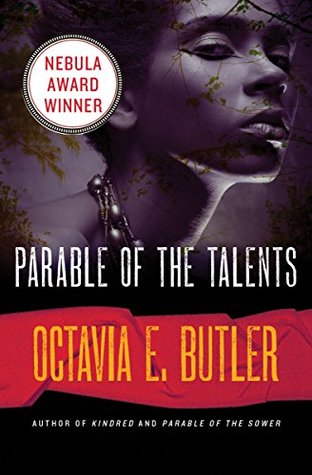
Parable of the Talents by Octavia E. Butler
Junkyard Dogs by Craig Johnson
An American Marriage by Tayari Jones
it was amazing
Racing the Devil by Charles Todd
Less by Andrew Sean Greer
Prince Of Fire by Daniel Silva
The Female Persuasion by Meg Wolitzer
In This Grave Hour by Jacqueline Winspear
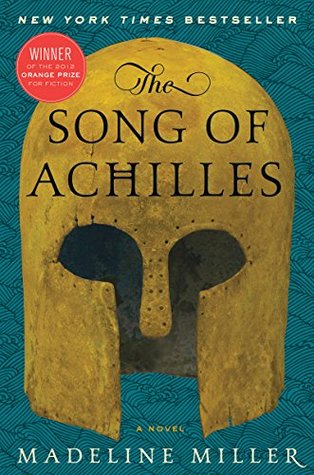
The Song of Achilles by Madeline Miller
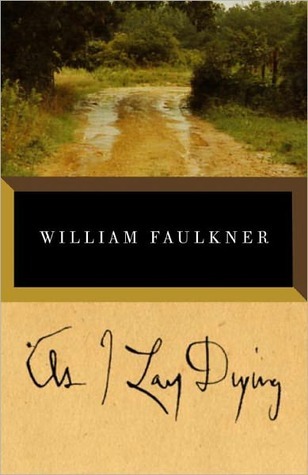
As I Lay Dying by William Faulkner
The Resistance Man by Martin  Walker
Clock Dance by Anne Tyler
it was amazing
Hell Is Empty by Craig Johnson
Two Kinds of Truth by Michael Connelly
The Great Gatsby by F. Scott Fitzgerald
Mr. Churchill's Secretary by Susan Elia MacNeal
There There by Tommy Orange
Bearskin by James A. McLaughlin
Don't Eat Me by Colin Cotterill
Where the Crawdads Sing by Delia Owens
Billy Boyle by James R. Benn
Desolation Mountain by William Kent Krueger
Presidio by Randy Kennedy
it was amazing
The Tangled Tree by David Quammen
Acqua Alta by Donna Leon
Lake Success by Gary Shteyngart
The House of Unexpected Sisters by Alexander McCall Smith
Lethal White by Robert Galbraith
Thrice the Brinded Cat Hath Mew'd by Alan Bradley
My Year of Rest and Relaxation by Ottessa Moshfegh
it was amazing
Transcription by Kate Atkinson
IQ by Joe Ide
The Witch Elm by Tana French
As The Crow Flies by Craig Johnson
Quietly in Their Sleep by Donna Leon
Melmoth by Sarah Perry
Shell Game by Sara Paretsky
The Clockmaker's Daughter by Kate Morton
Godsend by John Wray
it was amazing
Dark Sacred Night by Michael Connelly
How to Be an Urban Birder by David Lindo
The Friend by Sigrid Nunez
Unsheltered by Barbara Kingsolver
The Children Return by Martin  Walker
Florida by Lauren Groff
A Serpent's Tooth by Craig Johnson

A Serpent's Tooth by Craig Johnson
My last review of the year
really liked it 
Time to check in once again on Sheriff Walt Longmire and the quirky residents of Absaroka County, Wyoming. This time there is definitely something rotten in the county but at first it is not clear just what it is.

The action kicks off with an old lady telling Walt about the angels that have been helping her out by doing repairs and chores around her house. It seems that she leaves out a list of the things she needs to have done and somehow they al
 ...more