Translate

Monday, September 14, 2015

Garden Bloggers' Bloom Day - September 2015

Autumn seems to have come a bit early to my Southeast Texas garden this year. According to the calendar, it doesn't arrive until next week, but if you ignore that clue and just concentrate on the weather, you would swear it has been here these last few days. We have had glorious, sun-filled days with temperatures in the 80s F. It has been wonderful! 

More wonderful still, some of my plants are putting on a late flush of bloom just in time for Bloom Day. 


Pineapple sage has been a dependable bloomer all summer long.

More members of the sage family - autumn sage in front and the purple in back is 'Mystic Spires' salvia.

A few of the oxblood lilies are still blooming.

The inland sea oats are blooming, also, although you would hardly know it unless you gave them a second look. Those "blooms" will become a bit more colorful and noticeable as autumn advances.

Crossvine puts on its big display in the spring, of course, but, like many spring-blooming vines, it also gives us a few flowers in late summer/early fall.

The abelia blooms throughout the summer

Purslane continues to add color to its back porch planter.

The jatropha is beginning to bloom, too. Those long, narrow leaves are lemongrass which lives next to it. 

Bi-colored 4 o'clocks.

And fuchsia 4 o'clocks.

A few of the milk and wine lilies continue to send out the occasional blossoms.

Orange cosmos.

The cypress vine is loving the cooler weather.

The old pink crape myrtle continues to bloom.

As does the watermelon-colored crape, seen here against an autumn-blue sky.  

Butterfly ginger smells heavenly.

Yellow lantana.

Purple trailing lantana. The white berries on the plant in back are beautyberries. 

Wedelia.

Marigolds, of course. Gotta have marigolds.

The coral vine is just beginning to bloom. In another week, it should be full of these pink flowers and the bees will be ecstatic. 

It's called red milkweed, although it looks more orange to me.

And yellow milkweed. Monarchs seem to prefer the orange (red) - maybe because it better matches their wing color.

Blue plumbago.

Hamelia patens, also called hummingbird bush.

Yellow cestrum, a butterfly and hummingbird favorite. 

Pink oleander.

One of the last blooms of the year for 'Pride of Barbados.'

And the last rose of summer this year may well be a 'Molineux' because this plant is putting on a show for me just now.

How is your garden doing here at the almost changing of the seasons? I look forward to seeing what you have in bloom and I thank you for visiting my garden this month. Also, as always, thanks to Carol of May Dreams Gardens for hosting us. 

Happy Bloom Day!

Arthur & George by Julian Barnes: A review

Arthur & GeorgeArthur & George by Julian Barnes
My rating: 5 of 5 stars

I did not grow up in a house full of books. In fact, there were few on our bookshelves other than the ubiquitous King James Bible. I loved comic books, especially the Tarzan of the Apes ones. I read and reread them, and later, when I was around twelve I think, I began to discover REAL books.

The first ones that I found on my own were the Sherlock Holmes novels. I was drawn to them because I knew the name Sherlock Holmes. Even virtual illiterates could not escape the name of the great "first consulting detective" or the knowledge of his story.

The first book that I bought by myself was a volume of the complete Sherlock Holmes stories. He was my first literary love and I have remained true to him all these years later. He still fascinates me as he still fascinates much of the world, as evidenced by the popularity of modern movies, television shows, and literary pastiches featuring him.

What must it have taken to conjure up such a character? How much of his creator, Arthur Conan Doyle, is inherent in the fictional man? I get the feeling from reading Julian Barnes' Arthur & George that there is quite a bit of Doyle in Holmes.

Of course, Barnes is such an exceptional writer and such a perceptive observer of human nature that it must have been easy for him to make those connections and then to convey them to his readers. Or perhaps not. His writing seems to flow so effortlessly that the reader intuits that it was easy for him to produce it. But maybe we are not giving him enough credit. Maybe he struggles to make it all look easy. Just as there was hard work and a lot of research and experimentation behind Sherlock Holmes' brilliant deductions about complicated crimes. Or behind Arthur Conan Doyle's writing of them.

But I digress.

The Arthur in Arthur & George is, of course, Sir Arthur Conan Doyle. The George is the much less well-known George Edalji, a native-born Englishman of Indian and Scottish descent. His father was a Parsee out of India who became vicar of a South Staffordshire church where he served for some forty years. His mother was from Scotland. George was the oldest of three children and much was expected of him.

The book is based on true events that took place at the end of the 19th and beginning of the 20th century. It was a time when Arthur was married with two children, but his wife had been diagnosed with consumption. There was no cure, but Arthur threw himself into the fight to delay the inevitable as long as possible.

In the middle of this fight, he met and fell in love with Jean Leckie. He loved her - and she him - from afar for many years before the inevitable did, in fact, happen, and they were free to marry.

Meantime, George Edalji and his family were involved in their own fight. They were being harassed and tormented by an unknown persecutor, or persecutors, in the village. This progressed to the point that George, now a licensed solicitor, was framed for the mutilation of farm animals. The investigation and prosecution was a travesty of justice but he was sent to prison for eight years. However, he was released after three years.

After his release, he sent a letter with all the newspaper clippings about his case to Sir Arthur Conan Doyle and asked for the great man's help in clearing his name. As it happened, Doyle received this missive at a low point in his life, after the death of his wife. He needed something to bring him out of himself. George Edalji's case was just the ticket.

Once again, he wholeheartedly threw himself into a fight - this time the fight to find justice for a wrongly convicted man. In some ways, the fight was the salvation of Arthur as much as George.  

Julian Barnes tells this engrossing story from the alternating perspectives of George, then Arthur, and occasionally of other characters as well. From the beginning, we can see that a great wrong has been committed but that there is hope for redemption and redress. How could one not love such a story?

Barnes weaves various themes through this tale. There is the obvious one (to everyone except George and his family) of racism. It seems apparent that the contempt and disdain with which George is dealt throughout his ordeal has its basis in rampant racism, and yet, he refuses to ever consider that as an explanation. He is seriously in denial regarding the attitudes of his neighbors.

Ancillary to the racist attitudes is the theme of just how easy it is to instill ideas into the receptive minds of listeners or readers or viewers. And once those ideas are lodged there, how difficult it is to get them out.

An overarching theme for much of the book, and especially for the last third, is death. Conan Doyle became a true believer in spiritualism and the talents of mediums and uses of the seance, and he was a powerful proselytizer for his belief that death is not the end. It is merely a transition from one plane of life to another.

This is a book that is packed with ideas. They reveal themselves slowly, which might be a problem for an impatient reader. But for those who can take the time to absorb the complexity of Barnes' themes, the rewards are great.


View all my reviews

Sunday, September 13, 2015

Poetry Sunday: The Bees, the Flowers, Jesus, Ancient Tigers, Poseidon, Adam and Eve

Did you hear about the big brouhaha in the world of poetry last week? It seems that a poem that was included in this year's volume of the Best American Poetry series was published using a nom de plume. That probably wouldn't have stimulated much discussion or controversy except that the poet's real name is Michael Derrick Hudson and the name under which the poem was published was Yi-Fen Chou.

Hudson has said that he submits his poems first in his real name, and, if he can't get them published under that name, he resubmits the poems (unchanged) under his Asian pen name. Apparently, the editors who originally published his poem in the literary journal Prairie Schooner, as well as Sherman Alexie, the editor of this year's Best volume, were unaware of the fact that the poet is Caucasian not Asian.

Did that make a difference in his poem being selected for publication? Perhaps we'll never really know the answer to that question. A better question according to David Orr, poetry critic of The New York Times Book Review, might be, is the poem any good? Does it really deserve to be included in a Best of... collection? His assessment is that the poem isn't bad but that it is far from one of the best American poems of the year. What do you think? 


The Bees, the Flowers, Jesus, Ancient Tigers, Poseidon, Adam and Eve


   by Yi-Fen Chou (Michael Derrick Hudson)

Huh! That bumblebee looks ridiculous staggering its way

across those blue flowers, the ones I can never
remember the name of. Do you know the old engineer’s

joke: that, theoretically, bees can’t fly? But they look so

perfect together, like Absolute Purpose incarnate: one bee
plus one blue flower equals about a billion

years of symbiosis. Which leads me to wonder what it is

I’m doing here, peering through a lens at the thigh-pouches
stuffed with pollen and the baffling intricacies

of stamen and pistil. Am I supposed to say something, add
a soundtrack and voiceover? My life’s spent

running an inept tour for my own sad swindle of a vacation

until every goddamned thing’s reduced to botched captions
and dabs of misinformation in fractured,

not-quite-right English: Here sir, that’s the very place Jesus

wept. The Colosseum sprouts and blooms with leftover seeds
pooped by ancient tigers. Poseidon diddled

Philomel in the warm slap of this ankle-deep surf to the dying
stings of a thousand jellyfish. There, probably,

atop yonder scraggly hillock, Adam should’ve said no to Eve.

Saturday, September 12, 2015

This week in birds - #173

A roundup of the week's news of birds and the environment:

A shorebird that is frequently seen far from the shore - the Killdeer.

*~*~*~*

The big news this week in the world of science and the environment from long, long ago was the discovery of a previously unknown hominid species. The fossils of the species were found in South Africa at a place called Rising Star Cave. There were lots of bones which scientists believe were from individuals that were alive some 2.5 to 2.8 million years ago. The individuals had brains the size of an average orange and were named Homo naledi, referring to the area where they were found. 

*~*~*~*

Last week I showed you some pictures of my backyard birds that are molting. All About Birds has an article that tells you everything you need to know about this phenomenon.

And now comes word that some birds, like Bullock's Orioles, stop for a while during their migration to complete their molt. 

*~*~*~*

Sometimes Nature interferes with our belligerent species' ability to kill each other. So it was in the Middle East this week when a deadly sandstorm engulfed the area slowing, if not temporarily stopping, the various wars raging there. 

*~*~*~*

An ambitious environmental bill in California that attempted to legislate up to a 50% reduction in gasoline use by 2030 was derailed by lobbying by the oil industry in the final week of the legislative session.

*~*~*~*

Burning all the world's deposits of coal, oil, and natural gas would raise the planet's temperature enough to melt the entire ice sheet covering Antarctica and driving the sea levels up by more than 160 feet, according to report released on Friday.

*~*~*~*

Female cowbirds might seem to be the most uncaring of parents, since they lay their eggs in the nests of other birds and leave the chicks for the foster parents to raise, but it seems that they do make some effort to ensure that those foster parents are good. They tend to lay their eggs in the nests of birds where cowbird chicks have been successfully raised in the past. 

*~*~*~*

As if honeybees don't have enough problems, scientists have found that Argentine ants, one of the world's most widespread and damaging pests, may be infecting them with a deadly virus. 

*~*~*~*

The thylacine, commonly called the Tasmanian tiger, is well-known as an example of a species whose extinction was human-caused. The animals were hunted to extinction and the sad thing is that there was no good reason for it. They were not a threat to humans or their domestic animals. 

*~*~*~*

A federal judge in Midland, Texas, this week stripped the Lesser Prairie Chicken of Endangered Species Act protection, a victory for oil and gas companies that argued that conservation efforts are working and are sufficient. 

*~*~*~*

The El Niño system that is gathering steam in the Pacific is forecast to be one of the strongest on record. It will hit the North American continent hard, bringing rains, but it is not anticipated that those will be sufficient to break the drought in the West.

*~*~*~*

Meanwhile, California continues to practice mandatory water conservation. The state beat its goal for the second straight month, cutting water use by more than 31% in July.

*~*~*~*

A big wildfire in the Pinelands of New Jersey was apparently caused by charcoal briquets that were carelessly disposed of. The fire has burned more than 1,000 acres of forest. 

*~*~*~*

Kuwait has become the 169th signatory to the international treaty for the conservation of wetlands and has designated its Mubarak Al-Kabeer Reserve as its first Wetland of International Importance.

*~*~*~*

How do migrating songbirds avoid predators during their long treks? Well, they pick places to stop to rest where there are good hiding places. Whoever said these birds were birdbrains? 

Thursday, September 10, 2015

Throwback Thursday: An alternative view of bodice rippers

Back in 2009, I had a bit of an epiphany about a genre of literature that I had previously derided. Mainly, I now think, I sneered at it because my mother had loved it, and my teenage rebellion against all things that she liked carried over to my prejudice against her favorite fiction genre.

I'm talking about the romance novel, of course. Those were the books that, as I grew up, were typified by the well-thumbed paperback with Fabio, or a Fabio look-alike, with torn shirt, or no shirt, on the cover. 

As predictable as the covers were, the plots were even more predictable: Innocent, beautiful, usually poor girl meets experienced, handsome, usually rich man who falls helplessly in love with said girl, and all sorts of stumbling blocks must be overcome before they eventually fall into each other's arms and live happily ever after.  

I think the genre has grown up a bit and become somewhat more sophisticated over the years and perhaps our view of genre literature has grown also, but romance novels still struggle for acceptance among serious critics and serious readers of fiction. Of course, none of that is a barrier to their popularity among millions of (mostly women) readers. Can all those readers be so wrong? In our rush to prejudge the whole genre, are we overlooking some of the benefits that those readers derive from their favorite books? 

After reading a particular essay on the subject in 2009, I had to acknowledge that maybe I had been a bit hasty in my judgment, and on December 30 of that year, I wrote this blog post in which I finally conceded that maybe mother knew best after all. My own mother would probably have smiled knowingly at it.

*~*~*~*

An alternative view of bodice rippers

My mother was a lover of romance novels, perhaps because there was so little romance in her own life. In her later years, when she finally had the time to do so, she devoured these stories of female characters constantly in trouble and usually rescued by some strong male figure. I think they gave her a lot of pleasure and entertainment. I, of course, disdained them.

Romance novels, in my view, were for the unenlightened. Educated women and feminists most certainly did not read them. I thought that all romance heroines were weak and I wanted no part of that. The novels, I believed, were thinly disguised porn for women. Not that there is anything wrong with that.

In view of a recent thoughtful essay on the subject in the Daily Kos, of all places, I may have to revise my view of the genre. The essay was written by Laura Clawson, obviously a very smart woman (with an Ivy League PhD) who says she is a life-long feminist - and she reads romance novels.

One by one she debunks the myths about romance novels and her conclusion is that romance novels are demeaned by the literary world and by otherwise knowledgeable people as a way of demeaning women and women's interests. Why should a love story be any less legitimate than a spy novel, a mystery, or any other genre? It's the writing that counts and if the writing is good, it will shine in any genre.

Even teenage vampire novels?

Hmmm...I may have to give this whole issue of what is good literature and what isn't a rethink. Perhaps Mother knew best, after all.


Wednesday, September 9, 2015

Backyard Nature Wednesday: Oxblood lilies

It's oxblood lily time once again. When school starts in the late summer, we start looking for these magic lilies that soon pop out of the ground with colorful blossoms. A common name for the plants is "schoolhouse lilies," a nod to their time of bloom. The traditional color of oxblood lilies is bright red. 

But there is also a fuchsia pink variety. I have both in my garden.

Oxblood lilies (Rhodophiala bifida) are close relatives of spider lilies (Lycoris radiata) and rain lilies (Zephranthes) all of which have similar life histories. They produce most of their foliage during winter and spring and then go dormant during the heat of summer. As summer begins to wane and, typically, the fall rains begin, they pop out of the ground once again and begin their bloom. 
During the plant's dormant period during summer, they need little or no water. In fact, artificial watering during this time can actually harm them, but the late summer/early fall rains give them the signal that it is time to grace our world with their beauty once again.

Oxblood lilies, as well as their close relatives, are easy to grow in our area. Although they are not native plants (oxbloods were introduced from Argentina), they are easily naturalized. Their numbers increase through the years and they produce more and more flowers, making them very popular with lazy gardeners like me!

Tuesday, September 8, 2015

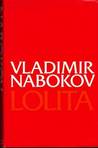
Lolita by Vladimir Nabokov: A review

LolitaLolita by Vladimir Nabokov
My rating: 4 of 5 stars

I had my Nabokov period in my twenties. I was mesmerized by the man's writing and read everything of his that I could get my hands on. One of those things was, of course, Lolita.

I can no longer be sure (because it was such a long time ago in the dim mists of my personal history) whether my memories of the book are truly memories of the book or of the old movie starring James Mason as Humbert Humbert and directed by Stanley Kubrick. I saw enough of that movie on television that it made a lasting impression on me. Either way, each (the movie and the book) in its own way was a tour de force.

I can remember finding parts of the book/movie laugh-out-loud funny when I first read/watched. Funny how time and life experiences change one's perspectives. Having children certainly changes one's perspectives. Having two daughters changes one's perspectives. I can no longer find anything about Humbert Humbert funny. He is a monster, a sick pedophile whose chosen prey is prepubescent girls.

This book was published in the U.S. sixty years ago this year. It was a very different world into which Nabokov birthed his creation. It's hard to even imagine today the kind of reaction it must have evoked at the time.

It was excoriated in some quarters as pornography and those critics were not far off the mark. On one level, it is a disgusting book on a disgusting subject that could only appeal to some very sick readers. Today, we live in a world where it is known that many priests, coaches, teachers, not to mention parents and step-parents, and others in positions of authority over defenseless children have taken advantage of and abused them to satisfy their own twisted lust. Humbert Humbert would be right at home in that crowd, although he would protest vociferously, with erudite language, against his inclusion.

And that is the other level on which this book can be read. Nabokov was such a master of language(s). The word play, the literary allusions, the wit with which the narrator Humbert expresses himself are all of the things that were so appealing to me about Nabokov's writing. They are the things that drew me to his books in the first place.

He was always a challenge to my understanding. He widened my horizons. He presented a test to my two years of French study because often long passages of his books were written in French. I loved that. It was like a secret puzzle to which I had the key.

But Lolita as erotica? There is nothing erotic about child rape unless you are truly sick, and let's not beat about bush, that is the subject of this novel. Twelve-year-old Lolita comes under the control of Humbert Humbert, the gentleman lodger in her mother's house who, in fact, married the mother so that he would have access to the daughter. When the mother meets an untimely death under the wheels of a neighbor's car, Humbert does not at first inform the daughter, who is away at camp.

Finally, after the funeral, he goes to pick up his step-daughter and sets out on a cross-country trip with her, still not informing her of her mother's death. He tells her instead that her mother is sick and in hospital. Along the way, when he is angry with her one day, he does tell her that her mother is dead. This twelve-year-old child is now completely in his power and has nowhere to turn.

This is Humbert's narration, of course, and he takes great pains to convince us that he was the one seduced and manipulated, that Lolita had already lost her virginity to a schoolmate, Charlie. He portrays himself as a man in love and as a dedicated and caring lover. Nabokov allows him this self-delusion, but occasionally we can see behind this veil of smoke that he blows in our face. We catch a glimpse when Lolita wistfully watches the interaction of one of her friends with the friend's loving father. We can see it in her resigned accessing to Humbert's sexual demands on her; her bargaining for pocket money and gifts and for permission to participate in a school play in payment for her sexual favors. We can hear it when Humbert lets slip in his narration that every night after he feigns sleep, he can hear the child sobbing beside him in bed.

No, a sick piece of work he may be, but I can't work up any sympathy for Humbert Humbert. His sob stories of all his suffering do not soften my heart in the least. It has been irrevocably hardened by Lolita's nightly tears.

And so, even though this is an amazing accomplishment simply on the level of language and story-telling, I just can't bring myself to give it five stars. The subject matter is so distasteful to me that it interferes with my enjoyment of the artistic accomplishment.

Vladimir Nabokov was quite a writer. There are few who could touch him in skill, and he was known for writing about difficult and often unsavory subjects. Ada, another book of his that features incest, comes to mind. One has to wonder where the mild-mannered scholar and lepidopterist gained his curiosity about or his knowledge of such subject matter. Perhaps it takes a master writer to even make such subjects readable.


View all my reviews