Translate

Tuesday, February 14, 2023

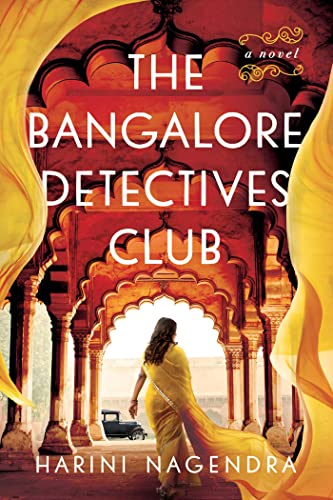
The Bangalore Detectives Club by Harini Nagendra


This is the first in a planned series of historical crime fiction books set in the 1920s in India. It is an India that is still under British rule, but protests against that rule are beginning to grow. This is very much the state of things during that period in the busy city of Bangalore in the state of Mysore. 

We see it all through the eyes of Kaveri, a young bride who has recently moved to Bangalore to be with her husband who is a doctor there. He is Dr. Ramu Murthy and he works at the Bowring Hospital run by Dr. Charles Roberts.

Kaveri is obsessed with mathematics and is apprehensive about how her interest will be perceived by her new husband, but fortunately, he is quite progressive and has an ego capable of withstanding his wife's other passions. Her mother-in-law is not nearly so progressive in her outlook and she demands that her daughter-in-law adhere to the strict societal expectations of women in that period, to forego education and center their lives around a man and the children that they have together.

As Kaveri becomes settled in her new life, she continues studying mathematics on her own and hopes to attend college and study formally. At the same time, she is establishing a circle of friends that cross all barriers of caste and class. This is a thing almost unheard of in an India that is strictly ruled socially by stringent adherence to caste.

Kaveri's insatiable curiosity and sense of community lead her to investigate the murder of a local pimp called Ponnuswamy. The murder occurred at a dinner that she attended at the local Century Club. She is certain that the wrong person is being accused of the murder and is determined to prove it. The police investigation is led by Detective Inspector Ismail who actually seems open to Kaveri's inquiries. Perhaps the two can work together to see that justice is served.

I very much liked the characters introduced in this book by Harini Nagendra. Kaveri, in particular, I found very relatable and someone that I might enjoy having as a friend. It's just that kind of feeling that one would want for the main character in a cozy mystery. Though this book definitely falls in the cozy mystery category, it also has quite a lot of information about that fraught period in Indian history. I suppose it might best be called "cozy historical fiction."  


Saturday, February 11, 2023

Poetry Sunday: Waiting in the Wings by Emile Pinet

As winter begins to wind down, we can almost see spring on the horizon. It is just over there beyond our view; waiting in the wings. 

Waiting in the Wings

by Emile Pinet

Sunlight weaves in between twigs of skeletal trees. And a web of shadows dances with each feisty breeze. A silver sky shimmers like cheap carnival glass. And yet, this fickle sun’s too weak for blades of grass. Snow accumulates on branches that almost break. And bow low to the ground with the weight of each flake. Sugar maple sap waits, not even one sweet drip. And snowmen aren’t melting, frozen in Winter's grip. Spring's not on stage, quite yet, She's waiting in the wings. But I can almost smell the flowers that She brings.

Friday, February 10, 2023

This week in birds - #537

 A roundup of the week's news of birds and the environment:

A pair of Whooping Cranes search for a meal in shallow waters at the edge of the Gulf of Mexico.

*~*~*~*

It's that time of year again! Time for the Great Backyard Bird Count, my favorite citizen science project and one in which we all can participate.

*~*~*~*

This is Flaco, a Eurasian Eagle-owl. He escaped from the Central Park Zoo a few days ago after someone vandalized the enclosure where he lived. As of today, he is still on the loose.

*~*~*~*

The Colorado River is drying up. Is it even possible at this point to avert this disaster?

*~*~*~*

           P-22 at home on his range.
Los Angelenos, and many of the rest of us, this week mourned the death and celebrated the life of one of the city's most famous inhabitants, the mountain lion known as P-22 who was euthanized after being hit by a car. 

*~*~*~*

Near Los Angeles, the poppies that cover its hillsides will soon be in bloom and that creates problems for the towns that have to deal with all the tourists rushing to see what is expected to be a "super bloom." Some roads and trails will be closed to discourage tourists.

*~*~*~*

Lead poisoning is still a danger to California Condors, one of the world's most endangered birds.

*~*~*~*

Elsewhere in California, bird lovers battled with a utility company that wanted to cut down a pine tree. It just happened to be a pine tree where Bald Eagles had nested for years.

*~*~*~*

Scientists can be intrepid in the pursuit of their science. Not even an erupting volcano can discourage them!

*~*~*~*

Many essential insects in East Asia have suffered massive declines in population. Why, and can the trend be reversed?

*~*~*~*

What is it about giant panda cubs? They are certifiably adorable! 

*~*~*~*

The Mexican cavefish has adapted to life away from light and most sources of food and still, it manages to survive and even thrive.

*~*~*~*

Acorn Woodpeckers were able to store some 700 pounds of acorns in the chimney of a Santa Rosa, California house.

*~*~*~*

The spotted-tail quoll of Queensland, Australia is facing extinction because of a combination of factors.

*~*~*~*

This is the Willow Ptarmigan, the American Bird Conservancy's Bird of the Week.

*~*~*~*

The cane toad is "public enemy number one" in Queensland, Australia and a competition finds plenty of participants that are eager to help rid the place of the invasive amphibians.

*~*~*~*

What color should a bee be? Turns out there is some controversy over the answer to that question. 

*~*~*~*

Here are pictures of some of the beautiful birds of Costa Rica.

*~*~*~*


*~*~*~*

Nearly 60 million years ago, there was a giant penguin species that weighed around 350 pounds and lived along the coastline of New Zealand.  

*~*~*~*

Sudden, extreme changes in the weather can prove fatal for migrating birds.

*~*~*~*

The discovery of some ancient tools has sparked questions about which hominin species was responsible for the technology that created them.

*~*~*~*

Check out the variety of bird species visiting this backyard Oregon suet feeder

*~*~*~*

There are many benefits of habitat restoration but one of the main ones is the recovery of bird species dependent on that habitat.

*~*~*~*

The protection of the Great Bear Rainforest of British Columbia has proved to be a triumph of conservation policy.

*~*~*~*

Orca moms seem to prefer sons and that may have some impact on the species' endangered status.

*~*~*~*

Should Endangered Species Act protections be terminated for grizzly bears in the Greater Yellowstone Ecosystem? That is the question being considered by the Fish and Wildlife Service.

*~*~*~*

A new reserve in Chile will protect the largest known colony of Markham's Storm-Petrel, a secretive and little-known seabird.

*~*~*~*

There is significant genetic diversity among corals and some of them have greater resistance to heat than was previously thought.

*~*~*~*

Cockatoos are the veritable Einsteins of birds and are amazingly adept at using tools

*~*~*~*

There's a new cash crop being grown in Australia's Outback: carbon.

*~*~*~*

Big Sur, California is a ruggedly beautiful area but storms can sometimes cut it off from the rest of the state.

*~*~*~*

Finally, here are some wonderful pictures of baby birds from Audubon's photography awards.


Thursday, February 9, 2023

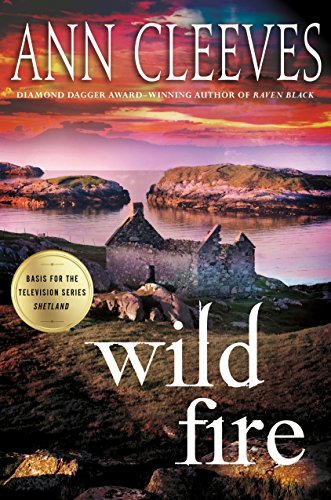
Wild Fire by Ann Cleeves: A review

Well, that's a bummer. Ann Cleeves says this will be the last book in the Shetland series. And just when it seemed that DI Jimmy Perez's life might finally be beginning to be sorted out. Ah, well, I guess that just means we get to write our own continuation in our imaginations.

This is the eighth book in the series and, as always, one of the strongest points in the narrative is Shetland itself. As Cleeves describes it, it is such a wild and beautiful place. The landscape itself is like a major character in the story.

And as for those human characters, no one describes them better than Cleeves. They always seem real and relatable, like anyone that you might meet in your daily activities. 

In this case, the main characters are newcomers to the island, Helen a knitwear designer, and her architect husband Daniel, and their two children, Christopher who is autistic and daughter Ellie. They have moved from London and are looking for a fresh start.

They are off to a bumpy beginning, however. The previous owner of their home, Hesti, had hung himself in the barn, and for some reason, the neighbors seem to hate and resent the newcomers and associate them in some way with the tragedy of their new home. The society of the place is claustrophobic and the main hobby of the inhabitants seems to be gossiping about their neighbors. Especially the new neighbors.

Autistic Christopher is shunned by the other students at school and he lives a mostly solitary life. Then, to make matters even worse, Christopher discovers another hanged body in the barn. It is that of a local nanny, Emma Shearer. Meanwhile, Helen is receiving anonymous notes with drawings of a hanged man. London is suddenly not looking so bad!

Chief Inspector Willow Reeves returns to Shetland to oversee the case and she gives some unexpected news to DI Perez - news that he does not handle well at all. Meanwhile, Perez's second-in-command, Sandy, has personal challenges to deal with in his life. All of these characters are facing turning points and have some difficult decisions to make.

But Ann Cleeves won't tell us what those decisions are. We'll just have to write those endings ourselves.

Sunday, February 5, 2023

The Latecomer by Jean Hanff Korelitz: A review


The latecomer in this family saga is Phoebe. She is the younger sister of triplets in the Salo and Johanna Oppenheimer family of New York. When the triplets are ready for college, their mother is feeling alone and she makes the decision to have their embryo sibling implanted in a surrogate and that is how "the latecomer" comes to be in the world.

The triplets are Harrison, Sally, and Lewyn, and they came about because Johanna was concerned that she had not become pregnant after three years of marriage and she consulted a fertility doctor. The treatment exceeded her expectations with the result that she ended up with not one but three babies.

The three had little in common beyond the fact that they had once shared a womb. In fact, they thoroughly disliked each other and would not even acknowledge their relationship to those who did not know about it. As soon as they are able to leave home, each goes his/her own way.

Johanna has hopes that having a new baby will somehow help to bring the family together, but, of course, it doesn't work out that way.  

The first three hundred and fifty pages are narrated in turn by the triplets who come off as completely smug and self-centered. Each is consumed by his/her own feeling of self-importance and, reading their narratives, I often felt quite irritated by them. When their mother decides to have another baby, they can only view that decision in relation to themselves with no sense of the new baby as an individual and they view it as their mother's attempt to focus attention away from them and to get people to pay attention to her. There is no sense that this younger sibling will have anything to do with them or have any place in their lives.

So, we have yet another dysfunctional family story. Not only is it dysfunctional but its members are, for the most part, quite unlikeable. There are character studies of each of the family members through which the author explores themes of race and class, sexuality and belonging. In other words, she explores the roots of individual identity. It makes for compelling reading, and even though the book is quite long at nearly five hundred pages and some readers have complained about the length, it doesn't really feel long to me. The story moves along at a good pace and one is always ready to move on to the next page to find out what happens next. 


Saturday, February 4, 2023

Poetry Sunday: Retread

Here's a retread for this Poetry Sunday. I was searching for a poem to represent this time of year and this one was the first that came up. It sounded very familiar, so I asked Blogger, and sure enough, I had featured it just about a year ago. In the belief that there is no such thing as too much of a good thing, here it is again.

*~*~*~*

Poetry Sunday: February by Margaret Atwood

Poetry may not be what Margaret Atwood is most famous for, but she has in fact published eighteen books of poetry. And, judging by this example, she is quite an accomplished poet. This one made me smile in recognition at her description of the interaction with the cat. Also, her description of our increased appetite in winter seems, unfortunately, spot on. It's not an easy time for those of us who have to watch what we eat. We can only hope that spring will arrive in time to save us.

February

by Margaret Atwood

Winter. Time to eat fat
and watch hockey. In the pewter mornings, the cat,
a black fur sausage with yellow
Houdini eyes, jumps up on the bed and tries
to get onto my head. It’s his
way of telling whether or not I’m dead.
If I’m not, he wants to be scratched; if I am
He’ll think of something. He settles
on my chest, breathing his breath
of burped-up meat and musty sofas,
purring like a washboard. Some other tomcat,
not yet a capon, has been spraying our front door,
declaring war. It’s all about sex and territory,
which are what will finish us off
in the long run. Some cat owners around here
should snip a few testicles. If we wise
hominids were sensible, we’d do that too,
or eat our young, like sharks.
But it’s love that does us in. Over and over
again, He shoots, he scores! and famine
crouches in the bedsheets, ambushing the pulsing
eiderdown, and the windchill factor hits
thirty below, and pollution pours
out of our chimneys to keep us warm.
February, month of despair,
with a skewered heart in the centre.
I think dire thoughts, and lust for French fries
with a splash of vinegar.
Cat, enough of your greedy whining
and your small pink bumhole.
Off my face! You’re the life principle,
more or less, so get going
on a little optimism around here.

Get rid of death. Celebrate increase. Make it be spring. 

Friday, February 3, 2023

This week in birds - #536

A roundup of the week's news of birds and the environment

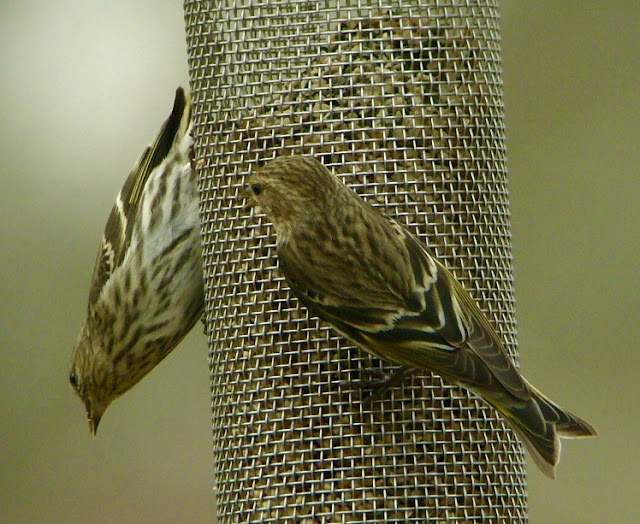
Pine Siskins are among my favorite winter visitors. 

*~*~*~*

Coal is economically outmatched by renewable sources of energy. It is more expensive to keep coal-fired power plants running than it is to build new wind or solar plants.

*~*~*~*

Six western states that rely on water from the Colorado River have agreed on a model to cut their use of water in the basin, but so far California is the one hold-out state that has not agreed.

*~*~*~*

It's a unique partnership: Bottlenose dolphins help Brazilian fishermen pull their catch in.

*~*~*~*

Why do bears rub against trees? It seems that there may be more to it than simply scratching an itch.

*~*~*~*

The EPA has blocked the Pebble mine project in Alaska, a move that will protect a valuable salmon fishery.

*~*~*~*

A black bear was apparently fascinated by a wildlife motion-activated camera near Boulder, Colorado, and ended up taking hundreds of "selfies." 

*~*~*~*

It's been an unusual winter in New York City. The city will set a record for its longest stretch in winter without measurable snowfall.

*~*~*~*

This beautiful shorebird, the American Avocet, is the American Bird Conservancy's Bird of the Week.

*~*~*~*

An extinct species of the elephant was a major source of calories for the Neanderthals.

*~*~*~*

The big news in the sky this week has been the passage of a green-hued comet past Earth and the sun for the first time in about 50,000 years.

*~*~*~*

Is it possible to bring back a species that has gone extinct? Some scientists think so and they want to try to do it with the Tasmanian tiger, a species that went extinct in the 1930s. 

*~*~*~*

Marshes in Iraq that have nourished communities since the dawn of civilization are drying up leading to further displacement of people in this region of conflict.

*~*~*~*

Sturgeons have survived in America's rivers for millions of years but now they are disappearing. Will humans be the death of this ancient species?

*~*~*~*

It's a rare partnership in Nature: The world's only black-furred bunnies distribute the seeds of a parasitic plant through their droppings.

*~*~*~*

"Microrewilding" in urban areas can provide a lifeline to Nature and enhance biodiversity.

*~*~*~*

A new conservancy in southeast British Columbia will protect a globally endangered rainforest with cedar trees. 

*~*~*~*

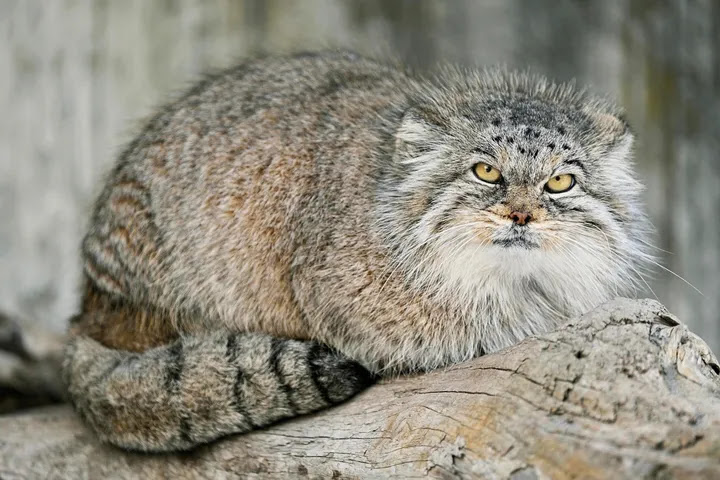
This grumpy-looking wildcat is a Pallas's cat, a rare and remarkable species that has been confirmed to be living on Mount Everest.

*~*~*~*

The thousands of Starlings that call Rome their home perform amazing aerial acrobatics that can mesmerize watchers, but what they leave behind at their night roosts is a lot less mesmerizing and a lot more problematic.