Thanks for Following

Friday, March 29, 2024

This week in birds - #585

 A roundup of the week's news of birds and the environment:

My 'Christmas Cheer' dwarf azalea is in bloom. Obviously, its calendar or its name is a bit off. The plant was a gift to me on the death of my mother twenty-three years ago this month and I treasure it.

*~*~*~*

The swallowtail butterflies are beginning to make their appearance so it must truly be spring.

*~*~*~*

Are you ready for the solar eclipse on April 8? Plants and animals, unlike you, might not be able to anticipate the eclipse but they will respond as Nature disposes them to.

*~*~*~*

Climate change is increasing the chances of glacial lake floods in the Andes.

*~*~*~*

What are the signs that spring is truly here to stay?

*~*~*~*

Should orcas be split into two distinct species?

*~*~*~*

Punxsutawney Phil and Phyllis have welcomed two baby groundhogs to the family.

*~*~*~*

How do birds manage to remember where they have stored food? It turns out they create a kind of memory barcode to guide them.

*~*~*~*

This pink grasshopper was discovered by a ten-year-old Nature enthusiast from Arkansas.

*~*~*~*

Strip-mining the Okefenokee National Wildlife Refuge will, unfortunately, likely be approved by Georgia state officials. 

*~*~*~*

Seeing and identifying 10,000 different bird species seems an almost impossible record but to have two separate individuals accomplish the feat on the same day? Wow!

*~*~*~*

A necropsy of Flaco the owl revealed that he had rat poison in his system when he died from an apparent collision with a high-rise building. 

*~*~*~*

This little beauty is the Green Kingfisher and he is the American Bird Conservancy's Bird of the Week.

*~*~*~*

It appears that the Asian hornet may have become established in the United Kingdom.

*~*~*~*

Here are pictures from the week in wildlife.

*~*~*~*

Do birds dream? Apparently, the answer is "yes."


Thursday, March 28, 2024

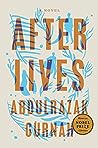
Afterlives by Abdulrazak Gurnah: A review


This story is set in East Africa in the early 20th century and follows the lives of three people - Ilyas, Afiya, and Hamza. Ilyas and Afiya are brother and sister and Hamza is in love with Afiya.

Ilyas was stolen from his family when he was just a child. He was stolen by German colonial troops and was forced to fight in their war against his own people. After years of fighting in their wars, when he is finally able to return home, he finds his family gone. His parents are no longer in their home and his sister has been given away.

Hamza, on the other hand, was sold into the war. He grew up under the tutelage and protection of the German officer who "owned" him. He would become an "Askari" soldier (local soldiers who served in the German Colonial Army). Both Hamza and Ilyas fought voluntarily for the Germans but they seemed to have little understanding of the political implications of the conflict. 

Abdulrazak Gurnah was the 2021 winner of the Nobel Prize for Literature, thus continuing the string of winners of this prize of whom I had never heard before their winning. Obviously, I've not read anything else by him so I have no way of judging if this book is a fair example of his writing. If it is then I would have to say that I'm not sure why he was deserving of the Nobel. I was just not very impressed by his writing here. The idea of the plot was interesting enough and the historical events on which it was based were certainly important but I could not really identify with any of the characters and so found it hard to have my interest fully engaged.  


Wednesday, March 27, 2024

Ten Second Staircase by Christopher Fowler: A review

Here's another Bryant and May mystery. They are always fun reads and Ten Second Staircase does not disappoint. (Although, having now finished reading the book, I still have no idea where that title came from or what it means.) 

In this one, Bryant's and May's unit, the Peculiar Crimes Unit of the London Police, is just about to be disbanded as part of a departmental reorganization. But where will that leave our two octogenarian detectives who have no desire to retire?

In order to forestall that imminent closure, the detectives need to solve a couple of cases, one old and one new, both of which have their basis in the historic London mythology of classic crime. 

To aid in their investigations, this time around their unit has a new addition, May's granddaughter, April. And, of course, she has her own set of peculiarities in that she is agoraphobic.

The modern-day mystery here involves a series of second-tier celebrities being killed in very elaborate ways. A witness to one of the crimes is a twelve-year-old boy who insists that the perpetrator was a masked highwayman riding a black horse. Well, he should be easy enough to find in London, right?  

There's a lot to like here. Fowler is, of course, a very talented writer who appears to assume that his readers enjoy the English language as much as he does. Here, he provides us with snippets of history which help to fill in the mosaic of the story he's telling and he does it with a rich trove of that beloved language. Moreover, the social commentary was enlightening and frequently quite amusing. Overall, I found my time spent with Bryant and May to be (once again) time well spent.


Saturday, March 23, 2024

Poetry Sunday: To Daffodils by Robert Herrick

What flower is more emblematic of spring than the daffodil? Poet Robert Herrick certainly found it to be so. And like the daffodil, our "spring," too, is all too brief. 

To Daffodils

by Robert Herrick

Fair Daffodils, we weep to see
You haste away so soon;
As yet the early-rising sun
Has not attain'd his noon.
Stay, stay,
Until the hasting day
Has run
But to the even-song;
And, having pray'd together, we
Will go with you along.

We have short time to stay, as you,
We have as short a spring;
As quick a growth to meet decay,
As you, or anything.
We die
As your hours do, and dry
Away,
Like to the summer's rain;
Or as the pearls of morning's dew,
Ne'er to be found again.

Note: This poem always brings to mind one of my favorite songs by Ian and Sylvia back in the day. (Yes, I am that old!)
 

Friday, March 22, 2024

This week in birds - #584

 A roundup of the week's news of birds and the environment:

A Killdeer views the world from atop a fallen log.

*~*~*~*

The headline said that scientists are divided regarding the climate crisis and I'm thinking, "When were scientists ever NOT divided and how is that the headline?"

*~*~*~*

There's no division over the fact that last year was the hottest year on record.

*~*~*~*

Our plant hardiness zones are changing.

*~*~*~*

The fossilized remains of the earliest known forest have been found. 

*~*~*~*

And in news of human fossils, a site in Ethiopia has revealed the oldest known arrowheads. They are from 74,000 years ago. 

*~*~*~*

In the state of Washington, a woman on a biking trip was attacked by a cougar. Fortunately, her friends were able to rescue her from the cat's jaws.

*~*~*~*

In Slovakia, it is bears that have been attacking people. Five people have been injured in attacks this week.

*~*~*~*

The Philippine Eagle is an endangered species with an estimated population of fewer than 400 breeding pairs left in the wild.

*~*~*~*

An Iceland volcano is once again pumping out a cloud of toxic gas across Europe.

*~*~*~*

In other volcano news, 74,000 years ago a supervolcano located on what is now Sumatra, erupted, sending microscopic shards of glass over a wide area.

*~*~*~*

Georgia may still okay a titanium mine on the edge of the Okefenokee National Wildlife Refuge but it won't be able to do it without a fight.

*~*~*~*

Bats are essential to the production of several foods and drinks that humans like quite a lot, so it's not good news for them or us that the critters are in trouble.

*~*~*~*

Another animal that needs our attention for their survival is the koala.

*~*~*~*

Not all wildlife benefited from the decrease in human activity during the pandemic.

*~*~*~*

Rio de Janeiro recently hit a record heat index of 144.1 degrees Fahrenheit.

*~*~*~*

The Yurok Tribe of California will be managing tribal lands in coordination with the National Park Service under a new agreement.

*~*~*~*

This is a Zebra Finch. It turns out that the female of the species has a highly developed ability to discern among songs from the various males of the species.

*~*~*~*

Climate change is making heat waves, like the one recently suffered by West Africa, much worse

*~*~*~*

A well-preserved village from 3,000 years ago has been uncovered by archaeologists in eastern England.

*~*~*~*

Wildfires in Canada have given Canadians even worse quality air to breathe than their neighbors south of the border.

*~*~*~*

Afghanistan is suffering through years of a punishing drought.

*~*~*~*

Scotland had pledged to cut emissions by 75% by 2030 but that no longer seems possible.

*~*~*~*

Cupid the Peacock was shot with an arrow, but thanks to his human neighbors, that was not the end of the story

*~*~*~*

Our favorite Muppet, Kermit the Frog, now has a prehistoric amphibian named for him.


Saturday, March 16, 2024

Poetry Sunday: St. Patrick's Day: With an Irish Shamrock by Charlotte Elizabeth Tonna

Happy St. Patrick's Day to all who celebrate it...and even those who don't! And here's a poem for you from almost a hundred years ago in honor of this day.

St. Patrick's Day: With an Irish Shamrock

by Charlotte Elizabeth Tonna

From the region of zephyrs, the Emerald isle,
The land of thy birth, in my freshness I come,
To waken this long-cherished morn with a smile,
     And breathe o’er thy spirit the whispers of home.
O welcome the stranger from Erin’s green sod;
  I sprang where the bones of thy fathers repose,
I grew where thy free step in infancy trod,
  Ere the world threw around thee its wiles and its woes.
         But sprightlier themes
         Enliven the dreams,
My dew-dropping leaflets unfold to impart:
         To loftiest emotion
         Of patriot devotion,
I wake the full chord of an Irishman’s heart.

The rose is expanding her petals of pride,
     And points to the laurels o’erarching her tree;
And the hardy Bur-thistle stands rooted beside,
     And sternly demands;—Who dare meddle wi’ me?
And bright are the garlands they jointly display,
     In death-fields of victory gallantly got;
But let the fair sisters their trophies array,
     And show us the wreath where the shamrock is not!
             By sea and by land,
             With bullet and brand,
My sons have directed the stormbolt of war;
             The banners ye boast,
             Ne’er waved o’er our host,
Unfanned by the accents of Erin-go-bragh!

Erin mavourneen! dark is thy night;
     Deep thy forebodings and gloomy thy fears;
And O, there are bosoms with savage delight
     Who laugh at thy plainings and scoff at thy tears!
But, Erin mavourneen, bright are the names
     Who twine with the heart-vein thy fate in their breast;
And scorned be the lot of the dastard, who shames
     To plant, as a trophy, this leaf on his crest!
             Thrice trebled disgrace
             His honours deface,
Who shrinks from proclaiming the isle of his birth!
             Though lowly its stem,
             This emerald gem
Mates with the proudest that shadow the earth!

      Sandhurst, March 17, 1827

Friday, March 15, 2024

This week in birds - #583

 A roundup of the week's news of birds and the environment:

An American Goldfinch has a snack of crape myrtle seeds.

*~*~*~*

You are not imagining it; winters are getting warmer. It's true of the oceans as well where the Great Barrier Reef has suffered a fatal heat wave.

*~*~*~*

Humans share many characteristics with whales. It turns out that one of the things we share is menopause.

*~*~*~*

For the first time in its documented history, Toronto has a pair of Bald Eagles nesting there.

*~*~*~*

Size dimorphism of the sexes is a common trait of mammals but it isn't always the males that are bigger.

*~*~*~*

Plant hardiness zones are changing as the climate changes.

*~*~*~*

When England's famed "Sycamore Gap" tree was chopped down by vandals, scientists sprung into action to try to ensure that the tree would have a second life.

*~*~*~*

The Biden administration has issued a draft proposal to provide protections for the imperiled Greater Sage Grouse.

*~*~*~*

Some endangered bats are making a comeback, thanks to their friends, the scientists.

*~*~*~*

Here are some winners of British wildlife photography awards.

*~*~*~*

This is the American Bird Conservancy's Bird of the Week. It is the Green Parakeet, a native of Mexico and Central America.

*~*~*~*

When it comes to the methane released by oil fields, it is even worse than we knew.

*~*~*~*

It seems that business is booming for Australia's snake catchers.

*~*~*~*

An African tree planting project is making a difference for the environment and for the people who live in it.

*~*~*~*

There is an effort underway to reintroduce wolverines to the Colorado wilderness.

*~*~*~*

Deforestation and climate change are putting many of North America's lizard species in peril. 

*~*~*~*

Playing thriving reef sounds can encourage coral larvae to settle on degraded reefs.

*~*~*~*

The Oregon Outback is the largest Dark Sky Sanctuary in the world.

*~*~*~*

This coral reef shouldn't really exist but Nature will find a way.

*~*~*~*

Margaret Renkl writes of the wild intoxications of spring.

*~*~*~*

This "Big Lister" has just documented his 10,000th bird species.

*~*~*~*

You might be surprised by the number and variety of species that live side by side with humans in New York City.

*~*~*~*

A deep-sea robot has discovered dozens of previously unknown species.

*~*~*~*

See the lengths this wildlife worker goes to in order to save a single orphaned fox kit. It gives one hope that the human race might not be totally irredeemable.


Saturday, March 9, 2024

Poetry Sunday: A March Glee by John Burroughs

The birds are definitely sensing the coming of spring. I see them busily searching out nesting sites and nesting materials. I hear them staking out their territories with song. The bluebirds are checking out the nesting box and I hope it will soon be occupied. Yes, spring is surely coming; "her couriers fill the air." 

A March Glee

by John Burroughs

I hear the wild geese honking
From out the misty night,—
A sound of moving armies
On-sweeping in their might;
The river ice is drifting
Beneath their northward flight.

I hear the bluebird plaintive
From out the morning sky,
Or see his wings a-twinkle
That with the azure vie;
No other bird more welcome,
No more prophetic cry.

I hear the sparrow's ditty
Anear my study door;
A simple song of gladness
That winter days are o'er
My heart is singing with him,
I love him more and more.

I hear the starling fluting
His liquid "O-ka-lee;"
I hear the downy drumming,
His vernal reveillé;
From out the maple orchard
The nuthatch calls to me.

Oh, spring is surely coming.
Her couriers fill the air;
Each morn are new arrivals,
Each night her ways prepare;
I scent her fragrant garments,
Her foot is on the stair.

Friday, March 8, 2024

This week in birds - #582

A roundup of the week's news of birds and the environment

A male Belted Kingfisher enjoying a sunny day by the creek.

*~*~*~*

Texas has been scorched by the largest recorded wildfire in its history. It almost certainly will not be the last

*~*~*~*

Last month was the hottest February on record, thanks largely to global warming. Not only was the month record-setting but it was the ninth straight record-setting month.

*~*~*~*

And there's more to come. El Niño is likely to supercharge global heating and deliver record-breaking temperatures from the Amazon to Alaska in 2024.

*~*~*~*

The last living member of Edmund Hillary's Mount Everest team says the once pristine mountain is now too crowded and dirty.

*~*~*~*

Gray whales became extinct in the Atlantic Ocean two centuries ago but now they are back, likely thanks to climate change.

*~*~*~*

Was the mosasaur the world's nastiest prehistoric reptile?

*~*~*~*

Sadly, Flaco the Eurasian Eagle-owl that escaped from the Central Park Zoo died after apparently striking a high-rise building. He had just a year of freedom and earned the love and admiration of New Yorkers.

*~*~*~*

Is rewilding a possible answer to the challenges presented by climate change?

*~*~*~*

Here are two Birds of the Week:

This is the Barred Fruiteater, aka Cryptic Cotinga, a resident of the tropical and subtropical mountain forests of South America from Venezuela down to Bolivia. This was the Bird of the Week for last week. 

And this...

...is the Northern Emerald-Toucanet, a resident of eastern Mexico and Central America, and he is the Bird of the Week for this week.

*~*~*~*

Florida's manatees are staring extinction in the face but devoted and dedicated humans are doing their best to save them.

*~*~*~*

It's official: We have it from the Pentagon that there has been no cover-up of evidence of an alien invasion, but many people will likely continue to believe otherwise.

*~*~*~*

For the third year in a row, the sea ice of Antarctica is at an alarming low.

*~*~*~*

Good news for England's Norfolk hawker dragonfly: Its population has recovered to the point that it is no longer considered endangered

*~*~*~*

The Denisovans were a group of humans that split from the Neanderthals and survived for hundreds of years before going extinct. In that time they managed to thrive throughout much of the world.

*~*~*~*

A man walking his dog in southern France found an almost complete skeleton of a titanosaur, a long-necked dinosaur.

*~*~*~*

In Oregon, a lake that migrating birds depend on is dying.

*~*~*~*

How can we combat the invasive lantern flies? Bring in the birds!

*~*~*~*

Cinnamon frogs are one of the many frog species that are seriously threatened, but there is hope for them; they have been successfully bred at a wildlife park in the UK.

*~*~*~*

In Las Vegas, a fountain display at a hotel was switched off recently when it received an unexpected guest - a rare Yellow-billed Loon, a bird more commonly found on the high Arctic tundra.

*~*~*~*

Smuggling wild animals is, unfortunately, a big and thriving business. 

*~*~*~*

In Death Valley, powerful winds have actually pushed a temporary lake two miles from its original location.

*~*~*~*

Invasive Joro spiders appear to be thriving in the southeastern part of the U.S.

*~*~*~*

Here's a phenomenon for you: a Honeycreeper that is half male and half female - male on one side and female on the other.

*~*~*~*

Have you ever wondered about how bees see the world? This new book explains all that.

*~*~*~*

The Guardian gives us the best of the week's wildlife pictures.

*~*~*~*

A supposed 280 million-year-old fossilized reptile that was discovered in the Italian Alps in 1931 has now been proven to be an elaborate fake.

*~*~*~*

Ants are amazing creatures and it turns out their talents include astounding medical abilities.

*~*~*~*

The tumbling tumbleweeds have been tumbling their way through Western towns in the wake of severe weather.

*~*~*~*

Harvestmen, or daddy longlegs, have been hiding something from us

*~*~*~*

Should the age that we are living in be designated the Anthropocene? Scientists, as scientists are wont to do, have differing opinions about that.


Saturday, March 2, 2024

Poetry Sunday: Spring and All by William Carlos Williams

William Carlos Williams was an American poet who lived from 1883 until 1963. He was a practicing physician. That's how he made his living. But poetry was his second job and his joy. Here is one of his poems.

Spring and All

by William Carlos Williams

By the road to the contagious hospital
under the surge of the blue
mottled clouds driven from the
northeast-a cold wind. Beyond, the
waste of broad, muddy fields
brown with dried weeds, standing and fallen

patches of standing water
the scattering of tall trees

All along the road the reddish
purplish, forked, upstanding, twiggy
stuff of bushes and small trees
with dead, brown leaves under them
leafless vines—

Lifeless in appearance, sluggish
dazed spring approaches—

They enter the new world naked,
cold, uncertain of all
save that they enter. All about them
the cold, familiar wind—

Now the grass, tomorrow
the stiff curl of wildcarrot leaf
One by one objects are defined—
It quickens: clarity, outline of leaf

But now the stark dignity of
entrance—Still, the profound change
has come upon them: rooted, they
grip down and begin to awaken

Friday, March 1, 2024

Apology

My apologies to "This week in birds" readers. No post this week. I hope to get back to my regular schedule next week. Thank you for your patience.