Translate

Friday, June 30, 2023

This week in birds - #555

 A roundup of the week's news of birds and the environment:

A female (or is it a juvenile?) Ruby-throated Hummingbird rests in a crape myrtle tree in my backyard.

*~*~*~*

Six months ago the world's nations met in COP15 and agreed to a pledge to halt biodiversity loss. How's that working out?

*~*~*~*

If those pledges are not met, Nature is at risk of a serious breakdown.

*~*~*~*

The Atlantic Ocean is at risk both above and below the surface because of the climate crisis.

*~*~*~*

This week a heat dome extended across the country and is expected to last throughout the July 4 weekend.

*~*~*~*

The extreme heat has already claimed some victims in Texas.

*~*~*~*

An emerging El NiƱo event is having its effect on heating up the planet. 

*~*~*~*

The heat wave in the North Atlantic is the worst in at least 170 years.

*~*~*~*

And in the Himalayas, the glaciers are melting.

*~*~*~*

This heat dome event was made five times more likely because of human-caused climate change.

*~*~*~*

The ecological tipping points may be much closer than we had expected.

*~*~*~*

The Environmental Protection Agency is being sued over its recent approval of two toxic herbicides that contain an active ingredient used in Agent Orange.

*~*~*~*

In California, hundreds of sick or dead dolphins and sea lions have washed ashore as a result of a toxic algae bloom.

*~*~*~*

Confused about native, non-native, and invasive plants? Audubon breaks it all down for you

*~*~*~*

The Mormon crickets are back in Nevada. The state is crawling with them.

*~*~*~*

Christian Cooper, the Black Central Park birdwatcher who unfortunately became famous in 2020 because a White woman made a racialized threat against him, has a new book about birdwatching called Better Living Through Birding.

*~*~*~*

Stonehenge has fascinated me ever since I learned about it in school. But who actually built it?

*~*~*~*

In Scotland, the endangered Capercaillie is making a comeback.

*~*~*~*

In fact, the jungle is alive, even in urban areas.

*~*~*~*

The Department of the Interior has designated nearly $4 million to protect and restore wildlife migration paths and habitats.

*~*~*~*

A study found that protecting marine life also benefitted humans living nearby, to which I can only say, "Well, duh!"

*~*~*~*

Human activity may be actually affecting Earth's spin.

*~*~*~*

Tree loss is up sharply in tropical forests in spite of human pledges to halt deforestation.

*~*~*~*

Here are some pictures from Rough Meadows Wildlife Sanctuary in Massachusetts.

*~*~*~*

The Biden administration has moved to restore Endangered Species protections that were dropped in the administration of the previous president.

*~*~*~*

Why does the Monarch butterfly have white spots on its wings? Rest assured, in Nature, there is always a reason!

*~*~*~*


*~*~*~*

The beautiful Western Tanager is the American Bird Conservancy's Bird of the Week.

*~*~*~*

Cuttlefish are remarkable creatures and they have an amazing ability to disappear right before your eyes as they blend with their surroundings so completely. 

*~*~*~*

Rhynchosaurs were the dominant reptile on the planet for a while before the dinosaurs took over. And I admit I had never heard of them as far as I can remember.

*~*~*~*

California's iconic Joshua trees have been given long-term protection.

*~*~*~*

The giant African land snail has been spotted in Florida, yet another invasive species for a state that is overrun with them.

*~*~*~*

Here's the week in wildlife pictures as presented by The Guardian.

*~*~*~*

Looe Island is a tiny Cornish island where Nature is thriving.

*~*~*~*

Rewetting England's lowland peat could help meet emissions targets according to a recent study. 

*~*~*~*

Swapping a nation's debt burden for its spending on Nature is one idea to be discussed at a finance summit in Paris.

*~*~*~*

Here's some good news: Some critically endangered Burmese Peacock softshell turtles have hatched and emerged from the mud of their nest in Myanmar.

*~*~*~*

Finally, no, orcas have not declared war on humans.


Saturday, June 24, 2023

Poetry Sunday: The Months by Sara Coleridge

So, according to Sara Coleridge, we are at the end of the month of "tulips, lilies, roses" and about to enter the month of "cooling showers." Ha! Not many cooling showers in July here in Southeast Texas. Sara Coleridge was Samuel Taylor Coleridge's daughter and she obviously lived in quite a different climate than the one where I currently reside. But we know what to expect. We will endure July and August and hope that September will begin to bring us some relief from the heat. Each month has its own personality.

The Months

by Sara Coleridge

January brings the snow,
makes our feet and fingers glow.

February brings the rain,
Thaws the frozen lake again.

March brings breezes loud and shrill,
stirs the dancing daffodil.

April brings the primrose sweet,
Scatters daises at our feet.

May brings flocks of pretty lambs,
Skipping by their fleecy dams.

June brings tulips, lilies, roses,
Fills the children's hand with posies.

Hot July brings cooling showers,
Apricots and gillyflowers.

August brings the sheaves of corn,
Then the harvest home is borne.

Warm September brings the fruit,
Sportsmen then begin to shoot.

Fresh October brings the pheasents,
Then to gather nuts is pleasent.

Dull November brings the blast,
Then the leaves are whirling fast.

Chill December brings the sleet,
Blazing fire, and Christmas treat.

Friday, June 23, 2023

This week in birds - not!

"This week in birds" is taking a much-needed vacation this week. It will return next week. Thank you for your loyal readership. 


Thursday, June 22, 2023

Mini reviews

What with one thing and another, I have seriously fallen behind on doing reviews of the books that I've read, so, in an attempt to catch up, here are a few mini-reviews. 

*~*~*~*

A Room Full of Bones (Ruth Galloway, #4)

by Elly Griffiths

I have been very much enjoying reading Elly Griffiths' series featuring forensic archaeologist Ruth Galloway. This one is set in Norfolk where the Smith Museum is preparing to open a coffin containing the bones of a medieval bishop. but when Ruth arrives to supervise, she finds the dead body of the curator Neil Topham beside the coffin. Moreover, it was not a natural death and it seems related to other recent uncanny events in the area. Not to worry though; Even though DCI Harry Nelson has fallen ill (another of those uncanny events), Ruth and her druidic friend Cathbad are on the job!

My rating: 3 stars

*~*~*~*

Blue Wolf in Green Fire

by Joseph Heywood

This is another series I'm enjoying reading. It features Upper Michigan Conservation Officer Grady Service and is the second entry in the series. In this one, there are ongoing protests by a group of animal rights activists. The protests appear, at least on the surface, to be related to a double murder at a wolf lab which resulted in the release into the wild of a rare "blue" wolf. Service must defend his hallowed Mosquito Wilderness and the wolves that live there against poachers out to bag that "blue" wolf.

My rating: 3 stars

*~*~*~*

Independence Square

by Martin Cruz Smith

I have long loved Smith's series featuring Detective Arkady Renko. This is the tenth in the series and I haven't found a clunker in the bunch. This one is a bit different from the others in that it has an autobiographical factor. We learn that Detective Renko is being diagnosed as having Parkinson's Disease, which in fact the author of the series has. It makes the story particularly personal. Also, there is a current affairs aspect as the story unrolls against the backdrop of Russia's invasion of Ukraine. Arkady is determined not to dwell on his illness and he throws himself into work, searching for an anti-Putin activist who has disappeared. The activist, Karina, is the daughter of an acquaintance of his and he meets and falls for Karina's roommate, Elena, a Tatar from Ukraine. Complications abound!

My rating: 3 stars

*~*~*~*

Beyond That, the Sea

by Laura Spence-Ash

This one unfolds against the backdrop of World War II. In 1940, a working-class couple in London makes the difficult decision to send their eleven-year-old daughter Beatrix to America for her safety. She will live with a family there for the duration of the war. Bea is scared and angry at being sent away from home but arriving in Boston, she meets her new family, Mr. and Mrs. Gregory, and their sons, William and Gerald and they simply fold her into their world. It is a more affluent world than the one she was used to back in England, but Bea soon becomes fully integrated and the Gregory family becomes more natural to her than her birth family.

My rating: 3 stars


Saturday, June 17, 2023

Poetry Sunday: A Summer's Garden by Robert Frost

What could be more delightful than a summer's garden filled with birds and flowers and all the things we love? Robert Frost would agree.

A Summer's Garden

by Robert Frost

I made a garden just to keep about me
The birds and things I love, all summer long.
I doubt not they'd live well enough without me;
How would I live without them -- their sweet song?

I made a garden and had my own flowers --
All that I cared to pick and more too, there.
Most of them died and fell in scented showers
Upon the beds, and colored the warm air.

Mine was not such a garden as I'd thought of --
A deep wild garden that no hand has trimmed
In many years -- a tangle that is wrought of
Old fashioned flowers 'neath old trees, barren limbed

But so my flowers brought the insects winging,
The butterflies, the neighbors' murmuring bees,
And birds one must not cage or they cease singing,
I asked no more, well satisfied with these.

My garden my fair garden! I saw wither
Flower, leaf, and branch, and from the maple bough
Leaves race across the bare beds none knows whither.
The lives I entertained where are they now?

Friday, June 16, 2023

This week in birds - #554

 A roundup of the week's news of birds and the environment:

A Little Blue Heron searches for its dinner among the reeds along the coast of the Gulf of Mexico.

*~*~*~*

There was an incredible sight along the Gulf Coast of Texas this week as thousands of dead fish washed ashore.

*~*~*~*

The Antarctic is in trouble from the effects of climate change and we are making it worse.

*~*~*~*

There are three living equid species of which the strikingly beautiful Grevy's zebra is the most threatened.

*~*~*~*

Surprisingly, there is some good news regarding the endangered Red Knot.

*~*~*~*

Will humans' time on Earth be known as the fire age, or pyrocene?

*~*~*~*

"It's an ill wind that blows no good," says the old aphorism, and proof of that may be found in the fact that the drought has actually helped to restore an ecosystem.

*~*~*~*

Could there actually be life on a moon of Saturn? There are tantalizing hints.

*~*~*~*

Do wolverines occasionally like to snack on fish?

*~*~*~*

And could this be the hottest year on record? It seems to be headed that way.

*~*~*~*

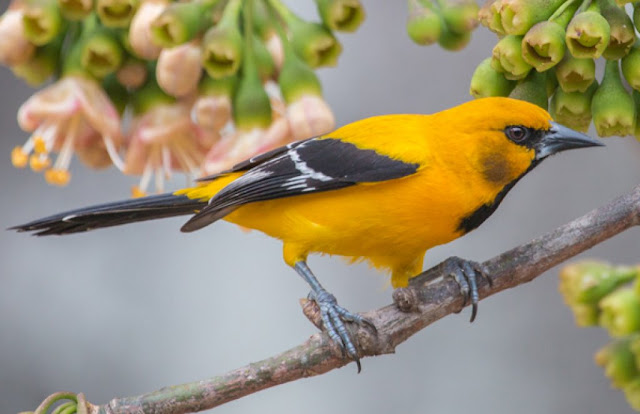
This is the beautiful Yellow Oriole, or Gonzalito, a bird of South America and the American Bird Conservancy's Bird of the Week

*~*~*~*

Last month was the warmest May for the world's oceans since records began to be kept in 1850.

*~*~*~*

Here are some wonderful wildlife photos from this past week. And here are even more.

*~*~*~*

Could the answer to a shortage of potable water be to desalinate ocean water?

*~*~*~*

Wildcats are being reintroduced in secret locations in the Scottish Highlands.

*~*~*~*

Moths don't get the acclaim they are due but they are VIPs (very important pollinators) maybe even more so than bees.

*~*~*~*

Illegal reintroductions of rare butterflies to the United Kingdom pose a potential threat to other species.

*~*~*~*

Animals have rights, too, and it is important that we recognize and respect that. 

*~*~*~*

Dinosaur bones in Australia? "They're bloody everywhere."

*~*~*~*

Warblers are on the move, passing through to their breeding grounds. 

*~*~*~*

A Kemp's ridley sea turtle has laid her eggs on the shore of Galveston for the second year in a row.

*~*~*~*

Feral hogs are no joke and there are now millions of them in the United States.

*~*~*~*

Lions are returning to parts of Africa from which they had long been absent. 


Monday, June 12, 2023

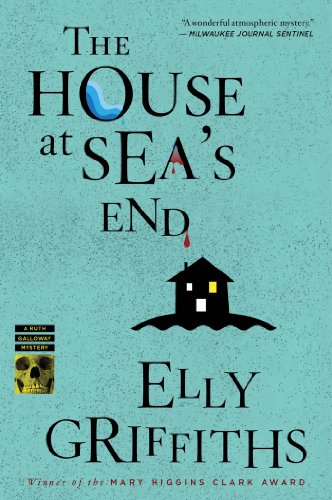
The House at Sea's End by Elly Griffiths


I am thoroughly enjoying Elly Griffiths' series featuring forensic archaeologist Dr. Ruth Galloway. My enjoyment is mostly related to the character of Dr. Galloway. She is a single middle-aged woman, the type of character that in many books would be portrayed as waiting and wishing for that special man to come along and complete their life. Not Ruth Galloway! She's much too busy digging up and interpreting the remains of the past. She is living the life she always dreamed of. 

This is the third entry in the series and in it, we find that Ruth has just given birth to her daughter, Kate, and she is struggling with the difficulties of juggling motherhood and work. 

When human bones surface on a remote Norfolk beach, Ruth is called in to investigate. This necessarily brings her back into contact with DCI Harry Nelson, the married father of her daughter. Awkward? To say the least!

The bones turn out to be around seventy years old bringing an association with the World War II era. But meanwhile, Ruth has been brought in to supervise the opening of a coffin that has been excavated near a medieval church. When she arrives on site she finds the museum's curator, Neil Topham, lying dead beside the coffin. And, of course, DCI Nelson is brought in to investigate the case. So Ruth is once again embroiled in a murder case alongside DCI Nelson.

There have been other spooky incidents recently and there is a suspicion that they are the work of a group called the Elginists, the goal of which is to repatriate the museum's extensive collection of Aboriginal skulls. Among the unexpected incidents has been the untimely death of the museum's owner, Lord Smith.

In addition to Ruth and Nelson, all the usual secondary characters are on hand for this one, including the sort of druid, Cathbad. In fact, Cathbad might be my favorite character in the series along with Ruth's cat, Flint. Those two are full of personality and it would be a much duller series without them.  


Saturday, June 10, 2023

Poetry Sunday: A June Night by Emma Lazarus

Emma Lazarus is well-known for her poem "The New Colossus" that was written in honor of the arrival of the Statue of Liberty in New York. But she wasn't just a one hit wonder as this poem describing a June night shows. I think she caught the spirit of the night just about perfectly. 

A June Night

by Emma Lazarus

Ten o'clock: the broken moon
Hangs not yet a half hour high,
Yellow as a shield of brass,
In the dewy air of June,
Poised between the vaulted sky
And the ocean's liquid glass.

Earth lies in the shadow still;
Low black bushes, trees, and lawn
Night's ambrosial dews absorb;
Through the foliage creeps a thrill,
Whispering of yon spectral dawn
And the hidden climbing orb.

Higher, higher, gathering light,
Veiling with a golden gauze
All the trembling atmosphere,
See, the rayless disk grows white!
Hark, the glittering billows pause!

Faint, far sounds possess the ear.
Elves on such a night as this
Spin their rings upon the grass;
On the beach the water-fay
Greets her lover with a kiss;
Through the air swift spirits pass,
Laugh, caress, and float away.

Shut thy lids and thou shalt see
Angel faces wreathed with light,
Mystic forms long vanished hence.
Ah, too fine, too rare, they be
For the grosser mortal sight,
And they foil our waking sense.

Yet we feel them floating near,
Know that we are not alone,
Though our open eyes behold
Nothing save the moon's bright sphere,
In the vacant heavens shown,
And the ocean's path of gold.

Friday, June 9, 2023

This week in birds - #553

A roundup of the week's news of birds and the environment:

A perky little Carolina Wren just checking things out.

*~*~*~*

Climate scientists warned us it was coming and now extremes in the climate contributing to heat waves and severe wildfires seem to be the norm.

*~*~*~*

And of course, one factor contributing to those extremes is the phenomenon known as el ninoHe's back...

*~*~*~*

One thing which thankfully has not gone away is the critically endangered porpoise called the vaquita. There's video to prove it.

*~*~*~*

Hundreds of wildfires continue to burn across Canada but the air quality in the eastern United States has started to improve.

*~*~*~*

By accepting the Montreal Protocol agreement, the government has actually taken some actions to curb climate change.

*~*~*~*

Southwestern states have proposed a landmark deal that could help to conserve the Colorado River.

*~*~*~*

Birds of prey, in general, seem to be holding their own, but that is not true for one of the smallest of their kind, the Kestrel

*~*~*~*

Scientists in the United States have documented a new atmospheric carbon dioxide high that is more than 50% higher than the average before the beginning of the industrial era.

*~*~*~*

Icebergs as a tourist attraction? Who would have thought it, but it is a strange world we live in. 

*~*~*~*

Now, the Grand Canyon is my idea of a tourist attraction. But it seems that the canyon's river may be drying up.

*~*~*~*

Avian flu is a threat to the critically endangered California Condors.

*~*~*~*

Wolverines had been essentially extinct in California since the 1920s but now some have returned.

*~*~*~*

This is the American Bird Conservancy's Bird of the Week. It is the sweet singing Wood Thrush.

*~*~*~*

Earth's last great wilderness is its oceans. It is important that we protect them.

*~*~*~*

Eastern Phoebes like to build their nests around human habitations and that means that sometimes we are witness to their tragedies.

*~*~*~*

We tend to take the presence of birds in our lives for granted, but how did birds become birds? When did they first take off?

*~*~*~*

I've long been fascinated by the civilization created by the ancient Mayas. It doesn't surprise me that scientists are continuing to discover more evidence of their ingenuity and sophistication. 

*~*~*~*

Is it possible that the presumed extinct iconic bird the Ivory-billed Woodpecker still lives in the wilds of Louisiana? The debate continues. 

*~*~*~*

On Hawaii's "Big Island," the Kilauea volcano has erupted once again.

*~*~*~*

Some refer to them as "trash birds." They are the birds that live in close proximity to humans, feeding off our crumbs. Personally, I would never refer to any bird as trash, not even the ever-present House Sparrow

*~*~*~*

Information derived from the exploration of a South African cave indicates that an ancient hominid species buried their dead more than 100,000 years before it had previously been known. 

*~*~*~*

Scientists have managed to drill nearly a mile beneath the ocean's floor all the way to the planet's rocky mantle.

*~*~*~*

The Arctic is rapidly losing sea ice and could be entirely free of it by the 2030s.

*~*~*~*

Our world still contains many mysteries and one of them is who built the lost cities of the Nigerian Sahara.

*~*~*~*

A road being built through the heart of the Amazon rainforest is a serious threat to the region's ecology.

*~*~*~*

Have you ever used Merlin? He is an extremely useful tool for identifying birds in the field.

*~*~*~*

This seems like the stuff of nightmares: The clumps of seaweed washing up on the shores of Florida contain a flesh-eating bacteria

*~*~*~*

Here are some views of the nest of a pair of Red-tailed Hawks and of some of the birds that share their habitat area.

*~*~*~*

The Washington Post has discovered that birds and their songs are good for our mental health. But you already knew that, didn't you? 


Wednesday, June 7, 2023

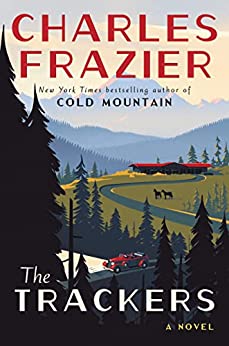
The Trackers by Charles Frazier: A review

This book is set during the Great Depression of the 1930s. It's not really an era that I prefer reading about, maybe because I grew up with parents who had lived through it and my life was informed by their stories of it. I have somewhat the same prejudice about World War II. It was the defining event of my father's life and I heard about it all during my childhood. But setting my prejudices aside, I had enjoyed Charles Frazier's Cold Mountain, so I decided to give his new book a chance. I'm glad I did. It was an enjoyable read.

It tells the story of a painter, Val Welch, who secures a New Deal assignment to paint a mural in the Dawes, Wyoming post office. The mural is supposed to represent a vision of that region of the world. Val considers himself very lucky to have landed the job when so many are out of work.

He travels west to Dawes prepared to get busy with the project. A wealthy rancher, John Long, and his wife, Eve, have invited Dawes to stay in one of the bunkhouses that serve the cowboys who work for them. He settles in and starts planning his work.

The Longs are the subject of a lot of gossip in the town. John has hopes for a political career. He had served in the army in World War I, but that service seems a bit shady in that he was a sniper. Rather than facing the enemy head-on, he killed while hidden. It's not clear how that will play in the rough tumble of a political campaign.

Moreover, his wife is a bit of a question mark. Before marrying John, she had lived the itinerant life of a singer in a Western swing band and she seems to be loathe to settling down to life as a rancher's wife. In fact, she doesn't settle. One day she absconds taking with her a valuable painting. Her husband hires the mural painter, Val, to go after her, find her, and bring her home.

Val travels across the continent in his search for Eve. Through his eyes, we see the ramshackle settlements that were called Hoovervilles that sprang up around the country. We also experience the nightlife of San Francisco in that era and finally, we travel to the swamps of Florida. 

Charles Frazier has done his research well and he brings all of that to life for us and makes the reader feel the desperation of the period. He does have a knack for writing about ordinary people who are just trying to get through the day and then tomorrow and the next day and the next... 

And that is exactly the story he has given us with The Trackers.

Saturday, June 3, 2023

Poetry Sunday: The Wind and the Moon by George Macdonald

This was one of my favorite poems when I was a child; this and Paul Revere's Ride by Henry Wadsworth Longfellow, which probably tells you everthing you need to know about my childhood taste in poetry! So when I came across it this past week in my search for a poem to feature today, I thought "Yes!" And here it is. Enjoy.
The Wind and the Moon
by George Macdonald
Said the Wind to the Moon, "I will blow you out;
You stare
In the air
Like a ghost in a chair,
Always looking what I am about —
I hate to be watched; I'll blow you out."

The Wind blew hard, and out went the Moon.
So, deep
On a heap
Of clouds to sleep,
Down lay the Wind, and slumbered soon,
Muttering low, "I've done for that Moon."

He turned in his bed; she was there again!
On high
In the sky,
With her one ghost eye,
The Moon shone white and alive and plain.
Said the Wind, "I will blow you out again."

The Wind blew hard, and the Moon grew dim.
"With my sledge,
And my wedge,
I have knocked off her edge!
If only I blow right fierce and grim,
The creature will soon be dimmer than dim."

He blew and he blew, and she thinned to a thread.
"One puff
More's enough
To blow her to snuff!
One good puff more where the last was bred,
And glimmer, glimmer, glum will go the thread."

He blew a great blast, and the thread was gone.
In the air
Nowhere
Was a moonbeam bare;
Far off and harmless the shy stars shone —
Sure and certain the Moon was gone!

The Wind he took to his revels once more;
On down,
In town,
Like a merry—mad clown,
He leaped and halloed with whistle and roar —
"What's that?" The glimmering thread once more!

He flew in a rage — he danced and blew;
But in vain
Was the pain
Of his bursting brain;
For still the broader the Moon—scrap grew,
The broader he swelled his big cheeks and blew.

Slowly she grew — till she filled the night,
And shone
On her throne
In the sky alone,
A matchless, wonderful silvery light,
Radiant and lovely, the queen of the night.

Said the Wind: "What a marvel of power am I!
With my breath,
Good faith!
I blew her to death —
First blew her away right out of the sky —
Then blew her in; what strength have I!

But the Moon she knew nothing about the affair;
For high
In the sky,
With her one white eye,
Motionless, miles above the air,
She had never heard the great Wind blare.

Friday, June 2, 2023

This week in birds - #552

 A roundup of the week's news of birds and the environment:

Plain Chachalaca photographed on a trip to the Valley region of Texas.

*~*~*~*

It was thirty-five years ago that NASA scientist James Hansen first warned us of the climate change that was coming.

*~*~*~*

The Supreme Court, in a decision handed down this week, has limited the Environmental Protection Agency's ability to protect the environment by undercutting the agency's authority to protect millions of acres of wetlands under the Clean Water Act.

*~*~*~*

The last Spotted Owl in Canada is fighting for its survival.

*~*~*~*

Brazilian forests are being decimated in order to provide land for raising beef cattle.

*~*~*~*

Companies that produce "forever chemicals" successfully hid the dangers of their products for decades.

*~*~*~*

Is climate change disrupting the mating habits of Arctic squirrels?

*~*~*~*

In yet another effect of climate change, insects are moving their habitat.

*~*~*~*

Do you sometimes get a sinking feeling? Well, it may be real. Much of the land in the United States is, in fact, sinking.

*~*~*~*

Environmentalists in Virginia and West Virginia view a proposed pipeline as a climate disaster and they continue their fight to stop it.

*~*~*~*

A giant pile of ancient logs in northern Canada is trapping millions of tons of carbon, but climate change may cause the release of that stored material. 

*~*~*~*

Climate change is causing insurance companies to refuse to insure parts of the country.

*~*~*~*

Indigenous nations are calling on the Department of the Interior to increase protections for the Grand Canyon.

*~*~*~*

A new ecological study confirms what we probably already knew: Our planet is very sick.

*~*~*~*

Will a California law force the furloughing of the firefighting goats?

*~*~*~*

The Biden administration has banned new oil drilling near Chaco Canyon, an irreplaceable tribal cultural site. 

*~*~*~*

The melting of California snow is helping to alleviate the drought which plagues that region.

*~*~*~*

America's national parks are getting ready for summer and the onslaught of visitors.

*~*~*~*

Is this beluga whale bumming around the Norwegian coast a Russian spy?

*~*~*~*

And, of course, if it's summer there must be a great white shark swimming in the waters off the coast of New Jersey. Cue the theme from Jaws!

*~*~*~*

The amazingly well-traveled Red Knot breeds high up in the Arctic tundra and then flies south to winter at the tip of South America.

*~*~*~*


*~*~*~*

Environmentally important kelp forests are essential to the health of oceanic ecosystems. They are also threatened.  

*~*~*~*

This handsome guy is the American Bird Conservancy's Bird of the Week. He is a Common Yellowthroat, a species which, unfortunately, is becoming somewhat less common. 

*~*~*~*

Also becoming less common are California beaches which a new study says could disappear by the end of the century.

*~*~*~*

As we work in our gardens, we would do well to remember we are not alone. These spaces can be home to many different critters. 

*~*~*~*

Meet some of the birds of Cape Ann, Massachusetts in springtime.

*~*~*~*

There's once again talk of the "Lord God Bird." But does the Ivory-billed Woodpecker actually still exist?

*~*~*~*

We know that the white bison exists. We have its picture.