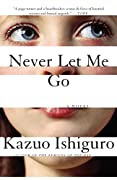
Kathy reminisces about her time at a boarding school called Hailsham where the teachers were known as guardians. One of the guardians was called Miss Lucy and one day Miss Lucy told the students that they were clones created to donate organs to others. After their donations, they are destined to die young. She believes that if the students are to live their best lives they must know the truth. The students simply accept what she is telling them without response. Miss Lucy is soon removed from her position because of her unauthorized disclosure.
During her time at the school, Kathy developed close friendships with two other students, Ruth and Tommy. Tommy is bullied by the other students and Kathy supports him and often talks privately with him. They seemed on the point of developing an even closer relationship but then he and Ruth became romantically involved instead.
When they were sixteen, Ruth, Tommy, and Kathy were moved to a place called the Cottages. For the first time they are allowed in the outside world, but they still mostly stay in their insular world. Ruth and Tommy are still together and Kathy has sexual relationships with various partners. When two older students tell them that they have seen a "possible" for Ruth - i.e., an older woman who resembles her and from whom she could have been cloned - they all decide to go on a trip to find the woman. While on the trip, the older students discuss a rumor they have heard that a couple can have their "donations" deferred if they can prove they are truly in love. The former Hailsham students had heard nothing about this. They do find the "possible" but the resemblance is so superficial that Ruth becomes angry, wondering if they were all cloned from "human trash."
During this momentous trip, Tommy and Kathy separate from the others and go looking for a cassette tape that Kathy had loved but that had been lost while they were at Hailsham. The (fictional) cassette was called "Songs After Dark" by Judy Bridgewater. The fact that Tommy remembers all this is indicative of his feelings for Kathy. They do find the cassette but do not tell Ruth about it. Later, Ruth does find out about the tape and her jealousy causes her to try to drive a wedge between the two. She tells Kathy that Tommy could never have a relationship with her because of her checkered sexual history. Soon after that, Kathy becomes a carer and does not see the other two for about ten years. When she does see them again, it is as their carer after they have begun their donations of organs.
The world that Ishiguro creates of clones and their carers is so richly described as to seem real even though there is nothing related in the chronology of the novel that we can recognize. This is in spite of the fact that it takes place in the recent past. It is a horror story masquerading as science fiction and the most horrible thing about it is that the narrator accepts everything as perfectly normal. It can certainly be seen as a parable about human mortality. The students of Hailsham tell each other stories to ward off the truth about their fates even as we tell ourselves stories to keep from facing the fact of our inevitable deaths.
Every book of Ishiguro's that I read just increases my awe of the man's imagination and talent. I feel fortunate to be living at the same time as he. In the citation for the award of the Nobel Prize for Literature in 2017, the committee wrote that Ishiguro "in novels of great emotional force, has uncovered the abyss beneath our sense of connection with the world." Yes, what they said.
I would rank this one just slightly below The Remains of the Day that I recently read, but not by much.
My rating: 4 1/2 of 5 stars
I never knew this book was about clones. Interesting! Kind of makes me want to read it even more. :)
ReplyDeleteYou would not regret it.
DeleteThis was an amazing book. I read it several years ago. The world building was some of the best I've read. I would highly recommend it.
ReplyDeleteIshiguro may be my new favorite writer.
DeleteI heard him speak in 2020 or 2021 and I thought he was very wise. If you are interested, his reading is archived here: https://inprinthouston.org/for-readers/inprint-archive-of-readings/
ReplyDeleteI agree with your feelings about this author. He is one of my favorites, too.
Thanks for that link.
DeleteI need to read it.
ReplyDeleteI would recommend it to anyone who loves good books.
DeleteI need to read this book. Thanks for the review, Dorothy.
ReplyDeleteYes, you do!
DeleteThis is a killer book -- mysterious and heart-wrenching as they undergo being organ donors. They believe perhaps there will be an exemption for them but alas ... ugh. The movie too blew me away. Might be my favorite Ishiguro novel.
ReplyDeleteI haven't seen the movie and after reading the book, I'm not sure I would want to. As you indicate, it would be heart-wrenching and my heart is already wrenched enough!
DeleteThis one left a lasting effect on me, and I never wanted to watch the film. I didn't enjoy it--it is so bleak, but I'll never for get it. What does it mean to be human?
ReplyDeleteIt is not one that will be easy to forget. It is an intelligent and affecting look at the human condition.
DeleteI didn't even know this book existed but it sounds so good! You had me at human cloning!
ReplyDeleteOh, Carrie, do read it! I think you will enjoy it.
Delete