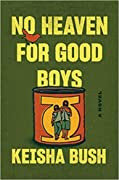
Etienne is the first to be sent to Dakar to be taught by Ahmed, but when his year is up Ahmed persuades the parents to let him stay, and then Ibrahimah's father decides to send his son, also. Ibrahimah's mother is opposed to the idea. She insists he is too young, but his father takes him to Ahmed very early one morning while his mother is still sleeping so that she cannot object. Ibrahimah joins Ahmed's daara (school) with his cousin and his life is changed forever.
Instead of being instructed in the Qu'ran, the boys in Ahmed's daara are forced onto the streets every day to beg for food and for money to line their marabout's pockets. They are told a sum of money that they must collect each day. If they fall short, they are beaten.
Even under the best of circumstances, the streets of Dakar would not be safe for these young boys. There are predators galore who would take advantage of them. For example, there is an active black market in organ trading that some of the boys are known to fall prey to. There are also student protests taking place on the streets, sometimes violent protests. Etienne and Ibrahimah must try to navigate all of these dangers as they attempt to meet their marabout's demands and avoid being beaten.
The older cousin, Etienne, is a real hero in this story. He does his best to protect his younger cousin and keep him safe. The boys' lives are a neverending series of horrors and the most horrible thing may be the knowledge that their parents - or at least their fathers for their mothers seem to have little say in the matter - have delivered them to this fate. Etienne and Ibrahimah long to run away and go home, but if they do, will their fathers just bring them back as the father of one boy who did manage to run away did?
This book had been in my reading queue for a year and I kept avoiding it because I knew it was going to be a heartbreaking story. I was not wrong. And, of course, I usually stay away from reading books that deal with the abuse of children or animals because they are just too upsetting for me. Nevertheless, in spite of the subject matter, I am glad I finally convinced myself to read this one. Keisha Bush has given us in her first novel a beautiful narrative of human perfidy and brutality but also of the resilience of the human spirit and its ability to keep hope alive even in the direst of circumstances. Her characterizations of Ibrahimah and Etienne make them real flesh and blood boys, not just paper replicas. They are a combination of both naivete and native wisdom. They comfort each other and manage to have moments of silliness that can almost bring a smile to the reader's face amid all the sadness.
The author also gives moments of magical realism in the narrative which somehow help to lighten the mood, but there is no disguising the fact that this is a completely devastating story. The most devastating thing about it may be the fact that it is based on reality. In truth, it is the religious custom in that country to send young boys to a marabout for a year's study of the Qu'ran. And human nature being what it is, over the years the practice has been abused and the boys are sometimes mistreated, even starved, and forced to beg. And evidently, this is not a practice that is in the past; it is still happening today. Here is a report on it from the Harvard Human Rights Journal published last year.
This really is an excellent, well-written book that tells an important story and is hard to put down, although I had to occasionally just to give myself a mental break. The only reason I don't give it five stars is because it was so difficult for me to read.
My rating: 4 of 5 stars
That is heartbreaking! Stories like this one are very hard to read, but I feel they're important, too. I don't think I've ever read a book set in Senegal, but I've read other similarly heartbreaking books set in other African countries. It's so sad that this kind of abuse happens all around the world.
ReplyDeleteI don't recall ever having read one before that was set in Senegal. Obviously, it is a society with a lot of problems. But then that can be said of most countries, can't it?
DeleteThis must be a tough one to get through considering the setting and plot. I spent a few years living in a similar culture, and some of the things I saw with my own eyes...not to mention the stories I heard from others...were truly heartbreaking. It was almost enough to sour me on what it really means to be a human being, so I don't think I'm ready for this one.
ReplyDeleteUnderstandable.
DeleteIt's heartbreaking, and, in a way, it's even more heartbreaking that (the article you linked to) explained how the teachings of a major religion have been twisted and used to the advantage of predators. I would find this a very hard read but perhaps its one I need to undertake sometime in 2022.
ReplyDeleteSometimes I feel I get too comfortable in my reading habits and need to challenge myself with something different. This was certainly different from anything I had read in recent years.
DeleteI've never read a story about life in Senegal and this does sound brutal; I gotta give this one a pass. My first book of 2022 could have been read in 1-2 days but I spread it over 4 as it is much darker than I thought it would be.
ReplyDeleteI have several books left in my queue from last year that I am making an effort to read now but I don't think any of them are as dark as this one was. At least I hope not.
Delete