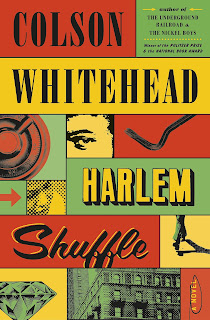
Ray is a family man. When we meet him, he has a wife and daughter and another child on the way. They are his incentive to maintain respectability and legitimacy. He is, in fact, considered a man of standing in the community. But there is another influence that keeps pulling him in the opposite direction. His name is Freddie.
Freddie is Ray's cousin and he is the one who gets Ray involved in all kinds of illegal schemes and heists. The book is divided into three sections; one is set in 1959, one in 1961, and one in 1964. The first one details the major heist of a hotel that Freddie sucks his cousin into as an accessory against his will. Ray's self-image as a legal businessman takes a serious hit and his life is changed.
The fictional stick-up heist of the Hotel Theresa (a real hotel in Harlem) goes off without a hitch. The hotel is described as "the headquarters of the Negro world" so robbing it is a headline event. The description of this caper is the high point of the book. Whitehead seems to be enjoying writing it. The prose is crisp and often gleeful and downright funny. I found the two following sections of the book to be somewhat less dynamic.
In the second section, Carney is steaming over being cheated out of $500 by a sleazy Harlem banker and most of the action involves him scheming of a way to exact revenge against the banker. In the third section, Carney's moral struggles continue as he is once again involved by Freddie as an unwilling accomplice in a crime that will have tragic consequences for some of his loved ones.
Whitehead, the double Pulitzer Prize winner, has always delivered novels that are original and quirky and are notable as expansions of whatever genre they might be assigned to. So it is with Harlem Shuffle. It is essentially a crime saga but it also manages to embody cultural satire and it is a page-turning, entertaining literary novel.
And now I must confess: I finished reading this book two weeks ago and when I sat down to write my review today, I found I really couldn't remember much about it. I'm not sure what that says about this book or about me as a reader; nothing good about either, I expect. I had to resort to reading the publisher's synopsis and some of the reviews of the book to jog my memory. I can't really explain why that would be because I did enjoy the book while I was reading it, but I never really felt "connected" to any of the characters. There were no female characters or at least none of consequence and perhaps that's why it was hard for me to identify with the male characters.
So, the plot of the book was not particularly memorable for me for whatever reason. I could actually better remember The Nickel Boys. Now we only have to wait for Colson Whitehead to collect his third Pulitzer for this "unmemorable" book.
My rating: 4 of 5 stars
lol... that happens to me also even tho i take lots of notes... but if i leaf back thru the book it usually comes back. but not always, sigh... this sounds (reads)like a novel i'd like; i'll see if the library has a copy...
ReplyDeleteYes, I've been known to forget before. When you read one book after another as I do, sometimes they can run together or one can be lost in the shuffle. But I think you will like this one. Of course, Whitehead is a terrific writer.
DeleteI had to laugh at your reviewing dilemma. But some books just aren't that memorable; even ones you like at the time. And I always remember the books with characters I can like and connect to better than the ones without. :)
ReplyDeleteThat sure is true for me. If I have a character I can identify with then the plot is more likely to stay with me.
DeleteI am STILL on the waiting list for this one so it was fun to read your thoughts. I have enjoyed Whitehead's last couple of books a lot, and I'm hoping that I take to this one as well. Tell you what...wouldn't dare wait two weeks to review a book; it would be hopeless. I think we read so much that we push some plots out of our heads before they've had a chance to really sink into our longer term memory. :-)
ReplyDeleteThat's probably quite true. It also probably didn't help in this case that I was dipping into two other books at the time, two nonfictions. I would normally have written the review earlier, but with the holidays, I was lagging behind.
DeleteSometimes that happens ... where I feel like I have not much to say about a book ... Some can be unmemorable. I'm sort of on the fence whether I will read this one ... Hmm. But you did find it entertaining?
ReplyDeleteOh, yes. It is very good. My faulty memory is no disparagement of the book itself.
DeleteUh oh. Hate it when that happens with a book I look forward to and by an author I like, but it does happen. Then again, I can forget what I ate for lunch.
ReplyDeleteLOL! I know exactly what you mean.
Delete