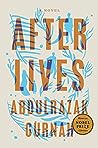
Afterlives by Abdulrazak Gurnah: A review


This story is set in East Africa in the early 20th century and follows the lives of three people - Ilyas, Afiya, and Hamza. Ilyas and Afiya are brother and sister and Hamza is in love with Afiya.

Ilyas was stolen from his family when he was just a child. He was stolen by German colonial troops and was forced to fight in their war against his own people. After years of fighting in their wars, when he is finally able to return home, he finds his family gone. His parents are no longer in their home and his sister has been given away.

Hamza, on the other hand, was sold into the war. He grew up under the tutelage and protection of the German officer who "owned" him. He would become an "Askari" soldier (local soldiers who served in the German Colonial Army). Both Hamza and Ilyas fought voluntarily for the Germans but they seemed to have little understanding of the political implications of the conflict. 

Abdulrazak Gurnah was the 2021 winner of the Nobel Prize for Literature, thus continuing the string of winners of this prize of whom I had never heard before their winning. Obviously, I've not read anything else by him so I have no way of judging if this book is a fair example of his writing. If it is then I would have to say that I'm not sure why he was deserving of the Nobel. I was just not very impressed by his writing here. The idea of the plot was interesting enough and the historical events on which it was based were certainly important but I could not really identify with any of the characters and so found it hard to have my interest fully engaged.  


Comments

  1. That's disappointing. I must say that as a nonprofessional reader, I often come away from literary award winning books feeling like the read was meh. I am not sure whether it is because my expectations were high or whether it is just because I am not knowledgable about what makes greatness in a story.

    ReplyDelete
    Replies
    1. I find that I am seldom in agreement with the "professionals" in regard to the qualities of greatness in modern day literature. But then I am reading just for my own personal enjoyment and I would guess they are reading for a set of specific qualities.

      Delete
  2. I have this one in my TBR. Now I know what to expect. Too bad you didn’t like it.

    ReplyDelete
    Replies
    1. I'd be interested to know your thoughts after you read it.

      Delete
  3. The thing that always puzzles me about the Nobel Prize for Literature is how the people who make the decision are able to evaluate authors writing in different languages. Surely even the best translation does not capture all the nuance and flavour the author crafts into the work, and perhaps even constructs subtleties that are not there. Didn't Bob Dylan win the prize for literature? Read what you enjoy, I say, without regard to the winners of the various awards. Use them as a guide, by all means, but they do not represent the final seal of approval for everyone.

    ReplyDelete
    Replies
    1. And that is pretty much what I do. We are once again in agreement, David!

      Delete
  4. You do expect really good writing from a Nobel Prize winner. Maybe they based his award more on his subject matter and what he exposes about that time period.

    ReplyDelete

Post a Comment

Popular posts from this blog

Poetry Sunday: Don't Hesitate by Mary Oliver

How about we share another Mary Oliver poem? After all, you can never have too many of those. In this one, the poet seems to acknowledge that it is often hard to simply live in and enjoy the moment, perhaps because we are afraid it can't last. She urges us to give in to that moment and fully experience the joy. Although "much can never be redeemed, still, life has some possibility left." Don't Hesitate by Mary Oliver If you suddenly and unexpectedly feel joy, don’t hesitate. Give in to it. There are plenty of lives and whole towns destroyed or about to be. We are not wise, and not very often kind. And much can never be redeemed. Still, life has some possibility left. Perhaps this is its way of fighting back, that sometimes something happens better than all the riches or power in the world. It could be anything, but very likely you notice it in the instant when love begins. Anyway, that’s often the case. Anyway, whatever it is, don’t be afraid of its plenty. Joy is no...

Poetry Sunday: Blackberry-Picking by Seamus Heaney

My mother was a farm wife and a prodigious canner. She canned fruit and vegetables from the garden, even occasionally meat. But the best thing that she canned, in my opinion, was blackberry jam. Even as I type those words my mouth waters!  Of course, before she could make that jam, somebody had to pick the blackberries. And that somebody was quite often named Dorothy. I think Seamus Heaney might have spent some time among the briars plucking those delicious black fruits as well, so he would have known that "Once off the bush the fruit fermented, the sweet flesh would turn sour." They don't keep; you have to get that jam made in a hurry! Blackberry-Picking by Seamus Heaney Late August, given heavy rain and sun For a full week, the blackberries would ripen. At first, just one, a glossy purple clot Among others, red, green, hard as a knot. You ate that first one and its flesh was sweet Like thickened wine: summer's blood was in it Leaving stains upon the tongue and lust ...

Poetry Sunday: Hymn for the Hurting by Amanda Gorman

You probably remember poet Amanda Gorman from her appearance at the inauguration of President Biden. She read her poem "The Hill We Climb" on that occasion. After the senseless slaughter in Uvalde this week, she was inspired to write another poem which was published in The New York Times. It seemed perfect for the occasion and so I stole it in order to feature it here, just in case you didn't get a chance to read it in the Times . Hymn for the Hurting by Amanda Gorman Everything hurts, Our hearts shadowed and strange, Minds made muddied and mute. We carry tragedy, terrifying and true. And yet none of it is new; We knew it as home, As horror, As heritage. Even our children Cannot be children, Cannot be. Everything hurts. It’s a hard time to be alive, And even harder to stay that way. We’re burdened to live out these days, While at the same time, blessed to outlive them. This alarm is how we know We must be altered — That we must differ or die, That we must triumph or try. ...