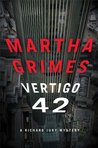
 Vertigo 42: A Richard Jury Mystery by Martha Grimes
My rating: 4 of 5 stars
The books in Martha Grimes' Richard Jury series often are rich in literary and film references and this one is no exception. The homage to Alfred Hitchcock's film Vertigo is perhaps obvious from the title, but there are also overt references to Thomas Hardy and William Butler Yeats, as well as more subtle nods to Oscar Wilde and even the Bard himself, Shakespeare. It all makes for a fun game for the reader, a kind of hide-and-go-seek, which is an actual game that plays a part in one of the mysterious deaths of the plot.
Once again, Jury is called upon to investigate a cold case, this time as a favor to a friend. Seventeen years before, Tess Williamson died in a fall down stone steps in the garden of her house in Devon. The verdict on the death was left open, as no definitive conclusion could be reached, but the inspector in charge of the investigation at the time leaned toward an accidental death due to the victim's known problems with vertigo. Her husband, Tom, is convinced that her death was murder, and, in that conclusion, he has an ally in another detective who was involved in the original investigation, Jury's friend, Brian Macalvie.
Tom is also friends with Sir Oscar Maples, another in Jury's circle of friends, and it is Maples who suggests to him that Jury might be willing to investigate the death, and it is he who delivers the request to Jury. Jury meets with Williamson at Vertigo 42, a bar in a City of London tower, hears his story, and agrees to look into the case.
One curious aspect of Tess's death is that five years before, a nine-year-old girl had also died in a fall at the Devon home, during a children's party that Tess was hosting. The victim was a particularly nasty child who was not liked by any of the other children, or, for that matter, any adults. There was suspicion that she was pushed and Tess was a suspect, but, again, there was no conclusive evidence and the verdict was left open.
So, two suspicious deaths seventeen and twenty-two years earlier, but before Jury can get very far into his investigation, another death occurs near the village where his friend Melrose Plant lives. A woman dressed in an expensive red silk dress and four-inch-high red heels dies in a fall from a tower. Did she jump? Was she pushed? How did she climb to the top of that tower in those four-inch heels? When it turns out that this woman was one of the children who were present at that party in Devon long ago when the little girl died, Jury sees a pattern and suspects that there may have been three murders.
Then, the woman's husband also turns up dead of gunshot wounds with his dog Stanley standing guard over his body. Four deaths - two in the past and two in the present - dot this intricate and compelling plot. How will Jury ever sort this puzzle out?
This is the latest entry in the Richard Jury series, number 23, and it isn't clear if there will be any more. If indeed it does turn out to be the last one, then Grimes will have ended on a fairly high note. This was a strong effort, more so than some of the recent books in which she seemed to be just phoning it in.
As usual, the plot meandered all over the countryside between Devon and London and it encompassed visits with most of the recurring characters that we've come to know and love (or hate) over the years. It had the usual quirky animals, but at least this time we didn't spend time inside the animals' heads watching their nonverbal reaction to events. There were no charming children this time around, which made for a bit of a change. But, all in all, particularly with the literary allusions, it hit all the notes that we've come to expect from Martha Grimes and it was a fun summer read.
View all my reviews
If this is the end, and even if it is not, I am glad you think it hit the right notes. :-)
ReplyDeleteIt was a definite improvement over some of the recent entries and I did find it to be an enjoyable read.
DeleteSounds like fun. I do like literary allusions in novels.
ReplyDeleteWell, Grimes' work is full of them!
Delete