
Reviews

I've been quite negligent about posting reviews of the books that I've read recently, so here's my effort to begin to catch up.

*~*~*~*
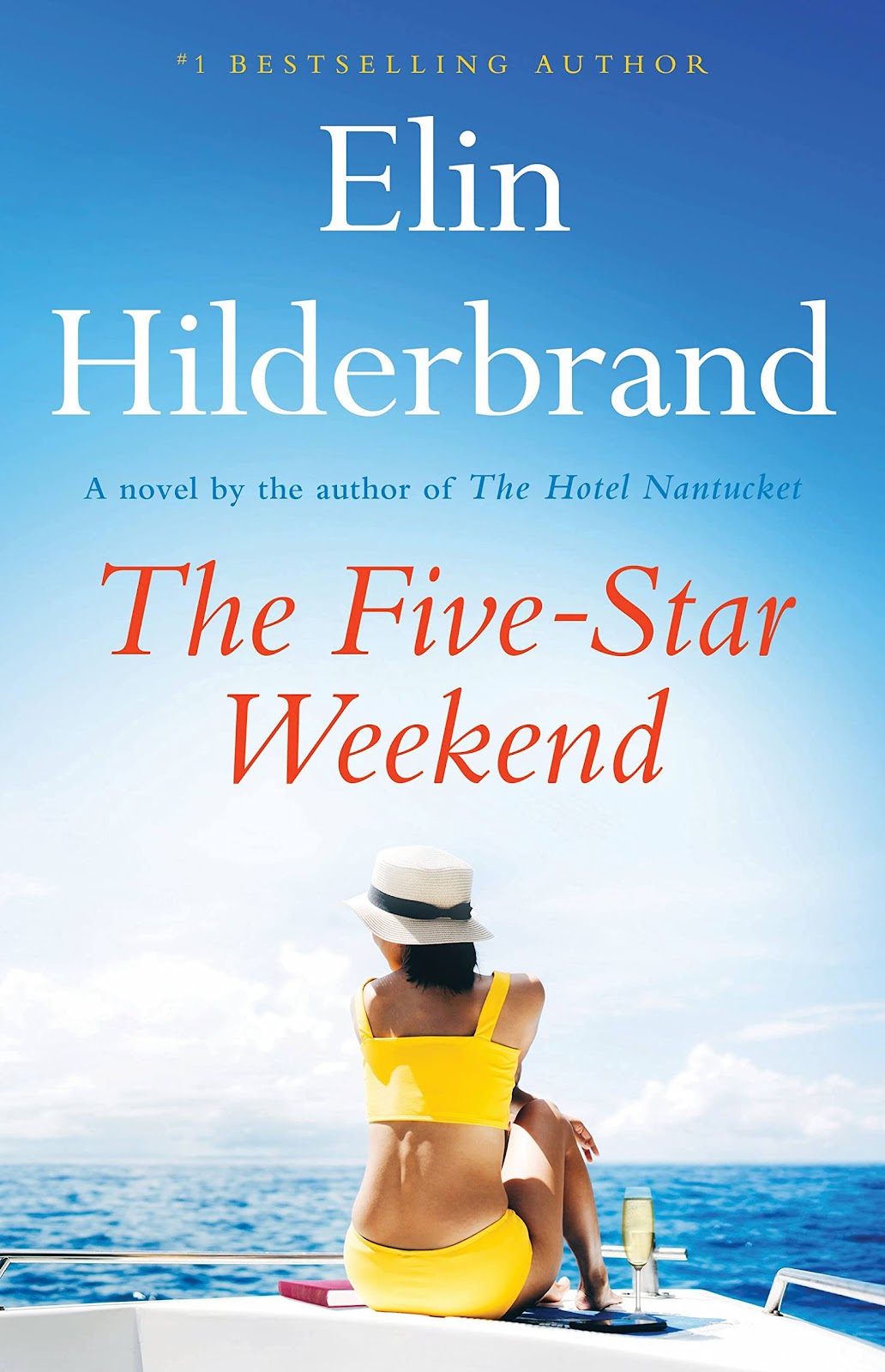
I find that Elin Hilderbrand's books are generally good for a light summer read and this one certainly falls into that category.

The setting is Nantucket (of course!) and the main character is Hollis Shaw. Hollis has recently lost her husband and as a grieving widow, she is lonely and searching for a focus and purpose for her life. 

Hollis has a summer home on Nantucket and she comes up with the idea of inviting a friend from each decade of her life to spend a weekend with her at that home. Accordingly, she invites Tatum, who was her childhood best friend; Dru-Ann, her best friend from college; Brooke, a friend from when their children were growing up together; and Gigi, who is her favorite internet friend. (Hollis is a blogger and Gigi follows her blog.) Little does Hollis know that she and Gigi share another connection and grief at a loss.

Hollis asks her daughter, Caroline, to interview and film each of the women as they discuss how they know Hollis. Of course, they each have their own problems and concerns and these are revealed through the interviews. The weekend becomes something of a therapy session for each of them.

Overall, I found this to be an enjoyable, non-taxing read. I've read Hilderbrand books before so I knew what to expect and I was not disappointed. If you are looking for a good beach read, here it is!

My rating: 3 of 5 stars  

*~*~*~*

Long, long ago in another hot summer not unlike this one, I read the Agatha Christie classic And Then There Were None.  If I wasn't hooked on reading murder mysteries before, that book sealed my fate. I searched out more books like that and especially more Christie books. I think, over time, I finally read all of her books, and some of them, like The Murder of Roger Ackroyd, I read more than once. Apparently, Alice Feeney is a Christie fan as well.

In Daisy Darker, Feeney has written a kind of homage to Christie's And Then There Were None. Feeney's story takes place on a tidal island that is cut off from the rest of the world once the tide rolls in.  At that point, it will be eight long hours until the island reconnects with the mainland.

The title character, Daisy Darker, is the granddaughter of the woman who lives on that tidal island. Nana is turning eighty years old and the family is gathering on the island to help her celebrate. Naturally, all of those family members have their own secrets and concerns, so it is a prickly assembly. 

It's made a bit more prickly by the fact that a storm is gathering which threatens to isolate the island even more. As the storm rages at midnight, Nana's body is discovered. It was not a natural death. In an hour, another family member is found dead. Someone is killing them off, one by one. But who? Is there anyone on the island besides family members?

So, what we have here is the classic locked-room mystery, and kudos to Feeney; she handles it quite well. She's no Christie but then nobody is but hers is a creditable effort.

My rating: 3 of 5 stars 


Comments

  1. These are two perfect books for summer reading. I don't ask too much of my summer reading books, and they don't ask too much of me.

    ReplyDelete
  2. The very first mystery I ever read by Agatha Christie was And Then There Were None (though at the time it was still going by Ten Little Indians). It definitely turned me into a Christie fan. And a fan of that isolated island, locked-room kind of setting/mystery. Daisy Darker is one on my TBR list, and I do hope to read it at some point. :D

    ReplyDelete
  3. Sounds like good books. I love mysteries and suspense.

    ReplyDelete
  4. Great settings for each book. I like the idea of a tidal island and the plot sounds pretty spooky. Whoa.

    ReplyDelete

Post a Comment

Popular posts from this blog

Poetry Sunday: Don't Hesitate by Mary Oliver

How about we share another Mary Oliver poem? After all, you can never have too many of those. In this one, the poet seems to acknowledge that it is often hard to simply live in and enjoy the moment, perhaps because we are afraid it can't last. She urges us to give in to that moment and fully experience the joy. Although "much can never be redeemed, still, life has some possibility left." Don't Hesitate by Mary Oliver If you suddenly and unexpectedly feel joy, don’t hesitate. Give in to it. There are plenty of lives and whole towns destroyed or about to be. We are not wise, and not very often kind. And much can never be redeemed. Still, life has some possibility left. Perhaps this is its way of fighting back, that sometimes something happens better than all the riches or power in the world. It could be anything, but very likely you notice it in the instant when love begins. Anyway, that’s often the case. Anyway, whatever it is, don’t be afraid of its plenty. Joy is no...

Poetry Sunday: Blackberry-Picking by Seamus Heaney

My mother was a farm wife and a prodigious canner. She canned fruit and vegetables from the garden, even occasionally meat. But the best thing that she canned, in my opinion, was blackberry jam. Even as I type those words my mouth waters!  Of course, before she could make that jam, somebody had to pick the blackberries. And that somebody was quite often named Dorothy. I think Seamus Heaney might have spent some time among the briars plucking those delicious black fruits as well, so he would have known that "Once off the bush the fruit fermented, the sweet flesh would turn sour." They don't keep; you have to get that jam made in a hurry! Blackberry-Picking by Seamus Heaney Late August, given heavy rain and sun For a full week, the blackberries would ripen. At first, just one, a glossy purple clot Among others, red, green, hard as a knot. You ate that first one and its flesh was sweet Like thickened wine: summer's blood was in it Leaving stains upon the tongue and lust ...

Poetry Sunday: Hymn for the Hurting by Amanda Gorman

You probably remember poet Amanda Gorman from her appearance at the inauguration of President Biden. She read her poem "The Hill We Climb" on that occasion. After the senseless slaughter in Uvalde this week, she was inspired to write another poem which was published in The New York Times. It seemed perfect for the occasion and so I stole it in order to feature it here, just in case you didn't get a chance to read it in the Times . Hymn for the Hurting by Amanda Gorman Everything hurts, Our hearts shadowed and strange, Minds made muddied and mute. We carry tragedy, terrifying and true. And yet none of it is new; We knew it as home, As horror, As heritage. Even our children Cannot be children, Cannot be. Everything hurts. It’s a hard time to be alive, And even harder to stay that way. We’re burdened to live out these days, While at the same time, blessed to outlive them. This alarm is how we know We must be altered — That we must differ or die, That we must triumph or try. ...