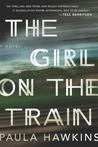
 The Girl on the Train by Paula Hawkins
My rating: 5 of 5 stars
Shades of Gone Girl and Gaslight, this is one nifty page-turner of a thriller. Paula Hawkins has used the device of the unreliable narrative and lying narrator made famous by Gillian Flynn in her fantastically successful Gone Girl and used it with great ingenuity to tight and suspenseful effect. It was a very entertaining read.
This is the story of three women - Rachel, Megan, and Anna. Each of the three shares in the narration of the story and so we see it from three different perspectives, but as we near the denouement, we begin to comprehend that none of the narratives has been entirely true. Certainly, none of the three is complete in itself.
The woman who we first meet is that "girl on the train." She is Rachel. She takes the same commuter train to London every morning, allegedly to go to her job at a public relations firm. Only slowly is it revealed that she has actually lost her job because of her drinking three months before. She continues taking her daily trip to fool her flatmate whom she doesn't want to know about the job loss.
As Rachel takes her daily trip to and from London, she rolls by a stretch of cozy suburban homes, one of which she used to live in with her husband, Tom. She was blissfully happy there until alcohol took over her life and Tom strayed into the arms of another woman, Anna. Now, he and Anna live in the house that he and Rachel once occupied and as she goes by each day, Rachel looks down on the house and remembers.
She also observes a nearby house where a young couple, whom she has named Jason and Jess but who are actually Scott and Anna, live. Rachel sees them as happy and in love, the perfect young marrieds. The truth is very much more complicated than that, as we learn when we meet Megan through her narrative.
One day as she is passing by, Rachel sees Jess (Megan) on her patio kissing another man who is not Jason (Scott) and she is shocked. Could she have been wrong about their lives?
She is even more shocked when she reads in the newspaper that the woman who lived at that address has disappeared without a trace - the day after she saw her kissing a man not her husband. Is there a connection?
While these events are happening, Rachel's life and her tentative hold on reality are unraveling completely. Her flatmate is fed up with her drinking and there is a black hole in her memory of the day that Megan disappeared. Rachel wakes the day after to find herself with unexplained injuries and unable to remember what happened, but she has a vague memory of being in the area where the woman disappeared.
Then the woman's body is found near the railroad tracks and Rachel is even more desperate to remember what happened during her blackout. She fears that she may be somehow involved in Megan's death.
Meanwhile, Anna is becoming fed up with Rachel and what she sees as her meddling in the lives of Anna, Tom, and their young daughter. She sees her as a stalker and a danger to her child.
Rachel, in an alcoholic haze, is torn about what she observed of Megan from the train and what she thinks she knows about her life and that of Scott and the unknown man on the patio. When she finally works up her courage to tell the police, they at first accept and investigate her statement but then reach the conclusion that her observations are not to be trusted because she is a drunk. She is humiliated once again.
This book has a lot of moving parts, but as we get near the end they all come together and take on the speed and force of a runaway locomotive. Paula Hawkins keeps all of the disparate lines of her complicated tale from becoming inextricably tangled and all the lies, innuendos, and threats eventually are revealed for what they are in a most satisfactory conclusion. It is a very impressive accomplishment.
View all my reviews
I so want to read this book, Dorothy! I've had my eye on it since I knew of its release, but I guess I'm waiting for Amazon to drop the price a little on the Kindle version.
ReplyDeleteI read it on Kindle and I have to say it was worth the price. Very enjoyable read!
Delete